The final guide to 3D printing your own Delorean Time Machine
The iconic Delorean DMC-12, from Back to the futurerepresents the pinnacle of science fiction nostalgia. For global enthusiastic manufacturers and fans, 3D printing offers an exciting opportunity: build a scale replica of its own film marvel. But turning complex curves, gull wing doors and complex flux capacitors from digital dreams to physical reality requires meticulous planning, technical knowledge, and sometimes expert help. This guide will take you through the process from digital models to polished time travelers while highlighting when and why professional rapid prototyping services become crucial.
Phase 1: Digital Basics – Procurement and Preparation Models
-
Find the correct blueprint:
- Source of good reputation: Start your pursuit of established 3D model repositories such as Thingiverse, cults3d, or myminifactory. search "DeLorean Time Machine," filter "Complete model" or "Complete assembly." Pay close attention to ratings, comments and photo galleries to evaluate quality and printability. Legendrydustgithub, Mwoldcrow and a variety of talented designers provide highly detailed models.
- Level of details: Choose according to your goals. The 1:10 model may have sophisticated engine details and door openings, requiring hundreds of parts and months of work. Smaller desktop models may be the speed at which dozens of parts are printed. Beware that the free model lacks details or requires significant modifications.
- File verification: After downloading, check the model in the slicing software such as Ultimaker Cura, Prusaslicer, or Simplify3D. Check for non-pulsive edges that may cause printing failures, reverse normal walls, and over-thin walls. Use a grid repair tool such as NetFabB or Meshmixer to solve the problem.
- Slicing and printing optimization:
- Workflow: Decompose the model into printable blocks. Most large replicas are pre-placed into components such as chassis, body panels, doors, wheels and internal parts.
- Support and direction: Strategically orient the parts to minimize overhangs that need to support the material (this adds post-processing). This is critical for curved surfaces like roofs and hoods. Consider using tree support where applicable, for easier removal and less scarring on the surface.
- Layer height and resolution: The visible outer parts have a layer height of 0.1 mm to 0.2 mm to capture details. For internal structural components, a lower resolution (0.3mm) may be sufficient.
Stage 2: Material Problems – Plastic Dream or Metal Reality
Choosing the right material can affect the appearance, durability and the printing process itself:
- PLA (polylactic acid):
- advantage: Easy to print colors are easy to print (including metallic silver), affordable low warping.
- shortcoming: Can be deformed in a thermal environment; the surface finish can look "plastic" No extensive post-processing. Lack of the weight and authenticity of metal.
- Best for: Beginners, weight is a focus on large exterior panels, initial prototypes.
- PETG (polyethylene terephthalate glycol):
- advantage: More durable than PLA, more heat resistant, decent layer adhesion, good chemical resistance (for painting), moderate flexibility.
- shortcoming: Can "String music" More temperament than PLA.
- Best for: Functional parts (hinges, mechanisms), door pillars that require elastic and durable.
- ABS (acrylonitrile butadiene styrene):
- advantage: High strength, good temperature resistance (essential near-lighting/motor), suitable for steam smoothing (acetone).
- shortcoming: A lot of warping requires heating of the enclosed chamber; smoke requires ventilation; with PLA/PETG is trickier.
- Best for: Internal structure near the heat source or areas that mimic the strength of metal.
- True stainless steel and aluminum (via professional service): Creality Halot One resin 3D printer
- advantage: The Holy Grail of Authenticity – Real Metal Weight, Feeling, Durability, Heat Resistance and Power. Traditional machining can achieve very complex geometric shapes that are impossible to achieve.
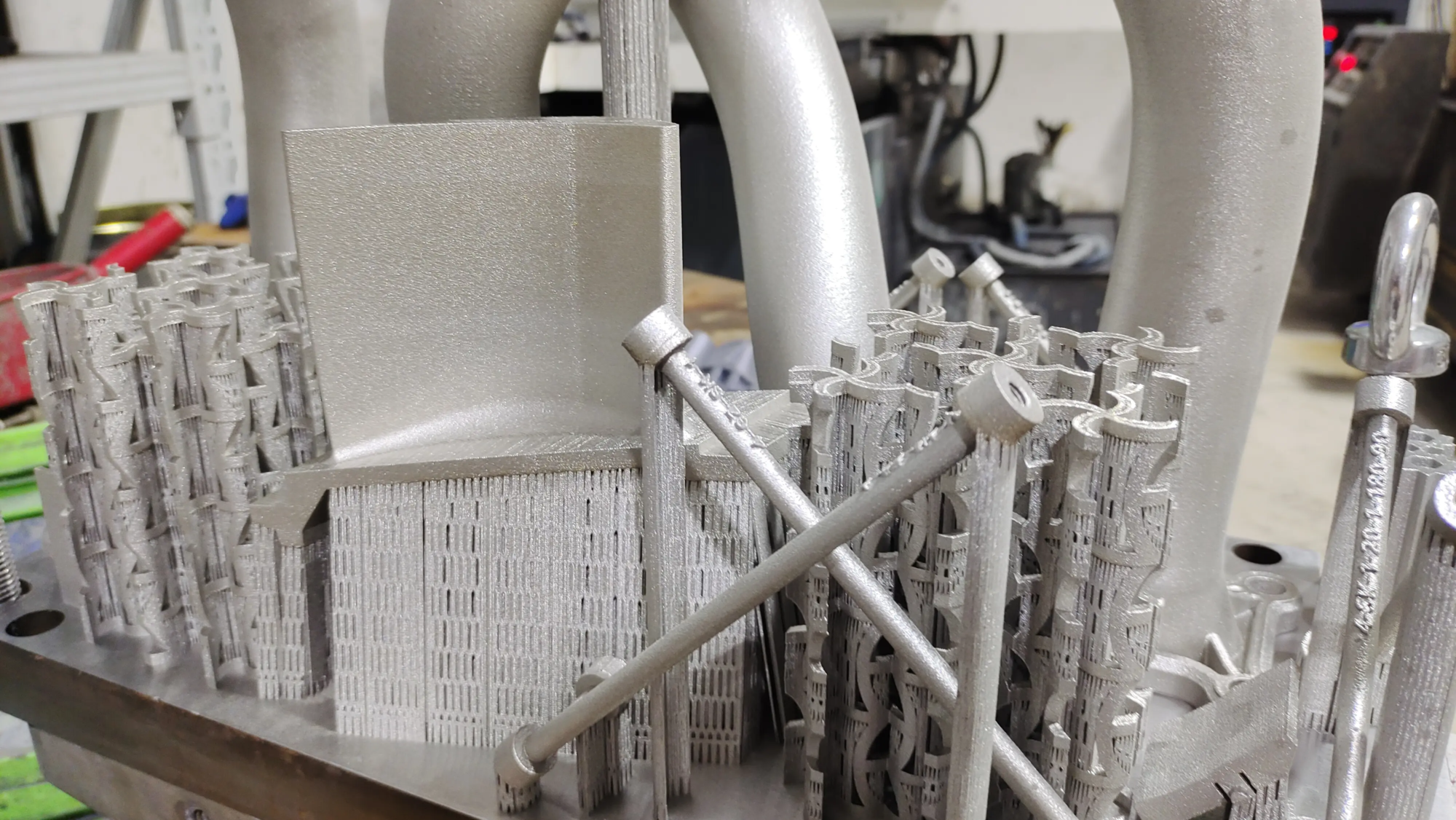
- shortcoming: Need advanced Selective laser melting (SLM) Or adhesive spray technology. Printers are very expensive and are for home use. Specialized design is required for printable (dangling, support) and sintering/distortion compensation. Here, it becomes crucial to work with professional services like Greatlight.
- For example: Printing highly stressed components in metal X 17-4 pH stainless steel, such as suspension mounts, intricate grilles, door latch mechanisms or specialized brackets ensures structural integrity and unparalleled aesthetic realism.
Phase 3: Fusion Process – Printing and Assembly
- Long printing: Print the full, detailed Delorean (even a 1:10 ratio) is a marathon, not a sprint. Almost continuous printing is expected for weeks to months. Pay close attention to printing using the camera and software (eight pons) to capture the fault as early as possible. Record everything – Bags and parts are marked when finished.
- assembly: Patience and precision are key.
- Dry fit test: Test suitable for parts to be constantly bonded. Determine the disturbance points that need to be trimmed or polished.
- Fixed/tightened: For structural joints (chassis/subframe), inserting the brass rod or using small screws can significantly improve the individual glue.
- Moving parts: Strengthen the hinge (metal rod in the printing sleeve) and connecting rod before assembly. Make sure the doors and hood are smooth.
- Electronic integration: Plan earlier wiring (flux capacitors, brake lights, headlights LEDs) and motors. Use channels in printed parts for wires.
Stage 4: Grooming – From Plastic (or Metal) to Movie Magic
-
Plastic post-processing (for DIY parts):
- Remove tool marks: Grinding sequence: 120-220 grit fixed layer line, 320-400 grit is smooth, 600+ can be selected for polishing.
- Gap filling: Use car fill putty, styling putty (such as Tamiya), or dot putty to handle seams and layer imperfections. Grind again.
- Prime & Unity: Apply high-build automotive primer fillers. Grind with gradually fine grit sand until perfectly smooth. Repeat if needed.
- luster: Achieving the famous brushed stainless steel appearance is the pinnacle:
- Paint route: Primer with bright silver metal. Carefully cover the panel. Spray with translucent grey paint at an angle to simulate brushed stripes. Sealed with a clear jacket.
- Metal sheet/polishing route (advanced): Spray the metal mass and rub the coarse polishing compound to create the brush mark and polish back to the sheen.
- detail: Paint trim, rubber seals (semi-light black), interior details (leather brown, grey), lighting (red, yellow, transparent) and added decals.
- Final Conference: After painting/details, put all the components together.
- Professional metal finish (Greatlight example):
SLM printed metal parts already have a real material basis. Greatlight’s comprehensive post-processing service greatly enhances the final look and functionality:
- Grinding/polishing: CNC media blasting produces a consistent matte or satin finish. Hand polishing creates a mirror finish.
- Relieve stress: Heat treatment ensures dimensional stability, especially complex parts that are prone to internal stress.
- Surface reinforcement: Options such as electropolishing or electroplating enhance corrosion resistance and aesthetic quality far beyond the paint.
- Key component accuracy: Highly resistant metal gears, bearings, seamlessly integrated with SLM-printed shafts for operating mechanisms, saving significant modification efforts.
Conclusion: Is it worth the 1.21 GW of effort?
A 3D printed copy of Delorean Time Machine is undoubtedly one of the most ambitious hobby projects imaginable. It requires tremendous patience, skill development, technical failure shooting, and a lot of time investment. However, the challenge is part of the huge reward. Seeing this iconic form realizes from thin filaments or thin layers of powder metal provides an unparalleled sense of accomplishment. Each scratched component proves your dedication.
It is crucial to remember the alternatives. For complex geometric shapes that require unparalleled strength and metal authenticity, especially functional mechanisms and complex details, it is crucial to DeLorean’s identity – Work with A Expert rapid prototyping services such as Greatlight have changed the impossible. Their advanced SLM technology and end-to-end finish expertise bridge the gap between the limitations of home FDM and the legendary stainless steel surfaces of the most famous cars in the movie. Whether you’re on board DIY, professionally serving critical components, or commissioning the entire build, the goal is the same: ignite the flux capacitors and return to the Golden Age of 1985 – once in a carefully printed layer.
FAQ: Your Burning DeLorean Printing Questions Answered
Q1: How long does it take to 3D print the entire Delorean model?
A1: This is completely different from the printer according to the scale. A highly detailed 1:8 scale model can be easily adopted 300-500 hours (or more) Pure Print Time – It takes about 2-4 months of continuous printing on newer FDM machines. Don’t forget the extra time to assemble, post-process and painting, which can easily double or triple the duration of the entire project.
Q2: What is the best silk to make it look like real stainless steel?
A2: Although thin filaments like PLA/PET "Silver Metal" Can play a role and achieve reality Brushed stainless steel It seems to be relying on experts Post-processing (Sanding, primer, professional painting techniques). For the authenticity of reality, Professionally printed stainless steel (for example, through Greatlight’s SLM process) is unparalleledprovides true metallic surface, weight and gloss without paint coating.
Q3: Can I print functional elements such as open doors and flux capacitor lighting?
A3: Absolutely, but strategy is key:
- Door: Use powerful hinges (metal pin/lever sliding in the printed tube) and support rods that fit in size (larger-sized gas springs). Carefully design the mating surface.
- Flux capacitor/lighting: Wiring channels and mounting bases are integrated during the printing schedule. Low power LEDs are ideal; early embedding. Use transparent or translucent filaments/resin in capacitor coils. Careful wiring management is crucial in the chassis.
Question 4: How much does it cost?
A4: DIY plastic replica:
- filament: Typically, depending on the quality, color and volume required, $150-$350+.
- Element: Paint, primer, filler, sandpaper, glue: $50-$150.
- Electronic equipment (lights/micro motors): $30-$80.
- time: A large amount of personal labor costs (assembly, finished).
Leveraging services like Greatlight to critical components greatly increases costs due to materials (e.g., high-quality metal powder) and machine/processing time, but provides unparalleled durability and finish.
Q5: Why do I use a professional service like Greatlight as a part instead of printing everything myself?
A5: Greatlight’s expertise in metal SLM printing and finishing solves key challenges:
- Extreme complexity: Parts that cannot be reliably printed with FDM/resin printers (thin-wall grill structure, complex functional components).
- Structural integrity and life: Metal parts are subject to pressure, heated and provide a life of plastic failure (suspension arm, gear mounting).
- Real aesthetics and weight: True stainless steel exterior and panel or key decorative feel, without complex paintings.
- Save time and trouble: Avoid weeks of printing failures, ending bad and engineered complex plastic solutions to solve easily occurring parts. Their one-stop solution from file preparation to post-processing ensures quality results.
Ready to bring the flux capacitor to life? For projects that require top quality and complexity, especially when authenticity requires real metal – Precision SLM printing, advanced material expertise and comprehensive post-processing Provides critical edges. We solve your rapid prototyping challenges professionally and efficiently to ensure your custom parts meet the highest functional and visual standards. “>Explore professional metal solutions for your ambitious projects today!