introduce
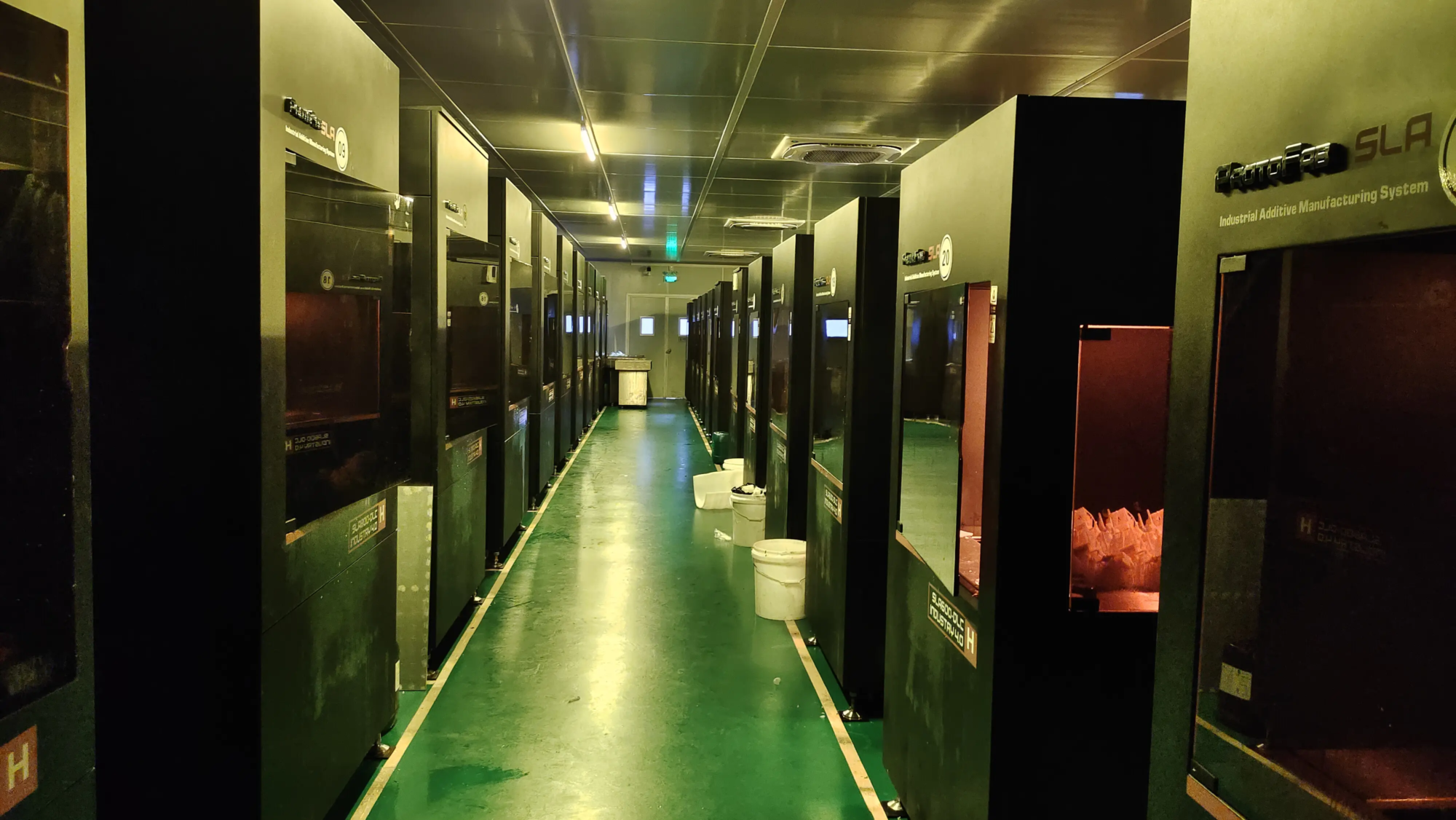
In the fast-paced world of product development, races from concepts to functional prototypes can innovate or break down innovation. This is Greatlight Improve workflow Redefine efficiency. As a leader in rapid prototyping with cutting-edge SLM (Selective Laser Melting) 3D printing technology, Greatlights streamlines the production of metal parts while integrating a comprehensive post-processing solution. Improving workflows involves not only speed, but also precision, reliability, and turning ambitious ideas into tangible results that are uncompromising.
Raise prototypes with selective laser melting
The core of Boost workflow is Industrial grade SLM technology. Unlike conventional methods, SLM uses a high-power laser to fuse ultrafine metal powders (layers) together to make completely dense parts. This makes unparalleled design free: complex geometry, internal channels and lightweight lattice structures that cannot be achieved by machining or casting. Greatlight’s advanced printers, such as the EOS M400-4, provide excellent accuracy (±0.05mm) and material integrity, which are critical to aerospace, medical implants or automotive components. By eliminating tool constraints, SLM can cut advance time from weeks to days, thereby accelerating the R&D cycle.
Material multifunction: exceeding standard alloy
Enhanced workflows thrive in customization. Greglight with a wide range of Certified metal powder:
- titanium (TI6AL4V): For aerospace or biomedical applications that require strength to weight ratio and biocompatibility.
- aluminum (ALSI10MG): Ideal for very lightweight, thermally stable components.
- Stainless steel (316L/17-4PH): Combines corrosion resistance and mechanical robustness.
- Exotic alloys (Inconel, Cobalt Chrome): For extreme environments (high temperature, corrosion).
Each material is rigorously tested – microstructure analysis, tensile testing to ensure performance for the end-use. Whether it is adjusting existing alloys or purchasing professional powders, materials science is the core of Greatlight’s mentality to solve problems.
Integration post-processing: "One-stop" Advantages
Many prototype services ignore finishes, resulting in bottlenecks. Improve workflows include End-to-end post-processing:
- Heat treatment: Relief annealing enhances mechanical properties.
- Surface refinement: Options such as CNC machining (+/- 0.01mm tolerance), vibration polishing, bead blasting or anodizing.
- Functional coatings: Custom textures for thermal spray, DLC (diamond-like carbon) or wear resistance.
This integration ensures that the parts are not only printed, but also produced. For example, the recently shipped turbine blades of Greatligh require internal cooling channels (SLM) + aerodynamic polish + thermal barrier coating within 5 days, usually taking more than 3 weeks of process.
Precision conforms to agility
What sets the workflow apart is its responsiveness:
- Digital Accuracy: Advanced CAD/CAM simulation minimizes trial version.
- Quick quote: AI-driven costing tools provide pricing within 2-4 hours.
- Scalability: From 1 prototype to more than 500 batch production.
Benefits from customers Speed is not sacrificed. For example, the start of medical devices utilizes it as a spinal implant in the regulatory schedule, while the automotive team verified engine parts before the quality tool.
Industry trust and impact
Greglight introduces ISO 9001:2015 and AS9100D (Aerospace) certification. Strict quality inspection protocols – CT scans, porosity analysis, dimensional inspection – ensure perfect results. Engineers work directly with customers to provide insights on DFM (Manufacturing Design). Recently, this consulting approach helped robotics companies reduce parts weight by 40% while maintaining load-bearing capacity – VIA generates redesigned SLM.
in conclusion
Greatlight’s workflow reshapes rapid prototypes from linear tasks to strategic advantages. It solves the critical triad by combining advanced SLM printing, material adaptability and seamless post-processing Speed, quality and cost-effectiveness. For innovators facing challenges in compressed development windows or complex metal parts, this workflow is not only an option, but a breakthrough catalyst. From prototype to small-scale production, Greatlight turns complexity into opportunity.
### FAQ: Enhanced Workflow
Question 1: Which industries benefit the most from SLM-based prototyping?
A: Aerospace (lightweight structure), medical (biocompatibility implant), automotive (performance parts) and industrial tools (conformal cooling molds).
Q2: How fast is it "Rapidly" In a Boost workflow?
A: The delivery time for the initial sample starts at 24 hours, and the delivery time for complex post-processed parts is 70% faster than the industry average.
Q3: Can you handle the accuracy of microscale? **
Answer: **Absolute. Tolerance reduction to ±0.05mm is standard, and optional precision machining can achieve ±0.01mm.
Q4: Are functional end-purpose parts feasible?
A: Yes. Using full-density SLM construction and certification (e.g., ASTM F3001 for Titanium), the parts meet structural and regulatory requirements.
Q5: How cost-efficient is low-capacity?
A: SLM bypasses tool costs, making it ideal for batches of 1-1,000 units. Quantity discount applies to 100 pieces.
Question 6: How do you ensure the quality of the material?
A: The powder comes from a certified supplier and is verified by spectral, fluidity tests and test versions before production.
Question 7: Does design support include?
A: Free DFM analysis optimizes the design of SLM – reducing weight, supporting structure and building time.
Ready to accelerate innovation? Contact Greatlight’s engineers to customize your project – ambitions fit the engineering reality.