Achieving Perfect Prints: The Ultimate Guide to Preventing Stringy 3D Printing
There’s nothing more frustrating than pulling a design off the printer bed, only to find it’s covered in a thin layer of melted plastic filament. This phenomenon is called "Threading" or "ooze," It has troubled countless makers, enthusiasts and professionals. While generally considered a minor aesthetic flaw, excessive filament strands can damage functional parts, interfere with moving components, and significantly affect the professional appearance of prototypes or end-use components. understand Why The occurrence of stringing and mastering prevention techniques are critical steps in achieving consistently perfect prints. At GreatLight, we specialize in high-precision metal prototyping using advanced SLM technology, and we understand firsthand the importance of perfect surfaces – we also apply these principles to guiding customers through common problems like stringing in polymer printing.
What is the reason for drawing?
Stringing occurs when molten filament oozes out of the nozzle while moving between different points on the model without actively extruding. Think of the nozzle as a faucet dripping hot glue. This oozing filament solidifies in mid-air, creating those annoying lines. Several interrelated factors contribute to:
- Printing temperature is too high: The basics of pulling the string. If the filament is also When hot, its viscosity drops dramatically. When extrusion stops, it becomes highly runny and prone to dripping or flowing uncontrollably. Each filament material (PLA, ABS, PETG, nylon, etc.) has an optimal printing temperature range. Exceeding the upper limit increases the risk of leakage.
- Suboptimal retraction settings: Shrinkage is an important measure for printers to prevent leakage. As the hot end moves between print areas ("travel action"), the extruder motor briefly retracts (pulls back) the filament slightly. This creates negative pressure within the nozzle chamber, actively drawing molten material upward and away from the nozzle tip. If the retraction distance is too small or the speed is too slow, leakage cannot be effectively offset.
- Excessive moisture in the filament: Absorbed moisture (hygroscopic filaments such as nylon, PETG, TPU) flashes into steam when heated. Even during non-extrusion motion, this vapor expands violently, forcing the molten filament out of the nozzle tip, creating the characteristic "burst" sound and erratic string-drawing patterns.
- Moving slowly: If the hot end moves slowly between extrusion points, any oozing filament has more time to drip and form lines before it reaches the next print location. Faster movement can minimize this window of exposure.
- Insufficient cooling: Poor part cooling will allow heat to persist in one print area and make nearby filament melt longer, making it easier for lines to form when moving directly over that warm area. This is especially noticeable on smaller details or closely spaced features.
- Filament selection: Certain materials are inherently more prone to stringing due to their viscosity and stickiness when melted. PETG and TPU, while offering excellent mechanical properties, are notorious for requiring careful tuning to minimize stringing.
Your comprehensive battle plan for pulling strings
Effectively solving wire drawing problems requires a systematic approach – similar to the strict process controls we use on our metal SLM printers. Don’t try to change everything at once! Start simple and iterate.
-
Main temperature control:
- Reduce nozzle temperature: This is often the most effective change. Reduce the nozzle temperature in 5°C increments. Print a small "Threading test" model after each change. Continue until stringing is noticeably reduced, but be careful not to go too low, resulting in poor layer adhesion or insufficient extrusion. Find that sweet spot.
- Determine the specific temperature of the filament: For easily drawable materials such as PETG/TPU, always use the low end of the manufacturer’s recommended temperature range. If possible, use a thermocouple to verify actual temperature accuracy.
-
Optimized retraction settings (key weapons):
- Increase retraction distance: Gradually increase the retraction distance in microtome settings (in 0.5 mm increments). Start conservatively (e.g. PLA: 0.5-1mm retraction test, PETG/TPU: 1-2mm test). Excessive retraction of the Bowden device may cause wear or blockage.
- Increase retrieval speed: At the same time, increase the retraction speed (in increments of 5-10 mm/sec). The higher the speed, the faster negative pressure is created, minimizing the seepage time before the nozzle moves. Typical speed range: PLA (speed: 40-60mm/s), PETG/TPU (speed: 45-70mm/s). Avoid excessive speed that may cause filament grinding.
- Fine-tuning anti-retract/Z jump: Carefully adjust the attack/retrieval speed and distance (usually lower than the retrieval speed) to avoid spotting at the beginning of the layer. Use Z jumps with caution – raising the nozzle can avoid collisions, but will increase travel time and sometimes indirectly worsen stringing.
-
Travel faster:
- Set up your slicer "Traveling speed" The highest speed your printer mechanic can reliably support (150-250mm/s is common on many modern printers). The faster the nozzle moves, the shorter the time for the filament to ooze out.
-
Make sure the filament is dry:
- Store all hygroscopic filaments (all open filaments!) in an airtight container with desiccant.
- Active drying before printing: For moisture-sensitive materials, use a dedicated filament dryer or low-temperature oven (precise temperature control is crucial!). Bake according to manufacturer’s guidelines (eg PETG: 4-6 hours at 50°C, Nylon: 8-12 hours at 70-80°C). This step can completely eliminate stringing and popping caused by moisture.
-
Optimized cooling:
- Maximize part cooling fan speed, especially for PLA and PETG. The goal is to achieve 100% cooling after the initial layer. Make sure the cooling ducts surround the nozzle tip effectively.
- Strategically position the model on the build board or use "shortest layer time" Set up to allow the small layer to cool sufficiently before the nozzle passes overhead.
-
Advanced slicer adjustments:
- slide: Allowing the nozzle to slow down its extrusion slightly before the end of the print line utilizes residual pressure to complete the print, thereby reducing pressure build-up before retraction/advance. Requires fine-tuning based on extrusion calibration.
- wipe: The nozzle moves slightly intentionally past When retracting, wipe excess material onto the inside walls of the part. Effective when paired well with retraction.
- Avoid crossing the perimeter (combing mode): Set the slicer’s travel mode to "Avoid printing parts" or "Avoid crossing boundaries." This allows travel movement to be limited to the interior padded areas or outside of the model, greatly reducing the chance of string deposits pass through Visible outer surface.
- Choose low-penetration filaments:
- When appearance is critical and material flexibility is not required, PLA typically has fewer threads than ABS, PETG, nylon, or TPU. The promotional materials are "windproof" Versions such as PETG-Pro often incorporate additives to reduce stringiness.
Solving Metal Printing Problems: Beyond Brushing to Surface Perfection
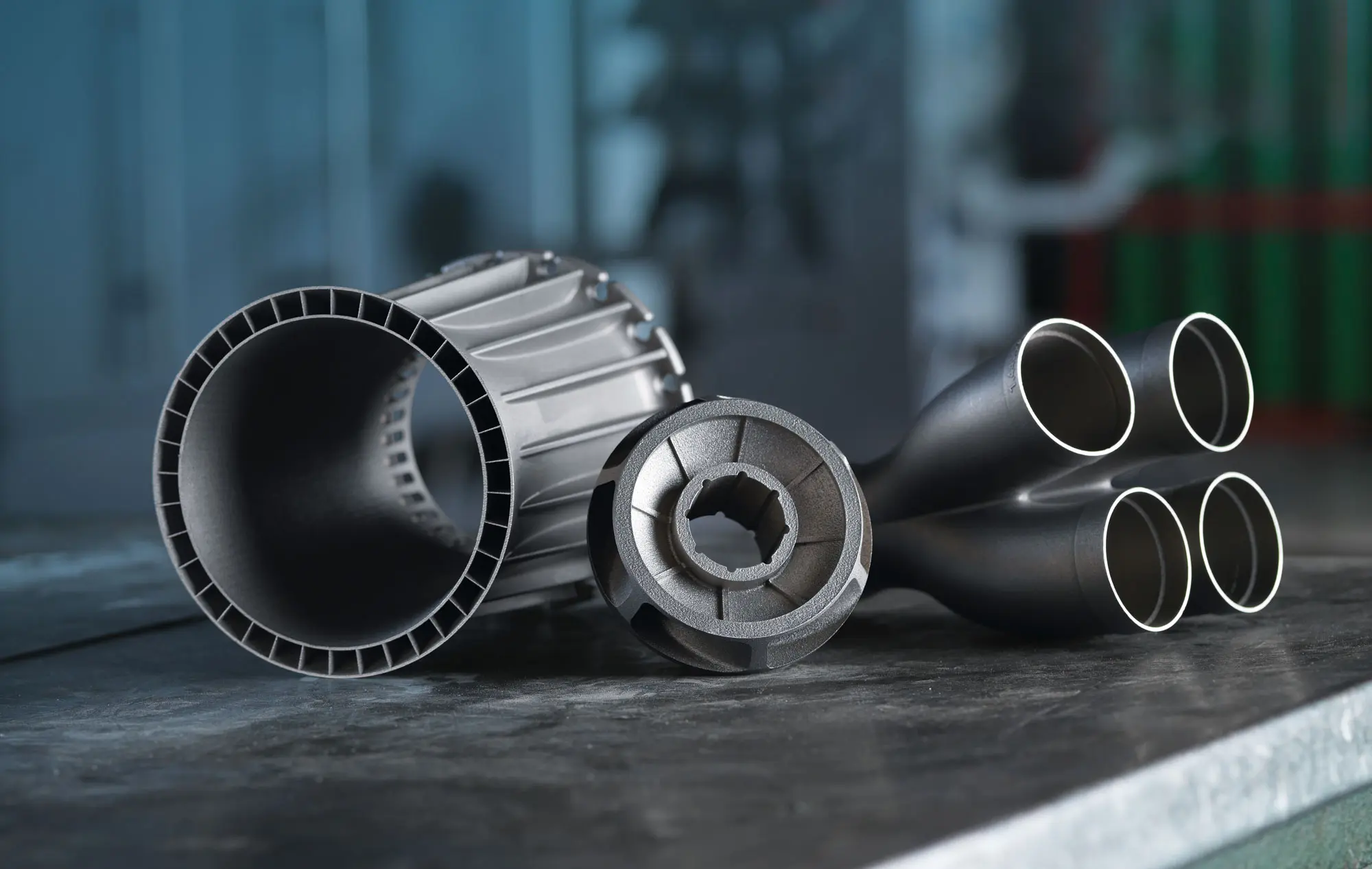
although "Threading" Referring specifically to the polymer FFF/FDM process, similar surface defects can also occur in metal powder bed fusion (SLM/SLS). Excessive spatter, powder sintering outside the intended melt pool, or bonding at the support interface may produce a rough surface or undesirable thin protrusions ("satellite"), which affects precision dimensions and surface finish. This is where GreatLight’s deep expertise shines:
- Advanced process control: Our industrial SLM machines use sophisticated thermal management and airflow dynamics to be precisely calibrated to the alloy they are printing. This minimizes spatter and uncontrolled powder adhesion.
- Precise parameter optimization: We carefully optimize laser power, scan speed, hatch spacing, layer thickness and scan strategy for each specific alloy and geometry to ensure a clean melt pool and crisp definition.
- Professional post-processing: Essential for metal parts. Techniques such as precision wire EDM for part separation, targeted CNC machining of interfaces, and specialized shot peening or electropolishing are all expertly applied to remove any unwanted workpiece to achieve the superior surface quality required for functional metal parts.
Perfect surface quality, whether preventing plastic stringing or eliminating metal spatter/satellites, requires mastery of craftsmanship. At GreatLight, we leverage advanced equipment, proven production technology, and extensive materials experience to reliably solve rapid prototyping challenges.