Uncovering the legal maze: 3D printing lower receiver
The world of firearms manufacturing is undergoing a quiet revolution, driven by the accessibility and capabilities of additive manufacturing (AM), commonly known as 3D printing. At the heart of many gun discussions is the lower receiver – a critical, federal regulatory component. As printers capable of producing metal and polymer parts become more sophisticated, questions surrounding their legality have arisen. 3D printed lower receiver has soared. At GreatLight, as precision rapid prototyping experts who handle advanced SLM metal printing every day, we understand technical Deep ability. However, navigation legality A completely different set of considerations is required, characterized by complexity and significant risks. This article aims to clarify the legal situation and emphasize caution and compliance with the law.
Understanding the Lower Receiver: More Than Just Plastic or Metal
- what is it: In firearms such as the AR-15 and its variants, the lower receiver is the chassis. It houses the trigger, hammer, safety selector, magazine well and stock attachment point. Importantly, it comes with the serial number required by federal law.
- Why it’s important: Under U.S. federal law (specifically the Gun Control Act of 1968), the lower receiver (or frame in a pistol) is legally defined as "firearms" Used natively on rifles and pistols. This designation is valid whether it is made from forged aluminum, polymer, or printed resin/metal powder.
- The role of ATF: The Bureau of Alcohol, Tobacco, Firearms and Explosives (ATF) is the federal agency responsible for enforcing gun laws. They interpret regulations, issue rulings and classify components.
Technical feasibility and legal reality
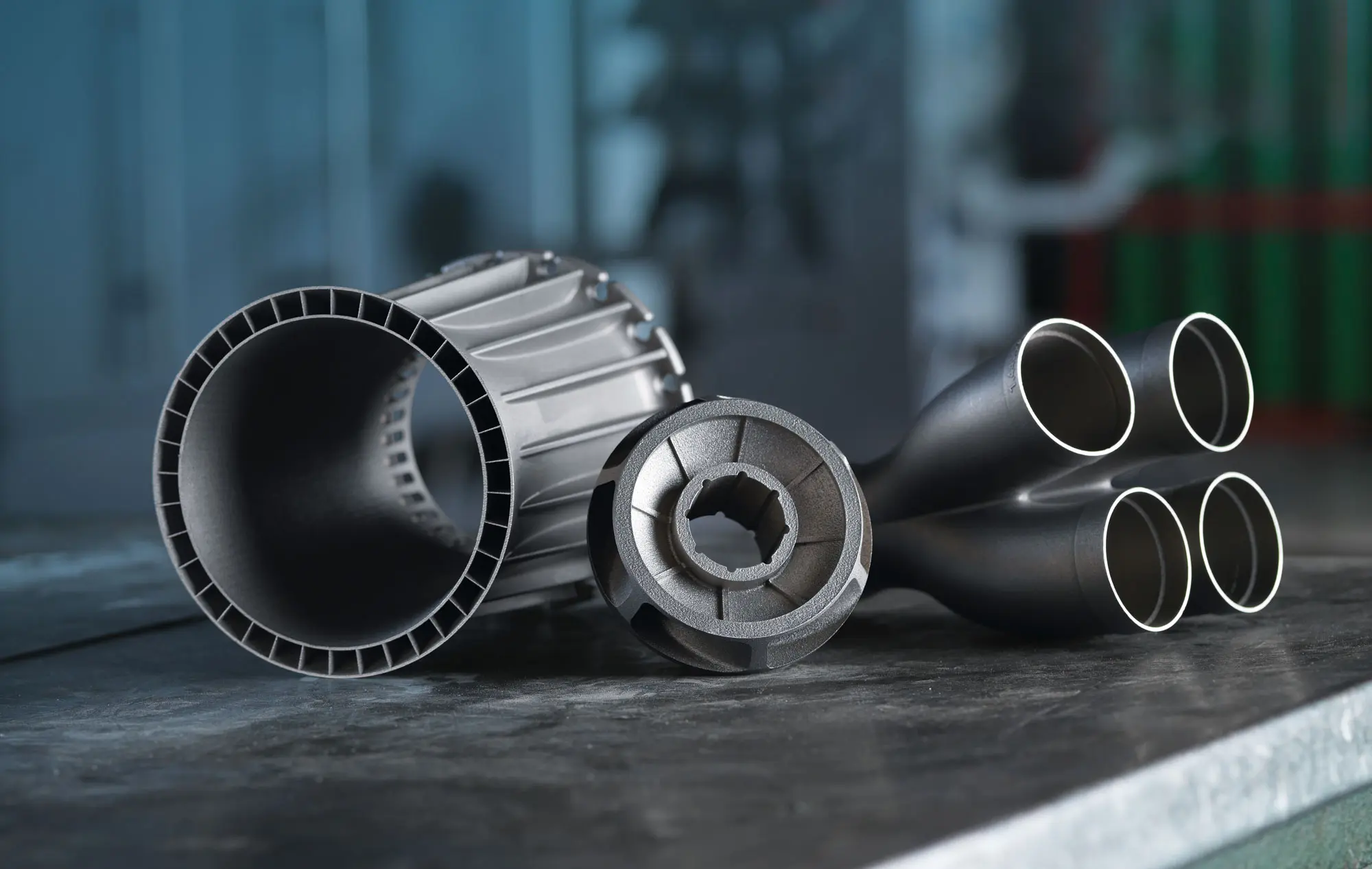
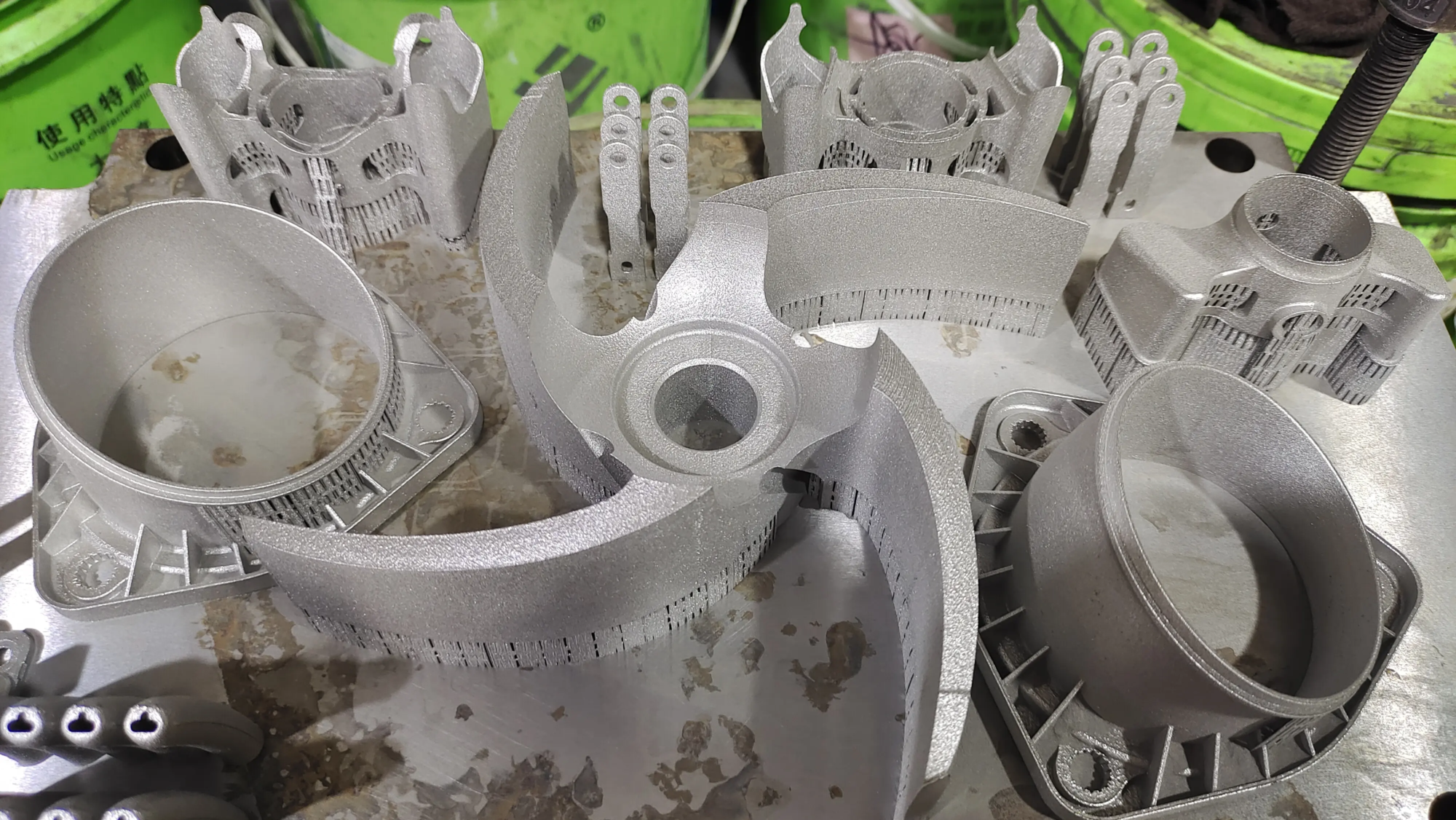
GreatLight’s SLM (Selective Laser Melting) printers excel at creating complex, high-strength metal geometries from alloys such as aluminum, stainless steel, titanium and nickel superalloys. Technically speaking, producing a functional metal lower receiver is achievable:
- Material selection: Choosing the right alloy is critical. Suitable options such as specific grades of aluminum (e.g. AlSi10Mg), maraging steels or optimized stainless steels can provide comparable strength to conventional forged parts when precisely heat treated.
- Design and Engineering: CAD models must be accurate, contain additive manufacturing-compatible geometries for strength optimization (avoiding critical stress concentration points), and intelligently include support structures.
- Printing and post-processing: SLM is built layer by layer. Post-processing includes critical heat treatments (e.g., solution annealing and aging of precipitation hardened alloys, stress relief annealing), meticulous CNC machining of critical surfaces (e.g., hammer/trigger pin holes, magnetic well interfaces) to ensure dimensional accuracy and surface finish, and careful inspection of internal porosity using techniques such as CT scanning.
- test: Rigorous strength testing (static and dynamic) under simulated shooting conditions is critical to verify performance and safety.
However, Technical capability does not equal legal permission.
Navigating the Legal Minefield: Federal Law
The production of firearm lower receivers triggers several federal regulations:
- Firearm frame or receiver definition (Rule 2021-05R): The rule, effective August 24, 2022, updates the definition but solidifies manufacturing The frame or receiver constitutes the manufacture of a firearm. This includes assembling functional parts onto an unfinished frame/receiver ("80%").
- Unauthorized manufacture (18 USC § 922(a)(1)(A)/(B), 27 CFR § 478.41): participate "Business" Manufacturing a firearm requires a Federal Firearms License (FFL 07 – Manufacturer). This applies regardless of the manufacturing method – milling, casting, forging or printing.
- How about personal use? Federal law generally allows individuals to manufacture firearms for personal use No a FFL, Provided they are not prohibited from owning firearmsand Provided the firearm does not violate the National Firearms Act (NFA). This includes printing.
- But…key limitations:
- Serialization: There is no room for negotiation in the law. As a manufacturer (even for personal use), you must Apply a unique serial number to the firearm receiver in accordance with ATF marking requirements (depth, size, location) outlined in 27 CFR § 478.92. Failure to serialize violates federal law.
- Record keeping: current federal law unnecessary Non-FFL individuals who manufacture firearms for personal use only Unlike licensed manufacturers, maintain records or transfer documentation. State laws may vary.
- Weapons are prohibited: Craft NFA items (machine guns, silencers, short barrel rifles/shotguns, destructive devices) No Necessary stamp duty paid and approved is illegalregardless of personal intent for use. Printing parts to enable automatic fire or facilitate NFA configuration creates significant results