On June 7, 2025, the entrance exam to college officially started. This year, a total of 13.35 million people registered nationally, a drop of 70,000 compared to last year, a slight decrease in the last decade. After the examination, the filling of the request form has become the most worried thing for candidates and parents, in particular how to choose a major, which can be done in the future and if it is worth learning.
3D printing, also known as the additive manufacturing, is a strategic emerging industry which is essential to support the “14th five -year plan” and an important part of advanced manufacturing and the digital economy. With the development of the industry, many universities have opened related majors and the demand for 3D printing talent in companies also increases.
The data show that the global size of the 3D printing market will reach 158.8 billion yuan in 2024, and the Chinese market should exceed 50 billion yuan, an annual sliding increase of 25%; It is expected to exceed 100 billion yuan by 2027, and the talented gap could reach 100,000 to 200,000 by then.
So, does the 3D printing major deserves to choose during the entrance exam to college in 2025? What universities in China have already exposed the relevant directions? What are the future job and salary situations? As a professional platform which has been deeply rooted in industry for 11 years, the resource library will respond to it one by one in this article.
1. What is major 3D printing? What universities across the country have this major?
Additive manufacturing, commonly known as 3D printing, has a professional nameAdditive manufacturing engineering(Professional code: 080217T). This major was created in 2021 and is a baccalaureate in machines at an ordinary university. He has a four -year academic calendar and receives a baccalaureate in engineering after obtaining the diploma. The major combines several disciplines such as material science and engineering, mechanical engineering and intelligent control. It aims to cultivate technical talents composed to promote the innovative development of the manufacturing industry. It is a typical representative in the context of the new engineering.
According to the resource database, to date, 23 universities in China have offered undergraduate majors in “Addition Manufacturing Engineering”. The following is a list of universities classified by the province and organized by school level (priority 985/211, followed by ordinary undergraduate students, and finally independent colleges):
Heilongjiang province:
Harbin technology institute (985/211)
Shaanxi province:
Northwestern Polytechnical University (985/211)
Xi’an Siyuan College (Independent College)
Gansu province:
Lanzhou Institute of Technology (General Baccalaureate)
Province of Hubei:
Hubei University of Automobile Industry (general baccalaureate)
Wenhua College (Independent College)
Henan province:
Normal University of Henan (General Baccalaureate)
Xinxiang College (General Baccalaureate)
Province of Hebei:
Hebei (general baccalaureate) University
Jiangxi province:
Nanchang Aviation University (general baccalaureate)
Jiangsu province:
University of Nanjing of Aeronautics and Astronautics (211)
Nanjing University of Technology (General Baccalaureate)
Jiangsu (general baccalaureate diploma) University of Sciences and Technologies)
Jiangsu (general baccalaureate diploma) University of Sciences and Technologies)
University of Sciences and Technologies of Suzhou Tianping College (Independent College)
Shanxi province:
University of the North Central (General Baccalaureate)
Shandong province:
Architecture University of Shandong (General Baccalaureate)
Jining College (general baccalaureate)
Province of Anhui:
Anhui of Science and Technology University (general baccalaureate diploma)
Tongling College (general baccalaureate)
Bengbu College (general baccalaureate)
Sichuan province:
Xihua University (General Baccalaureate)
Chengdu (general baccalaureate) technology institute)
In addition to the colleges and universities that have already opened an “additional manufacturing engineering”, many well -known universities in China also offered professional directions or courses linked to a 3D printing, such as the Tsinghua University, the University of Beijing, Aeronautics and Astronautics, the University of Shanghai Jiaotong, Huazhong University, they are not major, XI’an Jiaotong technology, etc. At the main level of domestic 3D printing, teaching and research in the fields of machines, materials, etc.
In addition, candidates can also choose certain majors closely linked to 3D printing, including materials training and control engineering (080203), mechanical design and manufacturing and automation (080202), intelligent manufacturing engineering (080213T), etc. Settings and job destinations.
2. What is the last salary situation in the 3D printing industry?
As a professional platform that has deepened its roots in the 3D printing industry, we have published the “3D 2024 printing wage survey report”. The report is based on 393 valid samples and industryThe average monthly salary is 9,150 yuanwhose monthly salary of 8,000 yuan is around 15,000 yuan represents 33.17%, and the proportion of more than 15,000 yuan is 24.52%. The overall salary level is much higher than that of traditional manufacturing.
In terms of recruitment, company requirements for “education + experience” continue to increase, 58.7% of positions requiring a baccalaureate and 65.8% prefer 1 ~ 3 years of professional experience. New graduates are generally faced with the dilemma of “learning and lack of experience”. It is recommended to participate in the training project as soon as possible during school to accumulate a practical base for employment.
In terms of work requirements, technological research and development stations represent 54.59%. Companies focus on 3D modeling capacities (such as CAD, Solidworks), mastering traditional printing technologies (FDM, SLA, SLS) and understanding the performance of printing materials (resin, metal powder, etc.). While industry continues to upgrade, compound technical talents gradually become the basic short -term resource on the market.
3. What are the orientations of employment in the 3D printing industry? What can graduates do?
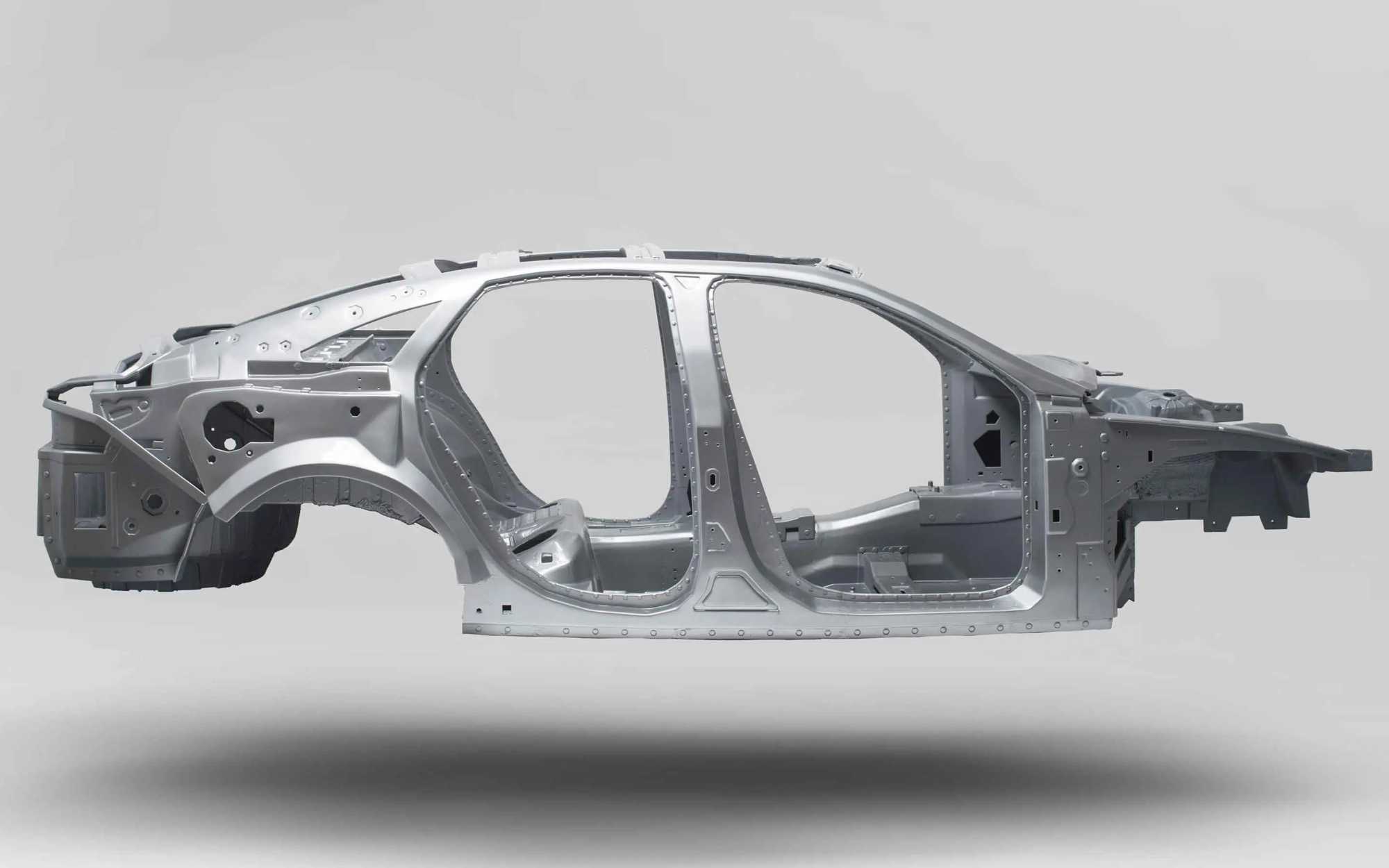
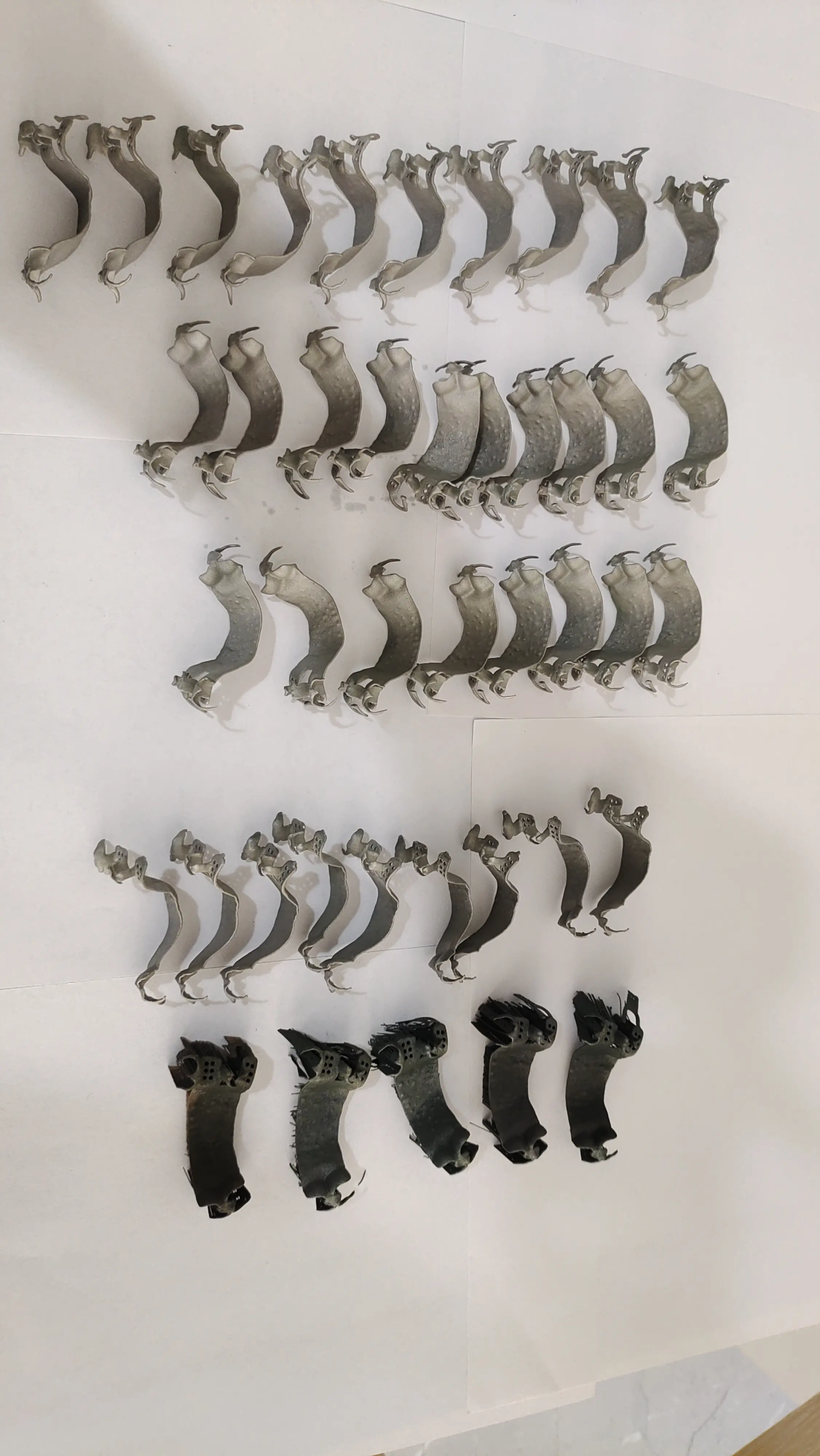
Today, 3D printing technology has been widely used in aerospace, rail transport, automobile, medical care, education, architecture, art and industrial manufacturing. For example:Automotive manufacturingAmong them, Tesla, Byd and other companies use the printing of 3D sand to make mussels;Medical healthIn the field, Invisale uses personalized orthodontics in 3D printing;appleWe have also tried to use 3D printing to make parts of metal titanium; At the same time, universities and research institutions have also built 3D printing laboratories to promote the integration of teaching and scientific research.
The main employment guidelines include: Additive manufacturing engineers, debugging equipment and process design, modeling designers, technology sales, research and development and analysis of materials, etc., covering all aspects of design, production to application, and there is a large space for employment.
In 2020, the Ministry of Human Resources and Social Security and the three other departments will do so “Additive manufacturing equipment operator“Included in the new catalog of the occupation, the occupation code is 6-20-99-00. In 2022, another new one”Additive manufacturing engineering technicians», Coded as 2-02-38-11. The creation of these new professions linked to 3D printing marks the rapid way to develop industry and also provides a new employment platform for university graduates.
4. What students are suitable for the request for the exam? What are the main contents of the major?
The major 3D printing is suitable for students who are interested in intelligent manufacturing and digital design, are good in mathematics and modeling, and who like practical practice and technological innovation. It is not recommended to students who are interested in the manufacture of courses, resist practical learning or mathematics, or who choose blindly for “new trends” and “high salary”.
Before officially registering for school, the resource library recommends you to read certain 3D printing books in advance to help quickly establish a basic understanding of this technology. We posted earlier“Recommended | 8 The most worth reading books printed in 3D in 2024”In an article, a batch of reading documents that are suitable for both entry and advances are selected, which are very suitable for the summer reading reference for candidates for the entrance exam to college.
5. After applying for the 3D printing house, what key points should be paid to the future study at school?
For students who apply for the major 3D printing (additive manufacturing), we previously interviewed many students who study in this major. Based on their personal experiences and suggestions, we have summarized several practical references:
First of all, interest is the main prior condition. If you are passionate about intelligent manufacturing, digital design and practical practice, this major will give you many awards; Second, practical capacity is very important and it is recommended to participate in competitions, scientific research projects and business internships during school to improve your global strength; Third, software skills are a more point, such as SolidWorks, Magics, UG and other modeling and professional software, you must master it as soon as possible; In addition, you must also pay attention to the attention of self-study and industry, expand the relevant knowledge of materials, machines, computers, etc., and follow the development of the industry.
In short, additive manufacturing is an emerging major who integrates the multidisciplinary, has a strong orientation of practice and a wide range of use. Students with strong practical capacity and love technology are suitable for learning in depth.
Finally,What we mean isMany traditional industries are gradually entering the “sunset period”, and 3D printing, such as the emerging “sunrise industry”, represents the future of manufacturing and is at an increase in rapid development.
The future of 3D printing is under our feet.
Students wishing to take the path of “smart manufacturing” are welcome to apply for the majority of additive manufacturing engineering.
Professional code: 080217T.