introduce
With the integration of 3D printing technology, the art of leather stamping has changed significantly. Craftsmen and manufacturers who once relied on hand-engraved tools and long production cycles now use technologies like Selective Laser Melting (SLM) to achieve unparalleled precision and speed. This innovation unlocks complex geometries and consistent reproducibility, which are critical for branding and decorative applications. However, mastering 3D printed leather stamps requires understanding material limitations, design nuances, and post-processing essentials. As a leader in professional rapid prototyping, GreatLight utilizes cutting-edge SLM technology to solve these challenges while providing an end-to-end solution for custom leather stamp production.
Tip 1: Prioritize Functional Material Selection
Leather stamps are subjected to high stress during the embossing process. Soft metals can deform under repeated impacts, while brittle alloys can break. For durable stamps, Tool steel, stainless steeland maraging steel Excellent due to its hardness and wear resistance. These metals are able to withstand repeated impacts without affecting intricate details. For special projects that require corrosion resistance (for example, wet leather conditioning), stainless steel is the best choice.
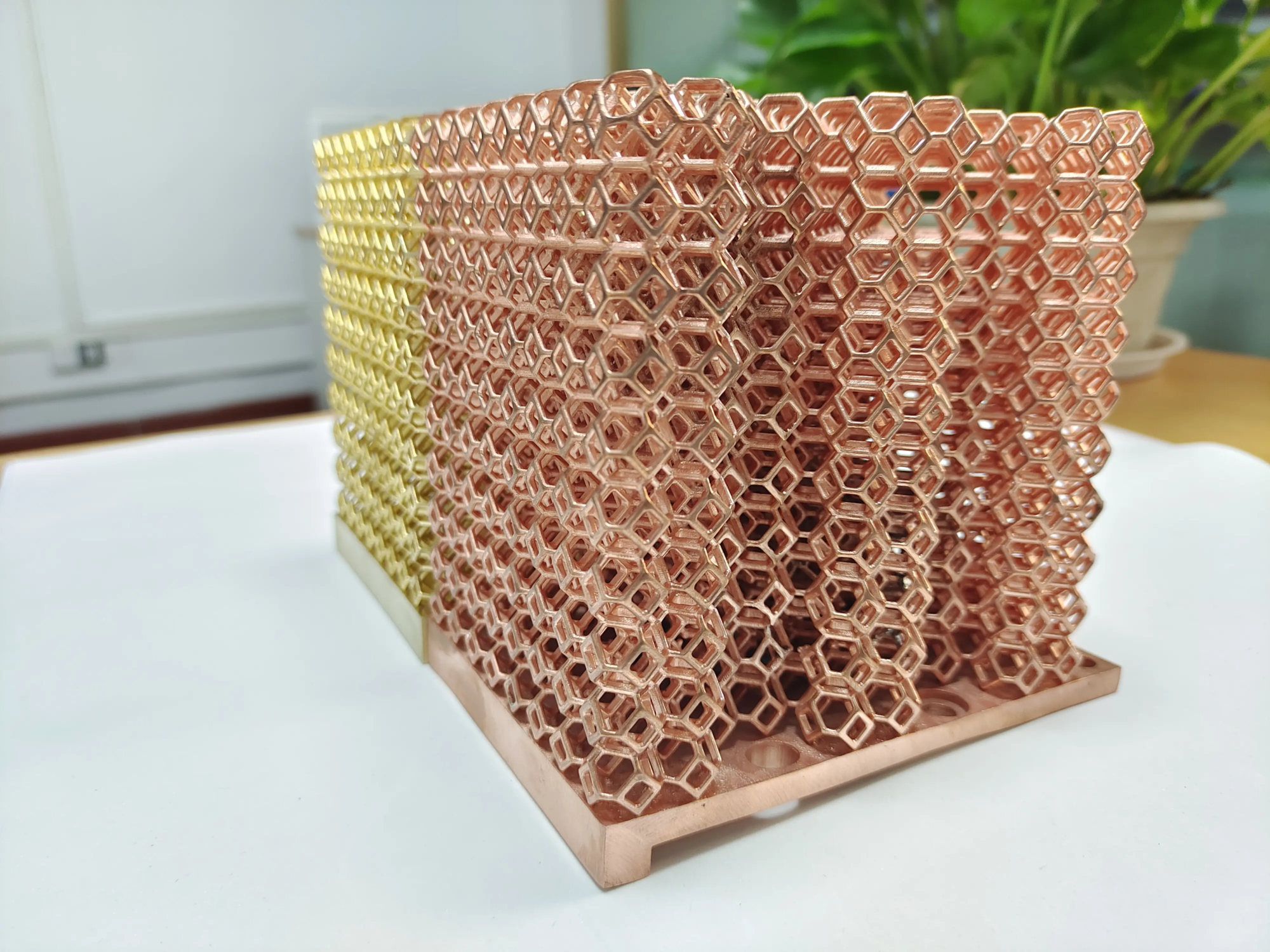
GreatLight specializes in materials science, providing custom alloys with extremely high durability. Our SLM printers precisely fuse metal powders in micron-scale layers, ensuring the uniform density and isotropic properties necessary for complex stamp patterns. Need a copper finish for a craftsman aesthetic? Our post-processing team provides coatings without sacrificing structural integrity.
Tip 2: Consider embossing mechanics when designing
The sealing effect depends on geometry optimization:
- Aspect ratio: The aspect ratio of the recessed pattern is maintained at 1:1 to 1:2. Walls that are too thin (<0.3mm) risk cracking under pressure, while designs that are too deep complicate hot leather demoulding.
- Support structure: Strategically placed SLM support anchor points to minimize post-process cleanup of slanted features such as slanted letters. GreatLight’s proprietary software predicts stress concentrations, reducing the risk of deformation during the printing process.
- Flatness control: Make sure the contact surface of the stamp remains perfectly level. Includes continuous perimeter sealing to prevent air pockets during embossing and ensure a clear impression.
Practical tips: Embed the registration mark into the stamp base, aligning multi-part designs (e.g. logo + serial number) with sub-millimeter precision.
Tip 3: Improve surface complexity through post-processing
Raw SLM prints often exhibit a textured, grainy finish, which is problematic for stamps to stick to the leather during ejection. GreatLight adopts a layered post-processing scheme:
- CNC Micro Milling: Flatten the embossed surface to an optical smoothness.
- Electrochemical polishing: Removes subsurface micropores that trap leather particles.
- Heat treatment: Stabilizes alloy microstructure to prevent lifelong cracking.
- Nano coating: The amphiphilic PTFE layer has non-stick properties and eliminates leather adhesion without the need for lubricants.
This workflow ensures that the stamp leaves a uniform impression over thousands of cycles, which is critical for large-scale manufacturing.
Tip 4: Validate your prototype with real simulations
Pretesting can prevent costly failures:
- Stress modeling: GreatLight’s FEA simulation predicts deformation under embossing loads. Iteratively optimize wall thickness or radius to avoid stress fractures.
- Thermal analysis: For heated stamping processes (common in vegetable-tanned leather), thermal simulation prevents warping caused by repeated temperature cycles.
- Material bending test: GreatLight uses PU leather replicas to verify imprint clarity prior to metal production, saving time and material expenses.
Tip 5: Incorporate production feedback early
Work with a prototyping expert who understands leather working workflows. Gretel suggests:
- Balanced stamp quality and seamless integration into handheld presses or automated cylinders.
- Tool standardization is provided for users to combine impressions with multi-cavity fixtures.
- Proactively address fatigue limitations in high-volume operations with controlled burn-in testing.
in conclusion
3D printed leather stamps combine artistry with engineered resilience. By using top-quality materials like tool steel, optimizing the design with SLM capabilities, and leveraging advanced post-processing, the stamps achieve lifetime durability without sacrificing detail. As a pioneer in rapid prototyping, GreatLight offers more than just printing – simulating real-world pressures, perfecting aesthetics with automated finishing, and offering unlimited customization potential. Let our solutions transform your leather crafting business, delivering industrial-grade precision at unmatched speed and value. Ready to start a project? Explore GreatLight’s prototyping services for superior leather stamping.
FAQ
Q1: What is the service life of 3D printed leather stamps?
A: After optimized heat treatment, the stamp can withstand more than 100,000 impressions. Stainless steel variant extends service life in environments with moisture or chemical exposure.
Q2: Can I copy an existing stamp?
Answer: Yes. GreatLight reverse-engineers through 3D scanning to clone worn or broken seals with less than 50μ accuracy, including recreating vintage tool patterns.
Question 3: What tolerance levels can be achieved with the SLM seal?
A: The standard tolerance of ±0.05–0.1mm can even accommodate cursive writing. Finer resolutions (±0.025mm) are available upon request.
Q4: Will the mark fade over time?
Answer: No. A properly processed SLM impression retains the original depth definition unless operated beyond its fatigue threshold. Regular quality control testing during high-volume projects allows for early identification of wear patterns.
Q5: How quickly can I get the prototype stamp?
A: Simple designs ship within 3-5 days; complex geometries may take 7-10 days. Bulk orders scale efficiently – our factory produces over 500 units per week without compromising refinement.
Learn about GreatLight’s rapid prototyping solutions – where precision meets performance.