

introduce
In the field of creativity and engineering, Lego bricks have fascinating generations. But what happens when you need custom pieces that don’t exist in the official catalog (or durable metal alternatives for high-pressure projects)? Enter 3D Print. With the rise of accessible 3D modeling and printing technology, enthusiasts and professionals are designing Lego-compatible parts to push boundaries. This guide delves into the world of LEGO 3D printed files, covers everything from file formats to material selection, and reveals how professional services can be used to leverage such Great You can upgrade your construction from hobby experimentation to industrial-grade creation.
What is a LEGO 3D printed file?
Lego 3D printed files are digital blueprints (usually in .stl or .obj formats) that allow you to use a 3D printer to make custom brick, gear, miniature or structural components. These documents are designed to be consistent with Lego’s precise size and clutch power ( "Snapshot" mechanism). Platforms like Thingiverse or Printables can accommodate thousands of free and paid designs, ranging from simple ceramic tile to complex technology sets.
Key Features:
- Modular compatibility: Files comply with LEGO formula grid system (e.g. 1 stud = 8mm).
- Parameter design: Advanced files allow customization of dimension adjustments to requirements.
- Legal nuances: When created compatible Parts are legal, and copying copyrighted designs (e.g., a microcosm of the brand) violates Lego’s IP policy.
Why 3D printing of Lego parts?
- Unlimited customization
Create elements you’ve never seen before: curved panels, oversized gears, or theme accessories (e.g., steampunk or sci-fi). - Repair and repair
Print rare/terminated parts such as old train wheels or cracked technical shafts. - Functional prototype
Test mechanical concepts (such as drone mounts or robot joints) before investing in mass production. - Cost-efficiency
Avoid buying a full set for a professional piece; instead print it.
Perfect design: Accuracy and tolerance
Lego’s ±0.005mm accuracy requires careful design. Common pitfalls include:
- Clutch failed: Is it too tight? The parts won’t catch. Too loose? They will separate. Ideal Tolerance: 0.2 mm clearance per side.
- Geometric Problems: Overhanging > 45° requires support; hollow structure requires drainage holes.
- Material shrinkage: Polymer shrinkage during cooling. Compensation is performed by scaling the model (e.g., ABS +2%).
Software Tips:
- Using CAD Tool Tinkercad (Beginners) or Fusion 360 (Advanced).
- use Bricklink Studiodigital building kit.
From Documentation to Completed: Step-by-step workflow
- Source or design your files: Download or create your own from the repository.
- Ready to print: Slice model (by kura or prorusala agent). Key settings:
- Layer height: ≤0.1mm to obtain details.
- filling: 50–100% structural parts.
- Material: PLA for prototyping; durability of PETG/ABS; microscopic resin.
- Printing and post-processing: Remove the support of acetone, rough edges of sand and (optional) steam smoothing abs.
Beyond Plastics: 3D Printing for Lego Metals
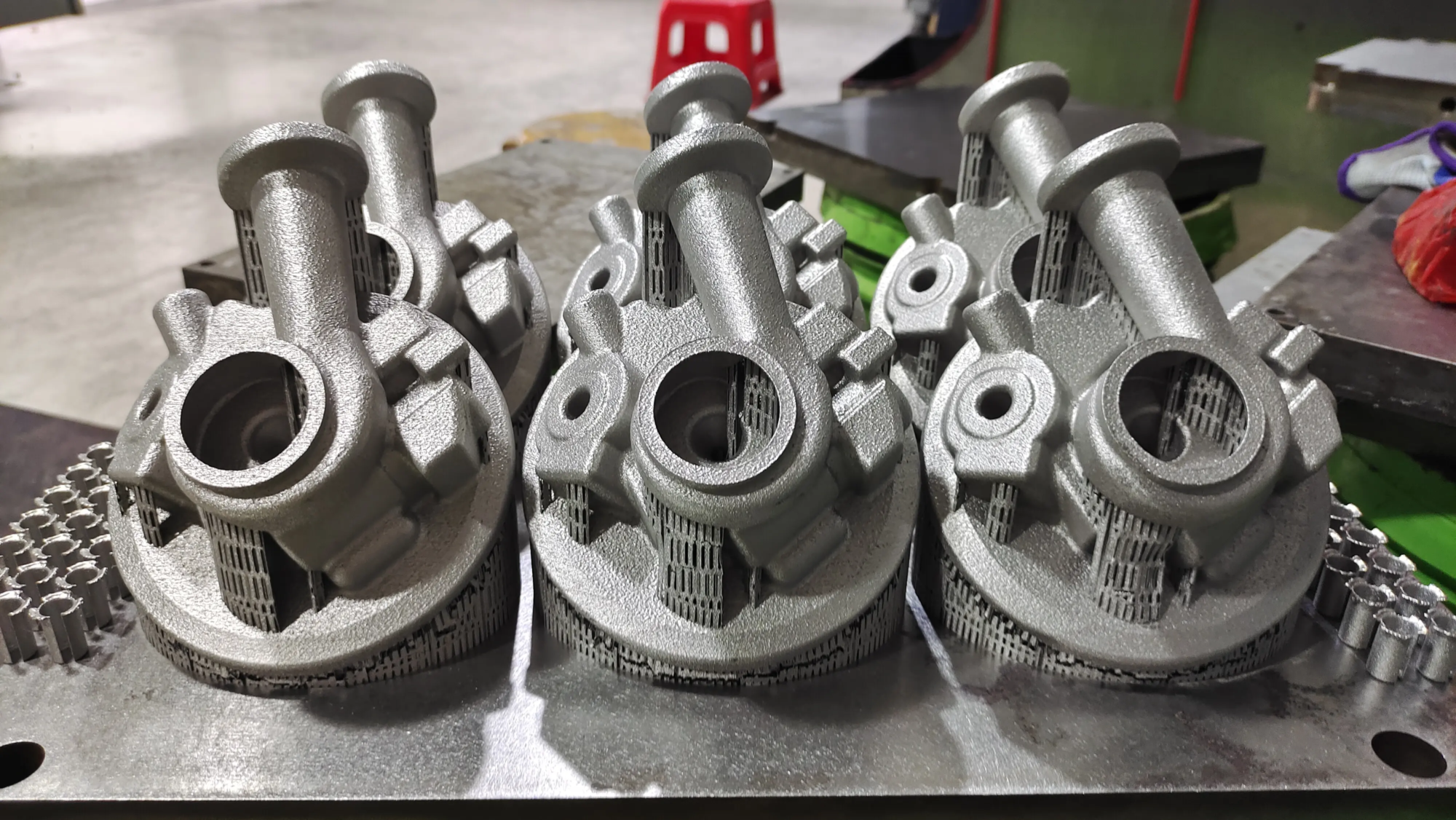
For industrial applications – consider robotics competition or functional prototypes –Plastic parts may fail. This is Greatthe leader of rapid prototypes is good at. Their SLM (Selective Laser Melting) Tech 3D Print Lego Compatible Parts in Metal:
- Material:Aluminum, stainless steel, titanium.
- Advantages: 10× High tensile strength, heat resistance and life.
- Apply: UAV frame, load gear, car model.
Why collaborate with Greatlight?
- accurate: Accurate of ±0.025mm after surgery.
- speed: Rush Services provides metal parts within 48 hours.
- End-to-end service: From file optimization to surface finish (anodized, polished).
Greatlight combines state-of-the-art SLM printers with materials science expertise to turn your digital LEGO design into a high-risk reality.
in conclusion
Lego 3D printing democratizes innovation and makes creators violate conventional restrictions. Whether you are printing plastic replacement parts at home or with Great To make the titanium mechanism, the fusion of 3D files and additive manufacturing will reshape the possibility. Ready to iterate faster and build stronger people? The future of custom LEGO projects has never been brighter or more flexible.
FAQ: The Mystery of LEGO 3D Printing
Question 1: Are 3D printed LEGO parts as durable as official?
Plastic printing (PETG/ABS) is close to the strength of Lego, but tolerances affect clutch power. Metal printed parts by Greatlight usually exceed OEM durability.
Q2: Can I sell my 3D printed Lego design?
Yes, if the design is original. The sale of a copy of the official Lego element infringes copyright.
Question 3: What if my home printer lacks the accuracy of micro-parts?
Use professional services! Greatlight handles complex geometric shapes (e.g., micro joints) with microscopic precision.
Question 4: Which metal material is suitable for high temperature LEGO projects?
Stainless steel (up to 800°C resistance) or titanium (lightweight + robust). Greglight provides material consultation.
Q5: How much does it cost to customize metal LEGO parts?
Varies with size/complexity. Small gear size is $12/part. Request a real-time quote from Greatlight.
Question 6: Will 3D printed parts damage authentic Lego bricks?
If the tolerance is correct, it is not. The sand has sharp edges and avoids the use of abrasive materials such as bad finished metals.
Transform imagination into iteration. design. Print. put up. repeat. 🔧🚀


