Unlocking Possibilities: Technical and Ethical Guide to Creating a Life-Size 3D Breast Model
The world of 3D printing continues to push boundaries, creating incredible realistic and functional objects from digital design. One application that inspires curiosity, meets profound needs and requires a lot of technical accuracy is a life-sized 3D printed breast model. Whether it is conducting medical recovery, artistic expression, anatomy education or in-depth personal projects, creating an accurate, realistic and morally reasonable model requires specific knowledge and expertise. This guide delves into the process, considerations, and the key roles of professional manufacturing partners Great.
Why create a life-sized 3D breast model?
Motives are diverse and often meaningful:
- Medical and prosthetic applications: First, this is to create a customized breast prosthesis for individuals who have a mastectomy or mastectomy. 3D printing allows for ultra-personalized shapes that perfectly match the remaining anatomy, improving comfort, fit, symmetry and confidence, far beyond universal off-the-shelf options. It can also be used in surgical planning models.
- Art and symbolic sculpture: Artists can use striking elements such as sculptures in innovative ways, or explore themes of form, identity, and human bodies.
- Anatomy Education: Detailed models are invaluable for medical training, patient education (e.g., interpreting surgical procedures or reconstruction choices) and biological research.
- Memorial or personal expression: Some people may commission models for personal reasons related to body image or commemoration.
Step by Step Life Size 3D Chest Printing Guide (Technical View):
To achieve high fidelity, the functional model involves consistent steps:
-
Source: Capture and Design
- 3D scan (for custom anatomical replication): This is essential for creating a prosthetic limb or replicating anatomy of a particular person. Professional 3D scanners (optical, structured light, sometimes photogrammetry applications (albeit with less accuracy)) capture surface geometry. Critical: This requires expert handling to ensure comfort, privacy, accuracy and proper posture. Scanning the unaffected side to indicate the object or desired target shape is a common method.
- CAD Modeling (for Art/General Shapes): If you do not copy a specific person, you can create detailed designs from scratch using professional computer-aided design (CAD) software or modify them from existing anatomical models.
- Processing data: The scanned data (usually point clouds) undergoes significant processing: noise removal, hole filling, mesh generation, watertight sealing, and potential engraving/modification of ergonomic designs (e.g., prosthetic substrate shape). Accuracy is crucial, especially for medical services. Use software such as Zbrush, Meshmixer or dedicated CAD tools.
-
Choose the perfect material: Functional indication form
- The end use determines the material:
- Soft, skin-like prosthetics: High-level materials that mimic tissue elasticity and sensation are needed. Silicone casting is usually the gold standard. High-precision 3D printing Mold (using SLA/DLP resin or smooth SLS nylon) and poured into medical grade silicone.
- Rigid prosthesis/socket/internal structure: Can be used directly using highly polished metals (such as titanium Ti6al4v or cobalt chromium) or biocompatible rigid polymers (PEEK, PEKK, medical grade resin) Selective laser melting (SLM) or other industrial AM processes. These are critical for complex reconstructions or structural components in implant support.
- Art Model: Materials range from smooth resin and sand detailed aesthetics to metal durability and finishes. SLS nylon offers durability and slight flexibility.
- Anatomical model: Details of durable plastics (MMJF, SLS nylon) or resin are common. Multi-matter printing can display different tissue layers.
- The end use determines the material:
-
Precision Manufacturing: Working with experts
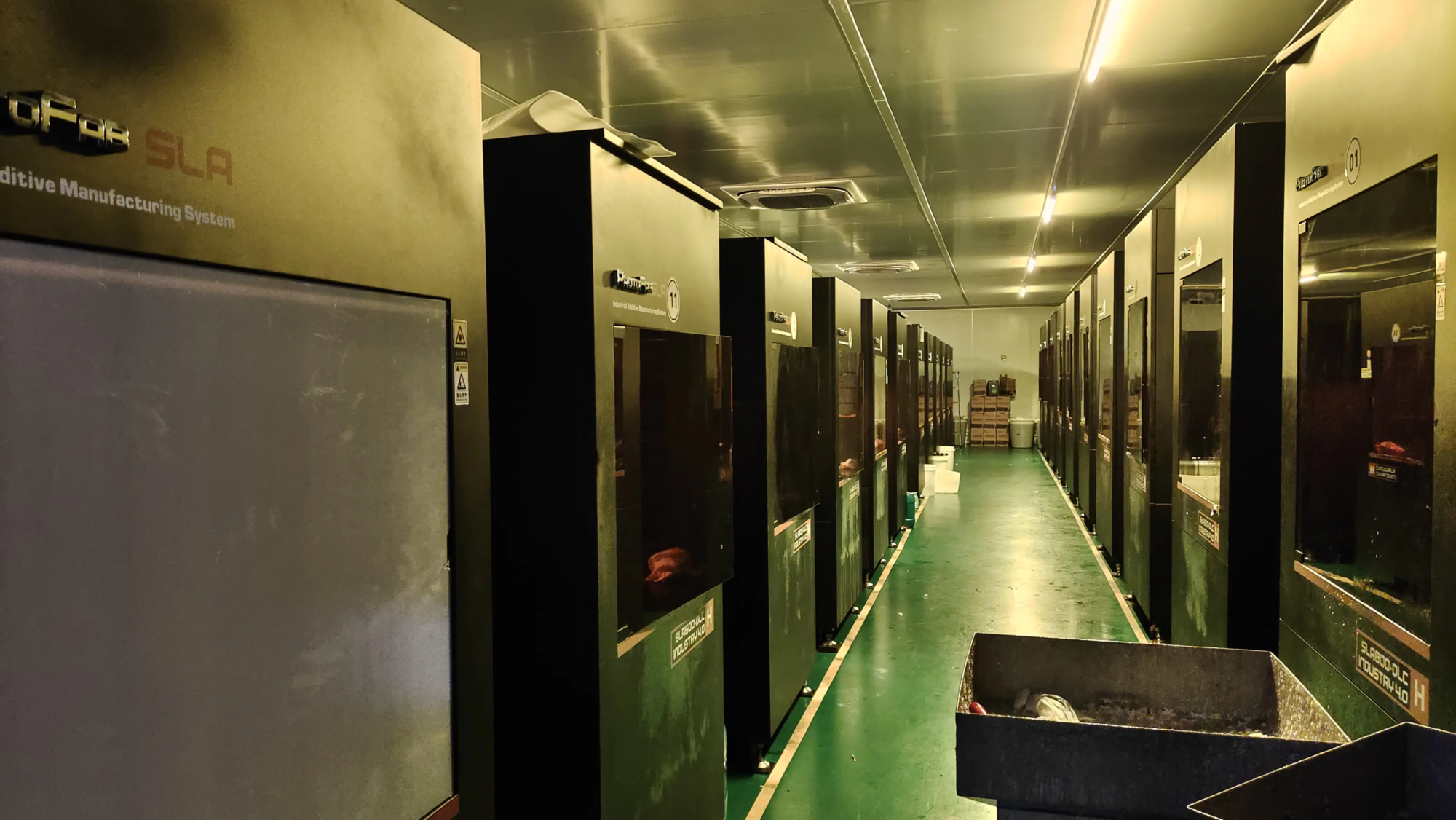
- This is Great Show its key value. Printed composites with specific material properties, life-sized organic shapes require industrial-grade equipment and deep expertise.
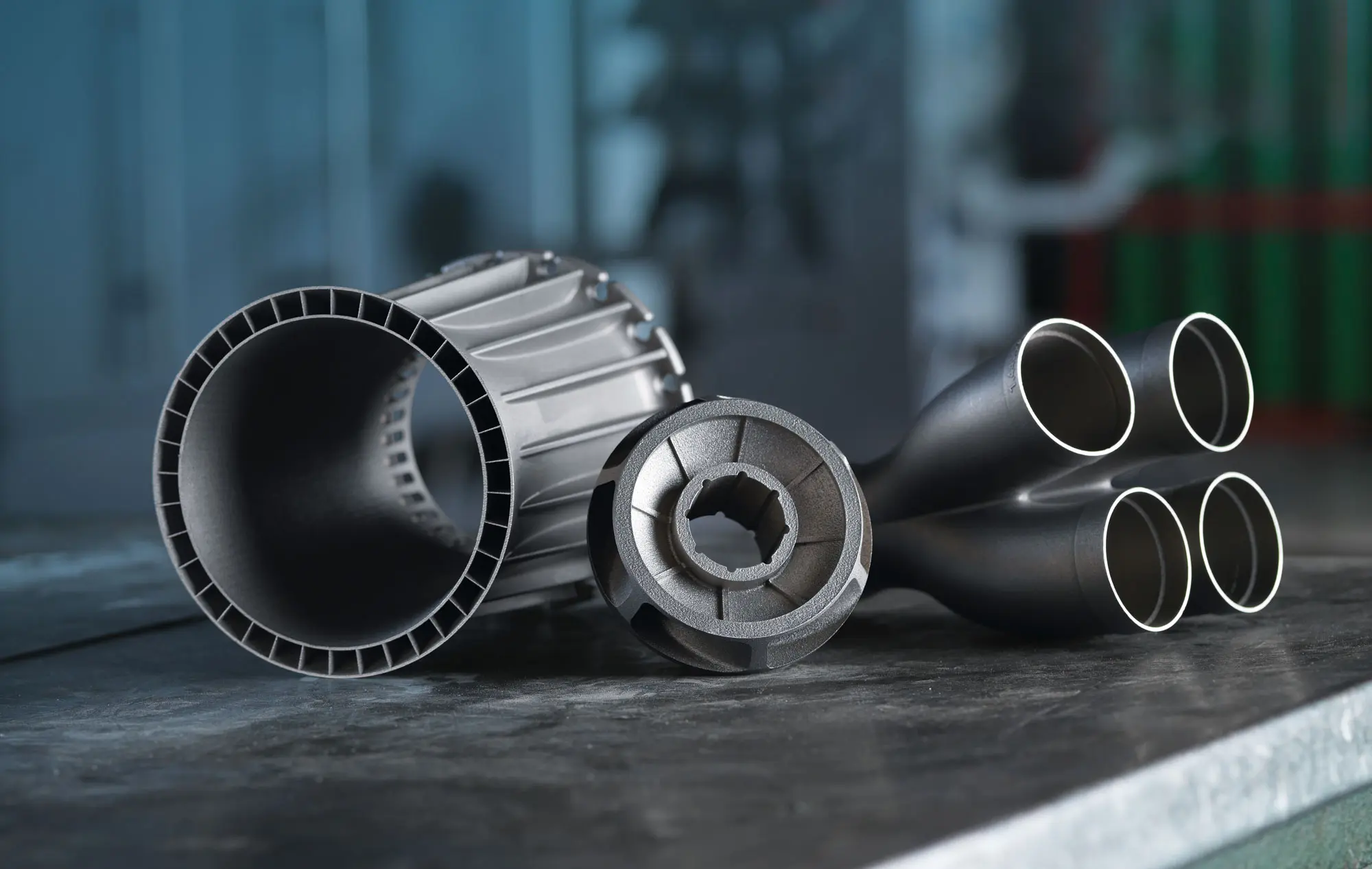
- Advanced SLM technology: For structural metal components that require biocompatibility, strength to weight ratio and fine feature resolution (such as lattice structure), Greatlight’s SLM 3D Printer Provides unparalleled functionality. SLM enables dense, powerful and highly accurate results by fusing fine metal powder with high power lasers, which is essential for medical applications.
- Accuracy and resolution: Ensuring a perfect match for printed parts to the digital microscope is not negotiable, especially for medical fitting. Greatlight’s process control ensures dimension accuracy and surface quality.
- Materials Science: Use of rigorously tested biocompatible polymers, resins and metals to ensure the end product is safe and fit.
-
Post-processing and completion: Realism and functionality
- Manufacturing partners provided Comprehensive post-processing Crucial:
- Support removal: Carefully remove the support structure without damaging the delicate features.
- Surface finish: For prosthetics/art, realizing a sense of reality is crucial. This involves polishing, bead blasting, tumbling and potentially skin-like paint. Metals may require a smooth and high-quality finish. Greatlight’s expertise here translates original prints into functional aesthetic projects.
- Cleaning and sterilizing: No medical application can be negotiated.
- After curing: Resin-based parts for optimal mechanical properties are crucial.
- Quality Control: Strict dimensional verification, visual inspection and material attribute inspection.
- Manufacturing partners provided Comprehensive post-processing Crucial:
- Ethics and Privacy Notes: Crucial
- Informed consent: Absolutely necessary When scanning a person. Clearly illustrate the purpose, use, store and dispose of data and models.
- Data anonymity and security: Personal scans must be stored, managed and anonymous as firmly as possible to protect patient/participant identities. Cloud storage requires strong security.
- Realistic expectations: Especially for prosthetics, management expectations regarding the difference between feeling, color, weight, lifespan, maintenance, and the universe and reconstruction.
- Medical Supervision: Prosthetics for medical purposes should be formulated and approved under the guidance of qualified medical professionals who comply with relevant regulations.
- Sensitivity: The entire process from scanning to delivery must be handled with utmost respect, empathy and discretion, especially for medical and deep personal projects.
Conclusion: Precision, Ethics and Partnership
Creating life-size 3D printed breast models is a powerful application of additive manufacturing technology, integrating advanced digital workflows with sophisticated materials science and meticulous craftsmanship. Its potential for regaining confidence through personalized prosthetics is enormous. However, success results depend on three pillars:
- Technical expertise: From high fidelity scanning/data processing to choosing the best manufacturing process and materials and applying the perfect finish – every step requires precise engineering.
- Strict ethics: Prioritize consent, privacy, security, realistic expectations and sensitivity throughout the journey.
- Professional Partnerships: Performing such a corresponding project independently is full of pitfalls. Work with experienced rapid prototype manufacturers Great Provide basic advantages: Obtain industry SLM Metal Printerextensive Advanced Materials,,,,, Comprehensive internal post-processing Functional, strict Quality controland technical knowledge of all complexities smoothly.
Whether driven by medical necessity, artistic vision or educational purposes, it should be carefully commissioned to emphasize cooperation with experts. When quality, accuracy, biocompatibility and discretion are critical, leveraging the capabilities of trusted rapid prototyping providers is key to turning vision into tangible reality. For projects that require the highest accuracy and surface treatment, especially those involving medical grade metals –Great Be ready to offer customized professional solutions.
FAQ: Life-size 3D printed breast models
-
Is the process painful or uncomfortable?
- The 3D scanning process itself is non-invasive and painless. This is similar to taking a series of photos. It is crucial to ensure that the person being scanned feels comfortable and safe.
-
The accuracy and reality of the model?
- Professional 3D scanning and printing are very high, with very high accuracy. Realism depends to a large extent on material selection and post-processing. Medical silicone poured into 3D printing molds provides the most realistic tactile feel and appearance for the prosthesis. Surface textures and shading can be customized.
-
Are these heavy?
- Weight depends entirely on the material. Metal prints (such as titanium) are surprisingly lightweight but heavier than tissue. Silicone prosthesis is designed to closely mimic the weight of natural breast tissue. Material selection is key to achieving the desired comfort level.
-
How durable are these models?
- Durability varies by material. SLM metal parts (for example, titanium) are very powerful and durable. High-quality silicone prostheses can last for years, but like all external prostheses, it will eventually require replacement and proper care. Prints of rigid polymers are also very durable for educational/artistic purposes.
-
Is skin contact safe? (Medical Focus)
- Crucial: Only materials that are specifically certified for biocompatibility skin contact should be used. This applies to both the final material (e.g., platinum cured medical silicone) and any intermediary (e.g., mold materials). Notable manufacturers (such as Greatlight) use ISO certified biocompatible materials when needed.
-
How long does the whole process take?
- Turnover varies greatly depending on complexity, material selected, post-processing requirements and workload. Scan and design can take days to weeks. Printing can take hours to days. Complex finishes can add more time. The delivery time for high-quality prostheses is expected to be several weeks. Discuss the schedule with the manufacturer in advance.
-
Can I make models for purposes other than prosthetics?
- Yes. Arts Council, anatomy education model or personal project is an effective application. Price, materials and required finishes will vary depending on the project’s goal. Discuss your vision clearly with the manufacturer.
- Why use a company like Greatlight instead of consumer 3D printers?
- Industrial grade printers (such as SLM for metals) and complex polymer systems provide excellent resolution, material selection (including biocompatibility options), consistency, strength and surface effect quality. Professional post-processing features (polishing, paint) are essential to realism and functionality and are beyond the scope of desktops. Complex geometric shapes, expertise in supporting generation and material behavior is essential for successful outcomes.