Push boundaries, but understand boundaries: Navigate the actual limitations of 3D printing for powerful prototyping
3D printing, especially metal additive manufacturing (AM), has sparked imagination. The hope of turning complex digital designs directly into functional, durable metal parts has revolutionized how we prototypically and produce quickly. At Greatlight, we use cutting-edge selective laser melting (SLM) technology to solve our customers’ complex manufacturing challenges every day. But the real power of this technology lies not only in its ability, but also in understanding its inherent constraint. Recognizing these limitations is not about stifling innovation. It’s about strategically guiding creativity to achieve reliable, manufacturable and high performance results.
Here we delve into the key limitations of shaping metal 3D printing, especially for requiring rapid prototype applications, and how expert navigation can transform these boundaries into pedaling stone:
1. Material Maze: Not Everything in Alloys
- limit: Although the palette of printable metal alloys has expanded significantly (titanium, aluminum, steel, nickel superalloy, etc.), it is not infinite. Each material behaves only during intense laser melting and rapid curing. Some highly desirable alloys, such as some high-strength copper or special tool steel, are still challenging and consistently printed without defects. Furthermore, the material properties in recent states are usually different from those of forged or casting counterparts.
- Greglight’s method: Expertise in materials science is crucial. We not only provide common alloys; we specialize in research Customized material development and parameter optimization. Our in-depth understanding of how different alloys behave under SLM conditions allows us to push the boundaries of printability. We work closely with our customers to choose The best Materials for printability and final partial performance, taking into account factors such as strength, weight, thermal properties, corrosion resistance and biocompatibility. If the standard alloy is not perfect, our R&D team will explore tailor-made solutions.
2. Dimension Dilemma: Size is important (size is also important)
- limit: Each SLM machine has a fixed build volume (X, Y, Z size). Although industrial printers offer increasingly larger rooms, the real huge parts still outweigh the current features. Components specifically targeting build volumes are crucial. Printing large, dense parts is also time-consuming and resource-intensive. Reducing extremely high functionality can be challenging due to laser spot size and melting properties.
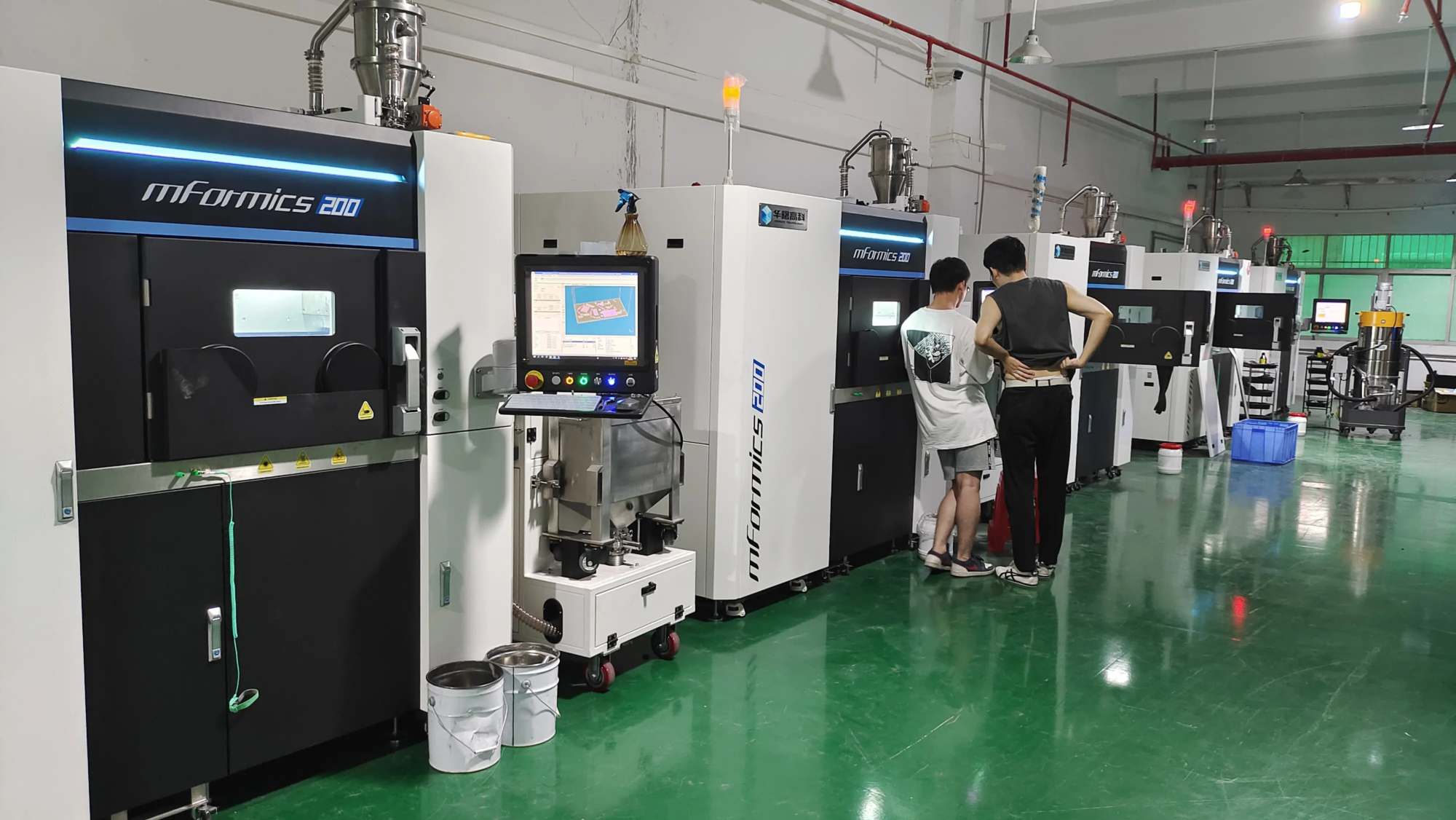
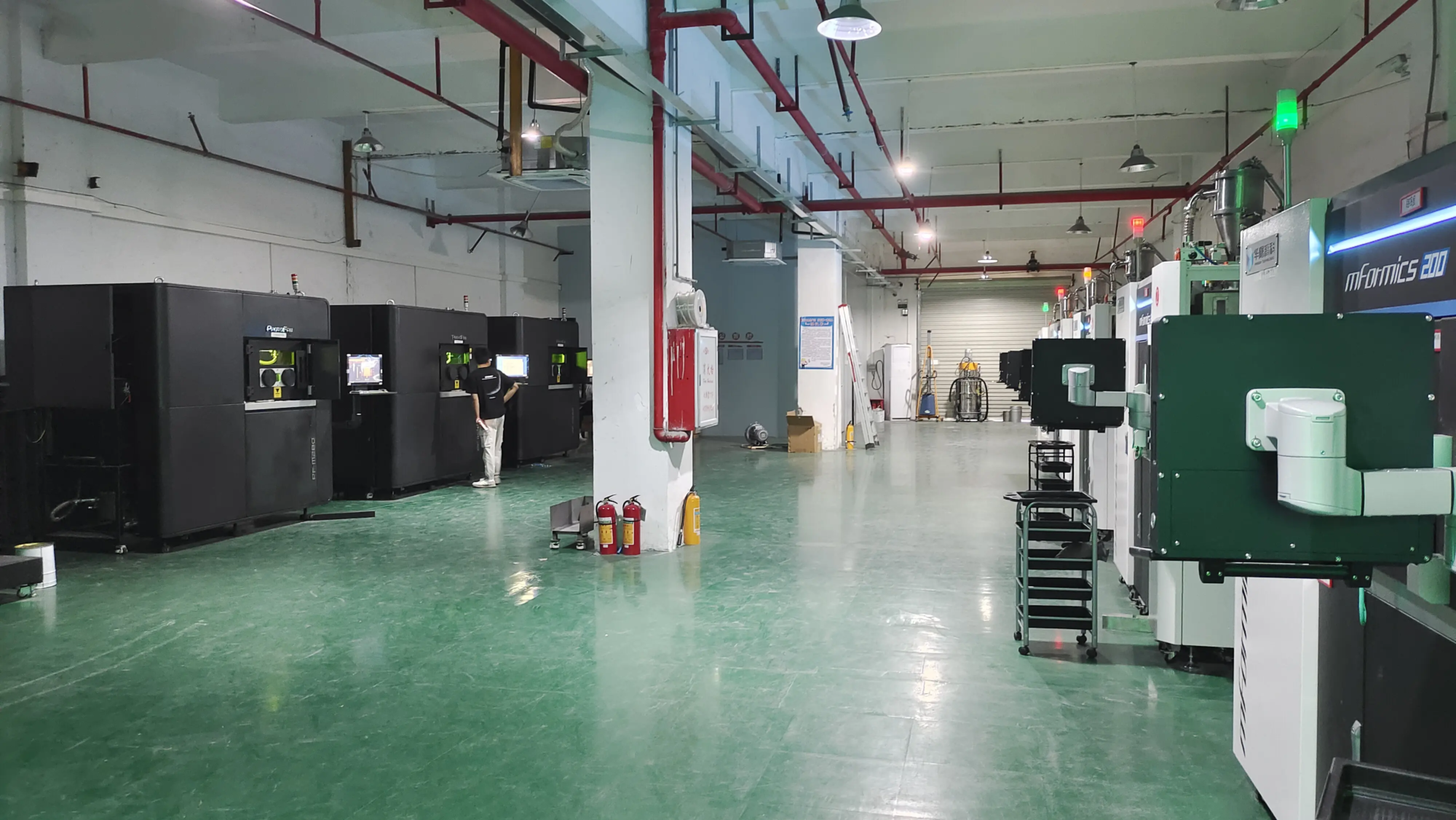
- Greglight’s method: Our Investment Large SLM printer The possibility of size of the prototype is greatly expanded. Beyond the size, we are Design suggestions. When parts exceed the build board, we use features such as interlocking joints or integrated fixtures to guide customers to develop intelligent segmentation strategies, allowing large components to come from printed subassemblies. Our expertise also lies in optimizing partial orientation and nesting of building interiors to maximize yields and minimize costs.
3. Surface finish and precision puzzle: rough around the edges?
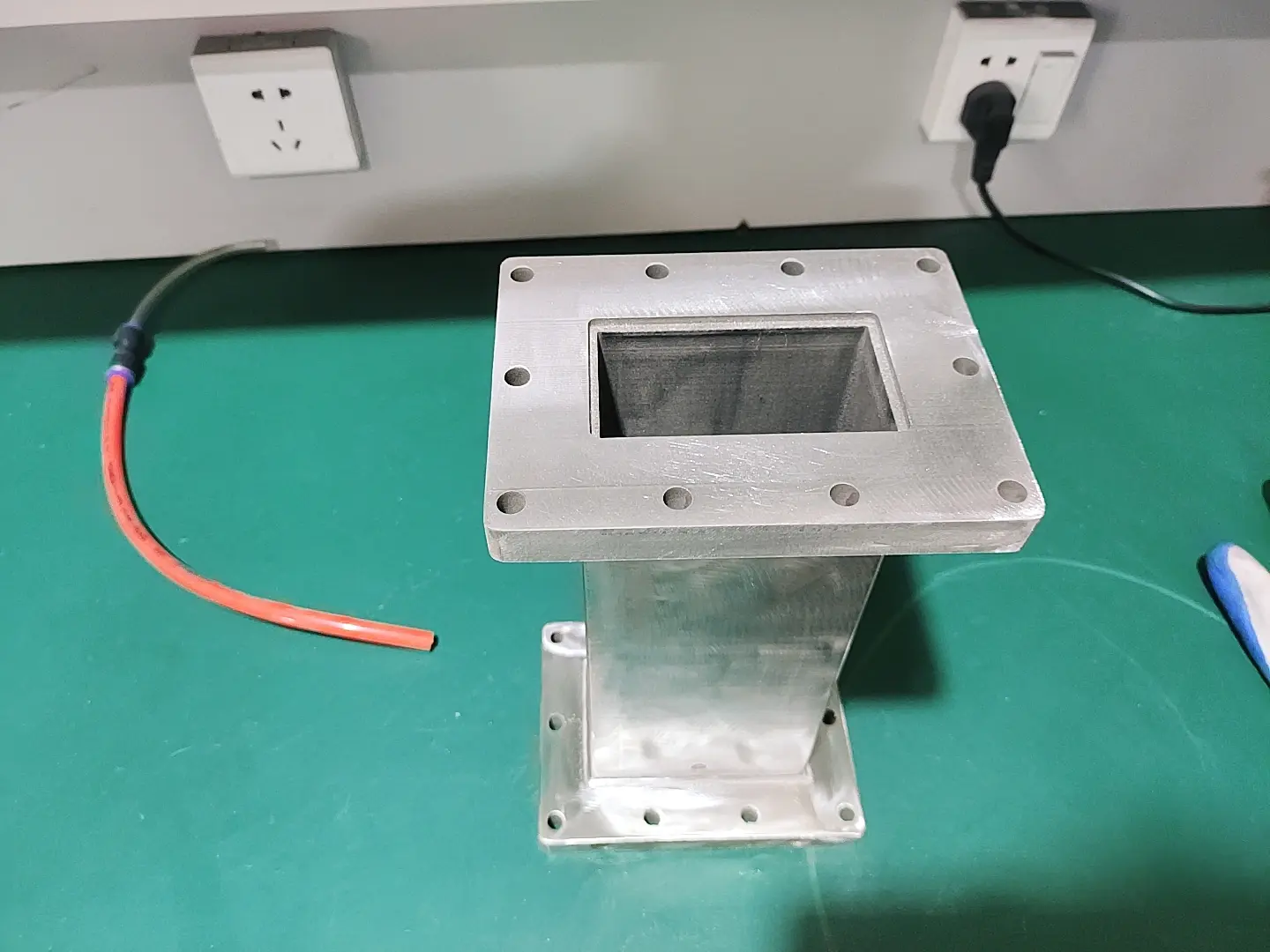
- limit: SLM parts are essentially characterized by surface roughness "Stair steps" Acting and partially sintered particles. The final product usually requires a tight tolerance or mirror smooth finish that usually requires a lot of demand Post-processing. Internal channels and complex geometry can be difficult to accomplish. Dimensional accuracy is also affected by thermal stress during printing, which can sometimes lead to warping or distortion.
- Greglight’s solution: This is ours One-stop post-processing capability Become essential. We not only offer the original. Our expertise covers a complete set-up technique:
- CNC machining: Fine surface finishes on surfaces with critical dimensions and functional dimensions.
- Heat treatment: Reduce pressure and achieve the required material properties (improve strength and hardness).
- Abrasive finish: Vibrate, roll, blast to remove the support structure and improve surface texture/smoothness.
- Premium finish: EDM, laser polishing and specialized coatings to suit specific functional or aesthetic requirements.
- Support removal: Carefully remove the meticulous technology of support without compromising complex features.
We think this is an integral part of the prototype process.
4. Structural doubt: internal integrity and anisotropy
- limit: Layer-by-layer manufacturing introduces potential anisotropy – meaning that material strength may vary depending on the direction relative to the direction of construction. Internal porosity or minute deficiency defects may also occur, which may affect fatigue life and structural integrity at high pressures.
- Greglight’s guarantee: Our method roots Powerful process control and verify. We use:
- Optimize parameter set: Each material is developed through extensive research and development, minimizing defects and promoting dense parts.
- Strict process monitoring: Technologies such as molten pool monitoring help ensure consistency and mark potential problems.
- Post-processing verification: We provide comprehensive Non-destructive testing (NDT) Services such as X-ray computed tomography (CT scan) and ultrasound testing verify internal integrity and detect any hidden defects that are critical to demanding applications.
- Optimized design for additive manufacturing (DFAM): Work with customers to strategic parts, increase reinforcement when needed, and design to mitigate inherent anisotropic risks.
5. Time and Cost Equations: Efficiency and Complexity
- limit: although "Rapidly" Printing complex metal parts, especially in smaller batches, is not instantaneous compared to traditional tools. Printer time, material costs (especially reactive metals such as titanium), the required support structure, and basic post-processing steps all contribute to the overall time and expense. Cost-effectiveness often improves with complexity (the more complex and difficult the traditional value is, the more complex and difficult the parts are), but simple geometry can be cheaper by traditional methods.
- Greglight’s efficiency: We maximize efficiency by:
- Advanced Nest Building: Optimally wrap multiple parts into a single build to share setup costs and printer time.
- Process optimization: Continuously refine printing parameters and post-processing workflows to reduce cycle time.
- Material expertise: Instruct customers to adopt cost-effective materials that meet the requirements.
- Scalability: Provides solutions from single prototypes to bridge production.
- Transparent pricing offers the best price: Our "One-stop shop" The model eliminates the hassle of coordinating multiple vendors, saving customers time and indirect costs. We emphasize cost-effectiveness For complexity.
Conclusion: Limiting as an innovation canvas
Understanding the inherent limitations of metal 3D printing is not a limitation on creativity. This is the framework for the birth of truly innovative and powerful design. By acknowledging the boundaries of materials science, construction volume, surface finish, structural integrity, and economics, designers and engineers can use SLM technology more efficiently and predictably. These "constraint" Force us to think smarter, optimize design using DFAM principles, and appreciate the key role of expert execution and comprehensive post-processing.
At Greatlight, we not only operate advanced SLM printers; we provide Seamlessly browse these limitations of expertise and integrated services. Our deep understanding of this process, combining one-stop post-processing capabilities and strict quality control, transforms your ambitious design into accurate, high-performance metal prototypes ready for real-world testing and beyond. We believe that challenges are not obstacles, but opportunities to leverage our skills and further advance technology, thus ensuring your creativity leads to successful success. Let us be your partner to overcome limitations to unlock the huge potential of metal additive manufacturing.
FAQ: Frequently Asked Questions about 3D Printing Limitations
Q1: Can Greglight print parts in any metal?
A: We focus on a variety of common alloys necessary for rapid prototyping and production, including titanium (Ti6al4v & cp-ti), aluminum (ALSI10MG, ALSI7MG), various steels (316L, 17-4ph, tool steel), nickel steel (Inceel alloys (Inconel Alloys 625, 718, 718). Although we offer a wide range of features and invest in custom material parameters development, highly exotic or non-standard alloys that require a lot of research and development may not be suitable for all projects. Consult our engineers to find the best solution.
Q2: Can your printed parts be large?
A: Our SLM printers have different build volumes (usually more than 400x400x400mm or larger). Even if your design exceeds a single build board, we can split large parts and provide a reliable joining strategy. We will recommend the best way to achieve your dimensional goals during the design phase.
Q3: What’s there "One-stop post-processing" Is it really covered?
A: This means that Greatlight can handle everything back Print jobs are completed, including:
- Accurately removes support structures with complex geometric shapes.
- Pressure relief heat treatment.
- Accurate CNC machining for dimensional accuracy and critical surfaces.
- Surface finish (sand powder, tumbling, grinding, grinding, EDM, polishing).
- Surface coating (anodized, color plating, painting).
- Non-destructive test (X-ray CT scan, ultrasound test).
This ensures that you receive a prototype that is really ready to work or presentation.
Question 4: How do you make sure my printed parts are solid and reliable?
Answer: Reliability is not negotiable. We pass:
- Use strictly validated printing parameters for each material.
- Optimize part orientation and support strategies.
- Apply industry-standard heat treatment solutions.
- A wide range of non-destructive testing (NDT) is provided to identify and eliminate internal defects.
- Decades of experience in combining metal manufacturing and quality control.
Q5: Is metal 3D printing cost-effective compared to prototype CNC?
A: This depends to a large extent on the complexity of the parts. For highly complex geometric shapes with internal features, channels, lattice structures, or organic shapes, 3D printing often eliminates expensive tools and machining steps, making it highly cost-effective. Easier, simpler parts are cheaper through CNC without assembling labor. We provide pre-date DFM analysis to recommend the most effective and economical ways to your specific project.
Question 6: Can you deal with projects that require tight tolerances or smooth finishes?
Answer: Absolute. While ASPRENT’s SLM parts have inherent surface roughness, our integrated CNC machining and polishing capabilities allow us to achieve very tight tolerances and surface surfaces, with surface finishes equivalent to or better than conventionally machined parts. We specify the achievable tolerances based on the geometry and material of the citation phase. Contact us today to customize your sophisticated rapid prototyping solution!