Unlock innovation: The rise of local 3D printing farms and your manufacturing advantages
The world of manufacturing is undergoing a transformative shift from the only centralized mass production to a more agile local solution. At the forefront of this change is Local 3D printing farm – An innovative hub equipped with multiple industrial-grade 3D printers to provide on-demand manufacturing services in your area. But what exactly are they and why should businesses and innovators consider them in the case of traditional methods or ordering from a distance? Let’s dive.
Beyond the Hobbyist Printer: The Power of Printing Farm
While desktop 3D printers democratize prototypes at home, local 3D printing farms represent professional development. Think of them as modern digital workshops:
- Industrial grade equipment: They accommodate advanced machines, with speed, accuracy, material capability and construction volume far exceeding consumer models – such as industrial FDM, SLA, SLS and critical Metal 3D printing system.
- Scalability: Need a prototype or hundreds of end-use parts? A range of machines on the printing farm can effectively handle the amount of fluctuations without expensive tool replacement.
- Local production: Close is the key. Faster turnaround times, reduced shipping costs and delays, lower carbon footprint transportation, and easier collaboration and revision cycles are great advantages.
- TAP’s expertise: Running a printing farm requires not only a deep understanding of the machine, but also the design of additive manufacturing (DFAM), materials science and post-treatment. This expertise is easily accessible to customers.
Multi-stage journey: How local printing farms work
- Digital Blueprint: Your journey begins with a 3D CAD file (e.g., STL, steps). Well-known farms often offer free design review services to optimize your parts for printability, strength and cost-effectiveness.
- Materials and technology selection: Depending on your application (prototype, functional part, visual model), durability needs and budget, farm experts recommend the use of the best materials (plastics, resins, composites, metals) and printing technology.
- Slice and prepare: Your file is "slice" Use special software to form thin layers to generate accurate instructions for the printer. Building direction and support structures is strategically planned.
- Print run: Your job is sent to the most suitable printer on the farm. Multiple machines can run large orders at the same time.
- Post-processing: Original printed parts usually need to be completed. This is where the craft shines. The process may include:
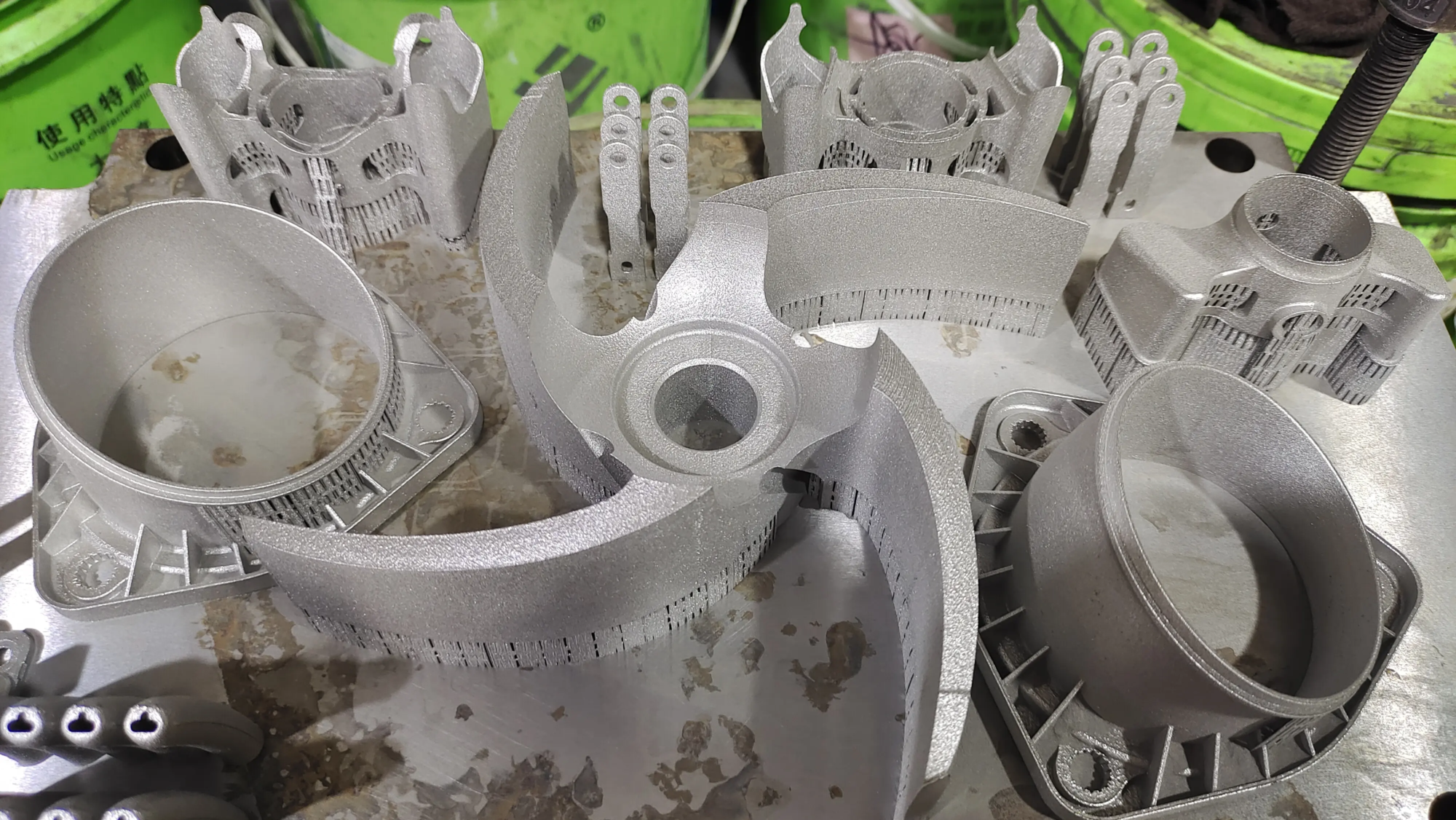
- Support deletion
- Grind, beads blast
- Heat treatment (especially metals)
- Painting, dyeing
- Precise machining of key tolerances
- Surface coating
- Quality Control and Delivery: Carefully inspect the parts to ensure the accuracy and quality of dimensions. The finished parts will then be packaged and delivered locally with minimal delay.
When Metals Are Important: The Key Function of Expertise
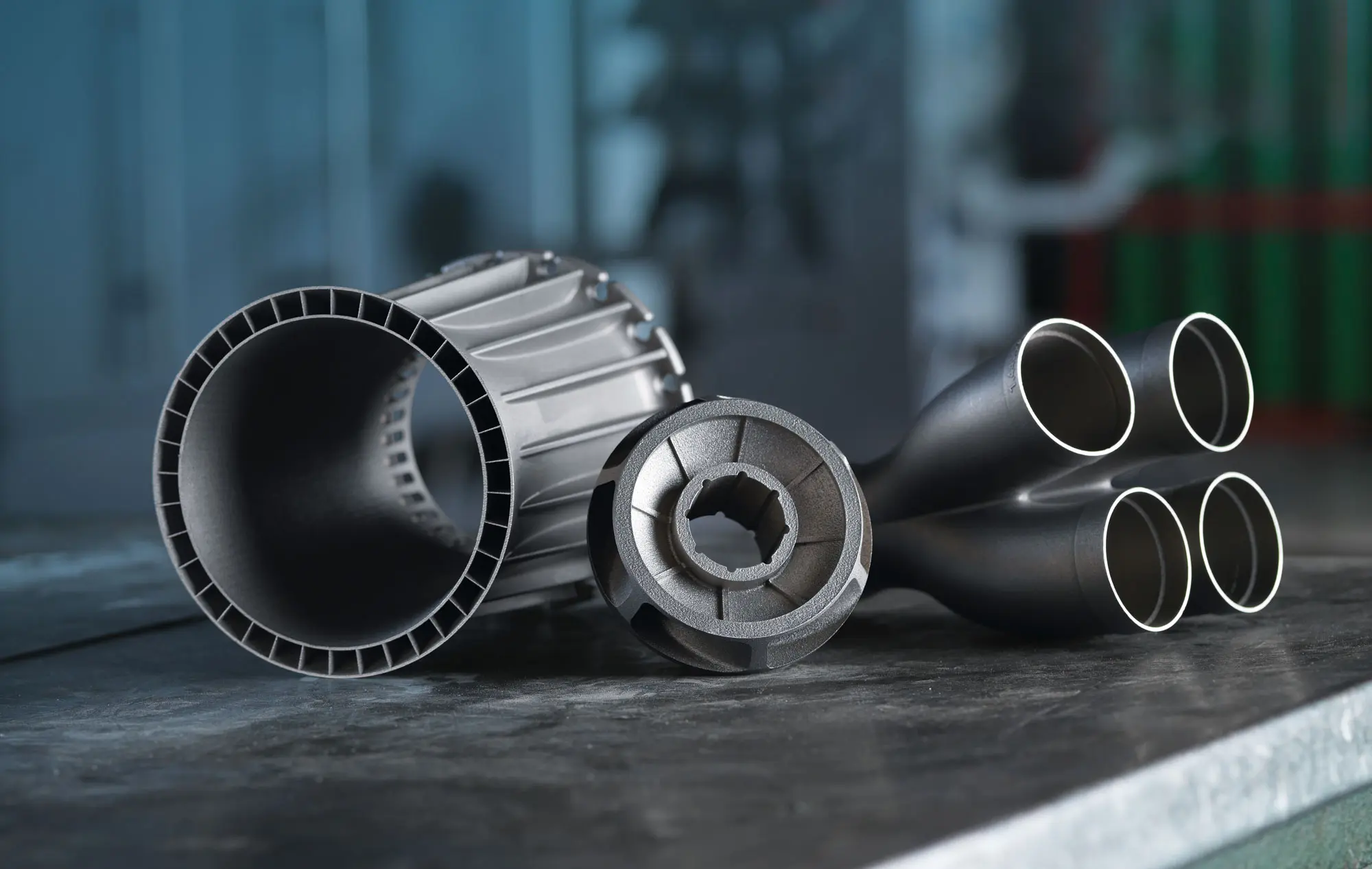
Metal 3D printing (especially selective laser melting-SLM) unlocks incredible possibilities – machining, lightweight but powerful structures are impossible to perform complex geometry, as well as rapid production of fixtures, fixtures and end-use components such as aerospace, automation, automation and medical care. However, metal AM is complex and demanding. Achieving successful, reliable, and high-precision metal parts requires:
- Advanced equipment: Industrial SLM printer with controlled atmosphere and powerful laser.
- In-depth process knowledge: Accurate parameter control (laser power, scanning speed, layer thickness) is crucial for partial integrity and material properties.
- Materials Science Expertise: Understand the alloy behavior and post-treatment effects during metallurgy, melting and solidification.
- Professional post-processing: Metal parts Require Careful heat treatment (pressure relief, annealing, hardening) to achieve the ultimate mechanical properties. CNC machining is often critical to achieving tight tolerances on key features or mating surfaces.
- Strong quality assurance: Strict inspections (size, visual, non-destructive testing) are not negotiable.
Why Greatlight excels in professional metal rapid prototyping and production
Navigating the complexity of metal additive manufacturing requires partners with reliable capabilities and reliability. This is exactly Great Distinguish yourself globally and position yourself as one of the major rapid prototype companies from China. Here is how Greatlight provides:
- Cutting-edge SLM technology: We invest in state-of-the-art selective laser melting (SLM) 3D printers to ensure the highest accuracy, resolution and repeatability of critical metal components.
- End-to-end solution: Gregtime is more than just printing. We are one Professional rapid prototype manufacturerprofessionally solve the problem of rapid prototyping of metal parts. Our comprehensive One-stop post-processing and completion Service is indispensable to our products. This includes expert heat treatment and Precise processing Ability to achieve exact functions and cosmetic requirements. From prototypes to finished parts, we manage the entire chain.
- Material mastery: Most materials can be quickly customized and handled. We work with a variety of high-performance metal powders (titanium alloy, aluminum alloy, stainless steel 316L/17-4PH, Inconel, tool steel, copper alloy, etc.) and are the best choice for strength, weight, corrosive resistance and budget.
- Speed and scalability: Customize your precision fast prototyping parts now at the best prices! Agile processes and advanced equipment enable us to deliver exceptionally fast lead times without compromising quality, whether you need a prototype or a large production run.
- Global competitiveness, local attention: By leveraging efficient manufacturing processes, Greatlight offers world-class quality at highly competitive prices. We combine scale advantages with personalized service and technical expertise to meet your unique challenges.
Conclusion: Local Printing Farm – Your Agile Manufacturing Partner
Local 3D printing farms represent not only convenient prints; they embody the fundamental shift to responsive, distributed manufacturing. They enable businesses to innovate faster, be more affordable, produce locally at higher speeds, and access industrial-grade technologies without large-scale capital investments.
For projects that require strength, complexity and performance of metal components, work with a true professional provider Great It is the most important. Their advanced SLM capabilities, deep engineering expertise, seamless integration with critical post-processing (especially precise machining) and commitment to quality assurance directly translates into reliable, high-performance parts and has a great competitive advantage.
Whether you are a startup, whether you are in a revolutionary product, an engineer designing complex automotive tools or a medical company that needs a custom surgical guide, you can explore your potential Local 3D printing farm – and leverage the expertise of leaders such as Greatlight for metal parts – could be a strategic move that accelerates your success.
FAQ: Local 3D Printing Farm
-
Q: What is the difference between a local 3D printing farm and an online service that sends my files to overseas?
- one: Local farms offer turnover speeds (usually days, not weeks), reducing shipping costs and risks, due to shared time zones/language, the potential for face-to-face meetings, reducing the environmental impact of transportation, and greater support for iterative design changes. Overseas services may offer an absolute minimum cost for a large number of simple parts, but lack speed and agility.
-
Q: What materials can I print on my local farm?
- one: It varies, but most specialty farms offer a wide range of: engineering plastics (PLA, ABS, PETG, nylon, PEEK, PEKK, PEKK, ULTEM), photopolymer resins (for smooth surfaces/details), flexible materials (TPU), composites (carbon fiber/nylon), and, carbon fiber/nylon), as well as considerable, effective Metal powder (Stainless steel, titanium, aluminum, inconel, tool steel, copper). Ask about their specific features and material libraries.
-
Q: How does metal 3D printing work in a farm environment? Is it safe?
- one: Metal printing (such as SLM) uses dedicated industrial machines to accommodate in controlled environments. Safety is paramount: These printers are usually run under inert gas (argon/nitrogen) and are equipped with proper ventilation and powder handling procedures managed by trained professionals. Reputable farms adhere to strict safety protocols.
-
Q: Why is post-processing so important, especially for metal parts?
- one: Especially metal printed parts are rarely the final product. The support needs to be removed, the surface may be rough, the metal parts have inherent stress and internal properties, often requiring heat treatment to achieve the desired strength and microstructure. For functional parts, precise CNC machining is often critical to achieving smooth bearing surfaces, tight tolerances or specific finishes. Ignoring post-processing can greatly damage the quality and function of the parts.
-
Q: Is 3D printing of production volume cost-effective?
- one: it depends! Although traditional injection molding is usually cheap per unit, 3D printing is more than medium to medium for lower to medium production, complex geometry (reduced assembly steps), custom/impossible machine parts, and fast tool applications such as fixtures and fixtures. It eliminates the high initial cost of the tool. For metal parts that require complex designs, it can be highly cost-effective even at moderate volumes compared to complex multi-axis machining. Local farms like Greatlight can offer specific quotes for comparison.
- Q: How to choose a well-known local 3D printing farm?
- one: Looking for:
- Expertise: Ask their engineers about their experience and DFAM knowledge.
- technology: Make sure they have the specific machines and materials you need for your project (especially confirming metal functionality).
- Post-processing: Verify the scope and quality of its finishing services (hot snacks? cnc? surface finish?).
- quality assurance: Ask them for inspection procedures (dimensional inspection, material certificate).
- Portfolio and reference: Review their past projects and ask for customer recommendations.
- communicate: Choose a responsive and collaborative partner.
- one: Looking for: