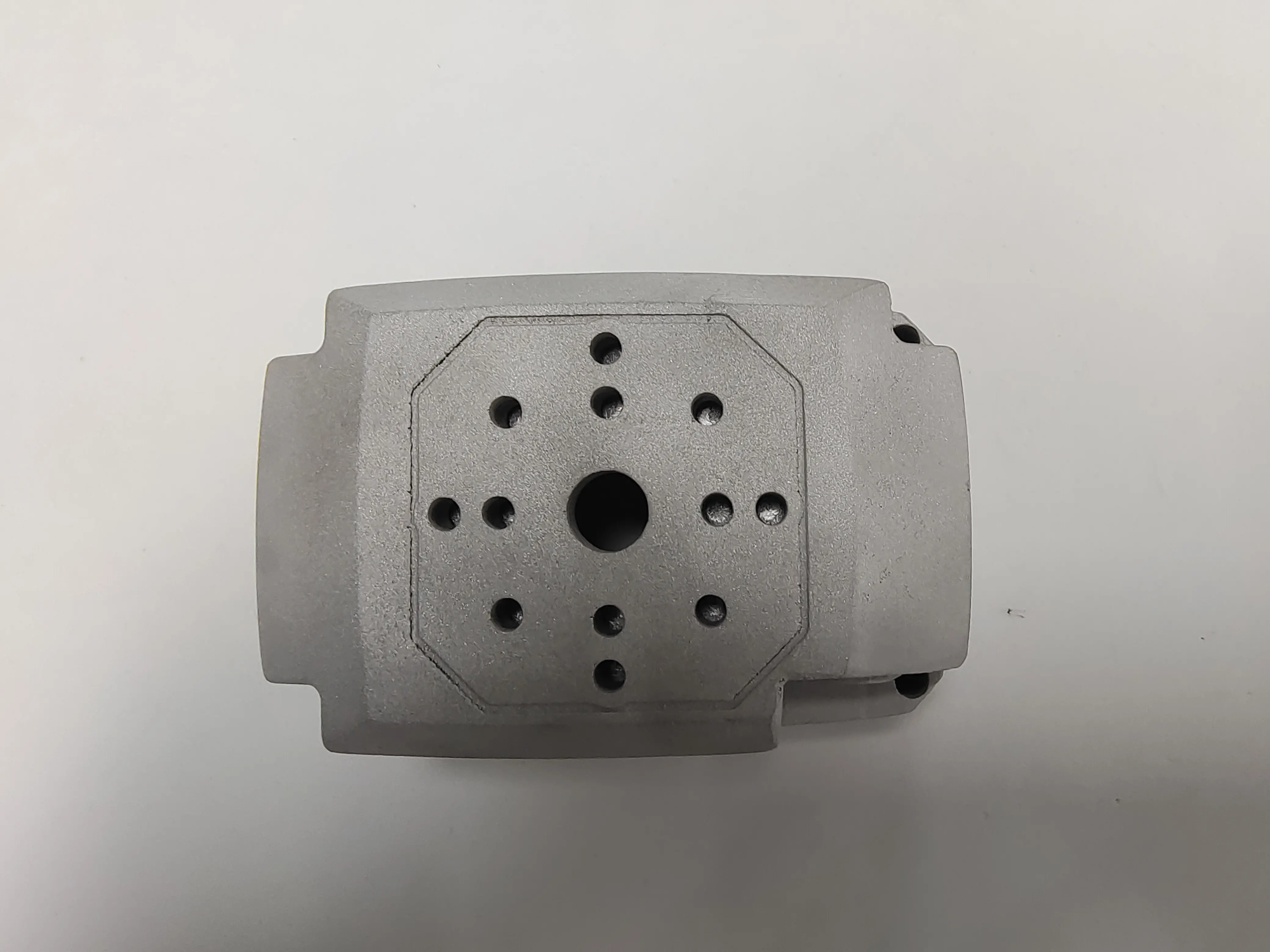
The Rise of LW-PLA: The Revolution of Lightweight 3D Printing
For makers, engineers and enthusiasts pushing the boundaries of weight-sensitive applications, 3D printing filament technology offers a significant leap forward: Lightweight PLA (LW-PLA). This innovative material is not just another variation of standard PLA; It is a game changer, specifically designed to provide Lightest printed part All while retaining commendable strength and printability. In pursuit of performance and efficiency, LW-PLA becomes an excellent solution.
What exactly is LW-PLA?
LW-PLA is a chemically modified version of standard polylactic acid (PLA). What are its defining characteristics? it contains a Foaming agent. This reagent remains inert at standard PLA printing temperatures. However, when heated to a specific higher temperature range (usually around 220-250°C), the reagent decomposes, releasing bubbles within Melted plastic. This controlled foaming action causes the extruded filaments to expand significantly as they exit the nozzle. The result is that the printed layer contains tiny air pockets, which greatly reduces the overall density of the material and thus the weight of the finished part.
Foaming mechanism: turning dense plastic into air structure
- Standard heating (low end): At temperatures suitable for conventional PLA (approximately 190-210°C), LW-PLA extrudes and behaves similarly to its parent material, although flow characteristics are often slightly different. Minimal foaming occurs.
- Activation range (high end): Thermal decomposition of the blowing agent begins when the nozzle temperature is intentionally raised to the higher range specified by the manufacturer (e.g. 240°C).
- Controlled expansion: As the molten, gas-infused plastic exits the hot nozzle, it expands rapidly. Effective wire diameter Increase When it is deposited onto the build plate or previous layer. LW-PLA filaments entering the hot end at 2.85 mm may expand to 4 mm or more upon extrusion.
- Rapid cooling and structural setup: The expanded material cools almost immediately, locking the foam honeycomb structure in place. This creates a complex internal matrix of plastic walls and air pockets throughout the part.
Why choose LW-PLA? Main advantages
- Significant weight reduction: This is the main benefit of implementing Weight reduction of 40% to 60% or more Compared to parts printed in standard PLA or PETG with the same solids fill percentage. It opens up entirely new possibilities in the critical area of weight.
- Excellent strength-to-weight ratio: Unlike a simple sparse infill pattern, LW-PLA maintains a continuous plastic skin and shell. The internal foam structure provides surprising rigidity and crush resistance for its low mass.
- Good printability: LW-PLA builds on PLA’s reputation for being user-friendly, with low tendency to warp, easy printing without a housing, and good bed adhesion with optimized settings. It usually does not require a hardened nozzle unless an abrasive filler is also present.
- Complex geometry compatibility: The lightweight foam structure is formed intrinsically during the printing process. This means that even complex geometries with varying thicknesses can easily benefit from weight savings without the need for complex CAD modifications for traditional infill optimization.
- Save materials: Although the cost per kilogram of LW-PLA filament is higher than standard PLA, printing same volume Consumption of lightweight components is significantly reduced A lot of material. This usually means a net saving in material cost per unit part Print.
Ideal applications for LW-PLA
LW-PLA shines brightest in scenarios where every gram counts:
- Remote control aircraft and drones: Frame components, fuselage components, wing structures, payload mounts. Reducing weight significantly extends flight time and improves maneuverability.
- Functional prototype: Quickly iterate on lightweight design concepts for sporting goods, automotive parts, or ergonomic design, where weight simulation is critical.
- Role play and props: Large-scale garments, weapons, wings or armor become more comfortable and wear-resistant after lightweight printing.
- Lightweight functional components: Brackets, housings, fixtures and clamps that require strength but where minimizing mass is advantageous (e.g. backpacking gear).
- Building model: Large models retain structural integrity while being easier to handle and transport.
- Structures requiring buoyancy: Parts designed to float naturally benefit from inherent low density.
Tips for successful printing with LW-PLA
- Master the dual-temperature strategy: Find the optimal temperature with your slicer’s temperature tower feature Printing temperature (this reduce The temperature at which the filament flows well without excessive drawing/bleeding) and foaming temperature (this higher temperature that triggers expansion). Many printers use two temperatures during the printing process: a standard temperature for complex area/layer changes and a higher temperature for the main extrusion line.
- Increase line width: Embrace expansion! Set the extrusion width of the slicer to 100-200% (sometimes even more) larger than the nozzle diameter (e.g., a 0.4mm nozzle prints 0.8mm width). Let the foam do its thing. Shrink the model slightly forward Slicing may be necessary.
- Moderate retraction: Excessive retraction may drag expanding molten material back to the hot end, causing blockage. Use a slightly higher travel speed and the glide/wipe function.
- Manage cooling: Good cooling helps the foam structure to solidify quickly after deposition. Make sure your parts cooling fan is working properly.
- Expect stringing and bleeding: LW-PLA is prone to stringing due to higher printing temperature and expansion state. Fine-tune retraction, temperature and travel speed. Post-processing cleanup is often required.
- Solid top layer: For functional parts that require strength, use enough top solid layer to effectively cover the foam structure. Higher fill percentages will override the foaming effect inside. Use the settings recommended by the filament manufacturer.
in conclusion
LW-PLA represents a fascinating and practical development in FDM filament technology. By utilizing controlled thermal foaming, it enables superior weight reduction directly at the point of deposition, opening the door to ambitious lightweight designs that are not achievable using traditional filaments or cumbersome infill patterns alone. While specific printing techniques require mastery, its advantages—significant part lightening, maintained strength, and inherent compatibility with complex shapes—make LW-PLA an indispensable material for enthusiasts designing drones, RC aircraft, props, and functional prototypes, where minimizing mass is critical.
Experience precision beyond PLA?
While LW-PLA offers incredible advantages in plastic lightweight prototypes and functional parts, demanding applications often require metal strength, precision machining and specialized finishing. This is where working with a professional manufacturer comes into play.
huge light As a professional leader rapid prototypingSpecializes in senior SLM (Selective Laser Melting) Metal 3D Printing technology. We specialize in solving complex metal part prototyping challenges across industries. In addition to complex metal additive manufacturing, GreatLight offers comprehensive One-stop post-processing and finishing services – From heat treatment and precision CNC machining to complex surface treatments – ensure your prototype meets the highest functional and aesthetic standards. Most metals and high-performance polymer materials can be easily customized and processed.
Whether your journey begins with a lightweight LW-PLA proof-of-concept or you require a rugged custom metal prototype from day one, huge light deliver Precision and excellence as one of China’s top rapid prototyping supplier. we guarantee Competitive pricing And tailored to your exact requirements with a quick turnaround.
Customize your next rapid prototyping project with confidence. [Contact GreatLight today for a quote and experience superior quality!]
FAQ: LW-PLA Revealed
- How much lighter is LW-PLA compared to ordinary PLA?
- expected weight loss 40% to 60% or more Print parts with the same geometry compared to solid PLA printing. Exact savings depend on foaming temperature and printer/setup used.
- Is LW-PLA weaker than ordinary PLA?
- Per unit mass, LW-PLA foam structure has an excellent strength-to-weight ratio, meaning it is very strong for its weight. compared to same volume Solid PLA parts, LW-PLA parts are inherently less dense and have lower absolute strength. However, its structure has good rigidity and impact resistance, making it suitable for its intended application.
- What temperature should I use?
- You generally need two key temperatures: A Printing temperature (lower, e.g. 190-210°C) for cleaning extrusions and foaming temperature (higher, e.g. 235-260°C), activated during longer extrusion movements. Please refer to your specific filament data sheet. Temperature towers are essential for calibration.
- Why do I encounter so much stringing when using LW-PLA?
- The higher temperatures required for foaming and the expanded molten state make LW-PLA more susceptible to stringing and exudation. Focus on optimizing retraction length and speed, travel speed, glide/wipe settings, and minimizing travel movement. Some post-processing cleanup is usually unavoidable.
- Can I print LW-PLA with any nozzle?
- Standard brass nozzles work fine unless the LW-PLA contains abrasive fillers (like some carbon fiber blends). The filament itself is not abrasive. 0.4mm or 0.6mm nozzles are common, just remember to significantly increase the extrusion width in your slicer.
- Does LW-PLA require a casing?
- Generally speaking, No. It inherits PLA’s low propensity for heat shrinkage. Printing without an enclosure is usually fine unless you need consistent ambient temperatures or print very tall/thin structures where drafts may cause problems.
- Where should LW-PLA supplies be stored?
- As with PLA, seal it in the original bag with desiccant when not in use for an extended period of time. While not as hygroscopic as nylon, moisture can degrade print quality over time.
- Is LW-PLA suitable for structural parts?
- Proceed with caution. Its strength to weight ratio is excellent, making it ideal for weight limited Structures (e.g. drone components). However, where maximum If strength is required or exposed to high continuous loads/temperatures, stronger resins (e.g. nylon, ABS, PETG) or metal would be a safer choice. LW-PLA excels in specific scenarios and its unique properties match the needs of the application. For structural metal prototypes, professional services such as huge light Provide powerful solutions.