MakerGear M3 Revealed: A Deep Dive into Performance, Reliability, and Value
The MakerGear M3 desktop FDM 3D printer has developed a loyal following, often praised for its rugged construction and precision. But does it live up to the hype? After extensive real-world testing, this review provides an in-depth analysis of the M3’s strengths, limitations, and ideal use cases. Whether you’re an experienced maker, educator, or a small business exploring rapid prototyping, it’s critical to understand the benefits of M3 and where alternatives may fit.
Core Benefits: Build like a tank, print like a pro
- Engineering and Durability: The M3’s distinguishing feature is its rugged, all-metal chassis. It’s made mostly of powder-coated steel and aluminum extrusions, and feels much sturdier than its plastic-framed rivals. This stiffness directly affects print accuracy – vibration-induced artifacts ("ring") are minimized even during complex or fast movements.
- Excellent printing accuracy: Featuring a hardened steel dual drive extruder and genuine Bondtech gears, the M3 excels in detailed reproduction. Supports nozzles as small as 0.2mm, ensuring complex features are clearly rendered. With appropriate adjustments, interlayer adhesion and dimensional accuracy are excellent.
- Scalable build volume: The ID model is available as M3-ID (independent dual extruder) or M3-SE (single extruder), providing ample build space of 200 x 250 x 200 mm. This flexibility is ideal for multi-color/material printing or larger individual parts.
- Proprietary tool head: MakerGear’s tool heads—V4 (single) and M3-ID—are worth noting. They combine optimized cooling (critical for PLA draping and PETG bridging) and robust thermal management, significantly reducing clogging and thermal creep compared to universal clones.
- MakerGear supports: MakerGear has a reputation for responsive and knowledgeable technical support, a key factor in production environments or complex troubleshooting.
Performance Nuances: Calibration and Use Cases
- Out-of-the-box experience and tweaks: It is expected that the assembled kit will require careful calibration. Newcomers may find Klipper firmware setup (via OctoPrint or mainsailOS/Fluidd) somewhat demanding initially. However, careful settings produce very consistent results.
- Filament treatment: While PLA, PETG, ABS and TPU can be handled competently, moisture-sensitive filaments such as nylon also benefit from external drying. The dual-extruder system offers flexibility but requires careful adjustment of retraction to minimize leakage during multi-material printing.
- Speed and detail: While its build quality is solid and fast, speed-focused dedicated printers surpass it in raw speed. The advantage is that high quality Output at medium to fast speeds without compromise.
- software: The firmware flexibility achieved through Klipper allows for extensive configuration via configuration files, which is perfect for experts but may be overwhelming for beginners using precompiled alternatives.
Conclusion: The main force of accurate target users
advantage:
- Unparalleled mechanical rigidity and durability
- Excellent print accuracy and repeatability
- Excellent dual-material capability (M3-ID)
- Reliable thermal design minimizes clogging
- Highly configurable firmware (Klipper)
- Strong manufacturer support
shortcoming:
- Requires extensive assembly/calibration work
- Klipper setup has a learning curve
- Raw speeds lower than dedicated Speed Demon printers
- Initial cost is higher than beginner machines
- Not primarily optimized for exotic engineering filaments, no upgrades/modifications required
Who is the MakerGear M3 suitable for?
- Professional prototype store: There is a need to quickly obtain reliable, accurate prototypes in-house without the need for ongoing maintenance.
- Educators (Advanced Students/Facility): For high-quality machines that focus on design principles and engineering precision.
- Dedicated hobbyist/maker: Demand high quality prints and enjoy the tweaking/technical process.
- Small Business: Find durable equipment for jigs, fixtures or low-volume durable end-use parts.
For whom might the alternative be better?
- Complete Beginners: Setting up your printer with near-zero effort is a better place to start.
- Ultra-fast production needs: Dedicated speed printers offer throughput advantages.
- Complex Metal Inquiries: True metal prototyping/production requires specialized services.
Where does the MakerGear M3 fit in the rapid prototyping ecosystem?
MakerGear M3 is a premium desktop solution for high-precision plastic prototyping where robustness and repeatability are required. Its ability to produce functional prototypes, detailed models and durable fixtures in-house provides tremendous value.
However, it is critical to acknowledge the diversity of manufacturing needs:
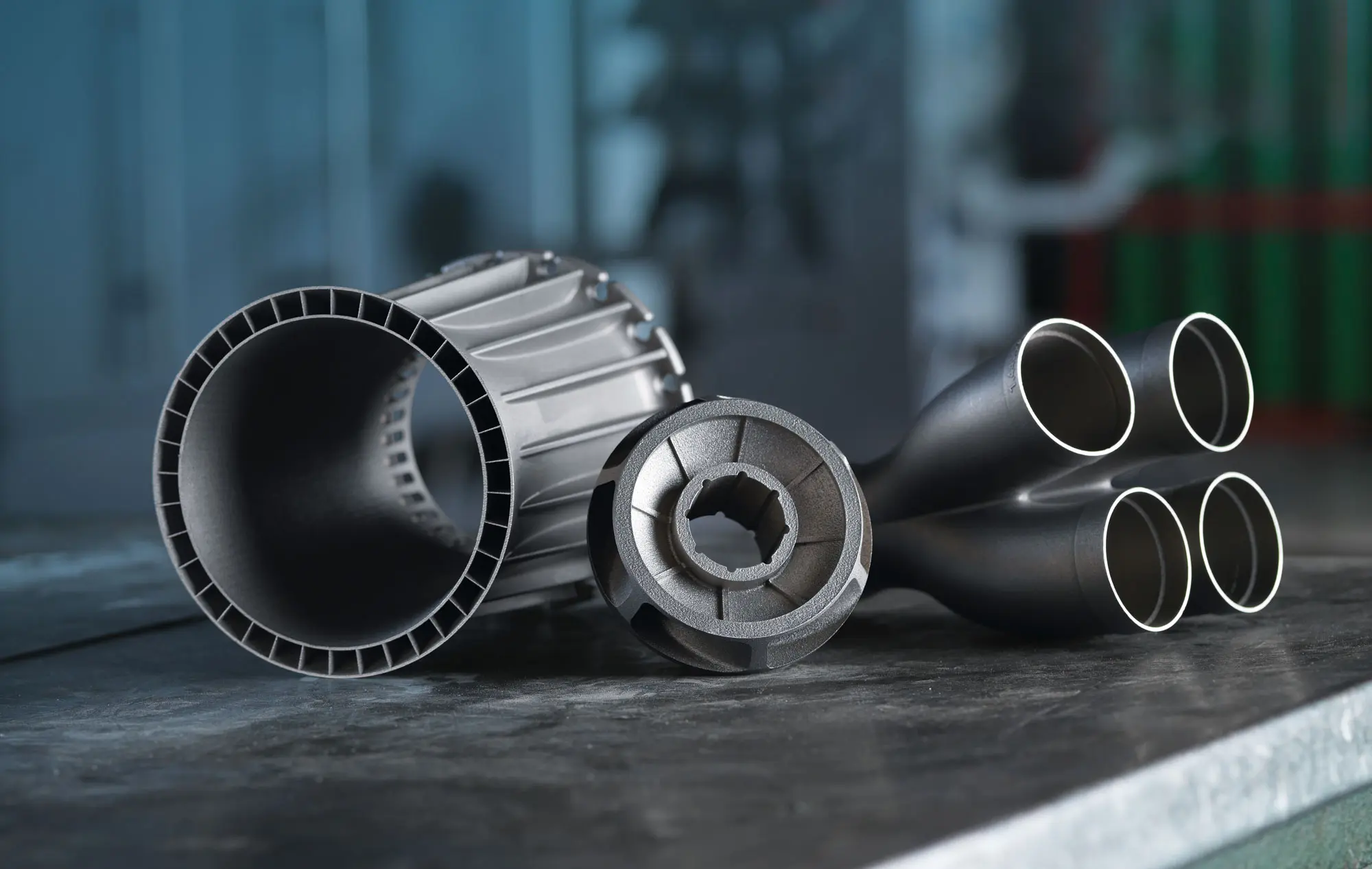
- The ultimate precision metal? Metal 3D printing, selective laser melting (SLM), and precision CNC machining are often preferred over FDM printers because FDM printers require extremely high strength, zero porosity, or complex geometries from materials such as titanium, aluminum, stainless steel, high-temperature alloys, and more.
- Mass production? While the M3 was rugged and durable, it was not economical for high-volume production.
Work with professionals when projects require complex geometries of fine metal alloys, require unparalleled strength-to-weight ratios, complex internal channels, or throughput that exceeds desktop capabilities. Rapid prototyping service provider become crucial.
in conclusion
MakerGear M3 is the pinnacle of desktop FDM engineering. Its superior build quality, mechanical precision and reliability make it an excellent choice for demanding users who prioritize print fidelity and durability over absolute plug-and-play simplicity. It requires an investment in cost and calibration time, but provides superior consistency for prototyping and functional part production in PLA, PETG, ABS and TPU. For projects requiring advanced metals, ultra-high volumes, or geometries beyond FDM capabilities, integrating M3 into a broader workflow with specialized prototyping partners provides a powerful set of manufacturing solutions.
Explore endless possibilities: Ready to push the boundaries of desktop polymers? Whether you need complex metal prototypes requiring SLM accuracy or cost-effective high-volume CNC machining, partnering with an experienced rapid prototyping service provider can accelerate innovation. Leverage their industrial-grade manufacturing technologies (such as advanced SLM/SLS/DMLS/SLA printers), diverse material libraries, and expert post-processing finishing to quickly bring your most ambitious designs to reality with uncompromising quality.
MakerGear M3 Frequently Asked Questions (FAQ)
Q1: How difficult is it to assemble and calibrate the MakerGear M3?
A: Although shipped as a kit that requires assembly, MakerGear provides comprehensive instructions. Assembly and leveling are expected to take several hours, followed by calibration for optimal squeeze/adjustment. Experience helps; beginners may face a steep learning curve with Klipper’s settings.
Q2: Can it reliably print flexible filaments such as TPU?
Answer: Yes! Thanks to a reliable filament path and optimized insulation/extruder handling, the MakerGear tool head can handle TPU very well, especially when configured with reasonable print speeds.
Q3: Can ABS be printed without warping problems?
A: Thermal management features improve results – ABS/SBS/C-PC prints can be further enhanced using an enclosed chamber, significantly reducing warping/cracking.
Q4: What maintenance does M3 usually require?
A: The most basic requirements include regular cleaning/replacement of nozzles, keeping belts properly tensioned, and occasional lubrication of linear guides – sturdiness will reduce overall frequency.
Q5: How does MakerGear support compare to other supports?
A: MakerGear has an extremely responsive channel – direct emails often provide knowledgeable troubleshooting tips to resolve user issues quickly and efficiently.
Question 6: Is the MakerGear M3-ID worth more than the M3-SE?
A: If the dual extrusion hybrid print/dissolvable support/dual material functionality directly enhances the workflow – yes! Otherwise, the individual cost savings are in favor of the SE unit unless a corresponding upgrade is planned later!
Q7: When should I consider using a professional rapid prototyping service to replace my MakerGear?
A: Working with a professional service provider has significant advantages in:
- Real metal prototyping: The complex metal fabrication uses a selective laser melting/fusion system to achieve astonishing strength, precision and structural integrity for aerospace grade alloys and also requires unparalleled precision post-processing!
- Scale manufacturing: While volume production requiring specialized skills/tooling is economically feasible, utilizing specialized partners utilizing injection molding or CNC automated tool paths, practical optimized volume production inevitably exceeds the capabilities of desktop printers!
- Strict certification requirements: Industries that require ISO certified processes Rigorous verification/materials require traceability/testing Regulated standardization Regulatory obligations fulfilled Reliable management across production batches Effectively requires appropriate metallurgical certification/testing!
- Excellent surface treatment: Utilize specialized polishing/tumbling/painting techniques to achieve complex geometries, including smooth/resolved complex contours, enhancing aesthetics, utilizing specialized, comprehensively engineered automated finishing processes to significantly differentiate professionally delivered prototypes that will impress!
Some Tier 1 suppliers consistently deliver exemplary service excellence, optimizing procurement results smartly, reliably, securely and consistently!
Expand your manufacturing horizons: For custom metal part prototypes, utilize advanced SLM/SLS/DMLS/SLA 3D printing accuracy, perfectly matched with CNC machining, working seamlessly to ensure unparalleled quality, cost-effectively and safely accelerate innovation timelines, profitably and decisively match strict specifications, perfectly iteratively optimized, and consistently achieve manufacturing excellence!