Unlocking accuracy: Mastering tension tolerance in 3D printing
In the rapidly growing world of manufacturing, tolerance is not only a technical specification, but also a cornerstone of functionality and reliability. For industries such as aerospace, automotive and medical equipment, a small fraction of millimeters can mean the difference between success and failure, Master tension tolerance in 3D printing It is not negotiable. This guide explores the science, challenges and solutions for achieving accuracy in additive manufacturing.
What is a tight tolerance?
Tolerance is a deviation that allows deviation from the specified dimension in the part. Tight tolerances, usually from ±0.025 mm to ±0.1 mm, require priority. In 3D printing, achieving this requires conquering variables such as deformation, material shrinkage and layer alignment.
Why tracking tolerance is important for 3D printing
- Functional integrity: Precision parts ensure seamless assembly and performance, especially in mechanisms such as gears or fluid systems.
- Material efficiency: Minimizing errors reduces waste and expensive rework.
- Industry Standards: Certification (e.g., AS9100 for Aerospace) requires strict dimensional accuracy.
Achieving a tense challenge
- Thermal effect: Melting and cooling of metal powders (such as titanium or inconel) can cause warping.
- Layer stacking: Small misalignment between layers.
- Support structure: The residual stress of the support distorts the geometry.
- Surface roughness:As Included parts usually need to be smooth to meet tolerance specifications.
How tolerate the master
exist GreatWe have refined a holistic approach to conquer these challenges:
1. Cutting-edge SLM technology
Our Selective Laser Melting (SLM) printer boasts:
- High-precision laser: Focused energy beams are controlled by micron-scale melting metal powder.
- Real-time monitoring: The sensor detects abnormalities during construction, so that it can be corrected immediately.
- Optimized room environment: Stable temperature and inert gases prevent oxidation and shrinkage.
2. Materials Science Expertise
We focus on demanding metals (stainless steel, aluminum alloy, cobalt chromium) and fine-tuning parameters such as laser power and scanning speed for each material. Pre-alloyed powder ensures consistency, while hip (hot, etc.) treatment relieves internal stress.
3. Intelligent design of additive manufacturing (DFAM)
- Simulation-driven workflow: Finite element analysis can predict distortions and inform pre-build adjustments.
- Direction optimization: Align parts to minimize support and residual stress.
- Compensatory scaling: Artificially expand the critical dimension before printing to offset the shrinkage.
4. Excellent post-processing
Tolerance is not “achieved” in printing and is improved afterwards. Greatlight’s one-stop service includes:
- CNC machining: Critical features are completed to eliminate layer lines and achieve ±0.02 mm tolerance.
- Heat treatment: Solution annealing can reduce pressure that does not damage strength.
- Surface finish: Electric polishing or bead blasting can enhance dimensional stability.
Real-world applications
- Medical implants: A hip cup with ±0.05 mm biocompatible required.
- Car injector: Micron-scale nozzle accuracy for optimal combustion.
- Robotics: The gears and joints need a consistent grid.
Case Study: Turbo Blade Prototyping
Customers require turbine blades with tolerance of ±0.03 mm. Greglight’s solution:
- Optimized SLM parameters to reduce thermal gradient distortion.
- For post-CNC machining of wing profile accuracy.
- CMM (Coordinate Measuring Machine) Verification confirms 100% compliance.
in conclusion
Tight tolerances 3D printing is an artistic place that conforms to engineering strictness. What it requires is advanced hardware, requiring expertise in materials, physics and precise completion. Great From SLM innovation to certified post-processing, its 360° approach is used to deliver metal parts that meet the strictest standards. As one of China’s major rapid prototype partners, we redefine the accuracy at one time, once.
Today, customizing precision metal parts with Greatlight – precision is not an option; it is the standard.
FAQ: Tolerance in 3D printing
Q1: What tolerances can 3D printing achieve?
Metal 3D printing usually has ±0.05–0.1 mm of standard processes, but can reach ±0.02 mm using a mixing method using SLM + CNC (e.g. CNC). Greatlight uses CMM devices to verify tolerances.
Q2: Which 3D printing technology provides the highest accuracy?
SLM (Selective Laser Melting) holds supreme dominance for metals, while polyjet or resin-based printed suit polymer micro-details.
Question 3: How does material selection affect tolerances?
The metal’s reaction to heat is unpredictable. Aluminum shrinks by 1-3% after printing. GRESTLIGHT pre-tested material to calibrate extended offsets.
Question 4: Can complex geometry maintain tight tolerances?
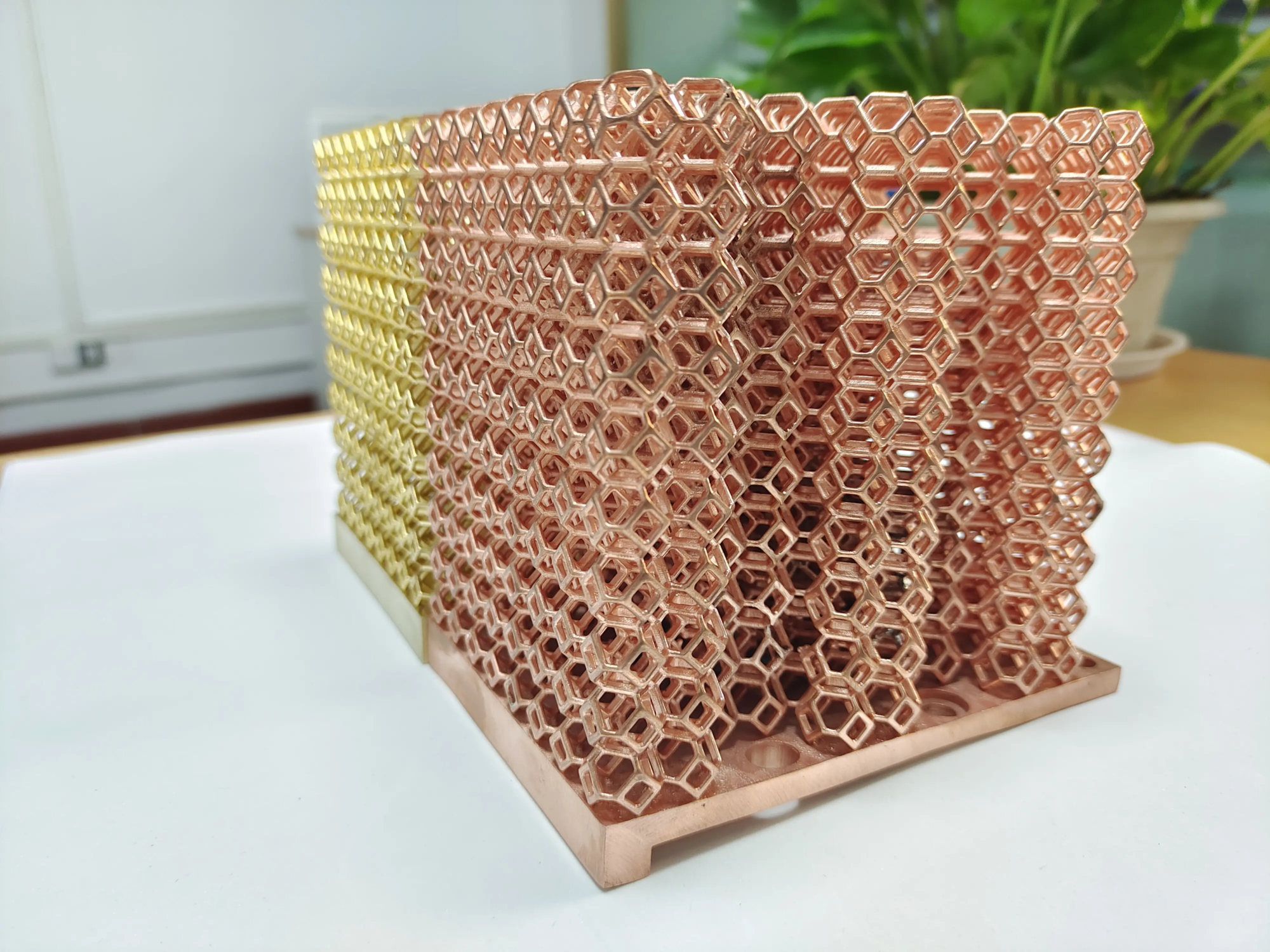
Yes, with DFAM optimization. Avoid sharp corners and unsupported overhangs. Use a lattice to distribute pressure.
Q5: Why do post-processing require strict tolerances?
Rapid surfaces are affected by stair stability and microporosity. CNC machining, grinding or EDM achieves the final dimension.
Q6: How does Greatlight ensure tolerances for custom projects?
We combine SLM technology, internal material library and ISO certification post-processing, all under one roof.
Q7: Which file format do you accept?
STL, OBJ, Steps – All are automatically repaired and simulated to limit spacious build risks.
Trust Greatlight to transform your digital design into the reality of precise design. Please contact us for a quote about rapid prototype solutions.