Unlock Perfect Prints: Master the 3D Print Threading Test
Every 3D printing enthusiast or professional has probably encountered the frustratingly tiny plastic filaments called "Threading" or "Oozing." These thin lines of filament bridge the gaps and they should not compromise the surface quality and accuracy of the print, turning an otherwise clean model into a mess. While it may seem trivial, mastering the stringing test is crucial to getting professional-grade results. At GreatLight, precision is critical to all of our rapid prototyping services, from complex metal SLM parts to complex polymer assemblies. Understanding and mitigating wire-drawing issues, even within FDM processes, underscores our broader commitment to efficiently delivering defect-free prototypes.
What exactly is stringing and why does it happen?
Stringing occurs when molten filament drips or oozes from the nozzle during non-extrusion motion, such as when the print head moves between different parts of the model. The culprits are:
- temperature: Excessively high hot end temperatures can cause the filament to become too fluid, increasing the likelihood that it will leak.
- Retraction settings: Insufficient retraction (distance and speed) effectively pulls the molten filament back into the nozzle prior to travel movement.
- Driving speed: Slower driving speeds give leaking plastic more time to seep out.
- Filament characteristics: Some materials (especially nylon, PETG, and wet filament) are inherently more stringy than others.
- Hygroscopicity: Wet filaments will boil violently and expand during heating, causing leaks to worsen dramatically.
- Nozzle condition: A worn nozzle tip or internal path may prevent clean retraction.
Basic Stringing Test: Weapons Against Gremlins
The pull wire test model is a specialized design designed to isolate and exaggerate the movement that causes the pull wire to travel. Typically, it has tall, thin columns spaced apart (e.g., 5 columns, 20 mm high, 10 mm apart, minimal infill).
Test step by step:
- Baseline settings: Start with the recommended slicer settings (temperature, retraction, speed) for your material.
- Model selection: Download or create a simple stringing test model (widely available online).
- Slice and print: Use slicing software to process the model and print it.
- Visual inspection: Carefully check the gaps between posts. Look for filaments, small balls, or thick ropes.
- Iterate and adjust: Based on the results, adjust One setup at a time and repeat the test:
- Threading too much?
- reduce The hot end temperature increases by 5-10°C.
- Increase Retraction distance 0.5-1mm.
- Increase Retraction speed 5-10mm/s.
- Increase Traveling speed 10-20mm/s.
- Under-extrusion/layer adhesion issues?
- Increase If the strings are minimal but the struts are weak (within 5°C), the temperature will rise slightly.
- make sure Withdrawal is not also The right extruder/Bowden system for you.
- Check For some nozzles clogged.
- Threading too much?
- Material matters: Test each filament type, brand individually and most importantly, make sure the filament is thoroughly dry beforehand!
Interpret your results like a pro:
- Target: Minimal to zero fine hairs between the posts. Clean, sharp post edges.
- Thick lines/spots: Possibly insufficient retraction distance/speed.
- Tiny wisps: Usually temperature related; gradually decreases.
- Random Burst/Concatenation: Point out moisture contamination – dry your filament!
- Pillar deformation/weakness: Indicates excessive cooling or too low temperature after retraction.
Beyond the Basics: Advanced Cord Mitigation Strategies
While retraction and temperature are most important, overcoming persistent stringing may require reinforcement:
- slide: Stop squeezing slightly forward perimeter ends, allowing residual pressure to complete the line and reduce leakage during retraction/movement.
- wipe: Move the nozzle back to the printed area and wipe away any excess plastic before traveling.
- Z jump ("Lifting head"): Raise the nozzle while driving. Use with caution – too much hops can Increase Pull line and slow printing.
- Combing: Forces travel to stay within the printed area, minimizing open travel (and potential leak paths). set to "inner padding" or "not in skin".
- Optimize slicing: Designing models with minimal travel movement inherently reduces the chance of threading.
GreatLight Advantage: Accuracy Beyond FDM
While mastering FDM threading is critical for hobbyists and polymer prototypers alike, achieving true accuracy in complex, demanding applications often requires more advanced techniques and rigorous quality control processes, especially in metals.
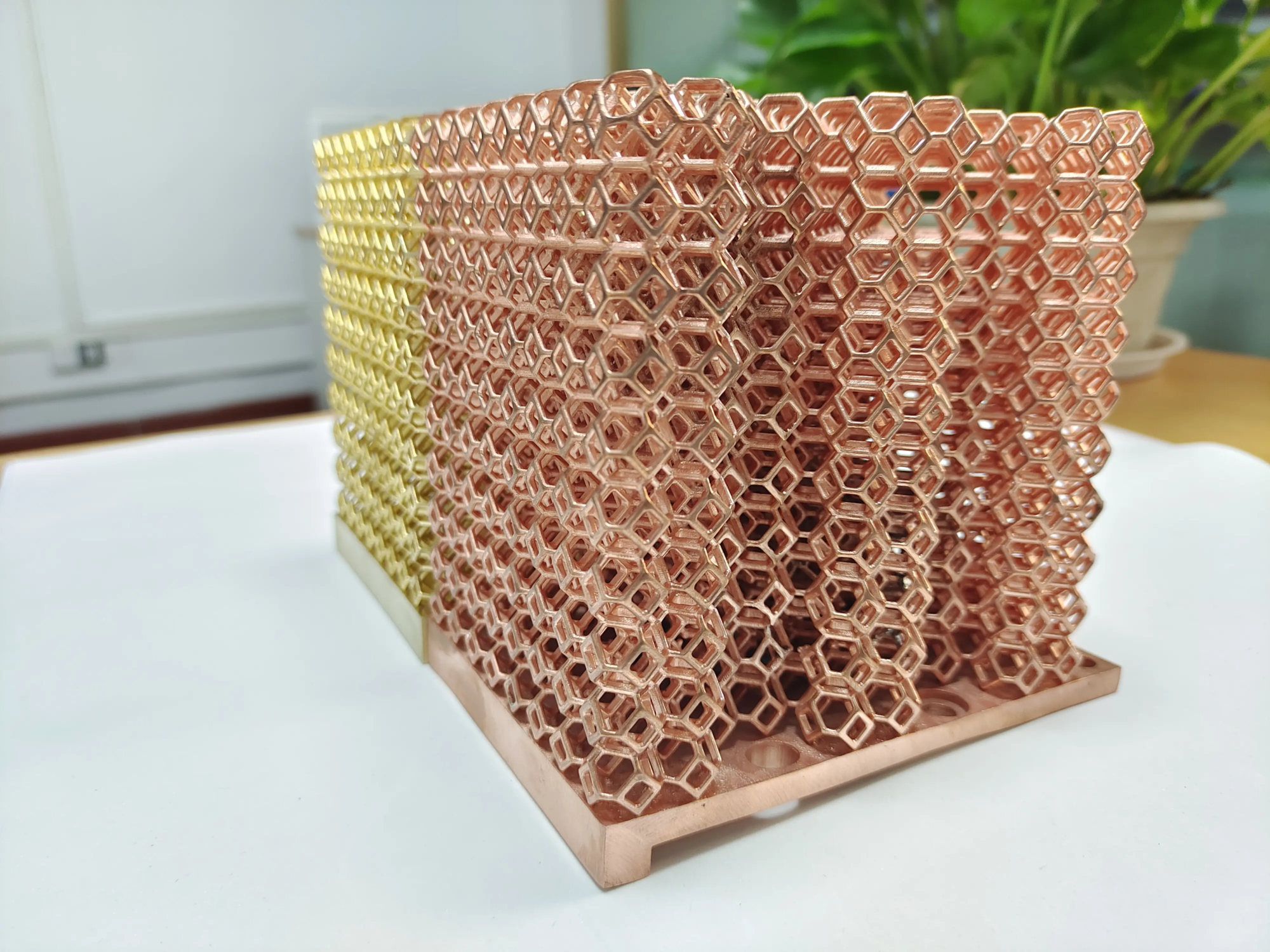
At GreatLight we utilize state-of-the-art technology Selective Laser Melting (SLM) technology as well as complex fluid dynamics modeling and layer-by-layer monitoring systems. This allows us to produce complex metal prototypes and end-use parts with superior dimensional accuracy, surface finish and mechanical properties. Although SLM will not suffer "Threading" In an FDM sense, there are similar challenges, such as minimizing vaporization spatter or optimizing the laser path to prevent microdefects.
Our expertise covers the entire workflow:
- Advanced Material Handling: Ensure metal powders are stored and processed in a controlled environment to prevent contamination.
- Parameter optimization: Proprietary parameter sets developed for multiple metal alloys (stainless steel, titanium, aluminum, Inconel, etc.) ensure minimal porosity and perfect fusion.
- In-process monitoring: Real-time sensors detect anomalies so corrective actions can be taken during the build process.
- Comprehensive post-processing: Our one-stop service includes stress relief heat treatment, precision CNC machining (to achieve tight tolerances), complex support removal, support removal, surface finishing (grinding, polishing, sandblasting), coating and meticulous inspection (CT scan, CMM).
For polymer prototypes that require flawless aesthetics and metal parts that require high performance, GreatLight provides unparalleled expertise and reliability. We transform complex designs into reality with speed, precision and unwavering quality control.
in conclusion
For anyone serious about 3D printing, mastering a simple threading test is a must-have. It teaches valuable lessons about the subtle interplay between temperature, motion, and material science in FDM printing. By systematically testing, observing, and iterating, you can achieve dramatically clearer, more professional results. However, when your project requires absolute precision, complex geometries, functional strength, or high-performance metal fabrication, working with professionals becomes critical.
At GreatLight, we embody expertise, authority and trustworthiness (EAT) in rapid prototyping. Our investments in cutting-edge SLM technology, deep materials knowledge, controlled processes and extensive post-processing capabilities ensure we deliver strong, dimensionally accurate and aesthetically perfect parts that effectively solve complex manufacturing challenges. Don’t let the frustrations of small-scale printing get in the way of your grand vision. [Get an instant quote today and experience the GreatLight difference – where precision meets rapid production.]
FAQ: Demystifying 3D Printing Threading
Q1: How much retraction do I typically need?
- A1: There is no single answer! It varies a lot:
- Direct drive: There is often a retraction distance of 0.5mm-2mm and a speed of 30-60mm/s.
- Bowden settings: Usually the retraction distance is 3mm-7mm, and the speed is 40-60mm/s. Always use the pull test for calibration!
Q2: No matter what I do, PETG strings – HELP!
- Answer 2: PETG is notoriously sticky. Combination Strategy: Carefully dry the filament. Use lower temperatures (230-245°C). Aggressively increase retraction distance/speed. Use glide and wipe. Set Combing to "inner padding". Increase travel speed (>150mm/s). Slow down printing on exterior walls.
Q3: Does the nozzle size affect threading?
- A3: indirectly. Finer nozzles (0.2 mm, 0.3 mm) require lower temperatures and velocities, potentially improving control. Larger nozzles (0.6mm, 0.8mm) push larger volumes requiring perfect retraction. Very small nozzles are more likely to clog, interrupting retraction.
Q4: Is it a "Threading test" Is it useful for resin/SLA printing?
- A4: No, stringing is a phenomenon unique to FDM. Resin printing (SLA/DLP) issues include suction, support strategies, and light penetration/curing settings. Calibration focuses on exposure testing.
Q5: If the plastic prototype is too complex or I need metal parts, can GreatLight help?
- A5: Of course! GreatLight specializes in overcoming complex prototyping challenges, specifically using advanced metal SLM printing and complex polymer technologies (such as MJF, SLS). Even if extensive FDM stringing debugging hinders your progress, or your project requires metal precision, biocompatibility, high heat resistance or complex geometries, our end-to-end rapid prototyping services can handle design optimization, expert printing, professional post-processing and rigorous quality control. [Submit your CAD model today for a fast, competitive quote.]