Soar to New Heights: Your Ultimate Millennium Falcon 3D Printing Adventure
The Millennium Falcon isn’t just a spaceship; This is an icon. For countless Star Wars fans and model-making enthusiasts, the temptation to create your own meticulously detailed version of the fastest hunk of junk in the galaxy is irresistible. Thankfully, 3D printing has revolutionized this dream, transforming it from a distant possibility into an incredibly tangible project. But working with such complex models requires careful planning, the right tools, and sometimes expertise. This guide will guide you through your Millennium Falcon 3D printing journey, ensuring your Corellian beauty lives up to its legendary status.
Calls and Challenges
Why the Millennium Falcon? Its unique saucer shape, asymmetrical mandible, sensor disk (depending on the version!) and intricate surface details make it a fascinating and challenging subject. 3D printing is able to capture these details with unprecedented precision, from panel lines and Greek letters to the interior of the cockpit, that wouldn’t be possible with traditional kits alone. However, its complexity also means this is not a beginner’s project. Success depends on an understanding of modeling, print settings, materials, supports, and meticulous post-processing.
Planning your Kessel run: Preprocessing essentials
-
Get your files: Your journey starts with a digital blueprint. Some special Millennium Falcon STL files are available on the following platforms:
- universe of things: Many variations are available, from large, highly detailed models ideal for cutting into parts, to simple versions suitable for small printers. Find popular, well-received designs.
- Cults3D: Typically hosts premium, highly detailed premium models created by professional designers, sometimes including pre-supported files or complex glitches.
- CGTrader/Dependencies: Also a source of paid, highly detailed models. Please consider size, cabin detail, component breakdown and whether supports are included before purchasing.
- scale: Decide on physical dimensions early! This determines the build volume requirements of the printer and how the model is sliced. Smaller scales (e.g., 1:100, 1:72) are better suited for use with desktop printers, while larger scales (1:48, 1:32) are stunning display pieces but require a lot of printing and assembly work.
- license: Respect the creator’s terms – Always check the license for non-commercial and commercial use.
-
Correct slicing: Import STL into slicers (Cura, PrusaSlicer, Simplify3D). Key slicing notes:
- Floor height: Lower heights (0.1mm – 0.15mm) capture finer details but significantly increase print time.
- support: Absolutely important. The Falcon’s complex overhang structure requires strong and well-placed supports. Use the slicer’s support generation tools carefully, usually selecting Custom/Tree Supports. For tricky interior areas, consider using soluble PVA supports (for dual extrusion printers).
- filling: For display models, 10-20% is usually sufficient. Use a spiral or cube pattern to get a good strength to weight ratio. Increase the density of load-bearing components.
- Perimeter/Walls: Use at least 2-3 perimeters/printer 2-3 walls for strength and better surface quality.
- Adhesion: It is highly recommended to use edges or rafts to prevent deformation, especially on large, flat sections of the hull.
- Material selection is key:
- People’s Liberation Army: Starting filament is preferred. Easy to print with good detail resolution, low warping and wide color range. Great for smaller scale or prototypes. May become brittle.
- Polyethylene glycol: Stronger, more durable, more flexible, better impact resistance, good chemical resistance and smoother surface than PLA. An excellent choice for high display impact models that require ruggedness. Requires slightly higher temperatures than PLA.
- ASA: Similar to ABS, but UV resistant. Ideal for models displayed in sunlight. The printing temperature is high and it is easy to deform, requiring a closed printer.
- Resin (SLA/DLP/LCD): Unmatched detail reproduction of cockpit, turret and intricate surfaces. Great for smaller scales or adding highly detailed sub-components. Requires thorough post-processing (cleaning/curing). Parts may become brittle.
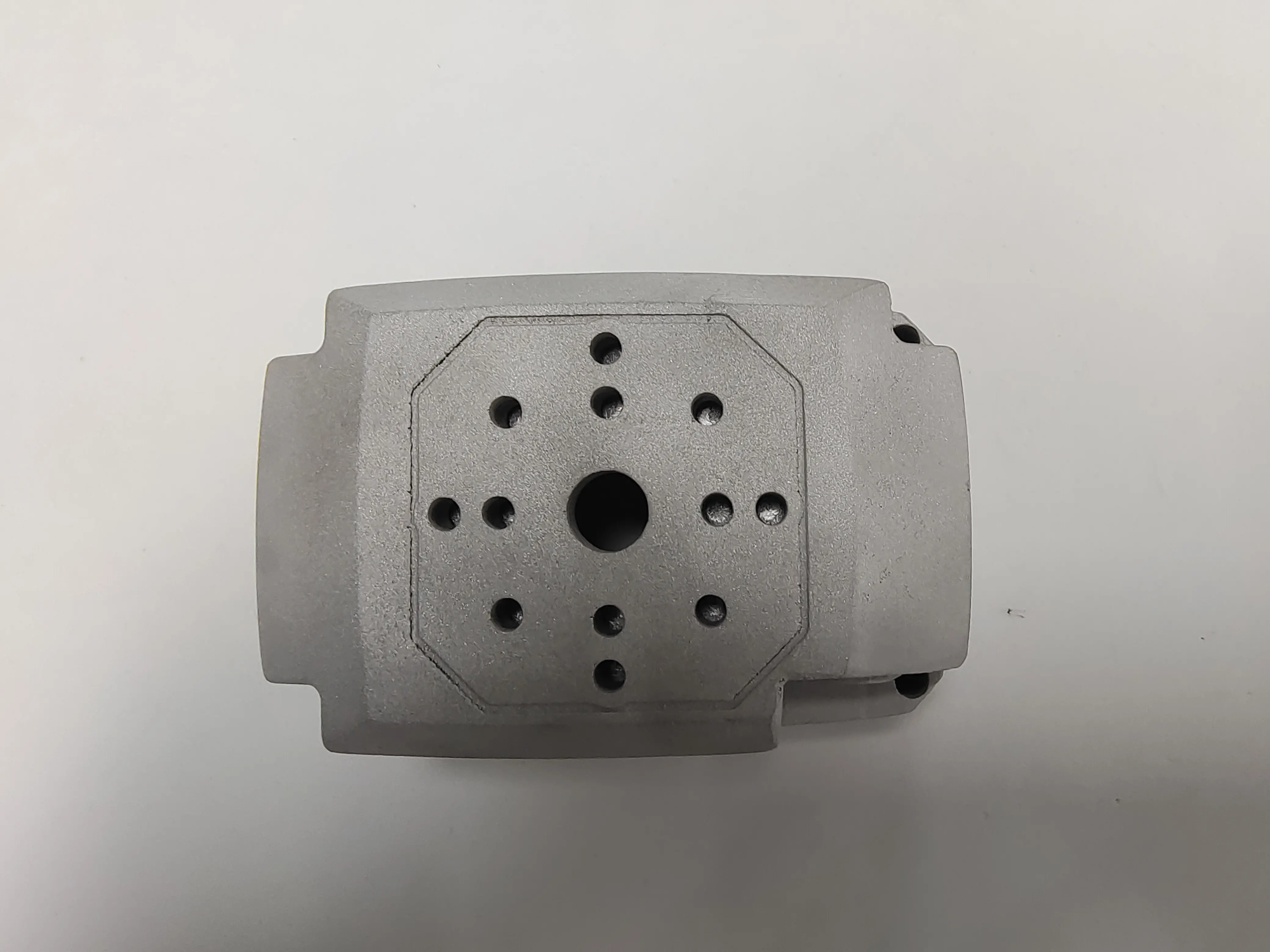
- Need metal? (See below!) A truly unique display model containing metal parts.
Exploring the Asteroid Belt: The Printing Stage
Printing a large falcon is often a marathon, not a sprint. Let’s break it down logically:
- Subcomponents: The cockpit, upper/lower hull, mandible, sensor disk, landing gear, four laser cannons, and engine deck modules are printed separately. Label each section clearly!
- Mind positioning: Orient the part on the build platform to:
- Maximize strength along stress lines.
- Minimize overhangs requiring support.
- Prioritize smooth surfaces for visible display areas.
- Monitor carefully: Especially for long prints. Make sure the bed adhesion remains strong. Pay close attention to the nozzle extruder temperature and filament flow rate.
- be patient: Large models can be brought week Combined print times. Take this into consideration.
From raw ore to polished hull: post-process like a pro
This is where your Falcon transforms:
- Support removal: Be very careful! Use flat end mills, precision blades and specialized support removal tools. Break supports slowly and deliberately. Polish away scars.
- clean: Thoroughly remove debris from support joints and details.
- Polishing: From coarse-grained to fine-grained (from ~120 to ~800+). Focus on layer lines and seams. Wet sanding usually results in a smoother surface. Don’t over polish the details.
- Seam filling: Use filler putty (Styling Putty, Bondo Spot Putty) to perfect the connections between parts before assembling or priming. Sand smooth after curing.
- **