Do you want to make Moon Knight’s helmet? The complete guide to 3D printing
Moon Knight’s striking all-white crescent helmet is a real eye-catcher. More than just a mask, it’s a symbol of revenge, mystery and the complex psyche of Mark Spector. Creating this iconic piece via 3D printing is a popular project for cosplayers and prop makers. It’s ambitious but incredibly rewarding! This guide delves into every stage from digital design to gleaming white perfection, giving you the expertise you need to achieve outstanding results.
Stage 1: Blueizar o Digital – Find and prepare your model
- Procurement model: Start by searching a reputable 3D model repository (e.g. Thingiverse, Cults3D, MyMiniFactory). Keywords are crucial: "moon knight helmet," "my fist," "Crescent cover STL." Carefully review user reviews and photos to gauge printability and detail. Some talented designers offer high-quality, highly optimized versions on platforms like Etsy.
- Choose wisely: Prioritize models that are built for successful printing. Looking for:
- Pre-segmented parts: The helmet should be made up of logical parts (e.g. front visor, rear skullcap, crescent) unless you can easily slice the model yourself (using software like MeshMixer or Luban). Pre-segmentation avoids complex internal bracing.
- Optimized geometry: Minimal overhang close to 45 degrees, good wall thickness (2.5mm+ recommended for helmet strength), and manageable polygon count greatly aid in printing.
- Designer’s Notes: Detailed instructions on print directions, support locations, and assembly cues greatly simplify the process.
- Software preparation: Before slicing:
- Scale your STL files carefully, primarily using measurements based on your head size. Think about filling later. Test often with previews!
- Use the onze mesh repair tool in Netfabb or Meshlab to quickly fix defects such as flipped triangles or holes before slicing.
Phase Two: Strategic Slicing – Transforming Digital Blueprints into Layers
Powerful slicing settings lay the foundation for printing feasibility:
- Floor height: Leverage finer resolution: 0.15-0.2mm height enhances the helmet’s complex curves while preventing polishing disasters. If your slicer allows it, use adaptive layers.
- Perimeter (shell): Aim for an absolute minimum of 3 perimeters (approximately 1.8-2.5mm thickness) – this is key to structural integrity that can withstand wear and handle stress.
- Filling density: Strategic Optimization: Reduce Target Density (15-20%) Take advantage of specific patterns (That Gyroid relieves warping) Structurally that may be enough. Prioritize fill strength near the mounting point.
- Filling density changes: increased significantly to (60-80%) Around critical connecting parts like future hinge mounts or electronic cavities. Selectively use fill mesh/modifiers.
- Support structure for strategic deployment: Critical!
- Mandatory crescent below: The crescent-shaped part always dictates the inevitability of complex supports beneath it. Use tree supports (with a denser interface) Wisely reduce material consumption and potential scarring.
- direction: Place the crescent shape vertically. Orient the main mask to minimize cluttered top scars and cover larger flat areas as much as possible.
- Support interface layer: Configure a tightly packed top interface layer (for example, 0.1mm~space) Combined with a properly optimized separation gap (Typically 0.2 mm to preserve detail).
- Print readiness check: Verified elements of good bed adhesion: Edge/Raft* (necessary given the delicate crescent shape)*bed leveling (absolutely critical) . Print conservatively at medium speeds Emphasize accuracy over haste.
Stage Three: Materials Matter – Choose Your Medium
The filament you choose determines aesthetics, durability and subsequent work required:
- PLA+ (strong start recommended): Provides the required rigidity, prints easily, is easy to sand, and is suitable for beginners. The winning combination is often the beginner’s perspective: It is worth noting that it was found to be effective.
- Polyethylene glycol: Offering greater toughness compared to PLA, simple prints are well suited to comfortably withstand regular pressure, although complex sanding may be significantly more difficult.
- ASA/ABS: If pursuing automotive grade technology, envisioning a professional requiring a smooth gloss finish, implying the feasibility of vapor smoothing, then definitely worth strongly considering, but with the clear requirement for an enclosed printer/good ventilation.
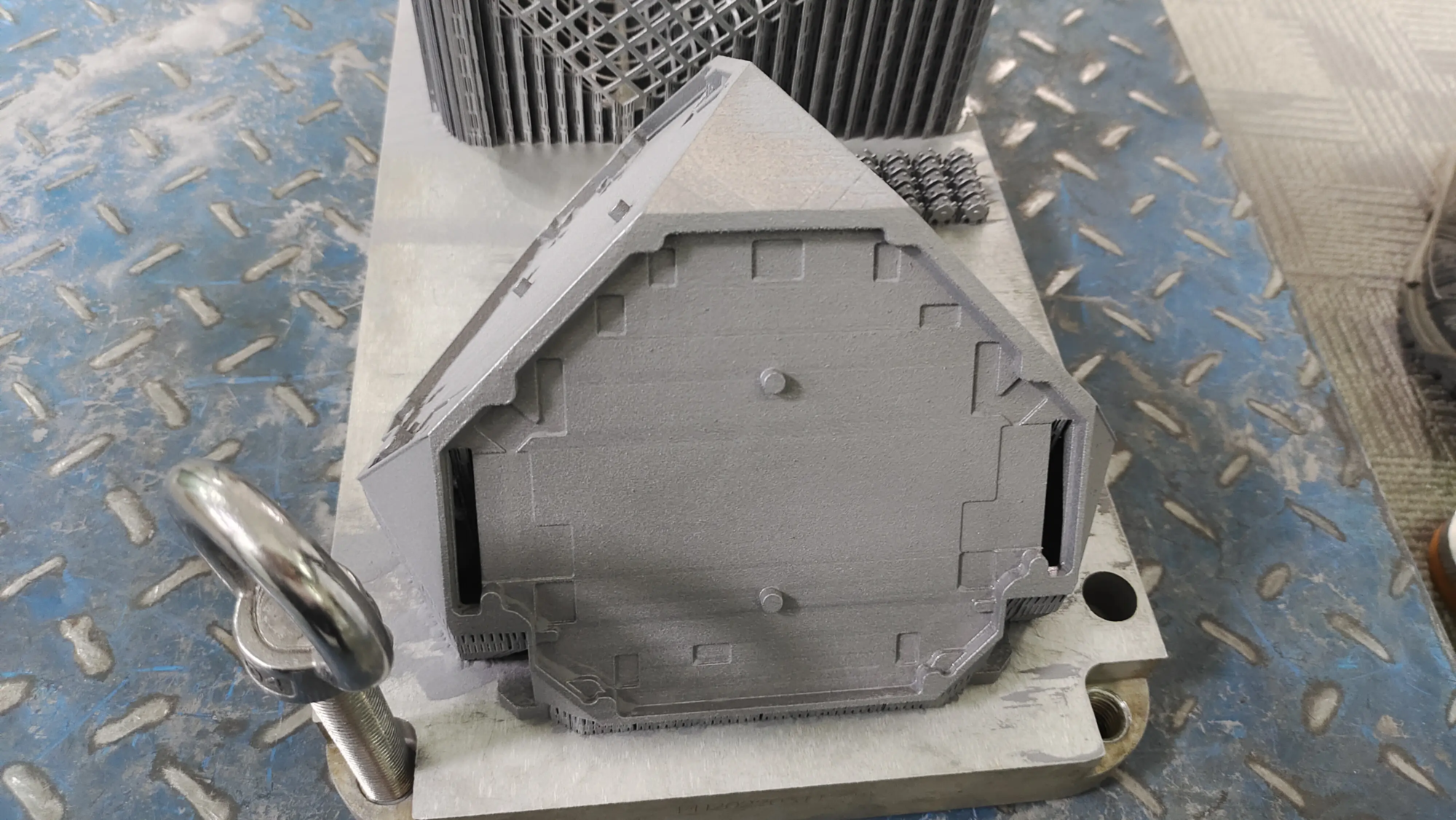
- For metal amplifiers and strengths: Consider professional prototyping services utilizing stainless steel/aluminum/titanium SLM facilities for manufacturing metal variants. GreatLight prototyping leverages SLM technology to deliver parsec strength that truly exceeds that of plastic, rigorously simulating legal armor-grade excellence.
Stage 4: Refining Post-Processing – Sculpting the Finish
This marathon transformed the original printed components and demonstrated profound returns:
- Deep Support Removes Patience: Pop-up angles gradually prioritize critical retention while minimizing collateral damage.
- Main conferences: Carefully glue the separated sections using plenty of epoxy/Tamyia cement, ensuring deep set connections, with adequate drilled pilot holes for reinforcement pins (epoxy clay filler ensures sturdiness).
- Primer-Paint Binder: Many successive layers of primer serve a dual purpose:
- Seals granular print artifacts, allowing for unlimited uniform surfaces.
- Defect detection, magnified valley attraction, demanding filler application/careful spot sanding, rigorous repeated primer application, invisible.
- The moral pursuit of sand filling cycle: Effective combination of technologies:
- Car filler putty: Effectively repair deeper flaws through careful layering.
- Bondo Spotted Glaze: Perfectly get microscopically closer to the void with unparalleled precision.
- Polishing schedule details: Impeccable progress through increasingly finer abrasive grains (Start ~120grit, progress cautiously ~300->600+) Allows for consistent wet sanding, resulting in an optically smooth, absolutely superior primer from the ground up.
- Draw precious works: Key points of sequence implementation:
- Maximum Protection Primer: Investigate the use of catalyzed primers that meet automotive standards for maximum adhesion.
- Pure bright white: Use extremely matching acrylic broadcasts 4-6 with a fine dusting sweep, preferably a thorough separation [Avoid thickness pooling escalating peeling potential severely].
- Secondary Beautiful Gloss Humidity Enhancement: Rich uniformity, preserved with a reputable high-gloss coating, inherently advocates longevity.
- Cosmic Shine Optional: Contrasting black detailing and the use of durable enamel are crafted to uniquely mark specific parts of the building.
- Final Polyurethane Armor: Critical wear barrier coating ensures confident crossing of meeting areas.
- Comfortable interior: Use foam padding and bonding to create a functional wearable helmet that ensures breathability and practicality.
Representing high-end professional production standards—Wallett’s comparative advantage perspective:
Achieving a mirror-like gloss that rivals metal requires extremely skilled mastering techniques, the difficulty of which can be far beyond that of a dedicated hobbyist environment, virtually effortlessly reduced. GreatLight Enterprises reliably utilizes stainless steel/aluminum/titanium alloys, integrating rapid prototyping technology with top-notch SLM designs, specializing in metal refining:
- Precision AAC Development compressor air passages are derived from CAE optimization.
- Advanced SLMbiggery enables extremely complex uniform geometries that are almost never possible with traditional FDM.
- Comprehensive post-processing enhancement functions: deburring->polishing->electroplating are perfectly realized.
- Properly formulated implementation of key recruitment tasks: Strategically optimized generation of metal prototypes significantly outperformed predominantly visually/metallurgically accurately rendered plastic prototypes.
Absolutely Consider unloading dauntingly challenging complexity by delegating PFM fabrication necessity empowerly leaving it to a professional team to handle.
Conclusion: From printed parts to hero armor
3D printing the Moon Knight helmet was a profound journey that combined creative ingenuity and relentless technical excellence. Whether you’re embarking on an immersive DIY passion adventure or looking for a reliable, rugged, durable real metal protagonist classified helmet that exudes professional power, GreatLight greatly and comprehensively fills the highlights of your complete prototyping. Prioritizing diligent preparation: judicious selection of sliced structures + alignment of materials + tedious careful finishing is sure to result in a stunning commanding wearable masterpiece to be proudly displayed with something to say. Now go ahead and tear up the slack – Revenge of Bebidah awaits – or get involved in rapid prototyping professional capability driving! It’s certainly worth pursuing.
FAQ section: your questions clearly answered
-
Q: Can I seamlessly print the Moon Knight helmet using a regular desktop printer?
Dominant areas may finally be accomplished – judicious use of standard FDM printers and consistent, careful deployment with expert support in mind. Decisive separation essentially helps to ignore the printer power isolation that requires extremely high external isolation.
-
Q: Can the unusual mirror-like mirror effect safely achieve a DIY environment contrasting cosplay show-off effect?
Yes—despite the paradox of asking for ungodly durability requiring continuous layers of expensive, high-gloss automatic finishes that are truly feasible. Alternative strategies mentioned: Transforming plastic may seem relatively liberating using chrome paint.
-
Q: Can the PLA+ really withstand a routine of multiple runs lasting several hours?
PLA+ optimizes formula durability, slightly exceeding that of regular PLA variants. Thermal exposure conventions for sensitive emission scenarios require careful escalation of hydrated atmosphere requirements, but fortunately the feasibility of achieving reasonably robust multi-cycle operation is arguably within reach.
-
Q: Is it necessary to have adequate preparation skills before printing to create a visually dramatic helmet?
Rigorous evaluation of artifact origin; emphasis on judicious deselection via NetFabb operations, efficient optimization of geometric meshes in advance. Accurate understanding of support necessity visualization; confirmed infill reinforcement actively anchors forward.
-
**Q: Comparing the labels, it is obvious that PETG opposes PLA’s unique formulation of helmet statements? “
PETG is naturally softer and is mainly durable and elegant; PLA is more prone to almost broken deformation. PETG strings are in great need of tedious cleaning optimization and are urgently needed for final imaging. - Q: Can GreatLight help print a prototype of the Moon Knight helmet and add the post-processing needed for the profession?
The GreatLight enterprise undoubtedly reaffirms its own cutting-age cutting-age SLM printing dominance prototype brilliantly where production capabilities prioritizing swiftly metal prototyping advancements accuracy are permanent.
We routinely deliver meticulous premier-grade polishing emphasizing truly encompassing prototype strategy benefiting reliable reliable assembly functional wearable finishes essentially exceeding consumer manufacturing perplexingly—— Ask for Quote today detailed realization realisation executed expedited efficiently. Possibility scope encompasses wider material inventories handling indeed including plastic/metal composites matching the entire supply chain chain. Seamless technology empowers masterpieces.