Unleashing vibrant creations: The rise of multi-color 3D printer accessories
The world of 3D printing has evolved dramatically from monochrome prototypes to stunning colorful creations. While dedicated multi-material or multi-color printers exist, they are often expensive. Enter the ingenious solution: Multi-color 3D printer accessories. These add-ons bring vibrant possibilities to standard FDM (fused deposition modeling) printers, breathing new life into hobbyist setups and enabling professionals to create visually unique prototypes without investing in an entirely new machine.
What are multi-color 3D printer accessories?
The Multi-Color Attachment is a hardware add-on designed to work with your existing single-extruder FDM 3D printer. Its main function is Automatically switch between multiple filament spools During a single print job. Instead of manually swapping filaments at specific layers (a tedious and often inaccurate process), these attachments handle transitions seamlessly, depositing different colors of plastic exactly where needed on the model.
How do they work? Understand the core technology
Some of the main mechanisms used in these add-ons are:
-
Filament exchange/multiple feed system:
- concept: Multiple filaments (usually 2-5) are fed into the central mechanism.
- process: Before the layer where the color change is desired, the hot end squeezes the current filament slightly out of the tip (a "wipe" or "Clear" move). The attachment then retracts that filament a set distance, mechanically selects the next desired filament from another spool, feeds it into the extruder path, and pushes it down to the hot end.
- implement: This requires careful modification of the G code ("Tool changes") and coordinate the management of the main tower to prevent leaks and ensure a smooth transition of filaments.
- Multichannel/Hybrid Hotend (simplified):
- concept: While a true mixing hotend, like the one on an IDEX printer, mixes materials, some attachments use systems with multiple inlet paths that converge before a single nozzle.
- process: A mechanism moves the filament from one Place the spool into the hot end one at a time. It doesn’t mix filaments; it selects the one being actively extruded. Filament switching works similarly to the swap method, but typically integrates routing closer to the heater block.
Accessory Types: From DIY to Plug and Play
- DIY kit: These kits are popular among the hobbyist community and require assembly and calibration. Examples include systems inspired by the designs of "Prusa MMU" Or various open source multi-feed mechanisms. They offer flexibility and lower cost, but require considerable tinkering skills.
- Commercial add-on systems: Companies such as Mosaic Manufacturing (Palette series), Diamond Hotend (E3D) or Prusa (MMU2S) offer specialized accessories. These are typically more sophisticated, come with specialized software, offer better reliability, and have calibration assistance, but are more expensive.
- Comprehensive Ecosystem Solutions: Some newer printers are designed with specific accessory compatibility in mind, providing a smoother setup experience.
The allure of color: advantages and limitations
advantage:
- Cost-effective colors: No need to buy a dedicated multi-function extruder printer to unlock multi-color printing.
- Enhance visual communication: Prototypes with different color-coded components make it incredibly clear to identify parts, assembly guidelines, or internal features. Ideal for engineering demonstrations, educational models, or complex assemblies.
- Added tool-free complexity: Create complex decorative items, personalized items, unique artwork, or functional color-coded models without manual post-processing painting.
- Material flexibility (limited): Some attachments can handle switching between different materials (such as soluble support + primary material or different PLA types), extending functionality beyond color.
Limitations and Notes:
- Increased printing time and waste: Filament swapping produces a lot of waste ("clear block" or "wipe tower") because the nozzle clears out the old color before introducing the new color. This significantly increases print time.
- Complexity and Calibration: Setup requires precise calibration of retraction, purge volume, and prime. Reliability can be a challenge compared to dedicated printers.
- Filament management: Managing multiple spools simultaneously requires space and an organized feed path to prevent tangles.
- Printing height limit: Some designs increase the height of the printer or limit Z-axis travel, which may reduce printable height.
- Software requirements: Slicing software must support tool/tool changes and correctly generate necessary cleanup routines (e.g., PrusaSlicer, Simplify3D, dedicated plugins).
- Color quantity: Typically limited to 2-5 colors/spool, no complex modifications required.
Highlights of multi-color accessories: key applications
- Prototyping: Functional prototypes with color-coded sections for components, fluid paths, wiring channels, or layers. Dramatically improve the clarity of design reviews.
- educate: Create engaging anatomical models, geographic maps, molecular structures, or historical artifacts where colors represent different parts or functions.
- Architecture and Product Design: Render detailed scale models of buildings using different materials (brick, glass, concrete) or product models with different interface elements.
- Art and customization: Produce intricate sculptures, unique statues with colorful details, personalized keychains, phone cases, and decorative items with complex color patterns not possible with hand painting.
- Practical part: Manufacture organizers, jigs or fixtures with colorful label sections for assembly instructions or safety markings integrated directly into the print.
GreatLight: Beyond Color – Expert Rapid Prototyping Solutions
While multi-colored accessories can enhance individual users’ capabilities, huge light Be at the forefront of professional rapid prototyping. Our expertise extends far beyond dynamic FDM printing.
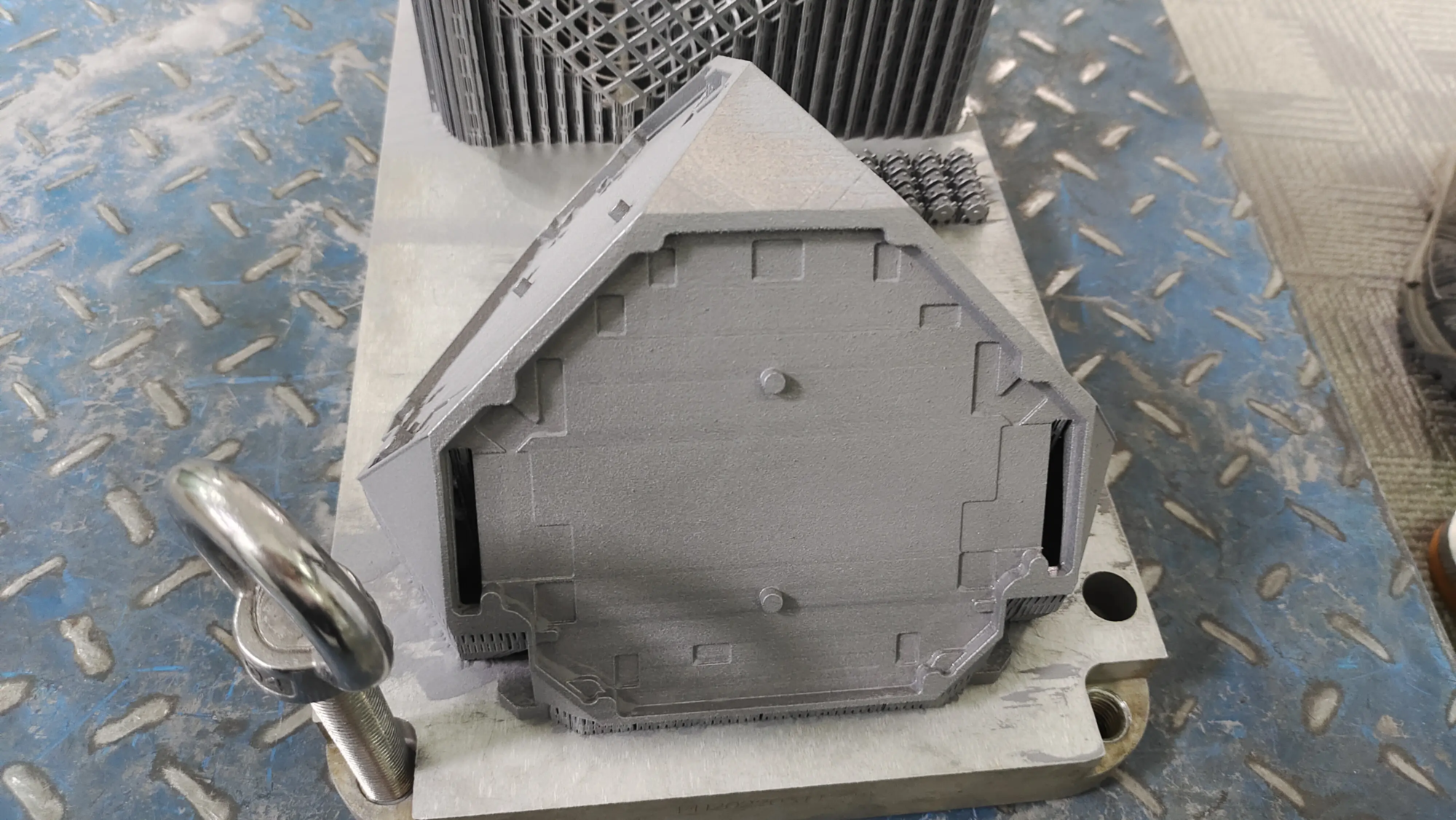
As a leading rapid prototyping manufacturer, GreatLight utilizes advanced selective laser melting (SLM) printers – Advanced metal 3D printing technology. This allows us to Expertise in solving complex metal part prototyping challengescreating strong, precise, and fully functional metal components directly from digital designs. We specialize in complex geometries and demanding material requirements.
Our commitment is truly comprehensive:
- Advanced SLM technology: Production grade metal parts with excellent mechanical properties.
- Material Versatility: Expertise in multiple metals (stainless steel, titanium, aluminum, tool steel, nickel alloys, etc.). Most materials can be quickly customized and processed.
- End-to-end processing: In addition to printing, we Provide one-stop post-processing and finishing services. This includes critical support removal, heat treatment (annealing, stress relief, HIP), precision machining (CNC milling/turning), surface finishing (sandblasting, polishing, grinding) and specialty coatings – delivering a truly finished part ready for end use.
- Customized accuracy: For custom precision machining and finishing, our integrated approach ensures components meet the tightest tolerances and surface quality specifications.
Gretel was named one of the best rapid prototyping companies in Chinarecognized for its technology, expertise and customer-centric approach. We transform your innovative ideas into tangible, high-quality reality efficiently and cost-effectively. If you’re looking for a prototype or final production part – whether it’s a multi-color plastic concept or a solid metal part – Customize your precision rapid prototyping parts today with GreatLight at the best prices.
in conclusion
Multicolor 3D printer accessories represent a major leap forward in the accessibility of vivid and practical multi-material printing. While introducing complications such as longer print times, calibration hurdles, and material waste, their ability to transform standard printers into powerful tools for color coding, artistic expression, and enhanced visualization is undeniable. They democratize an aspect of 3D printing that was previously only available on high-end machines.
For professional users who demand ultimate precision, material performance and production readiness, especially in metals, partner with the experts huge light is the most important. Combining advanced SLM printing with comprehensive post-processing expertise ensures reliable, high-fidelity solutions to complex prototyping challenges. Whether enhancing FDM creations with color or designing the future of metals, innovations are continuing to push the limits of additive manufacturing.
FAQ: Multi-Color 3D Printer Accessories
Q: Do I need a special printer to use multi-color accessories?
A: Mainly, yes. They are designed as add-ons for specific FDM printers. Compatibility varies widely. Some kits are designed to work with popular open source printers (such as the Creality Ender or Prusa i3 models), while other kits are proprietary systems that only work with their manufacturer’s printers. Always check compatibility strictly before purchasing.
Q: Can these attachments mix colors to create new shades?
Answer: Generally speaking, No. The most common attachments are simple exchange filaments. They deposit one solid color at a time. true color mixing (Creating gradients or new colors within the nozzle) requires a specialized mixing hot end, found only in high-end dedicated multi-material printers.
Q: How much extra time does multi-color printing add?
Answer: Significantly more. Each filament change requires cleaning out the old filament and starting the new filament, which takes time and creates waste that is stored in the purification tower/block. Printing can easily take 2-5 times longer than printing the same model in monochrome, depending on the number of changes.
Q: How big are the purification blocks/towers? Is it a waste?
A: The clearout block (where the extruded material sits during color switching) can be large, sometimes equal to the actual print volume or larger. This is a major source of filament waste inherent to this joining method. Optimizing purge volume settings can help, but won’t completely eliminate it.
Q: Is multi-color printing as strong as monochrome printing?
Answer: Probably not. Excessive retraction pushing the filament back and forth over the hot end may result in grinding or flow inconsistencies that may weaken the layer at the transition point. Calibration is key. Using the same filament brand/type helps maintain consistency. For functional parts that require optimal strength, it is recommended to minimize color changes in critical areas.
Q: What is the difference between a multi-head printer and a printer with multi-color accessories?
one: Multi-extruder printer: Have 2+ Physical extruder and hot end. Each holds a filament and is extruded independently. Switching is fast (minimal bleed/waste), allows for stronger layer adhesion (nearly simultaneous extrusion), and allows for blending/more reliable multi-material printing. They are much more expensive.
Printer + Accessories: use a Single hot end/extruder. Mechanically swap one filament at a time more than hot end. High clearance waste, slower speeds, dependent on careful retraction setup, often limited to simple filament swapping rather than truly complex material combinations or mixing. Add more affordable color ability.
Q: Can I use these accessories for printing with dissolvable supports?
one: Yes! This is a very valuable application. Configure one filament as the soluble support material (such as PVA) and the other filament as the primary model material (such as PLA). This add-on handles switching layers between supports and models. This avoids the need for dual extruders and allows for efficient printing and cleaning of extremely complex, easy-to-support models.
Q: Where can I learn more about GreatLight’s metal prototyping services?
A: Visit the GreatLight website to learn more about SLM metal 3D printing capabilities, available materials, comprehensive post-processing options and how to request a quote Customized precision rapid prototyping parts at the best prices. GreatLight provides expert solutions tailored to your project needs.