The evolution of manufacturing: multi-head 3D printers as the next frontier
The world of 3D printing is undergoing a dramatic shift, moving beyond single-nozzle systems and into a realm where complexity, efficiency and versatility converge. Enter multi-head 3D printers – machines equipped with two or more independent print heads that work in tandem or sequentially. This innovation is more than just an upgrade; it is redefining the potential of additive manufacturing in aerospace, healthcare, automotive and consumer goods.
How multi-head 3D printers work
Traditional 3D printers use a single extruder to deposit material layer by layer. However, multi-head systems contain multiple extruders controlled by complex software, allowing for coordinated or sequential operation. The configuration differs:
- Same header: Speed up production by printing multiple parts simultaneously.
- Special material head: Enables seamless material switching (e.g., PLA to soluble PVA support).
- Hybrid system: Combine extrusion with laser sintering or UV curing heads.
Advanced calibration ensures perfect alignment between print heads, minimizing errors while optimizing path algorithms to avoid collisions. This orchestration unlocks capabilities once thought impossible.
Benefits that drive adoption
- Speed and efficiency: By printing multiple components or layers simultaneously, cycle times can be reduced by up to 70%. Two heads can do twice the work of one head in almost the same amount of time.
- Complexity of Multiple Materials: Create hybrid structures that combine rigid and flexible elements, which is critical for prosthetics with soft grips or aerospace tubing that requires a heat-resistant core.
- Simplified post-processing: A dedicated support material head uses a dissolvable compound to eliminate the need for manual support removal and preserve delicate geometry.
- Scalability: Scaling up production is more cost-effective, connecting prototyping and mid-scale manufacturing.
Multi-head printing revolutionizes industries
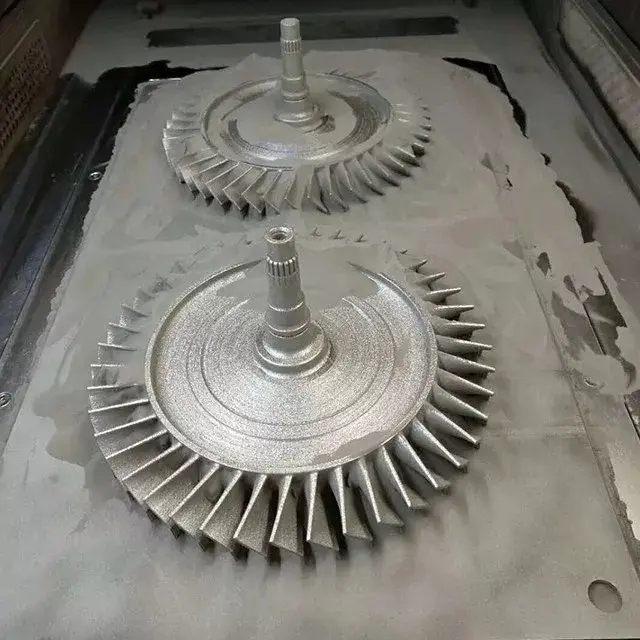
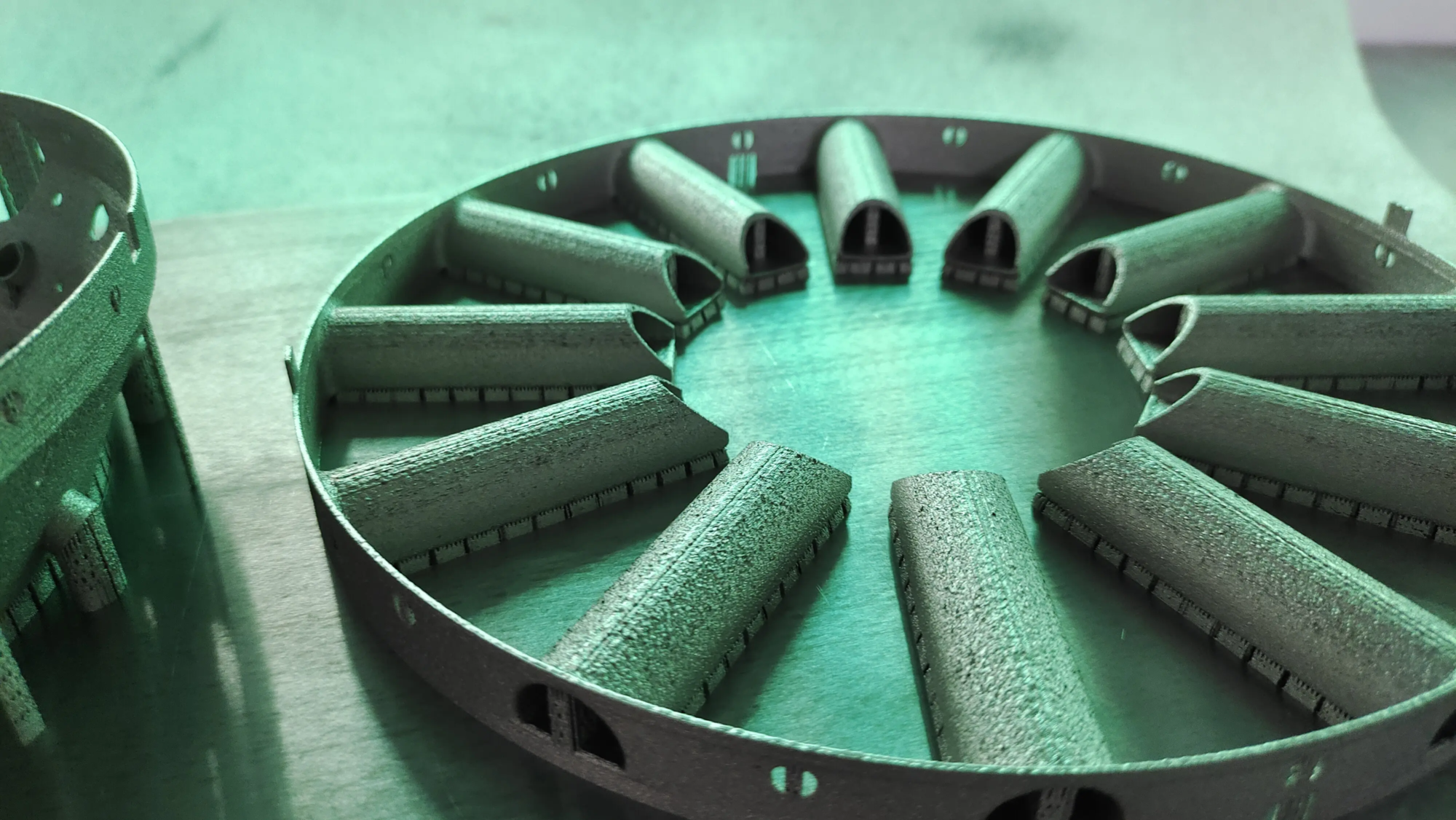
- aerospace: Fuel nozzles with internal cooling channels are printed in a single build using high-strength alloys and ceramic coatings.
- Medical: Create patient-specific implants in which porous titanium is fused with biocompatible polymers.
- car: Manufacture dashboard components that seamlessly integrate soft-touch interfaces and structural frames.
- Rapid prototyping: company likes huge lightis a leader in rapid prototyping solutions, utilizing multi-head SLM 3D printers to accelerate the development cycle of custom metal parts. With capabilities from rapid prototyping to post-processing, GreatLight can handle complex geometries and multiple materials (titanium, Inconel, aluminum), ensuring end-to-end innovation at competitive speeds.
Challenges to overcome
Despite this promise, multi-head printers still face obstacles:
- Calibration accuracy: Misalignment between print heads can cause defects. Laser-guided calibration systems are designed to solve this problem.
- Material Compatibility: Not all filaments/sintered powders bond optimally when layered.
- cost: High-end long systems require significant investment (from $50,000 to over $500,000) but can pay off in the form of long-term ROI.
- Software complexity: Slicing software must support toolpath coordination, requiring AI-driven solutions such as generative design integration.
The future: the development direction of multi-head technology
The next generation of progress is focused on autonomous intelligence. Printers equipped with AI-driven sensors will self-correct during the printing process, while a cloud platform coordinates fleet deployment for factory-wide coordination. Hybrid machines that combine additive and subtractive processes may become mainstream, layering metal powder before CNC milling the part in place. As breakthroughs like graphene deposition emerge, multi-head printers may underpin Industry 4.0 smart factories.
In summary
Multi-head 3D printers are not only iterations of existing technology, but also harbingers of a manufacturing renaissance. By combining speed with spatial versatility, they open up new areas of design freedom and production scalability. For engineers, designers and innovators, mastering this technology means staying ahead of the curve. just like the pioneers huge light Proven, integrated multi-head systems transform prototyping into high-value production, pushing the boundaries across departments—one precise, multi-layer build at a time.
Frequently Asked Questions about Multi-Head 3D Printers
Q: Can a multi-head printer mix incompatible materials?
A: Yes, if they use isolated temperature controlled nozzles. One head can extrude high-temperature PC, while the other head can print TPU to prevent cross-contamination.
Q: Is soluble support mandatory?
Answer: No need. Many systems allow for interchangeable support heads, dissolvable or detachable support heads, depending on the complexity of the part.
Q: What is the average price range?
A: Desktop FDM models start at $3,000 and go over $250,000 for industrial metal powder multihead setups. Cost varies with number of heads and complexity.
Q: How can multi-head printers reduce waste?
A: Optimized nesting prints multiple parts simultaneously in a single chamber, minimizing unused print volume and cutting raw material usage by approximately 30%.
Q: Is special training required?
A: The basic system mimics a single-head workflow, but taking advantage of the material/geometry potential requires advanced software/cadence training – often provided by manufacturers such as GreatLight**.
Q: Why choose multi-head over traditional setup for rapid prototyping?
A: Faster iterations, reduced assembly steps (printing integrated components) and material flexibility speed development. Services like GreatLight take advantage of these advantages to deliver functional prototypes 40-60% faster than traditional methods.
As multi-head printing evolves, its blend of precision and adaptability will continue to drive industrial innovation. For custom solutions, especially metal prototyping, the involvement of experts ensures your design takes advantage of the full potential of this cutting-edge field.