Miniature Miracle World: Navigation N Scale 3D Print File
For model rail and mini enthusiasts, n-scale (1:160) presents an attractive canvas: wide landscapes, complex cityscapes and detailed rolling stocks, all of which are condensed into a very compact form. However, sourcing specific structures, unique vehicles or highly detailed accessories can be a challenge. This is where 3D printing completely changes the hobby. By bringing your ideas from digital files to physical reality, it unlocks unrivaled customization. However, the journey depends on one key factor: your Digital files. Let’s dive into the basic files of N-level 3D printing.
Core file format: digital blueprint
Each 3D printing begins with a digital model. It is crucial to understand these common formats:
-
STL (Stereoscopic Lithography): Undisputed amateur king 3D printing. The STL file uses a mesh of small triangles to define the surface of an object. Key points:
- advantage: Universal support through modeling software, slicing software and printing services.
- shortcoming: Include The only one Geometric data (no color, texture, material information). Resolution (small triangles = more detailed) is crucial for n-level scales.
- Basic? Yes. For the vast majority of FDM (Filament) and SLA/DLP (Resin) home printing and service bureaus, STL is the preferred investment.
-
OBJ (wavefront object): STL’s cousin is more distinctive. The OBJ file also defines geometry through polygons, but has a significant addition:
- advantage: Can include texture map coordinates (UVS), material library references, and even vertex colors. This is invaluable for multi-color printing or providing a painting guide.
- shortcoming: Slicing software generally has less support Directly Compared to STL (although it is usually easy to import). File sizes may be larger.
- Basic? Highly recommended. Especially if your model has inherent color variations or complex textures required by realism.
- 3MF (3D manufacturing format): A modern competitor designed to replace STL. This is an open standard based on XML.
- advantage: Mesh geometry, color, material, texture, support structure and print settings can be encapsulated in a single file. Ideal for retaining complex data without the need for separate files.
- shortcoming: Adoption, although growing rapidly, is not as common as STL. Some older software or services may require conversion.
- Basic? More and more important. Representing the future, it provides a more robust and feature-rich container. It is crucial for complex projects that keeping all relevant data in one place is key.
In addition to understanding the format, Consider the model itself:
- Proportional Accuracy: It’s a model design At 1:160 n scale, or a larger larger model? Intentionally designed N-scale models usually have optimized wall thickness and fitted scale details.
- Level of details: Does the level of detail match the realistic implementation of your chosen printing technology (FDM, resin or metal)?
- Tolerant and close: Models designed for printing will include appropriate tolerances suitable for moving parts or components (“pin” is slightly smaller than “hole”).
Beyond Format: Key Model Notes for Level N Success
Selecting the correct file format is the first step. make sure The model itself The next step is crucial:
-
Wall thickness: This is the most important thing. The thin walls commonly found in n-scale structures or delicate details require special attention.
- FDM: The minimum actual wall is usually 0.4-0.6mm (especially perpendicular to the build board). Make sure the model designer respects this.
- Resin: A thinner wall can be achieved (effectively lowered to ~0.3mm), perfect for delicate railings or ladders.
- Metal (SLM): A minimum wall thicker than resin is required (usually > 0.5mm depending on the laser beam width and material/geometry caused by the support requirements). Greatlight’s expertise is invaluable.
-
Dangling and support: Models with steep overhangs (typically FDM/less degrees for FDM/Metal) require support to print successfully. Well-designed documents minimize unsupported angles or incorporate small support structures into the design ("The support of the tree"). This has had a significant impact on post-processing difficulties.
-
Function size: Tiny bolts, rivets, ladder steps or text must be large enough to survive in printing. For FDM > 0.3mm function, use ~0.1mm for resin function, and consult carefully on metal printing services (such as Greatlight for Process capability).
-
Manifold geometry (water density): The model must be a closed, complete "water proof" No gaps or inverted normal shells. Non-model models can cause slice errors.
- direction: During the printing process, the orientation of the model greatly affects the surface finish and support needs. The slice software can handle this, but the direction will be taken into account for the printed model.
Where to source n scale files:
- Design your own (DIY): Software such as Blender (Free), Fusion 360 (free amateurs), Tinkercad (free, web-based) or Sketchup (Freemium) allows custom creation – perfect for truly unique pieces.
- Online Market: Platforms such as cults3d, cgtrader, myminifactory can accommodate thousands of downloadable models, many of which are designed specifically for n scales or are easy to scale.
- Dedicated model railway station: Creators of Etsy, specific niche forums or sites like Thingiverse (although dominant in other scales) provide a focused collection.
- Professional designer: The committee custom model precisely customizes your vision and printing technology.
Professional Edge: When Accuracy is the Most Important
The enthusiast printer excels in some n-level elements, but Highly detailed, wear-resistant or extremely strong components Often, professional manufacturing is required:
- Complex mechanical parts: Gears, coupling mechanism, bogie frame under the locomotive.
- Fine-scale architectural details: Gorgeous cornices, fragile window frames require strength.
- Metal components: Handrails, loading cranes, tools – Weight or realism requires metal.
- Durability: Parts are affected by continuous processing or operation.
This is Great Intervene to provide next-generation manufacturing capabilities:
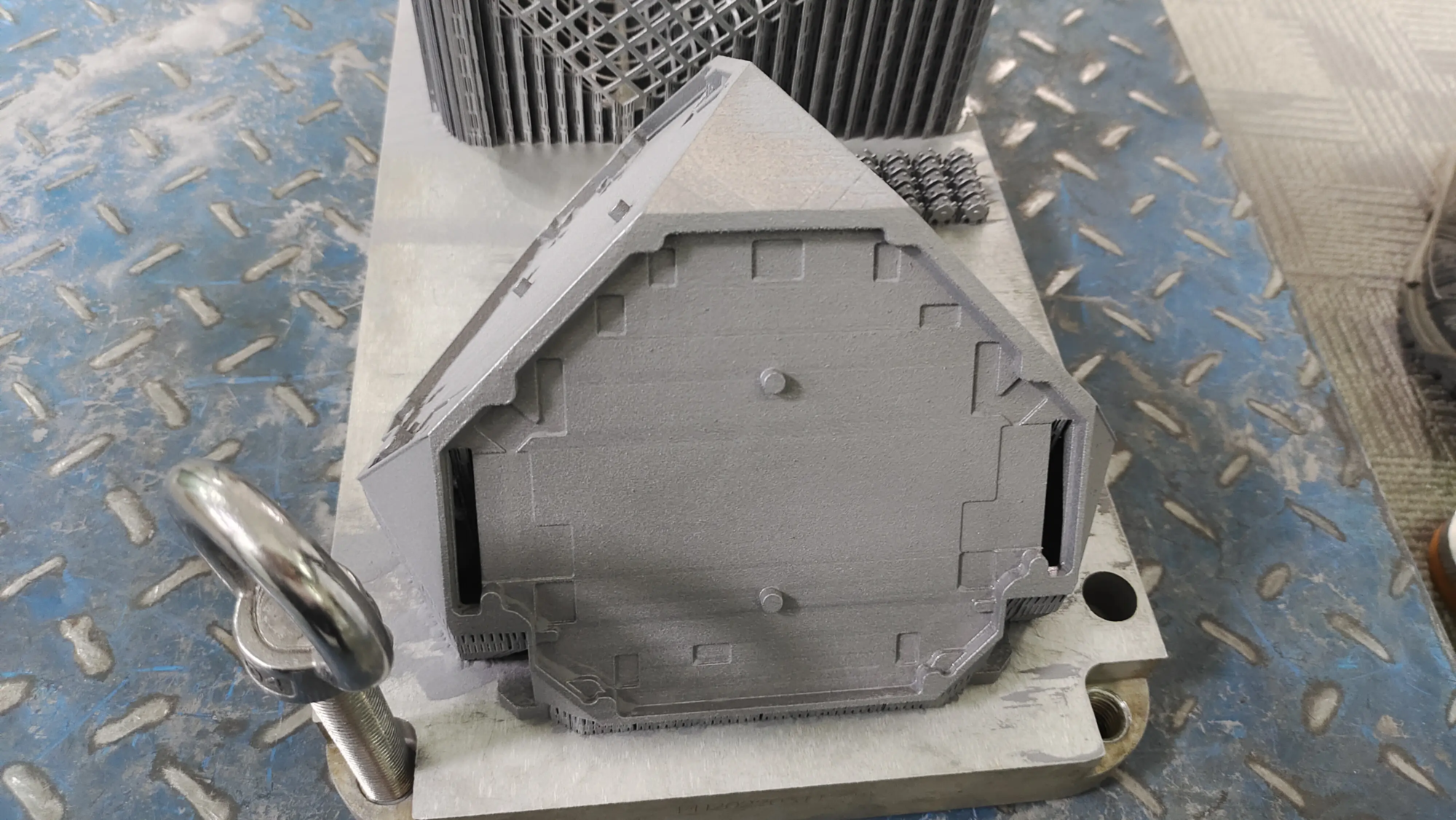
- Advanced Metal 3D Printing (SLM): Using selective laser melting technology, Greatlight builds complex N-scale metal parts directly from your digital files (STL, OBJ, 3MF, steps, etc.). This makes it impossible for plastic to have impossible functions and advantages.
- Material Diversity: From lightweight aluminum alloys to solid stainless steel and brass – can be customized to your parts’ functional and aesthetic needs.
- Manufacturing Design (DFM): Our team provides feedback from experts DFM to ensure they are optimized for SLM printing – providing advice on wall thickness, overhang, tolerances and orientation for optimal results.
- Precision and details: SLM can be accurately reduced to 1:160, thus capturing the best texture engraved in digital files.
- End-to-end solution: From initial consultation and document optimization to SLM printing, Greatlight offers a comprehensive post-processing: meticulous support disassembly, precise machining, polishing, polishing, polishing and custom finishing (painting, mount) to provide N-scale masterpieces suitable for exhibitions.
- Speed and customization: Rapid prototyping ensures quick turnaround in custom parts or small batches, allowing your unique project vision to give you no excessive costs.
Conclusion: Your vision is perfect
The world of N-scale is no longer restricted by on-site products. 3D printing fundamentally drives infinite creativity in the quality of your digital file. Understanding core formats (STL, OBJ, 3MF) and key design considerations for printability is the basis for success. For those who truly push the boundaries of realism and functionality, professional partners like Greatlight, with expertise in SLM metal printing and comprehensive finishes, provide the necessary bridge from perfect digital files to exquisite physical reality. Embrace files, leverage technology, and build the N-class world you’ve always envisioned.
FAQ:
Q1: What is the absolute best file format for n-scale 3D printing?
No single "The best." STL is the safest bet with the spaciousest compatibility. OBJ is great If you need color/texture data associated with the model solid. 3MF is the choice for the future For complex projects that require comprehensive data encapsulation. Always check for specific printing services or software requirements.
Question 2: I purchased an STL file online. Why does it look blocky or low-quality?
Common reasons:
- Low resolution: The triangle of the STL mesh is too large. Improvements should be made on the source (original designer).
- z-scab or stair stepping: FDM prints workpieces of layer height, especially on shallow slopes. Switch to print in resin or fine-tune the settings to mitigate.
- Poor original design: Source files are very important. Find clear design models for N-scale and realistic printing.
Question 3: Can I scale any 3D model to n scales?
Technically yes, but caution is required. Models designed for larger scales (HO, O) usually have features (wall heads, railings) that are unrealistic (wall thickness, bolt heads, railings) or are printed effectively when scaled to 1:160. Always like design models Specifically For n scales, or prepare for potential printing failures or details/cell loss. Reducing the scaling doesn’t make everything look right.
Q4: Why do I choose metal printing (such as SLM for Greatlight) instead of plastic as n-scale parts?
Metals (SLM) specializes in:
- Unrivaled durability: Ideal for parts under mechanical stress (gear, functional coupling) or constant treatment.
- Quality details: Due to its accuracy, in many cases, very small textures and functions are more accurate than resin.
- weight: Get real weight for details like metal handrails or tools.
- Realism: Material authenticity of field metal components.
- Heat resistance: Necessary for models close to lighting or motors.
While more costly, it is unparalleled for a key component of high fidelity, lasting. Plastics are better suited for large structures, landscapes or non-functional details.
Q5: How to make sure the tiny details on my N-scale file are actually printed?
it depends:
- Printer functions: Resin printers are usually better than FDM in small details. SLM metal requires a specific feature size minimum.
- Model design: The file needs to ensure minimum wall thickness and functional dimensions that fit the technology of your choice. Functions like pins/holes may require intentional clearance.
- Print settings: Layer height, printing speed and cooling significantly affect the detail fidelity on the FDM. Resin exposure time is important.
- Consult professionals: For critical metal parts, interact with Greatlight or similar providers forward Finalize the design file. They perform design (DFM) analysis of 3D model files to ensure ultimate feasibility.
Question 6: How does Greatlight assist in complex geometry or challenging file problems?
Provided by Greghime Expert DFM Feedback During the quotation process. Their team analyzed the files you submitted (STL, OBJ, steps, etc.) specifically for SLM metal printing. Based on their deep understanding of the process:
- They identified potential problems such as unsupported overhangs being too steep for metals.
- Recommended for the minimum functional dimensions that can be achieved by the selected material.
- Optimal printing orientation and potential support structural strategies are recommended.
- Manufacturing and reliability adjustments are recommended.
- Highlight areas that may require thicker wall detailing adjustments.
Question 7: Will Greatlight provide completion services for tiny N-class parts?
Absolutely! Their One-stop service It is the key advantage:
- Essential post-processing: Accurate support removal, cleaning.
- Processing: CNC machining critical dimension.
- Surface finish: Grind, polish to remove roughness and achieve the desired surface texture (smooth, satin, matte).
- Custom finishes: Electroplating, anodizing (for aluminum), passivation (stainless steel), heat treatment and customization Painting/patterning Services that meet your exact N-scale model requirements.
- These services are crucial to convert raw metal printing into ready-made, highly realistic n-class components.