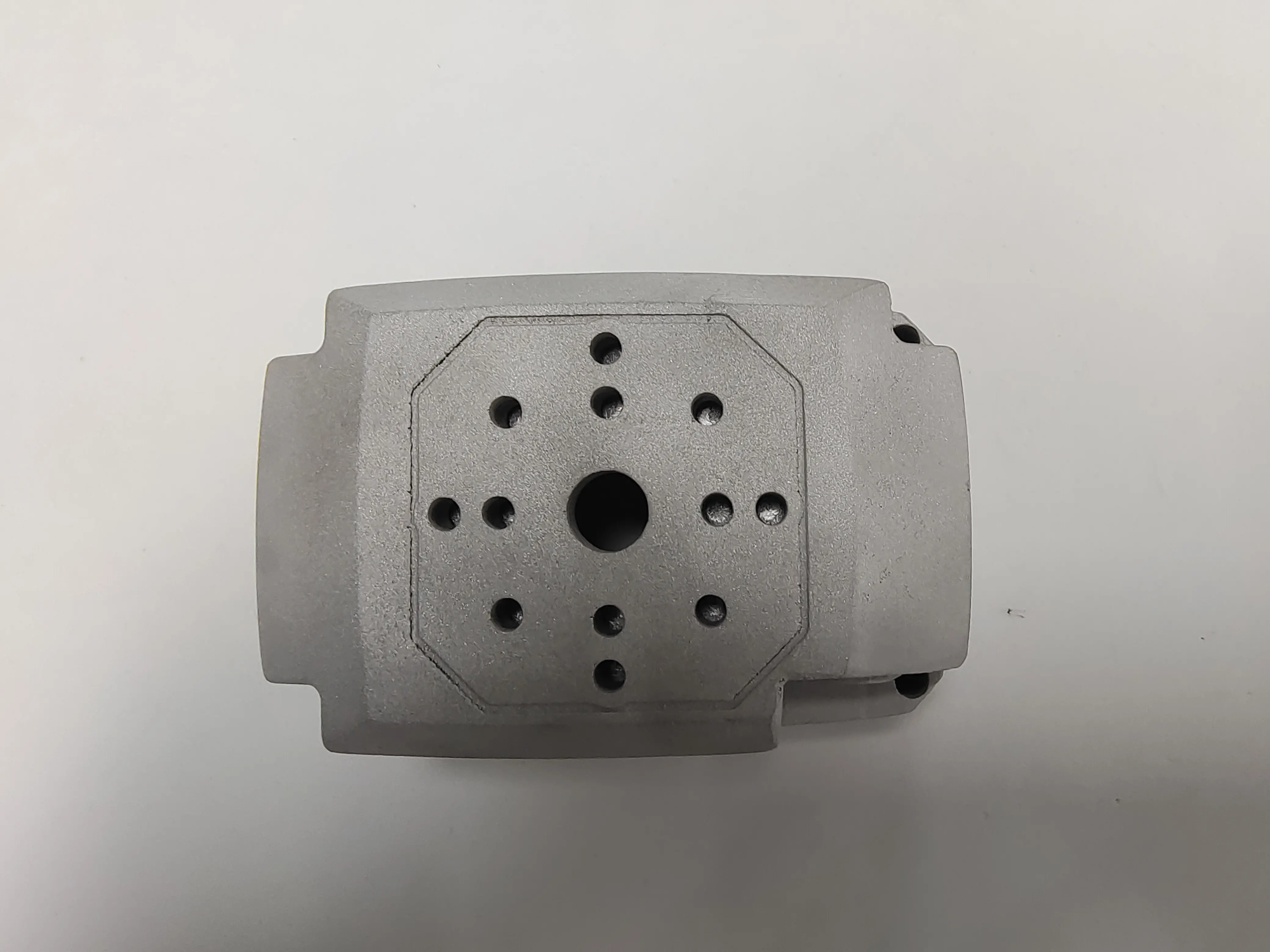
Unlocking your FDM 3D Printing Potential: Basic Guide to PLA 1.75mm Filament
In the world of vibrant Fusion Deposition Modeling (FDM) 3D printing, filament selection is crucial. Among the various materials available, PLA (Polylactic Acid) is a high position as an undisputed champion for beginners and experienced manufacturers. In the PLA field, diameter 1.75mm has become the main standard. This guide digs into everything you need to know about PLA 1.75mm filaments, giving you the ability to get consistent high-quality prints. At Greatlight, while our core expertise lies in advanced metal prototyping through selective laser melting (SLM), we understand fundamental roles such as FDM plays in a wider range of additive manufacturing landscapes. Mastering reliable materials such as PLA builds basic skills that apply to the entire spectrum.
What is PLA?
PLA is a biodegradable thermoplastic polymer that comes primarily from renewable resources such as corn starch, sugar cane or cassava root. Its popularity stems from its user-friendliness:
- Easy to print: The PLA has a relatively low melting point (usually 180-220°C), making it compatible with most entry-level and hobbyist printers without the need for a heated bed (although it helps). Compared to materials such as ABS, it flows smoothly and does not easily cause warping.
- Low odor and ecological composition: PLA emits a mild sweetness during printing, with much less than many other options. Its plant-based origin and biodegradability (under specific industrial compost conditions) contribute to its environmentally friendly appeal.
- Excellent visual effects: PLA produces prints with good surface details, vibrant colors (available in bulky arrays), and a pleasant aesthetic shine or matte finish, depending on the formula.
- Biocompatibility: PLA is considered biocompatible in its pure form, making it suitable for specific medical/pharmaceutical prototypes and food contact applications (although material certification and post-treatment are critical).
Why 1.75mm? Industry Standards
The filament diameter debate (1.75mm vs. older 3mm/2.85mm) was largely resolved. 1.75mm is now a common standard for most consumers and manufacturers FDM printers, due to the great advantages:
- Faster response and accuracy: The smaller diameter causes the printer’s extruder gear to hold and pushes the filaments with less torque. This can speed up and decelerate the filament feed faster, resulting in sharp corners, more detailed details and overall better printing accuracy, especially at higher speeds. The thin filament path has less friction and is easier to guide through the Bowden tube.
- Reduced risk of blockage: Thinner filaments require less force to melt on the heat table, minimizing back pressure that can be blocked in the nozzle or hot-suspension fluid.
- Faster withdrawal speed: Lower mass allows for faster and more efficient retraction movement, greatly reducing the string (those annoying stimulation of those plastics between the model parts).
- Material Availability: The sheer advantage of 1.75mm means unparalleled color choices (PLA+, silk PLA, wood fill, metal fill, dark darkness, and more), and easy to get the brand.
Key properties and precautions for PLA 1.75mm
- Strength and rigidity: PLA provides good stiffness and tensile strength for many functional prototypes, models and decorative items. However, it is relatively fragile compared to PETG, ABS or nylon, which means it has a lower impact force and can be captured or chipped under pressure. PLA+ formulas usually improve strength and toughness.
- Thermal resistance: PLA has the lowest heat resistance among common FDM wires. Avoid using it for parts exposed to temperatures above 50-60°C (e.g., automotive dashboards, near thermal electronics). It will begin to soften and deform.
- Moisture sensitivity: Like most thermoplastics, PLA absorbs moisture from the air over time. "Wet" The filaments boil and spit out during extrusion, resulting in surface defects (bubble, roughness), inconsistent extrusion, weaker prints and increased erectile qualities. It is crucial to store correctly (see the tips section).
- UV sensitivity: Prolonged exposure to direct sunlight can cause PLA to degrade, become brittle and discolor over time. Consider ASA or PETG for outdoor use.
Ideal for PLA 1.75mm
- Prototype (visual and low pressure): Rapid design iteration, conceptual model.
- Educational Programs: Safe, easy to print classroom.
- Art and Decorative Objects: Vases, figurines, sculptures, jewelry (details, aesthetics).
- Functional parts (lightweight): Hooks, organizers, toys, fixtures/fixes (for short-term use).
- Building Model: Precisely display the design.
- Custom kitchen utensils/gate tools (short-term food contact): Ensure certified food safety PLA and proper post-processing.
Printing with PLA 1.75mm: Pro Tips
- Bed adhesion: A clean horizontal bed is not negotiable. Use adhesion aids: professional adhesives such as Blue Painters, PEI spring steel plates, glue sticks (based on PVA) or Magigoo. Heated beds (50-65°C) greatly improve consistency.
- Optimal temperature: Start with the manufacturer’s advice. nozzle: Usually 190-215°C. bed: 0°C (unheated) to 60°C. Fine-tune according to your printer, speed and specific filament brand/mix. Lower temperatures increase intensity (slightly), and higher temperatures improve layer adhesion and gloss.
- cool down: PLA greatly benefits from intense cooling. Make sure your layer fan hits freshly extruded plastic. This minimizes string lines, improves overhang, cultivates details and provides a better finish.
- Filigree processing and storage: Treat PLA like a sponge! Store unused filaments in a sealed container with desiccant (silica gel). Consider a dedicated dry box or dry cabinet for long-term storage. Wet wire will be actively dry (<45°C) before printing.
- Printing speed: PLA is widely used. Usually, speeds of 40-80mm/s can be achieved. Slower speeds (<40mm/s) can enhance details, while higher speeds may require calibration and are often used for filling or rough drafts. Higher prints usually require a slower speed to cool.
- withdraw: Fine-tuning the retraction distance (1-5mm) and speed (30-60mm/s) is the key to eliminating the string. Bowden settings usually require a longer retraction distance than direct drives.
Troubleshoot common PLA issues
- Adhesion/warping of the bed: Level bed! Clean bed! Use adhesion aid. Increase the bed temperature slightly. Use edge/raft. Check the draft.
- Line string: Increase recovery distance/speed. Reduce the nozzle temperature. Increase the travel speed. Enable "Z-HOP" Carefully. Make sure the filaments are dry.
- Inadequate sorting: Check for clogged nozzles. Increase nozzle temperature. Check the extruder tension/gear. Increase the extrusion multiplier. Ensure filament diameter consistency (measure!). Dry silk.
- Excessive repulsion/blister: Reduce the extrusion multiplier/flow. Reduce the nozzle temperature. Calibration electronic steps. Make sure the filament diameter is not oversized.
- Layer splitting/brittleness: Usually due to moisture – dry silk. Increase the extrusion temperature for better layer bonding. Increase traffic slightly.
- Overhanging details/serial bad: Improve cooling! Increase fan speed. The drooping speed is slow. Enable support where absolutely necessary.
in conclusion
The PLA 1.75mm filament remains an ideal entry point for 3D printing and a reliable workhorse for countless applications. Its ease of use, extensive compatibility, excellent finishes and vibrant material options make it a favorite for good reason. While it may not be the final answer for high temperatures or key impact components, its role in the prototype, education, art and lightweight functional parts is invaluable. By understanding its properties, mastering the best printing settings, and diligently managing filament storage, you can consistently produce high-quality results.
When you explore more demanding materials such as PETG, ABS or complex engineering composites, the principles of material understanding, process optimization and attention to detail learned using PLA can be translated directly, or even ventured into the realm of professional metal prototypes, where expertise such as SLM functionality of Greatlight becomes essential. Complete the basics with PLA 1.75mm to empower you with your entire 3D printing journey.
FAQ: Your PLA 1.75mm question has been answered
-
Q: Can PLA really be biodegradable?
- one: Yes, but there are big warnings. Under specific industrial compost conditions (high temperature ~ 60 °C, high humidity, specific microorganisms), PLA biodegradation is usually in home compost or landfills. That’s true no Quickly decompose in natural environments. Always deal with the PLA responsibly, if possible, through recycling programs or appropriate waste streams. Think it is "Compostable under industrial conditions" no "One-time".
-
Q: Can I print PLA without heating the bed?
- one: Yes, PLA is one of the few filaments that can usually be used in this case. However, using a heated bed (even set to 45-60°C) greatly improved a layer of adhesion, minimized warping of larger prints and significantly improved overall printing success. Using tape or glue (such as tape or glue) is essential.
-
Q: Why is my PLA fragile after printing (even breaking on the spool)?
- one: The most common reason is the absorption of water ("Wet silk"). PLA absorbs water from the air, thereby weakening its structure and making it easy to capture. Before printing, dry the wire thoroughly (using a dedicated filament dryer or very low-temperature oven). Over time, age and UV exposure can also lead to vulnerability.
-
Q: What is it "PLA+" or "PLA Pro"?
- one: These are modified PLA formulations with additives such as impact modifiers, stabilizers or enhancers. This goal is usually to enhance mechanical properties such as toughness (resistance ability), ductility, heat resistance, layer adhesion or reduce wear resistance. Manufacturers have very different properties, so check their specifications.
-
Q: How to correctly store 1.75mm PLA?
- one: Protect it from moisture and dust:
- always: The opened plastic bag is placed in the open plastic bag and is packaged with desiccant immediately after printing.
- Best Practices: Store all spools (even unopened) in a dedicated sealed container (e.g., latch boxes, vacuum bags) with a rich silicone desiccant.
- consider: Silk dry box dispenser that can be fed directly to your printer or dedicated dry cabinet/storage.
- one: Protect it from moisture and dust:
-
Q: Can I use PLA for functional parts such as gears or tool handles?
- one: PLA able Used for lightweight functional parts, especially rigid gears or handles under minimal pressure. However, be aware of its limitations:
- Low impact resistance: Easy to capture or be affected.
- Low heat resistance: Can be deformed under low temperature loads.
- Creep: Can be deformed over time under constant load.
- wear: Not as wear-resistant as nylon or PET. For truly durable functional components, PLA+, PETG or ABS are usually better choices.
- one: PLA able Used for lightweight functional parts, especially rigid gears or handles under minimal pressure. However, be aware of its limitations:
-
Q: What is the difference between silk PLA and Matte PLA?
- one: This is mainly about the appearance:
- Silk PLA: Includes additives (usually in an elastomeric form) that give it an incredibly smooth, shiny, almost satin or silky shine. The print looks metallic or shiny, but may be slightly weaker/brittle than the standard PLA and requires very good cooling to maintain the shine.
- Matte PLA: Formulated to eliminate typical gloss finishes. It leads to a smooth non-reflective surface that masks the layer lines very well and has a low-key feel of height and low. It usually has similar mechanical properties to standard PLAs.
- one: This is mainly about the appearance:
- Q: Is PLA food safe? Can I use it to print cups or plates?
- one: Very careful trampling. And RAW PLA polymer able It is food safety, and the 3D printing process introduces significant risks:
- Micropore force: The layer lines create tiny gaps in which bacteria and mold can reproduce and cannot be effectively cleaned.
- Pollutants: Previous material (even traces) in the nozzle, oil/dirt in the treatment or printer assembly, or additives/colorants in filaments may themselves not be food safe.
- Temperature sensitivity: PLA softens in a dishwasher or in a hot liquid. if Requireduse thin silk Supplier’s confirmed food safety And coat the final object with FDA-approved food safety epoxy to seal the surface. Understand the risks. Commercial food-grade plastic items are molded, not printed in 3D.
- one: Very careful trampling. And RAW PLA polymer able It is food safety, and the 3D printing process introduces significant risks:
Mastering PLA 1.75mm is your portal to unlock the full potential of Desktop FDM 3D printing. For projects that require engineering-grade strength, durability, or the unique possibilities of metal, remember that companies like Greatlight specialize in using advanced technologies such as SLM Metal 3D printing and comprehensive finishing to bridge the gap between desktop prototypes and high-performance end-use parts. Happy Print!