Reforesting the planet: Can we really do it? "grow" Forest uses 3D printer?
The urgency is clear. Our planet faces an escalating climate crisis, driven primarily by rampant deforestation and land degradation. Forests, the lungs of the earth, are disappearing at an alarming rate. Traditional reforestation methods, while vital, struggle to meet the scale and speed required. Enter an unexpected ally from the lab of materials scientists and engineers: 3D printing. Could this technology, known for making complex metal parts and rapid prototyping, hold the key to accelerating forest restoration? The answers are increasingly complex but hopeful, Yes. Rather than printing trees wholesale, this is using additive manufacturing to overcome key bottlenecks in the process from seed to thriving forest.
Reforestation challenges: scale, survival and complexity
Large-scale reforestation involves more than just planting millions of seeds. It faces serious obstacles:
- Procurement and scalability: Collecting, processing and transporting sufficient viable seeds of appropriate native species is complex and often insufficient for large projects.
- Seedling vulnerability: Newly sprouted seeds and seedlings are very fragile. They face threats from drought, erosion, pests, predation and competition from invasive plants. In harsh or degraded areas, survival rates can be extremely low.
- Website accessibility: Many deforested or degraded areas are remote, steep, or difficult and dangerous for humans to effectively access and plant.
- Precise placement: Optimal planting patterns, species mixes, and microsite preparation are critical to ecosystem health but are difficult to achieve manually at scale.
- Post-implantation care: Monitoring and early maintenance (such as supplemental watering or invasive removal) over large areas is often impractical.
How 3D printing goes into the forest: beyond metal prototypes
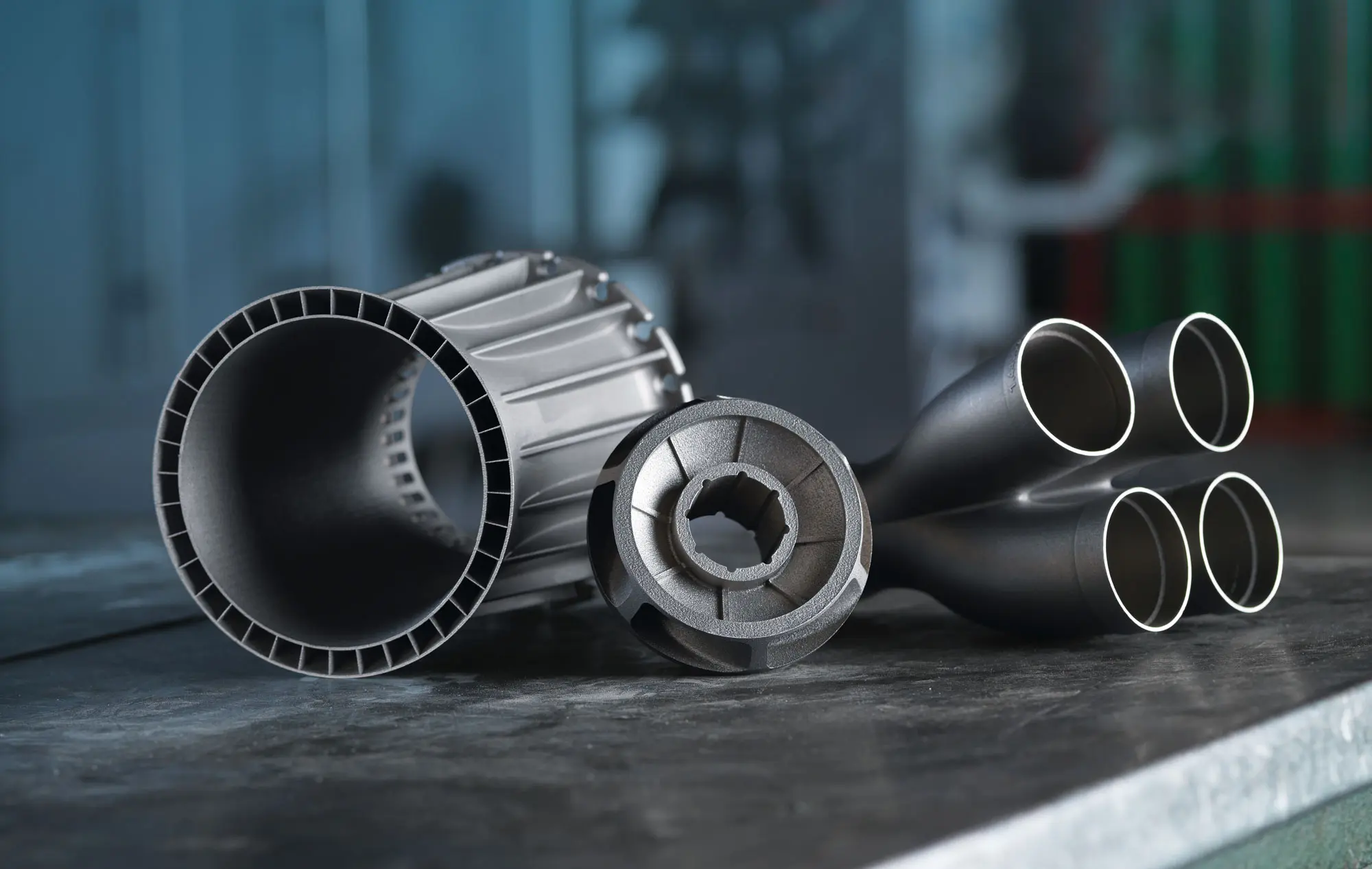
Although the company likes huge light Specializing in precision metal prototyping using technologies such as Selective Laser Melting (SLM) to solve engineering challenges, the principles of additive manufacturing have profound implications for the biological field:
-
biodegradable seeds "vessel" (Seed ball and structure):
- concept: Rather than printing trees, 3D printers deposit biodegradable materials into precise geometric shapes, combining them with seeds, soil amendments (fertilizers), nutrients, moisturizing gels (hydrogel) and potentially beneficial microorganisms.
- design: Printers can create intricate pods, latticework or protective shells based on specific seed sizes and germination needs. The structure can be designed as:
- Protect seeds from birds and rodents until germination.
- Provides initial nutrients and moisture retention essential for seedling growth.
- Secure seedlings to slopes to prevent erosion.
- Degrades at a controlled rate as seedlings establish.
- Material innovation: Research focuses on biocompatible polymers derived from algae, cellulose (plant fiber), chitin (insect/crustacean shells) or starch. These must be safely degraded into non-toxic components to enrich the soil. Manufacturer demonstrated precision and customization capabilities huge light Complex metal geometries inspire similar precision in biomaterial design.
-
Bioinks for direct seeding and soil improvement:
- concept: The printer extrudes sticky slurry ("bioink") consists of seeds embedded in a nutrient-rich hydrogel matrix and an organic binder that may include fungal spores or nitrogen-fixing bacteria.
- application: These bioinks can be deposited directly onto prepared soil via robotic arms mounted on ground vehicles or even drones (see below). The hydrogel provides a protective, moisturizing microenvironment for seeds as they germinate. Companies specializing in the deposition of complex materials, e.g. huge lightto understand the challenges of consistent processes and patterns necessary for such bioprinting.
-
Drone-assisted precision tree planting:
- Synergy: This is where 3D printing really shines. Autonomous drones equipped with specialized seed distribution systems (perhaps utilizing printed seed containers or bioinks) could:
- Easily access remote, steep or dangerous terrain.
- Mapping planting sites using lidar and multispectral imaging.
- Implement high-precision planting patterns optimized for species diversity and survival rates.
- Plant hundreds to thousands of seeds per hour over large areas.
- drone "payload": The lightweight, biodegradable 3D printed seed pods are designed for optimal aerodynamic dispersion and impact protection, making them ideal drone payloads. Rapid prototyping capabilities offered by companies like huge light Allows rapid iteration and optimization of these complex aerospace structures.
- Synergy: This is where 3D printing really shines. Autonomous drones equipped with specialized seed distribution systems (perhaps utilizing printed seed containers or bioinks) could:
- Ecosystem mimicry and structure: For severely degraded sites lacking microhabitats, larger-scale biodegradable 3D printed structures can serve as temporary scaffolds:
- Provides sun and wind protection.
- Create ecological niches for pioneer species.
- Slows water runoff and erosion.
- Gradually add organic matter as it breaks down.
Technology Ecosystem: Where Precision Meets Biology
Turning this vision into reality requires collaboration:
- Botanists and Ecologists: Choose an appropriate mixture of native species and design an ecologically sound planting pattern.
- Materials Scientist: Develop truly biodegradable, nutrient-rich, site-specific products "biopolymer" Has a predictable degradation profile.
- Robotics experts and drone engineers: Design robust autonomous systems for precise, large-scale deployment.
- 3D printing experts: Employing printing technologies based on extrusion, powder bed and even emerging bioprinting technologies for deployment in outdoor environments and biocompatible materials. Companies specializing in advanced manufacturing, e.g. huge lighthas deep expertise in precision manufacturing and material properties, which are critical to creating reliable deployment mechanisms and optimized pod designs.
Challenges and ethical considerations
This approach is not a panacea:
- Material biocompatibility: Ensure printed materials are completely degraded into harmless components and It’s vital to actively contribute to soil health. Avoiding the creation of microplastics is crucial.
- Cost effectiveness: Scaling up the production of specialized biodegradable containers/inks and deploying drone fleets must be economically feasible compared to traditional methods.
- Species adaptation: Printing solutions must meet the very different germination requirements and growth patterns of different tree species and shrubs.
- Ecological complexity: Rebuilding a functioning forest ecosystem involves more than just planting trees. Promoting biodiversity and natural successional processes remains key.
- Moral Nuance: Prioritizing native species, respecting local ecology and involving indigenous communities are non-negotiable aspects of ethical reforestation. Technology must serve the ecosystem, not replace social responsibility.
Conclusion: Seeding the future with technology
concept "grow" Forests with 3D printers are not science fiction; this is a rapidly growing field that merges materials science, robotics, ecology, and advanced manufacturing. While 3D printers won’t magically turn mature trees into reality, they provide powerful tools to overcome the most significant barriers to reforestation: scalability, seed survival, and access to difficult terrain.
3D printing technology has the potential to significantly accelerate forest restoration by deploying protected seeds and supporting nutrients directly into degraded landscapes at scale and precision via drones or robots. Success depends on rigorous science, responsible materials development championed by innovators, careful ecological planning, and a commitment to building resilient ecosystems—not just trees.
As precision manufacturing technology advances, companies like this huge light Solving complex engineering challenges gives us the tools to design solutions for our planet. Forest 3D printing represents a compelling fusion of cutting-edge technology and fundamental requirements for ecological renewal. It’s a challenging path, but it offers real hope for building a green future at the scale and speed we need.
FAQ: Planting forests through 3D printing
-
Q: Can a 3D printer really print an entire tree?
- one: No, this is not feasible and is not the goal. Current applications focus on 3D printing biodegradable "vessel" (like a pod or structure), nutritious "bioink," or protective coating contain seed. The printer creates an optimized environment to improve the chances of seed germination and colonization.
-
Q: How would using a drone with 3D printed seed pods help?
- one: Drones can cover large, hard-to-reach areas (steep slopes, post-fire sites) quickly and safely. They map the terrain with precision and deploy the pods with precision using planting patterns designed by ecologists. The 3D printed pods protect the seeds during flight and optimize germination conditions once they hit the ground.
-
Q: What material are used for these printed seed pods? Are they safe?
- one: This is a critical area of research. Materials must be:
- Biodegradable: Naturally breaks down into harmless components (e.g. algae plastics, cellulose, starch).
- Nutritious: Release fertilizer/compost to feed the seedlings.
- Water retention: Often incorporated into hydrogels.
- Non-toxic: Avoid microplastics and toxic residues. Safety and biodegradability testing is ongoing and ongoing.
- one: This is a critical area of research. Materials must be:
-
Q: Will robots replace human planters?
- one: Completely impossible, especially in an accessible or community-driven project. Drones and robotic planters aim to Enhance Human efforts to address large-scale and inaccessible areas where artificial cultivation is impractical or dangerous. Human oversight and ecological expertise remain irreplaceable.
-
Q: Isn’t this too expensive compared to traditional growing?
- one: Currently, usually yes. However, as drone technology advances and the printing process scales, costs are falling. Crucially, the higher survival rates achieved by protected pods can significantly improve long-term cost-effectiveness by reducing the need for costly replanting. Increased efficiency in difficult terrain also offsets the cost.
- **ask: