Fighting with Warp: How to stop 3D printing edges from curling and destroying your build
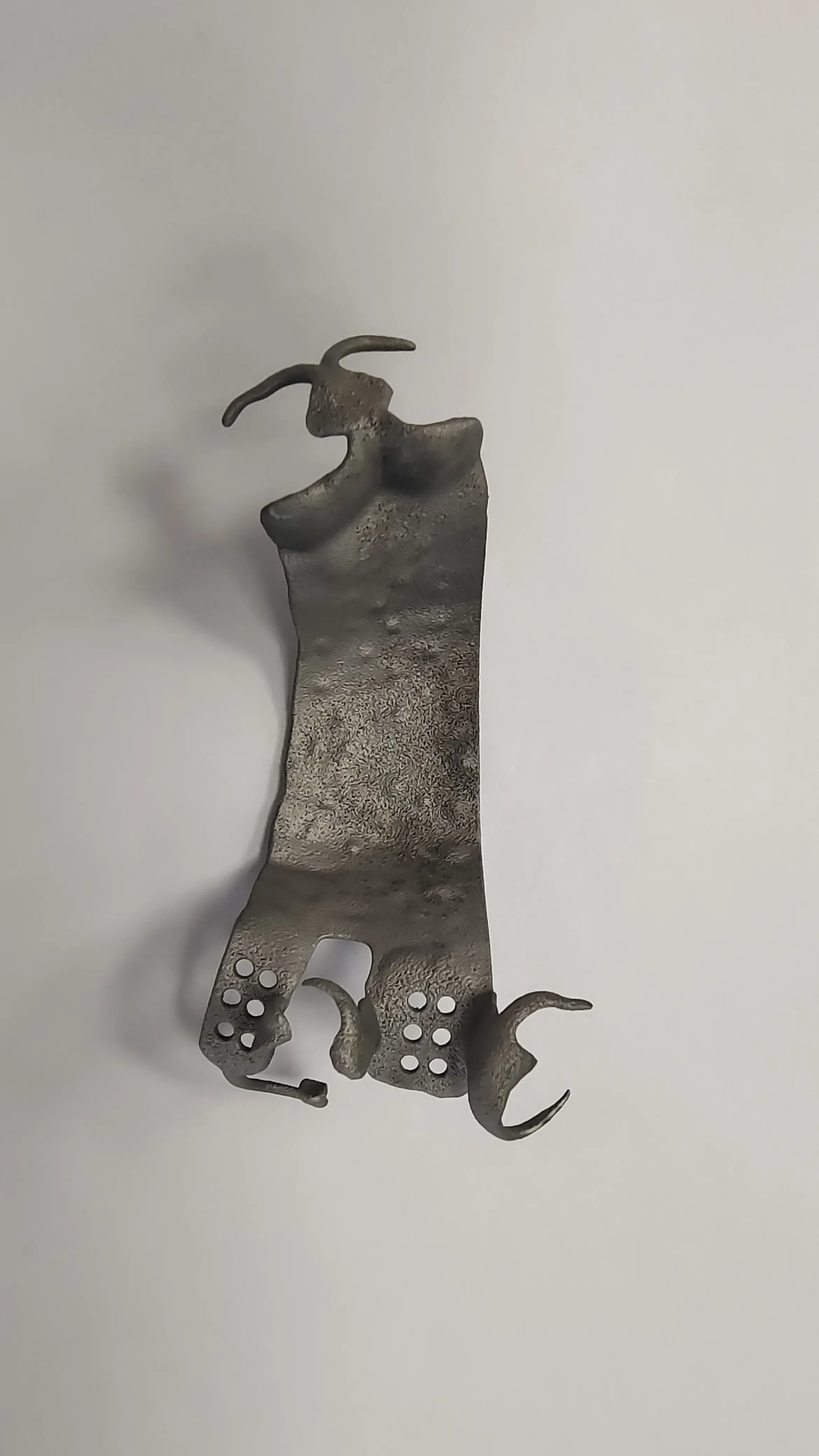
You’ve spent hours designing the perfect 3D model, carefully sliced and started the printer, only finding the sadness of curling on the edge. As the print progresses, the corners lift off the building board, bent upward like stubborn potato chips, and suddenly, your masterpiece is ruined. This common problem, known as warping, stems from a simple villain: Uneven heat shrinkage. When the plastic cools, it shrinks. If a part is faster than the other part (e.g., top layer vs. bottom), the internal stress pulls the edge upwards, pulling them off the bed.
At Greatlight, as a leading rapid prototyping manufacturer with deep expertise in industrial-grade selective laser melting (SLM) equipment and metal/composite printing, we have been twisting in thousands of projects. Whether you are an amateur or an engineer, Edge Curling is common. Let’s break down why it happens and how to crush it into a perfect print.
Why 3D Printing Edge Curl: Scientific Simplification
Warpage occurs due to the coefficient of thermal expansion (CTE), a tendency for the material to expand upon cooling and expand upon cooling. During printing, high temperatures (e.g. 200-260°C) are extruded on the cooler build plate. As the layers cure, they shrink slightly, creating tension. If the adhesion to the bed is weak, the tension pulls upwards the edges, especially in materials with high CTE such as ABS, nylon or polycarbonate. Factors that enlarge include:
- Material properties: High CTE plastics (such as ABS) shrink more than PLA. Semi-crystalline polymers (such as nylon) are particularly fragile.
- geometry: Concentrating stress in larger planes or sharp corners.
- Environmental conditions: Draft or lower room temperature can lead to uneven cooling.
Verified strategies to prevent edge curling
1. Main bed adhesion
The foundation for success. Without strong parts stickiness, twists will win.
- Surface preparation: Clean the manufacturing board with isopropanol to remove oil. Scrub with soap and water every month.
- Adhesive aids: Apply a thin layer of glue sticks, hair spray or professional adhesives such as Magigoo. For glass beds, diluted PVA mixtures can also be used.
- 3D Printer Tools:use edge (Thin extension at the bottom of the model) Extra grip or raft For unstable models. Set the edge width to 5–10 mm in the slicer.
2. Optimize bed temperature
Care is your ally. A consistently warm bed minimizes thermal gradients.
- Set the temperature to slightly higher than material Tg (Glass Transition Point). For example:
- PLA: 50–65°C
- ABS: 90–110°C
- Nylon: 70–100°C
- Use a thermal camera (or infrared thermometer) to identify the cold spot. Insulate the bottom surface of the printer if necessary.
- Key insights: For materials that are prone to warping, keep the bed temperature throughout the print.
3. Perfect printing settings and cooling
Balance is crucial. Tool path and cooling adjustments relieve stress.
- Initial layer settings:
- Reduce the first layer speed to ≤20mm/s.
- Increase the initial layer line width to 150% for better extrusion.
- Cooling strategy:
- For the first 3-5 layers with ABS, nylon or PC, completely disable part cooling.
- After that, the ramp fan gradually rises to 50–100%. Never use a sudden 100% cooling explosion.
- Nozzle temperature: Lower it to the minimum recommendation of the material to reduce thermal shock.
4. Design intelligence: Line-of-Defense Model
Prevention begins with CAD. Small adjustments offset physics.
- Round corners: The pressure is evenly distributed on the circular edges. The 3–5mm rounded corners can be clearly eliminated.
- Avoid large solids: Hollow models with fill elasticity below 50% are better. Use ribs instead of thick flat plates.
- Smartly Eastern: Located in a large surface parallel to the printing bed or inclined model 5-15 degrees.
5. Materials Important: Choose wisely
Not all filaments warp equally. Profile suggestions:
- PLA: Low risk of warpage – ideal for beginners.
- Petg: Easing. Use at a bed temperature of 70–80°C.
- ABS/ASA/Nylon: High. Need a shell and a warm bed.
- TPU/PVA: The risk due to flexibility is very low.
- For prompts: Fiber-reinforced filaments (eg, carbon fiber PLA) are reduced due to filling stability.
6. Surrounding and environmental control
Lock heat. The enclosed printer keeps temperature stable to reduce layer cooling differences.
- DIY case work (IKEA lacks watches is classic!). Industrial machines like Greatlight’s internal SLM system use sealed chambers and have a finely tuned atmosphere.
- Humidity is important: Store nylon in a dry box when printing because moisture will magnify and warp.
Conclusion: Twisting is fixed-precise
Edge Curlling feels like a buzz, but targeted fixes make it beatable. Each solution rotates around three pillars: Adhesion, thermal uniformity and material intelligence. Get started with easy – Fill the bed ready and add the edges. If the twist persists, dial in bed temperature, adjust cooling and redesign geometry. For projects that require zero tolerance accuracy, such as aerospace or medical prototypes, manufacturers like Greatlight offer shortcuts. Neutralize and warp it before starting with advanced industrial printers, including climate-controlled SLM systems, and then process all post-processing (e.g., heat treatment) to achieve dimensionally stable metal and polymer parts. Remember to build expertise by troubleshooting. However, if time or complexity dominates, please work with us to save costs and materials.
FAQ: Quickly answer your twisted dilemma
Q1: Why does my 3D printing always curl at the edges?
This is almost always due to uneven cooling and poor adhesion. The top cools and shrinks faster than the bottom, creating pressure to raise the edges. High CTE material (ABS, nylon) worsens this.
Q2: Can distorted prints be repaired?
Slight warping can be flattened with heat (for example, a low hair dryer) or can be gently re-melted with a hot knife. Severe warping is irreparable – prevention is key.
Question 3: Which materials are most likely to distort?
ABS, nylon, polycarbonate and ASA are on the list. PLA, PETG and TPU are more stable. For use in warpless metal (titanium, aluminum), professional SLS/SLM system Excel.
Question 4: How to prevent curls from heating beds?
It allows the bottom semi-plastic to hold for longer periods, matches the cooling rate to the upper layer and reduces shrinkage stress. Important: Make sure the temperature is consistent!
Q5: What is the optimal nozzle temperature to avoid warping?
Print at the lowest end of the recommended range of filament. For ABS, 220–240°C is used to balance flow and stress. Test specific valve spools with temperature towers.
Q6: Are there any design adjustments to prevent lifting?
Yes! Rounded corners > acute angles. Large parts? Add mouse ears (small disc pads around the corner). Oriental models avoid isolated edges of isolation beds.
Question 7: How does Greatlight’s service help eliminate warping?
For mission-critical parts, our industrial SLM 3D printers have sealed, heated chamber neutralization and thermal gradients. We also optimized orientation and annealing in post-processing to ensure trial-free flatness. This is ideal for custom metal components, and the risk of distortion is wasted time and metal powder.
Ready to jump from distorted trouble to warpless precision? Greglight performs rapid prototyping with speed and science – on a 24-hour support basis. Customize your project with China’s leading manufacturing partners today. Let us bring your vision to life – plain, square and flawless.