Shrink Your Dreams: The Ultimate DIY Guide to Building to the Nth Level
The world of model railroading thrives on meticulous detail and transports viewers into a world of miniatures. At the heart of any charming layout are the structures: houses, stations, factories and barns that bring the scene to life. For fans of N scale (usually 1:160 scale), space efficiency is key, making DIY construction extremely attractive. This guide delves into the exciting possibilities of creating your own N-scale structures, exploring techniques, materials, and how advances like precision 3D printing are revolutionizing the hobby.
Why DIY N-scale buildings?
- Unparalleled Customization: Get rid of the constraints of commercially available kits. Design the precise buildings your layout requires – a unique factory, a farmhouse in a specific area, or a row of shops that reflects your favorite street.
- Cost efficiency: While there are start-up costs for tools or printing, making multiple buildings yourself, especially simpler designs, can be much cheaper than buying a kit.
- Creative realization: There is great satisfaction in seeing a structure emerge from your own planning and efforts.
- Scalability and consistency: Need ten identical workers’ huts? DIY can be replicated exactly.
- The joy of problem solving: Meeting the challenges of miniaturization is inherently rewarding for hobbyists.
Basic DIY approach to N-scale construction:
-
Traditional staging build:
- Material: Card stock, foam core board, balsa wood, styrene board/rod, basswood strips, craft sticks, wood glue, plastic cement, CA glue.
- process: It requires careful measuring, cutting, assembling and perfecting.
- advantage: The barriers to entry are very low (basic tools like knives, rulers). Great for block building or learning the basics.
- shortcoming: Time intensive. Achieving intricate detail and consistency at N scale (especially windows, doors, textures) is challenging. Durability can be an issue with lighter materials.
- Scale fidelity tips: Use printed paper overlays to apply bricks, siding, or roof tiles to cardstock walls for an enhanced sense of realism.
-
Kit bashing:
- concept: Modify and combine parts from existing business model kits (plastic or card) to create something new.
- advantage: Faster than building from raw materials. Make use of existing details like windows or doors. Great for experimentation.
- shortcoming: Subject to pose and style of donor kit. Cutting, modifying and finishing skills are still required. Increased costs.
- 3D printing (the game changer):
- Material: Mainly photopolymer resin (for SLA/DLP/LCD printers) or PLA/ABS/PETG filament (for FDM printers).
- advantage: Unleash incredible precision and complexity at N scale. Excellent reproduction of fine textures (wood grain, brick, stone), gorgeous details and perfectly reproduced parts. Files are easy to expand and modify. Ideal for intricate details such as stairs, railings, tiny signage and more. STL files can be easily shared or purchased online.
- shortcoming: Requires access to printer (owned or outsourced). There is a learning curve involved with printing/cleaning/finishing. Resin handling requires safety precautions.
- Printing nuances: N Scale details:
- Resin printing (SLA/DLP/LCD) It is the first choice for most people. Layer heights of 0.025mm – 0.05mm allow for stunning smoothness. Use high-resolution, fast-curing resin designed for microscopic features.
- FDM printing: Yes, but requires perfect calibration, tiny nozzles (0.2 mm or less) and very fine layer heights (<= 0.08 mm). Best used for larger, less complex buildings or terrain features where layer lines are less obvious. Slow printing speed is critical.
- Post-processing: Water-washable resin simplifies the cleaning process. Use a mild IPA bath for others. Carefully remove the supports. Flat surfaces may require sanding – use a high grit wet sander (>600 grit). Primer (acrylic spray) is essential for an even painted surface.
Design your N-scale masterpiece:
- Reference photos: Collect high-quality images of prototype buildings for accurate scale, detail, and weathering.
- planning: Draw plans, decide on construction methods, list materials/parts. Break down complex buildings into modules (walls, roofs, removable parts).
- software:
- Simple: Inkscape (2D patterns), Tinkercad (basic 3D).
- Advanced: SketchUp, Fusion 360, Blender (complex modeling). Focus on solid modeling techniques necessary for printing waterproof meshes.
Detail and paint for maximum impact:
- Surface preparation: Filling gaps/sanding (especially FDM). Prime thoroughly. For card/wood, seal the surface before painting.
- painting: Acrylic paint is ideal. Airbrushes provide the smoothest results. Use washes (diluted dark paint) to emphasize details. Dry brush lightly to raise texture.
- weathering: Essential to realism. A subtle clean of dirt and a crayon/dry paint clean of rust/dirt streaks. Avoid overdoing it on the N scale.
- Windows: Transparent acrylic plate painted frame or 3D printed insert. Mirrored plastic creates the illusion of depth. Glass gloss adds realism.
- Signage and Advertising: High resolution inkjet prints scaled down. Apply decals effectively.
Bring home precision and scale fidelity:
Craft intricate N-scale details like tiny bolts, delicate railings, intricate storefronts or authentic Victorian gingerbread decorations, pushing the boundaries of hand-scratch builds and kit-bashing. This is where the professional level comes in Precision rapid prototyping and manufacturing, Like the service provided huge lightbecoming a valuable partner in the enthusiast’s journey.
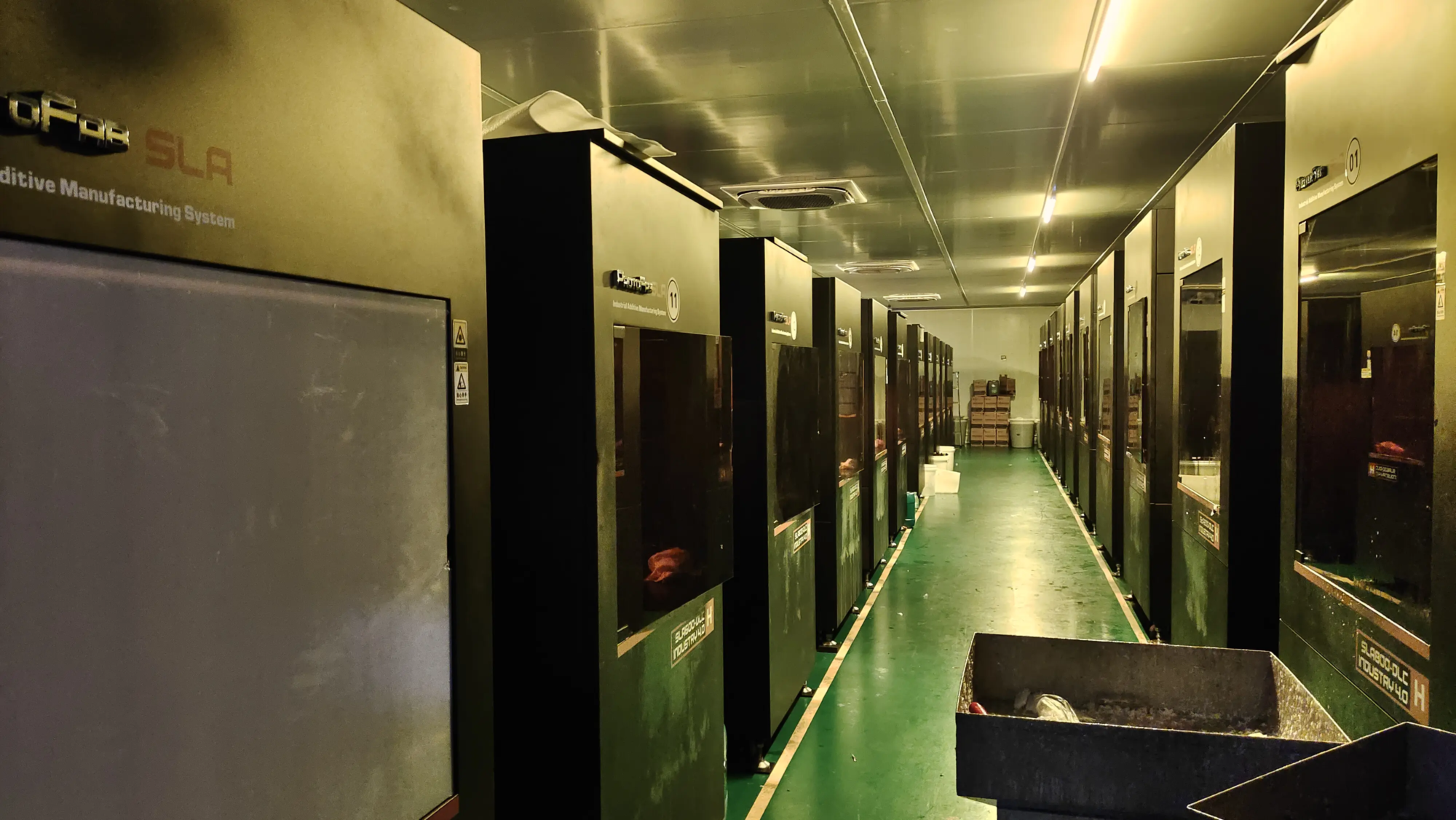
GreatLight utilizes state-of-the-art selective laser melting (SLM) metal printing and advanced polymer 3D printing technology. While SLM is typically used for metal industrial parts, our expertise translates into unparalleled accuracy in resin printing:
- Microscopic detail capture: The ability to reproduce details finer than a human hair is crucial for perfect N-scale windows, rivets and textures.
- Excellent material: Using specialized high-resolution engineering resins, they provide the superior surface finish, durability and stability that are critical for miniature models for indoor or outdoor display. Say goodbye to warping!
- Consistency and scalability: Need ten identical motorcycle taxis or station rooftops? Industrial printers provide batch consistency that is impossible to achieve manually.
- Complex geometric shapes: Create seamless complex roof structures, hollow interiors with intricate details or flowing Art Deco curves that are simply not achievable with traditional methods.
- One-stop solution: GreatLight not only handles ultra-precision printing, but also performs professional post-processing – cleaning, ultra-fine support removal, smoothing (including resin vapor polishing), painting and finishing – delivering true model-ready assemblies or complete structures.
When your DIY ambitions require details that challenge your home printing setup or crafting flexibility, work with A leader in precision rapid prototyping like Gretel Take N Scale realism and creative freedom to the next level. We understand the unique tolerances and aesthetic requirements of model railroading. Whether perfectly designing a historic structure of impossible origin, mass-producing minutely intricate details, or ensuring museum-quality finished product, our manufacturing capabilities can transform your miniature vision into a tangible, stunning reality.
in conclusion:
Building your own N-scale structures is a very rewarding aspect of model railroading. Whether embracing the hands-on craft of building from scratch, creatively dissecting kits, or harnessing the incredible power of 3D printing (either at home or through professional services), the possibilities are endless. This journey involves experimentation, learning and the attention to detail that makes N-Scale layouts captivating. Remember, achieving the pinnacle of authenticity and sophistication doesn’t mean going it alone – partner with a professional rapid prototyping expert like GreatLight to get the industrial-grade precision, durable materials, and expert finishing that take your DIY creations from good to extraordinary. So grab your tools, fire up your imagination or your printer and start building tiny worlds that reflect your vision, one crafted building at a time.
FAQ: Making an N Scale Building – DIY Guide
Q1: Can I really get good details using only N Scale card stock?
A1: Yes, for simpler, more square structures, card stock may work well. However, achieving sharp windows, thin roof overhangs or detailed surface textures using only 1:160 scale cardstock is very challenging. A printed paper overlay helps a lot with texture. For complexity and detail stability, cardstock benefits from reinforcement (balsa wood/cardboard core) and resin printing.
Question 2: What type of home printer is best for an N-scale building?
A2: For detail fidelity beyond injection molding, LCD/DLP/SLA resin printer For N-scale architectural details (windows, doors, railings, signage), there is no doubt that it is superior. Modern affordable desktop resin printer offers perfect working resolution. Even cheap resin printers outperform high-end FDM in microscopic detail.
Question 3: How to prevent N-scale FDM prints from lacking detail?
A3: Break through the limits of FDM: use the smallest nozzle available (0.2mm) and the lowest possible layer height (<=0.08mm)、校准)。设计厚壁(>1mm), remove intricate detail/material, oriented for optimal feature resolution. Accept compromises – FDM is suitable for large structures with simple textures with hidden layer lines. In terms of accuracy, resin is the first choice.
Q4: Are resin printed buildings durable enough?
A4: Properly cured resin is very durable for static models. Uses high quality tough resin designed specifically for model making. Avoid using alkaline brittle resins. Like any miniature, care needs to be taken when handling it. For exterior layouts that require ultimate toughness/UV resistance, professional printing services like GreatLight use strong engineering resins designed for demanding miniatures.
Q5: How to draw small details such as window frames?
A5: Technique is important: Fine brush (000 or smaller), acrylic wash into grooves. Spray primer black/dark gray to make the missed areas look like shadows. Carefully dry brush a light color onto the raised surface. Paint window frames forward Add glass material. Masking spray primer reveals recessed details for easier painting.
Q6: Where does outsourcing to a company like GreatLight make the most sense?
A6: Outsourcing shines when you need it:
- Unparalleled details: Features beyond home printer/resin capabilities.
- Stability issues: It is crucial to avoid warping and ensure a flat base/floor on the N scale.
- Mass/batch production: Print more than 20 identical structures perfectly.
- Complex projects: The internal structure required strength, complex hollow sections.
- Excellent surface treatment requirements: Professional steam polishing, spray painting, metal plating effects.
- Special materials: Ultra-tough, UV-resistant resin suitable for outdoor layouts.
- Historically accurate castings: Metal parts simulation.
Q7: How to start designing easily?
A7: When printing: from tinkercade (Free, browser-based). Import basic shapes, combine/cut. Many N-scale objects are