Ever dreamed of taking control of your own galactic power?
Death Star. It’s not just a moon-sized battle station from a galaxy far, far away, it’s a symbol of engineering ambition (albeit a very sinister one!). For fans, cosplayers, prop makers and enthusiasts, the desire to own a replica of this stunning structure is strong. Thankfully, printing planet-destroying superlasers is beyond the reach of our current technology (hopefully still!), but 3D printing technology, esp. Advanced metal additive manufacturing (AM) such as selective laser melting (SLM)bringing the complex Death Star replica very close to reality. This guide delves into the fascinating process, complexities, and professional SLM services such as those provided by huge lightcan transform this sci-fi dream into a finely crafted metal masterpiece.
Why choose metal for your Death Star? Beyond basic plastics
While desktop FDM printers can produce plastic Death Star models, metal offers unparalleled advantages for truly impressive replicas:
- Unparalleled authenticity and weight: It feels important. The metal imbues the model with the massive industrial heft that is synonymous with Imperial engineering. It transforms from a toy into a serious collectible or industrial piece of art.
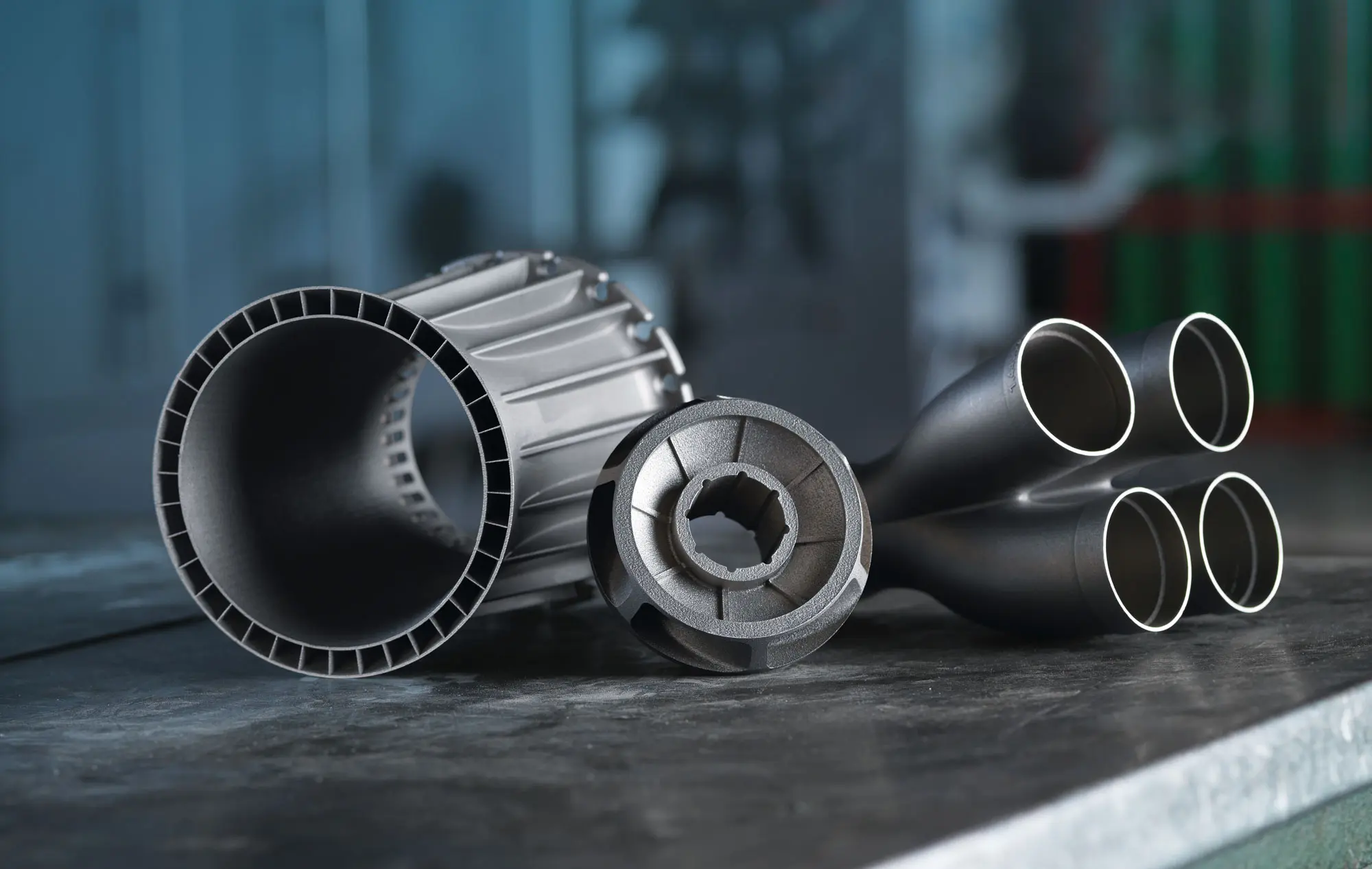
- Excellent detail resolution: Advanced SLM printers use precision lasers to fuse metal powder layer by layer. This allows for the capture of tremendous surface detail—complex networks of grooves, laser ports, panel lines, docking grooves—far beyond ordinary plastic printing.
- Enhanced durability: Stainless steel, titanium, or aluminum printed with SLM are inherently tougher and more resistant to damage than high-strength plastics. Your Death Star relic can withstand the stress of handling or display gracefully.
- Professional completion: Metals provide the perfect substrate for stunning post-process finishes—high-gloss polishes, intricate brushings, specialty coatings—to achieve screen-accuracy or a unique, artistic aesthetic.
- Complexity is key: SLM is not hampered by traditional manufacturing limitations. Hollow sections for interior detailing, complex lattices to simulate internal structures, and complex unsupported geometries all become feasible.
Blueprint: Preparing the Death Star for SLM Printing
Printing such complex structures requires careful preparation:
- Digital model: Start with a high-quality, waterproof 3D model. There are tons of detailed Death Star STLs online (it’s often more practical and economical to focus on fragments or cutaways than the complete sphere). Precision is important – make sure the geometry is diverse and suitable for slicing.
- Size issues: Depends on size. A complete Death Star? Impossible. But large desktop monitors (about 20-50 cm in diameter) or extremely detailed widgets (about 5-10 cm) are possible. Larger sizes exponentially increase cost, print time, design complexity, and potential printing challenges such as warping.
- Design for additive manufacturing: This is crucial. While SLM offers freedom, Design for Additive Manufacturing (DfAM) principles can optimize success. Considerations include:
- Wall thickness: Make sure the walls are thick enough for structural integrity, but not too dense to conserve powder and reduce costs.
- Self-supporting angle: Minimizing severe overhangs requiring bulky supports reduces post-processing work.
- Internal structure: Design lightweight grids or efficient supports within hollow sections.
- Stress distribution: Geometry is strategically placed to minimize residual stress concentrations during the printing process.
- Slicing strategy: This defines the laser path and support structure. The orientation of the build plate can significantly affect support requirements and the quality of the final part. Skilled technicians carefully balance these factors.
Navigating the Asteroid Belt: The Challenge of Metallic Death Star Printing
Printing complex spherical objects with detailed surface features presents unique obstacles:
- Rich support structure: The spherical shape inherently has severe overhangs, requiring extensive support underneath much of it during the printing process – a major source of complexity and post-processing labor.
- Mass and thermal stress: Large metal prints can accumulate significant internal stress during rapid melt/solidify cycles. This can lead to warping or cracking if not professionally managed through DfAM, optimal laser parameters, controlled build chamber heating and controlled cooling strategies.
- Cost drivers: Factors that significantly affect price include:
- Material Quantity and Cost: More metal = higher raw material costs. Complex lattice can alleviate this situation.
- Build time: Longer printing times tie up the machine and increase costs.
- Support for removing complexity: Complex supports embedded in deep gaps require skilled technicians and time-consuming manual labor.
- scale: All of the above factors grow exponentially in size.
- Material selection: Not all metals behave the same:
- Stainless steel 316L: It has excellent corrosion resistance, good strength, wide range of uses and high cost performance. Classic aesthetic.
- Aluminum alloy: Lightweight with good strength to weight ratio. Excellent thermal conductivity. The polish is amazing.
- Titanium alloy: Excellent strength to weight ratio, corrosion resistance, high biocompatibility. Excellent choice, but significantly more expensive.
Post-Processing: Forging the Final Super Laser-Ready Shape
After a successful SLM print, the original part undergoes critical finishing operations:
- Carefully remove supports: This is crucial and subtle, especially for complex features. Using wire cutting, precision CNC machining or highly skilled manual removal techniques.
- Relieve stress: Annealing, typically performed before support removal, reduces internal stresses generated during the printing process, improves dimensional stability and prevents cracking.
- Surface treatment arsenal: There are many options:
- Machining/Grinding: Smooth layer lines and support contact points.
- Shot blasting/sand blasting: Creates an even matte finish that eliminates minor surface imperfections.
- polishing: Achieve a mirror-like shine on steel or aluminum. Electropolishing provides superior, uniform surface results on complex geometries.
- Media Tumble/Vibration Finishing: Effectively smooth edges and surfaces.
- coating: Paint allows for precise color schemes, and PVD coating allows for metallic colors or enhanced durability.
- assembly: For multi-part designs (highly recommended for larger scale or complex interior details), precise fixing and gluing/joining techniques are required.
Why partner with GreatLight to realize your Death Star ambitions?
Attempting a complex metal Death Star print requires specialized equipment and expertise. where is this huge lightis a leading rapid prototyping manufacturer using cutting-edge SLM technology with the following advantages:
- SLM power source: Equipped with the latest high-precision SLM machines, it is capable of accurately melting fine metal powders to achieve stunning detail reproduction even on challenging geometries.
- Engineering mastery: Our team has deep expertise in DfAM and process optimization for SLM. We work on complex designs every day (like your Death Star!) and understand stress management, support minimization, and positioning strategies that are critical to success.
- Material proficiency: We don’t just print; we understand metallurgy. We guide material selection and process it reliably based on your desired aesthetics, mechanical properties and budget.
- End-to-end service: From analyzing STL files to final refinement, GreatLight provides comprehensive services One-stop manufacturing. We efficiently handle printing, meticulous support removal, complex heat treatments, and a full range of finishing options (machining, sanding, sandblasting, polishing, electropolishing, special coatings).
- Reliable and fast: As experts in rapid prototyping, we prioritize speed without compromising on quality. we provide Quick turnaround Time for complex projects.
- Customization person in charge: True customization. Scale, materials, finishes, aspect ratios – we work with you to realize your specific vision for this galactic icon. At GreatLight, our core expertise lies in Customized precision machining and complex metal additive manufacturing solutions.
- Competitive excellence: We leverage advanced technology and streamlined processes to deliver superior quality best pricemaking ambitious projects truly possible.
Conclusion: From Sci-Fi Fantasy to Metal Reality
The Death Star represents the ultimate in scale and complexity—a fitting challenge to the pinnacle of modern additive manufacturing. While printing functional planet killers is still science fiction, creating complex, durable and visually stunning metal replicas is entirely possible with the help of SLM (Selective Laser Melting) 3D printing. This guide outlines the entire journey: from selecting the right highly detailed digital model and considering complex DfAM considerations, to overcoming SLM printing challenges and undertaking transformative post-processing.
Turning such an ambitious goal into reality requires Expertise, advanced technology and meticulous execution. This is the domain of specialist rapid prototyping partners, e.g. huge light. With state-of-the-art SLM equipment, deep metallurgical and DfAM knowledge, and seamless one-stop service (printing, precision finishing, comprehensive quality control), we have the capabilities to transform your galactic engineering dreams into premium metal products. Whether envisioning a stunning display or a compelling proof-of-concept demonstrating technological prowess, GreatLight is ready to collaborate.
Are you ready to create your own Star Wars saga? Please contact GreatLight today for a consultation. Share your Death Star vision or ambitious metal 3D printing project and leverage our expertise and cutting-edge technology to achieve unparalleled results. Experience rapid prototyping done right, combining efficiency with craftsmanship – Customized, precise, priced wisely.
FAQ: Printing the Death Star using SLM Technology**
Q1: Can GreatLight really print? full size Metallic Death Star model?
one