Custom Gundam Dreams: Your Ultimate 3D Printing DIY Guide (And When to Call the Professionals)
Custom paint, unique design or simple charm your own Gunpla is powerful. While traditional plastic model kits offer incredible detail, 3D printing opens up a whole new dimension: pure customization. Want a never-before-seen mobile suit variant? Your favorite weapon from fan fiction? Or just replacement parts for a precious damaged kit? 3D printing makes this possible. However, the road from digital dream to physical perfection is fraught with technical challenges. Let’s start the DIY journey of printing your own Gunpla.
Why 3D print your Gundam? The charm of customization
- Unleash your creativity: Design unique mobile suits, custom weapons, shields, and even dioramas from scratch.
- Relive the classics: Print replacement parts for rare, damaged or missing parts from beloved old kits.
- Scale flexibility: Create miniatures for tabletop games or oversized display pieces that exceed standard Bandai proportions.
- Personalized perfection: Modify an existing design for better clarity, unique proportions, or a personal aesthetic.
- Cost-effectiveness of prototyping: Cheaperly test fit and design concepts before resorting to expensive resin casting methods (although for final production, injection molding is still king).
DIY Workflow: From Files to Fragile Frames
-
Get or create your model:
- Free and paid STL: Platforms like Cults3D, Thingiverse, MyMiniFactory, and Patreon Creators offer a growing library of Gundam-inspired designs (make sure the license allows for personal printing). Search for similar terms "Gundam STL," "mobile suit," Or a specific model (RX-78-2, Zaku II, etc.).
- Model it yourself: Requires proficiency in CAD software (Fusion 360, Blender, ZBrush). Start simple!
-
Choose printing technology: resin (SLA/DLP/LCD) and FDM (filament):
- Resin printing (SLA/DLP/LCD): this The details clearly win. Produces extremely smooth surfaces, sharp edges, and captures the tiny features necessary for Gundam model panel lines, vents, and complex parts. Ideal for smaller parts and complex geometries. shortcoming: Post-processing (cleaning, curing) is messy and requires chemicals, supports are important but difficult to remove in detail, and resin is brittle.
- FDM (filament printing): More convenient and more affordable. Best for larger structural parts, base frames, weapons, or simple custom parts. challenge: Surface texture (layer lines) was a major impediment to scale modeling detail, achieving the accuracy required for snap joints was difficult, and small features were obscured.
-
Core Challenge: Joint Precision Engineering
- Snap-on Nightmare: The Bandai kit is a marvel of injection molding precision. Replicating snap nails, holes and complex joint mechanisms (balls and sockets, plastic caps) through 3D printing is the biggest obstacle. Small variations (shrinkage, warpage, printer tolerances) can cause a part to be too tight (break), too loose (sag), or not fit properly.
- Material properties are important: The feel of resin is different from ABS plastic. FDM prints (PLA, PETG, ABS) vary widely. Friction points, joint stress concentrations, and brittleness all significantly affect mobility and durability compared to engineering Gunpla plastics.
- Action creates stress: Mobile suits are meant to move. Can your printed hip handle the leverage of a giant printed bazooka? Realistically simulate stresses during the model design phase.
- Slicing and printing: striving for perfection
- Direction is key: Position parts to minimize support on critical detail surfaces and optimize strength along stress axes (e.g., nail direction). Beveled pieces provide better layer adhesion in critical areas.
- Support strategy: resin printing need support. Use light/medium supports attached to non-critical areas. Adjusting support density and contact point size can minimize scarring, but is an art form. FDM can sometimes get away with less support, but suffers more from being left hanging.
- Floor height: For details, please look down! Resin: 0.025-0.05mm. FDM: 0.08-0.15mm is pushing the limits of small parts.
- Tolerance calibration: Critical! you must Calibrate the printer’s dimensional accuracy and account for material shrinkage. Print a test cube, gap gauge, and simple peg/hole combination to determine the exact offset required (e.g. 0.1-0.3mm gap for a snap fit).
When DIY reaches its limit: Partner with Rapid Prototyping Professionals
Let’s be realistic. Converting a highly detailed, articulated Gunpla design from a digital file into a solid, functional physical model with a perfect finish is extremely difficult. Consistently achieving the required precision, strength and surface quality on a benchtop machine is a significant challenge, especially for complex assemblies or metal parts.
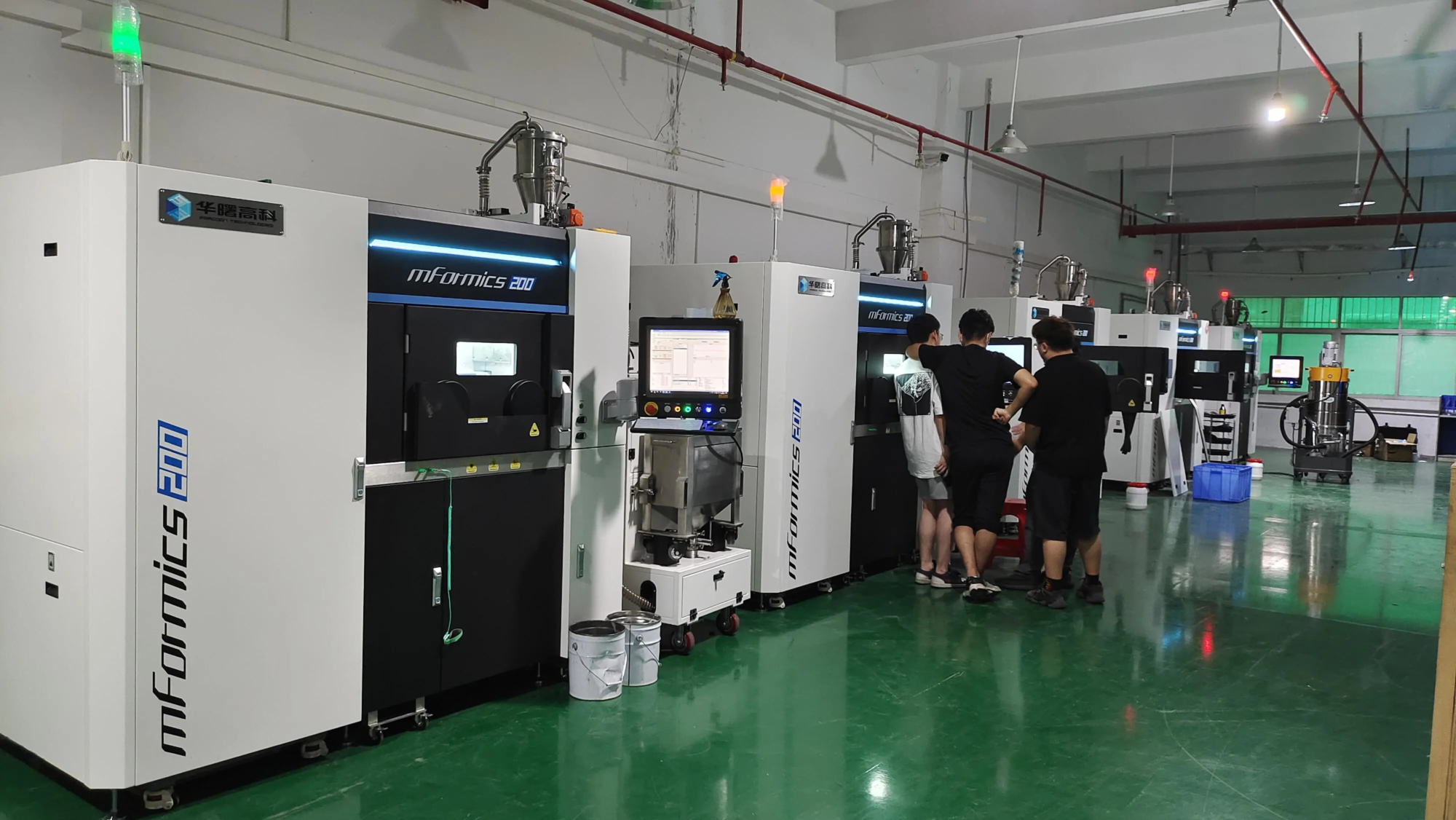
This is where working with expert rapid prototyping services such as huge light Change the game. GreatLight focuses on the absolute pinnacle of precision manufacturing for demanding applications, offering capabilities well beyond what consumer 3D printers can achieve:
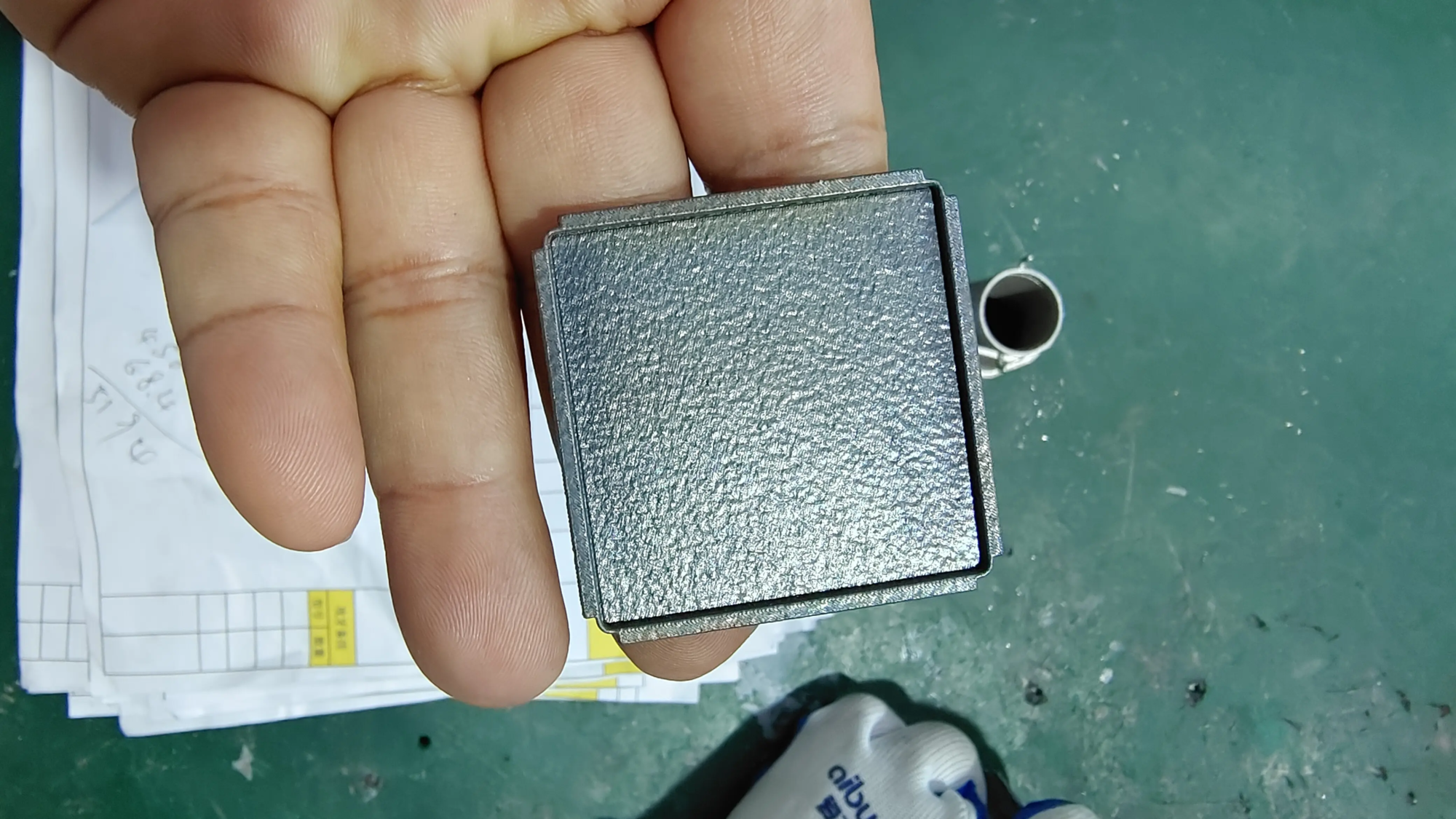
- Industrial metal printing (SLM/DMLS): Print parts using solid metals like aluminum, titanium, or stainless steel. Imagine customization Metal An internal frame for unparalleled strength, a metal weapon with real weight, or parts designed to withstand years of posing and handling. Guoguang Advanced SLM technology Achieve complex geometries and densities not possible otherwise. Great for super strong joints, internal mechanisms or displaying weapons.
- Unparalleled precision and consistency: Advanced industrial machinery (far beyond desktop SLA/DLP) combined with strict process controls ensure microscopic dimensional accuracy that is critical for those important snap connections and friction joints. They handle complex tolerances automatically.
- Engineering grade resins (and plastics): Engineering resins offer extremely superior toughness, flexibility and thermal stability compared to consumer resins. Need to replace flexible polycapacitors? Glow has materials science.
- Comprehensive post-processing: One-stop expertise delivers mirror-like finishes through specialized techniques:
- Support removal: Use advanced methods for meticulous, damage-free removal.
- Sanding and polishing: Achieve flawless surfaces ideally suited to the exacting standards of model finishing.
- Vapor Smoothing (for some plastics): Layer lines are eliminated almost perfectly.
- Painting and coating: Achieve professional automotive-grade finishes and effects.
- Truly customizable: Don’t just choose a color – specify accurate material properties, tolerances, surface roughness.
- Solve your toughest problems: Expert engineers work with you to optimize your design specifically for additive manufacturing—identifying potential print failures, suggesting ways to strengthen fragile features, and ensuring that articulation features in your printer operate smoothly.
DIY post-processing techniques for printing Gundam models
- clean: Resin: Thorough IPA clean and full spectrum UV cure. FDM: Carefully remove support material.
- Polishing: Essential for both. Start with coarse grinding to remove supports/steps and gradually move to ultra-fine grit (800-2000+). Wet Sand Resin.
- Primer: Essential for revealing layer lines and imperfections for further sanding and as a base for paint. Spray primer works best.
- Gap filling: After initial priming/sanding, use styling putty or resin glue to fill in layer lines or minor imperfections.
- Painting and details: Master the craft of a modeler. Thin coats, panel linings, decals, topcoats.
Conclusion: A world of possibilities, choose your path wisely
3D printing opens up exciting frontiers for Gundam modelers and creators. There’s no denying that the ability to bring a unique design to life or restore a classic kit is powerful. Embark on a DIY journey and learn valuable skills in design, engineering, and complex additive manufacturing. When you get it right, you’ll be greatly rewarded.
However, serious technical challenges are acknowledged, particularly in achieving the precision and durability required to achieve an articulated mobile suit on par with Bandai kits. Amateur printers do have limitations in material properties, dimensional accuracy, and surface finish. To achieve truly outstanding results – especially for complex designs that require the strength of metal, a smooth surface on glass or the guarantee of a perfect fit – work with a professional rapid prototyping service such as huge light It’s not just an option; it’s often the path to reliable, industrial-grade success.
Whether you choose the DIY route, work with a professional, or combine the two methods (for example, DIY outer armor on a sturdier professionally printed frame), the age of truly customized Gunpla has arrived. Take on the challenge, design boldly, and build your perfect mobile suit!
FAQ: Printing Gunpla
Q: Is 3D printing Gunpla cheaper than buying a Bandai kit?
one: Generally speaking, no, especially for the same results. High detail resin printing + materials + paint + significant time investment may exceed the cost of a standard HG or RG kit. DIY is about customization and the journey, not the cost savings of a standard model. Professional printing for professional applications on metal/complex prototypes.
Q: What is the most affordable Gunpla parts printer?
A: Regarding the details necessary for Gunpla, LCD resin printer (such as Elegoo Mars series, Anycubic Photon series) is usually the best starting point if You can handle resin processing and post-processing. If possible, avoid FDM on delicate parts.
Q: Why don’t my printed joints stick together? Are they too loose or too tight?
A: This is the challenge of tolerance! Parts may shrink slightly during the printing/curing process. Solution: Carefully calibrate your printer using tolerance testing. Use the slicer settings to adjust horizontal hole extension (slightly more) and horizontal size compensation (slightly less nail diameter for the resin; results vary by printer/material). Expect trial and error.
Q: My resin parts are too brittle! They break easily. what can I do?
Answer: Standard resin is very brittle. try adding flexible resin to your mix or switch to a specific "ABS-like" or "tough" Resin designed for better impact resistance. It is crucial to: Hollow thick parts reduce internal stress points during the curing process. Ensure complete post cure.
Q: What materials does GreatLight provide that are suitable for Gunpla?
A: GreatLight offers a wide range of products suitable for demanding Gunpla applications:
- Resin: Engineering grade tough, ABS-like resin for detailed armor/weapons and increased durability. Flexible resin for polyamide replacement.
- Metal (SLM): Aluminum (lightweight/strong frame, weapons), stainless steel (extreme durability), titanium (excellent strength to weight ratio).
- plastic: Nylon (PA12) is flexible/tough and an advanced composite material.
Q: Can GreatLight print complete, ready-to-assemble articulation kits?
one: Yes, absolutely. Honglaite’s expertise in high precision SLM metal printing Advanced resin processes combined with their integrated post-processing capabilities make them uniquely qualified to produce complex, fully articulated prototypes or custom models. This solves key DIY challenges of precision assembly and strength. Discuss the feasibility of your project.
Q: Where can I find good Gundam STL files?
Answer: Search platforms, such as Cults3D, Thingiverse, MyMiniFactory. Please note license restrictions ("For personal use only" very common). Private Patreon creators often offer exclusive designs. If you are new to resin printing, make sure your model is well pre-supported. notes: It is illegal to distribute unlicensed copies of official Bandai designs. Focus on original designs or custom parts.