Print your own removable dinosaur! Taking Jurassic Engineering to the next level
There’s a special sense of excitement when you hold a piece of prehistory in your hands. Or even better? When you print a T. rex skeleton that can snap its jaw, or a velociraptor model that can actually bend its legs! Printable, moveable dinosaurs have captured the imagination of enthusiasts, educators, and dinosaur enthusiasts around the world, bringing engineering concepts and paleontology together in a tangible, interactive way.
Using widely available filament printers (FDM), creators around the world share intricate, articulated dinosaur designs. The models are feats of parametric design, deftly slicing complex skeletal structures into printable parts that then snap, slide or hinge together using pins, hinges and clever joint designs – all derived from digital CAD files.
DIY Dinosaur Revolution: Easier Than Ever
Platforms like Thingiverse, Printables, and Cults3D are treasure troves of dinosaur STL files. Designs range from scientifically accurate anatomical replicas to stylized cartoon creatures. Printing these models is a fascinating project:
- Source document: Find a design you like, often for free or for a small fee.
- Slice it: Import the slicing software (Cura, PrusaSlicer, etc.) to generate printer instructions. Need careful guidance and support!
- Print block by block: Patience is the key! Each bone, vertebrae, and claw requires printing time.
- Assemble the puzzle: Carefully clean your print, insert pins or connectors, and build your dinosaur skeleton step by step. Watching it come alive as the joints move is very satisfying.
The convenience of desktop 3D printing enables anyone to become a digital paleontologist-engineer, cultivating creativity and deepening understanding of biomechanics and mechanics.
But what about industrial strength? Moveable design beyond plastic
While desktop printing democratizes creation, professional metal rapid prototyping services also unlock entirely new possibilities – applications in which the dinosaur model is not just a display piece, but a functional component. This is what companies like huge light shine.
Imagine that your moveable dinosaur is designed not for fun, but for:
- Powerful robot testing device: Precise joints that mimic biological movement, have the strength of metal, and resist fatigue are needed.
- Education Kit Components: High-precision, durable joints are required that can withstand repeated assembly/disassembly by students.
- Precision gear scale model: Suitable for long-term exhibition works that require smooth transitions and fine details.
- Basics of custom components: Use articulated design principles for non-dinosaur applications requiring complex internal motion.
Why choose professional metal prototyping for complex moving parts?
Desktop plastic printers are pushed to their limits when precision, durability, complex geometries or demanding materials are required. That’s where technology like this comes in Selective Laser Melting (SLM) – GreatLight’s Core Expertise – Become a Game Changer:
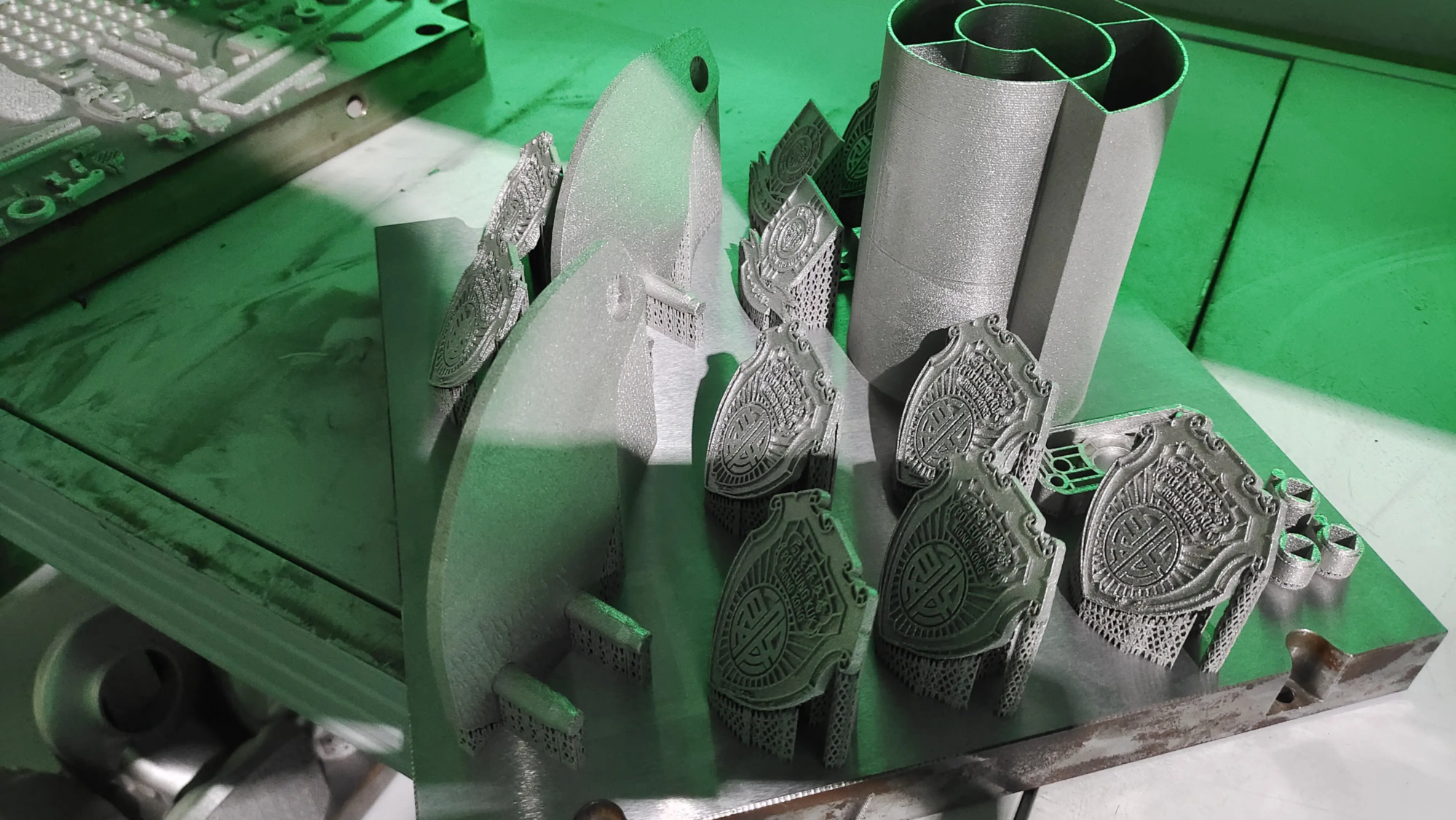
- Complex and uncompromising: SLM 3D printing uses high-power lasers to melt fine metal powder to build parts layer by layer. This allows for extremely complex internal channels, hollow structures that mimic bone, complex lattices for weight reduction, and fine joint geometries with tight tolerances (critical for smooth joints) that would not be possible through machining or casting alone. Imagine accurately replicating the intricate bones of the inner ear or the complex pattern of vertebrae.
- Material Muscle: Beyond plastic. GreatLight specializes in printing functional parts using advanced technology metal powder Examples include stainless steel (corrosion resistance, strength), aluminum alloys (lightweight, thermal properties), titanium (high strength-to-weight ratio, biocompatibility), cobalt-chromium alloys (wear resistance), and nickel alloys (heat resistance). These materials transform your articulated dinosaur or its functional derivative into a rugged prototype that can handle real-world stresses.
- Seamless integration: Do you need embedded bearings? Are specific shaft surfaces hardened? Threaded connection integrated into print? SLM excels at integrating different functional features directly into a single printed part, thereby reducing the assembly complexity of movable mechanisms.
- Accuracy and repeatability: Professional SLM systems provide superior dimensional accuracy and surface finish control compared to desktop printers. This is critical to ensuring that parts fit together accurately time and time again (interchangeability) and that joints articulate smoothly without binding or excessive play.
- One-stop professional solution: GreatLight processing all Process chain:
- Design optimization: Our engineers review and provide recommendations for optimized designs for manufacturability (DFM) in SLM, which is critical to preventing warpage and ensuring joint integrity.
- High performance SLM printing: Using advanced SLM equipment.
- Comprehensive post-processing: This is crucial for functional chattels:
- Removal of supports: Carefully remove complex supports without damaging delicate joint features.
- Heat treatment: Improves material properties and removes residual stress to increase strength and durability.
- Precision machining: Critical tight tolerance features required to achieve articulation on mating surfaces or shafts.
- Surface finishing: Applying techniques such as CNC machining, grinding, polishing, sandblasting or coating to achieve aesthetics and functionality (e.g., reduce friction on sliding surfaces).
Bring your mobile vision to life
Whether you’re designing a mechanical dinosaur for fun and want a museum-quality metal replica, or you’ve developed an articulated mechanism inspired by nature that requires industrial-grade metal parts, GreatLight can transform your digital vision into a powerful, functional reality.
in conclusion
Printing your own movable dinosaur offers a fascinating journey that combines art, science, and engineering. Desktop 3D printing makes it easy for everyone to enjoy. However, when your project requires superior strength, precision, intricate detail, functional robustness or advanced materials that are not possible in plastics, professional metal rapid prototyping through technologies like SLM becomes an essential tool. company likes huge lightWith its advanced SLM capabilities and comprehensive post-processing expertise, it provides the engineering capabilities to transform complex articulation concepts (inspired by dinosaurs or designed for industrial applications) into tangible, high-performance metal parts. So dream big, design your moveable masterpiece, and leverage professional prototyping to bring unparalleled power and precision to your creations.
FAQ: Printing Movable Dinosaurs and Professional Prototyping
Q: Where can I find the STL files for printable movable dinosaurs?
A: Popular repositories include Thingiverse, Printables, MyMiniFactory, and Cults3D. search "articulated dinosaur," "movable dinosaur skeleton," or a specific dinosaur, e.g. "Tyrannosaurus rex skeleton STL." Carefully read the instructions for licensing and printing requirements.
Q: What desktop printer settings are most important for a mobile dinosaur?
A: Key settings include:
- Floor height: Finer (e.g. 0.1 mm) provides a smoother surface and better detail, especially at seams.
- support: Crucial for dangling parts like arms, claws, and complex bone connections. Use tree supports whenever possible to facilitate removal.
- direction: Position parts to minimize support and maximize strength along the joint axis.
- tolerance: Adjust the gap setting between the pin and the hole in the microtome (e.g., the hole expands horizontally) to achieve a snap-fit or hinged joint. Test printing is key!
- filling: Higher fill levels (20%+) provide greater strength to the pins and load-bearing joints.
Q: My printed joints are too tight or too loose. what can I do?
one: Tight joints: Carefully sand dowels or widen holes slightly. A drop of lubricant will help. Loose connector: Apply a thin layer of glue, nail polish, or epoxy to the pins for added thickness. Reduce the gap setting in the slicer (“horizontal hole expansion”) for future prints.
Q: Why use metal prototyping (like SLM) instead of regular plastic printing for articulated designs?
A: For functional prototypes other than demonstration:
- Durability: Metals can withstand wear, fatigue, impact and environmental conditions better than plastics.
- accurate: Achieve tighter tolerances, which are critical for reliable articulation with minimal friction.
- Material properties: Use specialized metals with heat resistance, biocompatibility, high strength-to-weight ratio, or electrical conductivity.
- Minimum assembly: Complex mechanisms with integrated functionality can be built as individual parts or as fewer assembled components.
- Professional completion: Ideal for applications that require beautiful, powerful presentation or functional performance.
Q: What types of articulated designs would benefit most from GreatLight’s SLM prototyping?
Answer: The project requires:
- Functional joints/robots: driven limbs, connecting rods, robot joints, fixtures with bionic motion.
- High Wear Parts: Articulated parts that are subject to constant motion or friction.
- Precision Mechanisms: Locking mechanisms, hinges, levers, gears that require smooth operation and minimum tolerances.
- Complex lattice/auxetic: Design lattices that mimic bone structure to achieve lightweight strength.
- Bracket integration: The mounting points are integrated directly into the hinged structure.
Q: What materials can GreatLight use to create removable metal prototypes?
A: We specialize in a wide range of areas, including:
- Stainless steel (316L, 17-4 PH)
- Aluminum alloy (AlSi10Mg)
- Titanium alloy (Ti6Al4V)
- Nickel alloy (Inconel 718, 625)
- cobalt chromium alloy
- tool steel
Material selection depends on the properties you require: strength, weight, corrosion resistance, biocompatibility, thermal performance, etc. Our engineers can provide recommendations based on your application.
Q: How does GreatLight ensure that the moving joints in printed metal parts work properly?
A: It’s a combination of expertise:
- Design Consulting (DFM): Optimize SLM-specific joint clearances, tolerances and orientations early in the design.
- Process control: Precision SLM machines ensure dimensional accuracy.
- Critical post-processing: Carefully remove supports near complex joints. CNC machining allows precise final tolerances of shaft diameter and bore diameter required for smooth articulation. Heat treatment ensures dimensional stability and optimal material properties. Proper surface preparation (polishing, coating) to reduce friction.
Q: If my dino/mechanical device needs springs or bearings, can GreatLight handle the components?
Answer: Of course! As a full-service prototyping partner, GreatLight can integrate standard components into your design during assembly (springs, bearings, bushings) or provide precision mounting points within the printed metal part. We offer comprehensive post-processing and assembly services to deliver fully functional prototypes.
Customize your moveable wonders from plastic fun to industrial metal reality. Take advantage of GreatLight’s advanced SLM prototyping expertise – get a quote today!