Bringing the Lost Bionicle Legend to Life: Your Final Guide to 3D Printing Custom Parts
For twenty years, Bionicle has inspired generations with its unique Polynesian myth, sophisticated biomechanical design and fascinating storytelling. Although the official set may no longer roll off the line, the creative spirit exists firmly within the MOC (my own creation) community. However, every builder knows the frustration: that critical piece lost, always broken joints or unique parts of the concept that Lego never produced. This is the transform power of the 3D printing step, allowing the fan to make custom bionic parts on demand. Let’s dive into the world of DIY Bionicle manufacturing and explore how to work from home printers or leverage professional services to get the best results.
Why 3D printing is the game changer of Bioniclers
- Repair and repair: Revived damaged or lost pieces for precious vintage sets. Breathe new life to that iconic Toa or Rahi.
- Unlimited customization: Design and print unique weapons, armor, masks (Kanoshi), tools, joints, limbs or brand new species that cannot be built with official parts. Free your inner Artakha.
- Prototype concept: Quickly iterate over MOC design before committing to final versions or mass-scale parts production.
- Community Cooperation: Access and create a large number of repositories of shared designs (STL files) created for enthusiasts around the world. Websites such as Thingiverse and Cults3D are treasure troves.
Core method: From desktop to industrial grade
-
FDM (Fused Deposition Modeling – Desktop):
- how: Plastic filaments (such as PLA, ABS, PETG) are melted and squeezed into a layer.
- advantage: The easiest to access and affordable home printing method. Suitable for prototypes, large structural parts or sturdy weapons. Wide selection of substances (PLA is easiest).
- shortcoming: Surface finishes often show layer lines that require a lot of post-processing. The accuracy and strength of the dimensions, especially for small or thin components such as gear teeth or ball joints, can be challenging. Whether the details needed for complex masks or gree bones are missing.
- Tips for success: Use small nozzles (0.2mm or 0.3mm), fine layer height (0.1mm or lower), optimized printing direction to minimize support to critical surfaces, and perform arduous calibration (E-Steps, flow rate, withdrawal).
-
Resin (Stereo-Lithography – SLA / Digital Light Processing – DLP – Desktop / Hobbyist):
- how: Curing liquid photopolymer resin (hardening) using a light source (laser or LCD screen).
- advantage: Excellent detail resolution and surface smoothness. Perfect for complex masks, textured armor, small connectors, pins and parts that require smooth pronunciation. The smallest visible layer line.
- shortcoming: Parts are usually more brittle than their FDM counterparts. Careful post-treatment (wash unauthorized resin + UV curing). The resin can be messy and requires good ventilation. The print volume is usually less than FDM. The stiffness/impact resistance of matter varies.
- Tips for success: Thoroughly clean parts (isopropanol) in IPA to ensure complete UV curing for maximum strength, consider "Tough" or "Similar to abdominal muscles" Resin for functional joints, using resin-specific support for delicate features.
- Professional metal and high performance polymer printing (SLM, DMLS, SLS, MJF):
- Industrial Edge: When desktop printers meet limits in strength, durability, complexity, dimensional accuracy or material requirements, Great Become essential.
- Function:
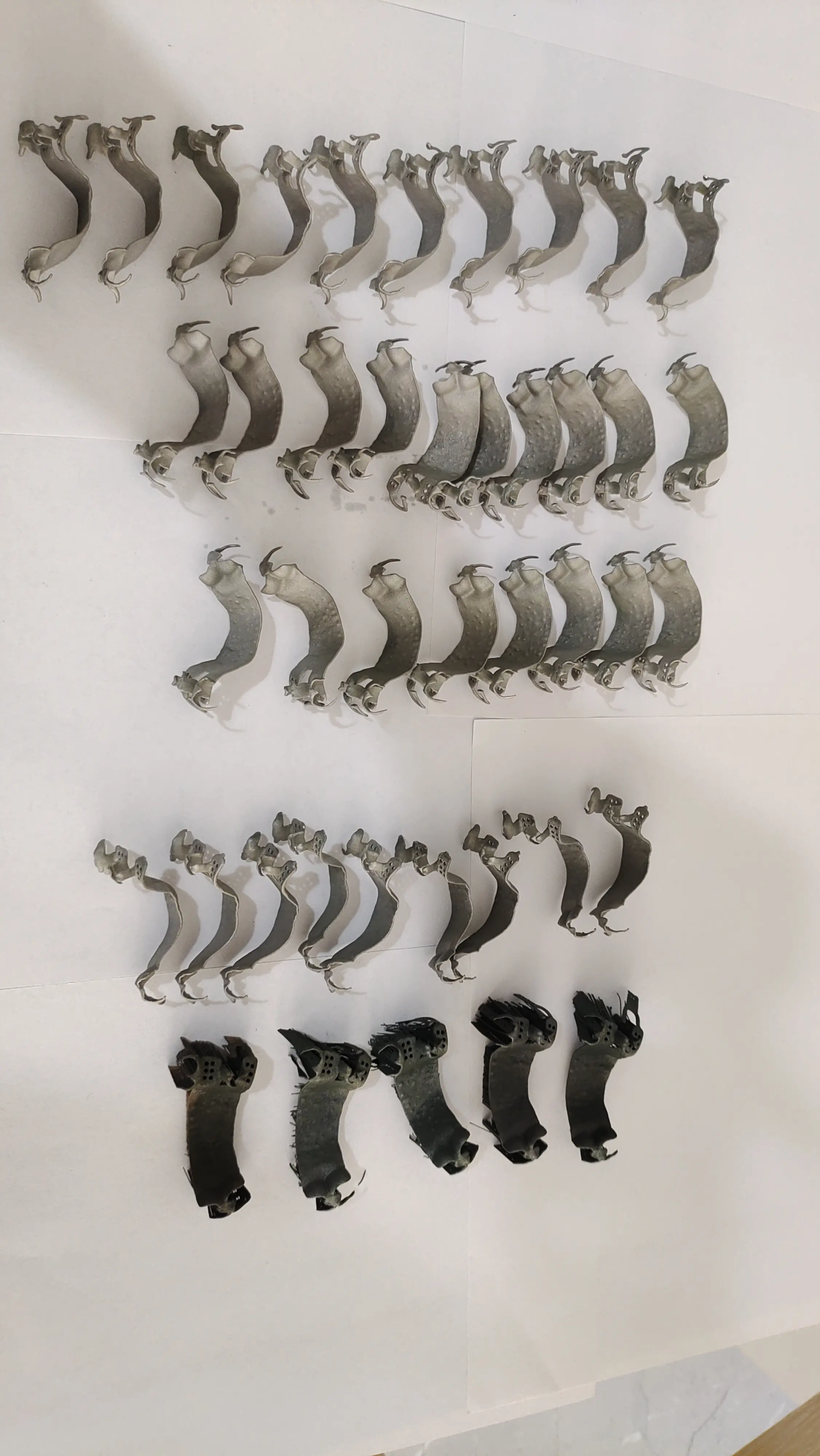
- Metal Printing (SLM/DML): Fused fine metal powders (such as aluminum alloy, titanium, stainless steel), layer by layer, with high power lasers. Why is it important? Create incredibly strong, wear-resistant, heat-resistant axles, high pressure joints (think ball cups of maximum strength or unyielding gear assembly), thin-walled armor, metal replicas that won’t pop up, or even legendary weapons.
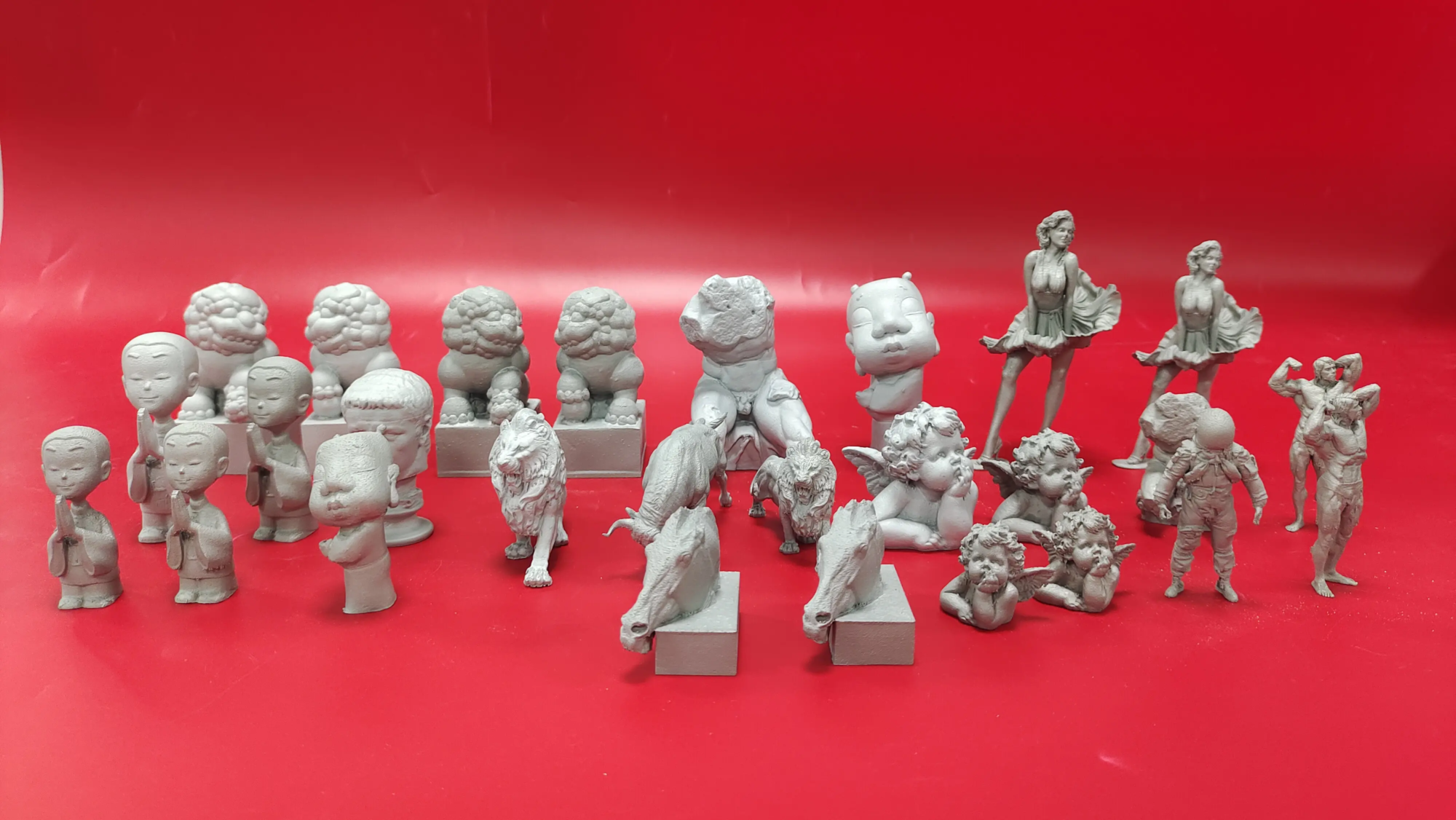
- High Performance Polymer Printing (SLS, MJF): Sintered or fused nylon-like powders (e.g. PA12, PA11, PA11, PA11CF -Nylon Carbon fiber) are used to sinter or fuse. Why is it important? Balance between special strength, toughness, detail and smooth finish. Nylon is more flexible and impactful than standard resins, perfect for durable gear systems, flexible but stronger connectors (such as custom MATA hand claws) or complex structural parts that require high fatigue resistance. Compared with amateur resins, brittleness is much less brittle. Provides almost injected quality.
- advantage: Unrivaled strength, stiffness, durability, heat resistance and design freedom (complex internal structure, organic shape). Excellent dimensional accuracy. More consistent, reliable mechanical properties with desktop approach. The upper surface can be realized. Enables creating parts that actually last in intense gaming or display.
- shortcoming: Higher per-part cost than desktop printing. Professional service providers are required.
- Great Advantages: As Leading rapid prototyping manufacturer,,,,, Great Have advanced SLM 3D Printer and deep expertise in metal and polymer production technology. We specialize in solving complex rapid prototyping challenges, including providing comprehensive One-stop post-processing and completion service (such as heat treatment, grinding, processing, dyeing or polishing) is suitable for the needs of your plant parts. We work with a wide range of Customizable materials And priority Quick turnaround No sacrificing accuracy.
Navigation process: From concept to physics
-
Find or create a model:
- Source STLS: Search for dedicated repositories (Thingiverse, cults3d, bzpower.com forum) for existing designs. Ensure compatibility and license terms.
- CAD Modeling: For truly unique parts, learn CAD software (Tinkercad for beginners, Fusion 360 or Blender for complexity). The emphasis must be placed on precise dimensions, connection points (axis holes, ball sockets, friction nails – tolerances are crucial!) and structural integrity.
-
Optimization and preparation (slicing):
- Use software like NetFabB or MeshMixer to fix any grid errors in STL.
- slice: Generate G-codes for the printer using slice software (Cura, Prusaslicer, Chitubox as resin). Consider carefully:
- direction: Control supports additional locations (avoiding critical surfaces), maximizing intensity along stress lines, and minimizing layer visibility of prominent features.
- support: It is crucial for overhanging. Balance the necessity with ease of removal and surface scars. Optimize placement density and contact points.
- set up: Layer height, fill density/pattern, perimeter/wall, printing speed, temperature. These greatly affect strength, flexibility, detail and surface quality. Iteration may be needed! Details such as vertical gaps should be printed vertically to maintain accuracy and surface effect. Horizontal holes usually suffer from deformation and tolerance differences.
-
Printing and Patience:
- Prepare the printer: Carefully flatten the bed (FDM), make sure the resin bucket is clean and mixed with resin (resin), check powder level (professional).
- Start printing: Monitor the first few floors closely. Prepare for potential failures and learn from them.
- Post-processing: Magic Touch (essential!)
- FDM: Remove the support (be careful!), sand (gradually fine grit), fill the primer, gap filling (skin), painting.
- Resin: Wash carefully in IPA (or alternative cleaner), dry thoroughly, cure under recommended UV (critical strength), remove proppant (usually easier to book), if necessary (necessary) (start helps hide the layer lines), paint.
- Professional (Greatlime): Our One-stop service Includes expert support for removal (minimizing surface damage), sandblasting for uniform textures, precise machining of critical tolerances, heat treatment (metal specific), vibrational shutdown for super smoothness (plastics) (plastics), dyeing (nylon substrate) and various polishing levels. This converts the original print into a production-quality component.
Powerful design considerations
- tolerance: This is not negotiable. The axle requires a specific friction fit. The ball joint needs a precise diameter to hold correctly. Research or measure existing LEGO parts. Depending on the accuracy of the printer, add ~0.1mm of FDM/resin connector to the 0.2mm gap. Expect professional processes such as SLM or MJF to achieve near-perfect dimensions.
- strength: Design thick walls around the pins and shafts. Use fish fillets (rounded corners) to reduce stress concentration. Avoid highlighting. Right to choose Material For work-thin structural crystals require PA11CF nylon or aluminum, rather than brittle resin. The eastern layer maximizes strength along the load path of the part.
- Function: Ensure that the moving parts have sufficient clearance for smooth operation. Visualize assembly sequences. Consider how subcomponents are connected.
- Authenticity: For the duplicate part, precise dimensions and subtle surface texture are key. Scan existing parts (if possible) for reference.
The power of professional manufacturing of the best performance
When home printing provides incredible freedom, it inherently faces limitations. Stringing numerous complex joints together for combination models or making thin ultra-resistant spearheads puts huge pressure on material and dimensional accuracy. Desktop printing, especially for functional connectors or curved elements, is usually the victim of erectile patches (resin), layer adhesion failure (FDM), creep (softened under continuous load), or fatigue cracks. Tiny features such as ratchet teeth or pin head details are easily lost or captured.
This is where to work with expert rapid prototyping manufacturers Great Improve your bionic works:
- Material mastery: Aviation-grade aluminum alloys for invincible structural components, lightweight stiffness of complex limbs, medical grade stainless steel with corrosion resistance or reinforced nylon (PA11CF, PA12GF), provide ineffective force and joint fixation – compared to patient tolerance – compared to patient wear resistance – corrosion resistance. We solve it professionally Problems with rapid production of metal parts.
- Uncompromising accuracy: Advanced SLM 3D Printer Meticulous process control ensures that parts always meet incredibly tight tolerances. The ball socket is well involved; the axle slides smoothly without tilting; the complex interlocking mechanism works perfectly. This level is nearly impossible to reliably replicate on consumer machines. We specialize in research Custom precision machining.
- Superior durability: Engineering materials treated under controlled conditions, including critical post-heat treatment of metals, provide unparalleled strength, stiffness and wear resistance. Printed parts can withstand the test of powerful games, dynamic poses, and time without breaking or warping. The gear train is grid smoothly; the joints that bear stress remain intact.
- No compromise complexity: Eliminate restrictions. Print complex organic curves, internal lattice structures, near-seamless hinge mechanisms, microtextures mimicking the protobromatous flow or printing them as components of a single unit – all of which can be used with industrial AM technology. Great Expert in bringing complex visions into life.
- Experts completed: Take advantage of our One-stop post-processing service Used for unparalleled surface quality. accomplish "Fresh molds" Transform the printed parts into collectible elements with precise sand blue and vibrant dyeing (for nylon) or polished metallic sheen. We handle messy finishes professionally.
in conclusion
3D printing has revolutionized the experience of Bionicle fans, turning the ambition of reviving dreams and customization into a tangible reality. Whether you are making a powerful agent from an accessible FDM printer, leveraging resin to create amazing masks, or pushing boundaries through such professional services Great To forge metal myths or indestructible armored creatures, tools are now available.
The key is to choose the right method and material for some of your purposes. Priority is given to tolerance accuracy, material properties and design integrity. Embrace the iterative process – prototyping, refining and learning. Don’t make nearly mistakes in critical connections or materials that may fail prematurely.
For parts that require peak performance – breathtaking details, firm strength, complex geometry or durable features – Explore Greatone of the The best rapid prototype company from Chinabecome a strategic move. We combine the cutting edge SLM 3D printing technologymaster the materials, rigorous accuracy and comprehensive finishing services to meet the most demanding Bionic parts of the challenges. So, start the slicer, unleash your design capabilities, and start printing a bionic legacy! Customize your precision fast prototyping parts now at the best prices!
FAQ: 3D printing of bionic parts
-
Q: Where can I find the STL file for bionic parts?
- one: Popular sites include community forums such as Thingiverse, Cults3D, myminifactory and BZPower.com. Use such as "Bionic body," "Social community," Specific part name (Gahlok Kal Claw, Exo-Toa foot) or element type (Bionicle Ball Cup, Bionicle mask).
-
Q: What is the best way to print detailed masks (kanohi)?
- one: Resin printing (SLA/DLP) is usually preferred for the highest levels of detail and surface smoothness directly from above the printer. Compared to FDM, professional SLS/MJF nylon printing also offers excellent detail and excellent finish.
-
Q: I need a very powerful axle connector to constantly capture my FDM prints. What choice do I have?
- one:
- Optimize FDM: Using PETG or ABS, increase the number of walls/fill, optimize the direction (align the layer line with the direction of force), and slightly increase the critical dimension.
- Switching materials: Print parts from professional services in MJF/SLS nylon (PA11, PA12 or PA11CF) – These parts have higher impact strength and bend before rupture.
- Remove metal: For ultimate durability (especially thin axles), use professional SLM/DMLS services (such as Greatlight) to print in aluminum or hard stainless steel. This is usually the most reliable solution for high stress joints.
- one:
-
Q: How important is the tolerance of moving bionic joints?
- one: Extremely important. Millimeters are important. Too tight, the parts won’t assemble/mov; too loose, the connection is soft or scattered. Study the standard LEGO gap (usually around 0.1-0.2mm between PEG and hole). Desktop printers usually require test printing to calibrate. Professional services provide the higher tolerance consistency required for complex gear assemblies or smooth ball joints when the designer measures correctly.
-
Q: Will my professional metal or nylon printing parts feel or look like Lego bricks?
- one: They will feel denser and stronger than ABS plastic. The appearance depends to a lot on the completion:
- Metal: Can be blasted (matte), polished (gloss) or left-grown (grained). Provides unique weight and coolness.
- nylon: Greglight provides a smooth finish that is almost indistinguishable with advanced tumbling/sanding/vapor smoothing. It can also be closely matched with the LEGO color. The material has slightly different textures, but has excellent visual properties.
- one: They will feel denser and stronger than ABS plastic. The appearance depends to a lot on the completion:
-
Q: Is professional 3D printing not too expensive plant parts?
- one: Costs vary widely based on size, material, quantity and finish. Small, necessary structural joints produced in nylon or aluminum (such as reinforced ball cups or critical axes) can be quite affordable, especially given the increased durability and the elimination of printing failures. For large armor or numbers, it becomes more focused on serious collectors or presenting models. It is recommended to get a quote for specific parts.
-
Q: Can Greatlight help me design parts if I don’t have STL files?
- one: While our core expertise is manufacturing and rapid prototyping, once you have a design concept, we can provide engineering advice on manufacturing (Additive Manufacturing Design – DFAM). The actual CAD modeling service may be an additional product, or requires collaboration with a designer – it is best to consult us directly on your specific project needs. Our strength is professional Solve the problem of rapid production of metal parts And perform complex builds as specifications.
- Q: How strong are resin-printed parts compared to Lego?
- one: Compared to ABS Lego plastic, standard hobby resins are more brittle and easily break under impact or bending stress. "Tough" or "Similar to abdominal muscles" Resin has better impact resistance and flexibility, closer (but usually still lower than injections). For consistent high toughness and reliability, professional SLS/MJF nylon is the powerful solution of choice.