Outside the Brick: The Final Guide to Creating Custom Lego Parts (DIY Guide)
Imagine this: You deeply love the architecture of Epic Lego – perhaps a replica of the sprawling cityscape, sci-fi Mech or your favorite medieval castle. But then you hit the wall. This is a unique piece that perfects aesthetics or functions…not in any official suit. That’s magic Customized Lego Parts Come in. Forget the limits; unlock unlimited creative potential by designing and crafting your own custom bricks and elements.
Why customize? Beyond the official suit
The LEGO catalog is very broad, but even with boundaries. Custom parts enable you to:
- Invoke life into unique creations: Designed signature textures, microsheets, hinges, joints or micro accessories are not available at all.
- repair "Close to the lady": Modify existing parts slightly to fit your vision completely without awkward tradeoffs.
- Prototyping: Test the functionality of a new mechanism or part before considering mass production.
- Personalized perfection: Create parts with custom logos, inscriptions, or gears for specific characters.
- Explore new materials: Go beyond ABS plastics to venture into metal or high temperature resins for specialized applications.
Your DIY Toolkit: How to Make Custom Lego Parts
Here is a breakdown of the easiest to access and effective DIY routes:
-
Desktop FDM/FFF 3D printing:
- How it works: Melt plastic filaments (such as PLA, PETG, ABS) layer by layer.
- advantage: The most affordable entry point, a wide range of material options, suitable for larger prototypes, highly available on consumer printers such as Creality, Prusa or Bambu Lab.
- shortcoming: Layer lines are visible; achieving Lego’s signature clutch power (comfortable fit) on small parts (such as studs or pins) requires careful printer calibration (layer height, flow rate), and frequent post-processing (sanding). For thin-walled parts, durability can be lower than injection-type LEGOs.
- Best for: In early prototypes, larger structural elements do not rely on precision clutches, decorative fragments, and less critical texture.
-
Desktop SLA/MSLA (resin) 3D printing:
- How it works: UV light is used to cure the liquid photopolymer resin layer by layer.
- advantage: Excellent finish and detail resolution – ideal to capture the complexity, texture and sharp edges of microscales. It is easier to achieve good clutch power in small functions with appropriately designed.
- shortcoming: The resin can be brittle; strong, LEGO-like durability requires a specific engineering resin (expensive). Extensive post-treatment (washing, curing) is required. The build volume is usually smaller than FDM. Material handling requires care.
- Best for: Highly detailed Minifig accessories (weapons, tools, unique hats), decorative tiles, small and complex parts that require smooth finish.
- Silicone forming and casting (for enthusiasts):
- How it works: Create a silicone mold from the main section (probably an existing LEGO element, engraved part or 3D printing). Cast your copy into resin or urethane plastic.
- advantage: After making the mold, it is very suitable for repetition. Details can be copied. The castable resin/amino acid can approach the toughness and feel of ABS.
- shortcoming: Great upfront efforts to create high-quality molds. Limited complexity can be easily captured. Bubbles can be a problem. Unsolvable Initial Design Problem (needs a good master part/model).
- Best for: Reproduce a small number of custom design parts (e.g., the unique rivets of the spacecraft, custom dishes elements).
Blinking the gap: When DIY is not enough – Enter a professional fast prototype
Parts Requirements Excellent precision, functional strength, unique materials (such as metal!) or perfect finish with official Lego, DIY methods usually reach their limits. This is where to work with experts like GRESTHERMENG – Advanced Rapid Prototyping Change the possibility.
Why choose Greatlime for your custom LEGO points component?
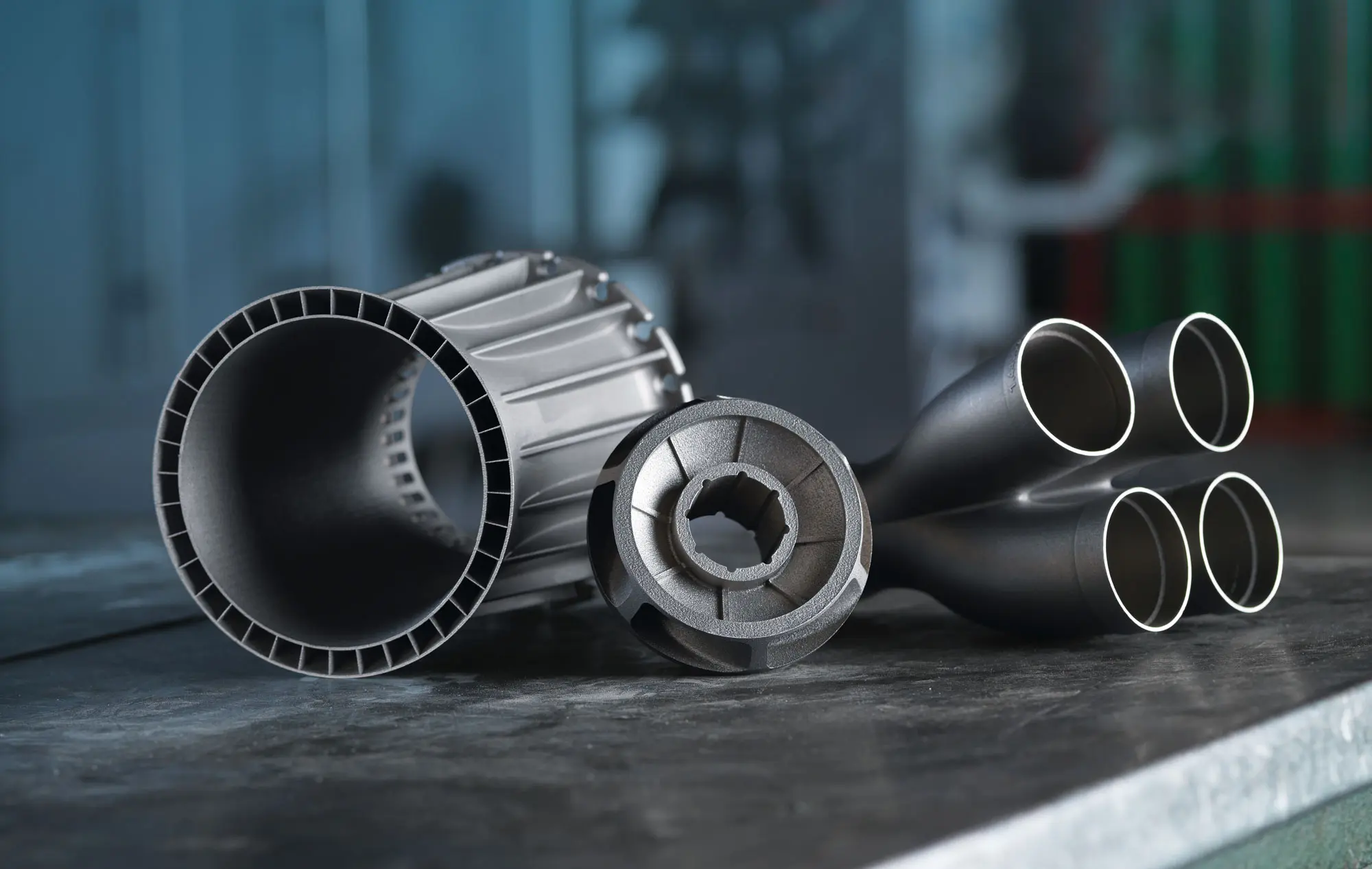
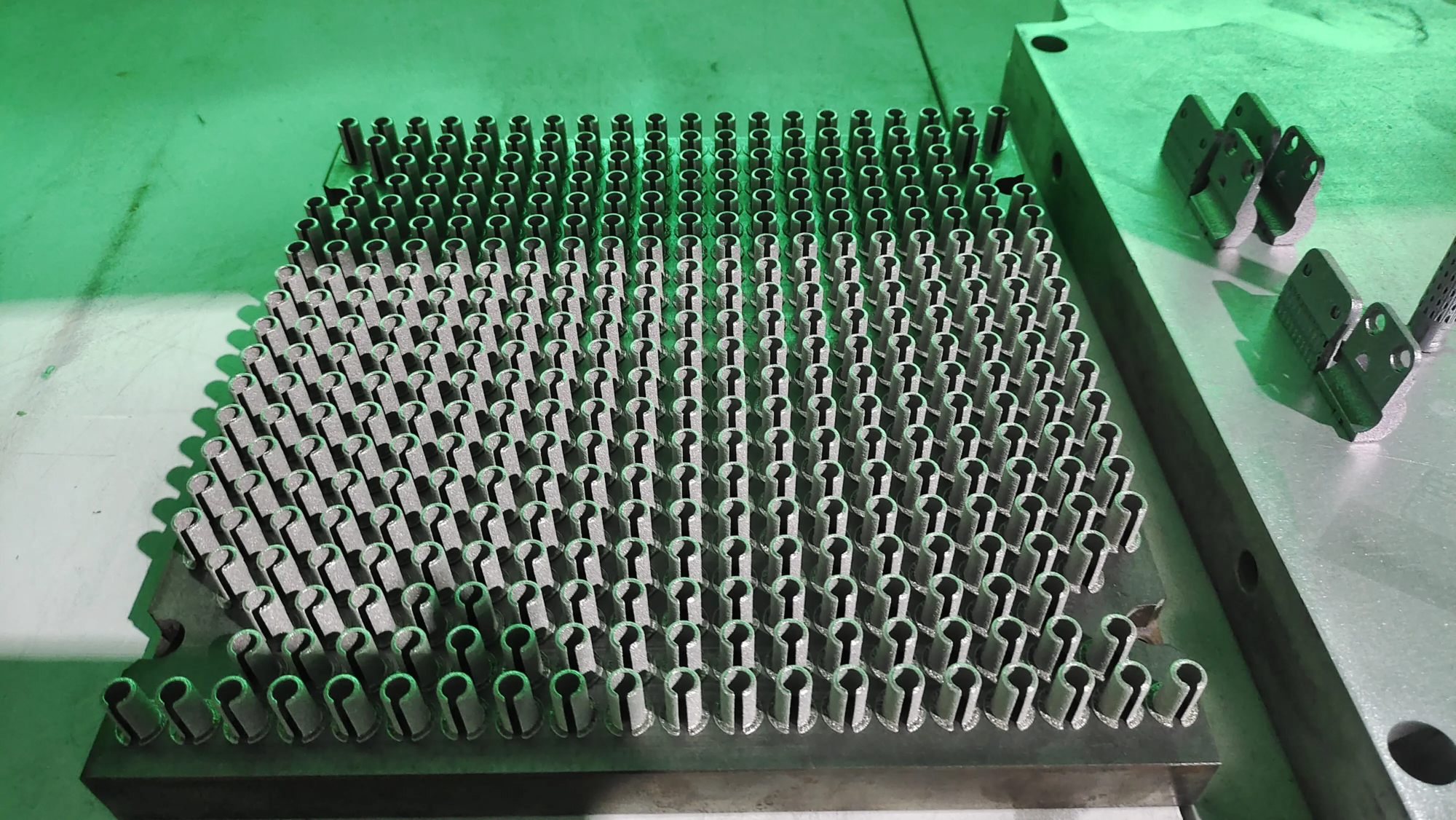
- Industrial grade metal 3D printing (SLM/DML): Does your MOC need robust gears, custom springs, heat-resistant thruster components or simple metal trim? Great Selective laser melting (SLM) Technology creates fully dense high-strength metal parts (stainless steel, titanium, aluminum alloy) from complex CAD models. Imagine titanium reinforcement, for high stress joints or glittering chrome-plated brass blades!
- High-precision plastic prototype (SLA, SLS, MJF): Go beyond desktop restrictions:
- SLA: Achieve museum quality resolution and smoothness for display works or subject patterns for shaping.
- SLS/MJF (Nylon): Produce parts with excellent toughness, flexibility and complex details, ideal for functional mechanisms and high clothing parts.
- Engineering expertise: Not only print, but also solve it. Greatlight’s team understands tolerances, pressures and how to optimize the manufacturing design of the design to ensure the clutch is close to perfect clutch power (+/- 0.02mm control) and structural integrity.
- One-stop post-processing excellence: Convert prints to production-ready parts:
- Perfect surface smooth/polished.
- Accurate machining of key interface points (e.g., shaft holes).
- Dying (nylon parts), plated, powder coating or paint for any finish.
- Careful support for deletion to save details.
- Speed and material versatility: Quick turnaround. Access to home settings impossible external materials. A fully customized solution is available soon.
Whether you need a single-use prototype titanium small sword sword or fifty precision nylon gears for dynamics sculptures, Greatlight offers industrial muscle and engineering support to make it a reality.
Designed for success: Some essentials compatible with Lego
Before hit "Print" (or order), it is crucial to master Lego geometry:
- Power of the clutch: This is the key! Relentlessly research the official section.
- Stud: The diameter should be ~4.8mm. The height is slightly different (1.7-1.8mm).
- Tube/shaft hole: The standard shaft diameter is approximately 4.85mm (clutch is provided). The inner tube diameter of the axle is about 5mm. The walls need to be sufficient thickness.
- tolerance: ABS shrinks ~0.8% during molding. Explain this for this! Designers usually use 0.2mm moving parts for Snuggers for standard clutch.
- Master grids and cells: Lego was built on 8 mm AD (stud pitch). The bottom of the brick 1×1 is 8x8mm. The height is a multiple of ~9.6mm (plate height = 3.2mm, brick height = 3 plates = 9.6mm).
- Using the reference model: Download the existing LEGO partial model (available online) to compare sizes and positions. Similar software Bricklink Studio or Lego Digital Designer It is priceless.
- CAD is the King: Designed using parameter CAD software (Fusion 360, SolidWorks, Freecad, Onhape). This allows precise dimensional control and simple iteration. Don’t just be eyeballs!
- Strength considerations: Determine the stress point. Reinforce with ribs, increase wall thickness (especially thin parts on FDM/resin), and strategically oriented it.
Your step-by-step DIY creation process (simplified)
- Concepts and sketches: It clearly defines your needs. painting!
- 3D Modeling: Convert your sketches to an exact digital CAD model.
- Prototype iteration (DIY or professional):
- DIY: Print the model using FDM/SLA. Strictly fit with existing LEGO tests. Does it have a clutch? fit? Function? Refine the model as needed.
- hint: For critical parts that require perfection (especially metal or high-strength nylon), consider sending Early iteration great. Their feedback on manufacturing can save time.
- Finalized with agricultural products: Once the prototype is met:
- DIY: Print the final version, focusing on quality setting and proper post-treatment (sanding of resin, washing/curing, annealing of certain nylons).
- Professional: Send your refined model to Greatlime. Specify materials and completion requirements. Use their experts to complete the service.
- Integration and presentation: Combine your masterpiece with Lego creations. Share your achievements with the AFOL community!
Conclusion: Building Unlimited
Creating custom LEGO parts opens up the universe of possibilities for truly unique creations. DIY method empowers beginners and amateurs to explore basic design Professional level strength, precision, material variety, and true seamless integration with official LEGO hinges to leverage expert rapid prototyping services such as Greatlight. Their mastery of advanced SLM metal printing and comprehensive finishing options eliminates technical barriers and allows you to focus on pure imagination. Don’t let individual bricks be unavailable and stop your creative genius. Design it, prototype, perfect, and build something extraordinary. Standard bricks are just the starting point. Your vision defines the finish line.
FAQ: Your custom LEGO printing question has been answered
-
Can 3D printed parts be as safe as real LEGOs?
- DIY (FDM/Resin): Implementing the perfect clutch is challenging and requires excellent printer calibration and design. Usually, it is "Good enough" Display display, but not as reliable as LEGO, especially for parts that are frequently connected/disconnected.
- Professionals (SLS/MJF/SLM): Yes! When designs have precise knowledge of LEGO tolerance and are manufactured on industrial equipment with strict control (such as Greatlight), parts can be almost different from injection-type LEGOs.
-
What is the best material for functional/strong Lego parts?
- Nylon (PA11/PA12) provides the best combination of toughness, durability, light flexibility and plastic part details via SLS or MJF (Greatlight Easy to Use). To achieve the final strength and unique properties (heat resistance, metal aesthetics), metal printing (such as stainless steel or SLM of Alsi10mg Greatlight) is unparalleled. Standard PLA/PET on home printers have less durability for high pressure use.
-
Is it expensive to make custom Legos professionally?
- Pricing depends to a large extent on part of the complexity, size, material and quantity. Small plastic prototypes through Greatlight may be reasonable. Metal parts are more expensive due to material and process costs, but are crucial for demanding applications. Requesting a quote (usually free) gives realistic expectations.
-
Am I infringing copyright by making customized Lego works?
- Make custom parts Personal, non-commercial use (Not for sale) usually "Reasonable use" Many jurisdiction concepts. sell Accurate copying of Lego’s copyrighted design or custom parts of trademark is infringing. Real original design for sale ("Inspired" But unique) takes up a complex space – if not sure, consult legal advice. GRESTLIGHT is a manufacturing service that does not grant intellectual property rights.
-
Which file format should I use in a service like Greatlime?
- Preferred standard CAD format: . step or .iges Best for accurate geometric transmission. .stl It is widely accepted, but for key dimensions, it is mesh. Greatlight’s engineers can provide advice based on your specific model.
- Resin Printing (SLA) Custom Parts with ABS Lego Lego Lego Lego?
- Standard resins are usually more brittle than ABS plastics. They can be captured under pressure or chips, especially thin parts or connections. Engineered/hard resin (available on Greatlight) provides greater impact and flexibility to make it more suitable for functional LEGO parts.