Unlocking the potential of PTFE in additive manufacturing: a balanced appearance
The well-known Dotraterrefluoride (PTFE) has long been the cornerstone of the industry from aerospace to medical equipment. Traditionally, PTFE has been processed from solid blocks and now enters the realm of 3D printing, a boundary full of innovation but also brings great challenges. As a leader in advanced rapid prototyping, Greatlight delves into the reality of PTFE 3D printing, separating hype from practicality while highlighting where the technology shines and where it falls.
Advantages: ptfe 3D printing is excellent
-
Free design of complex geometric shapes:
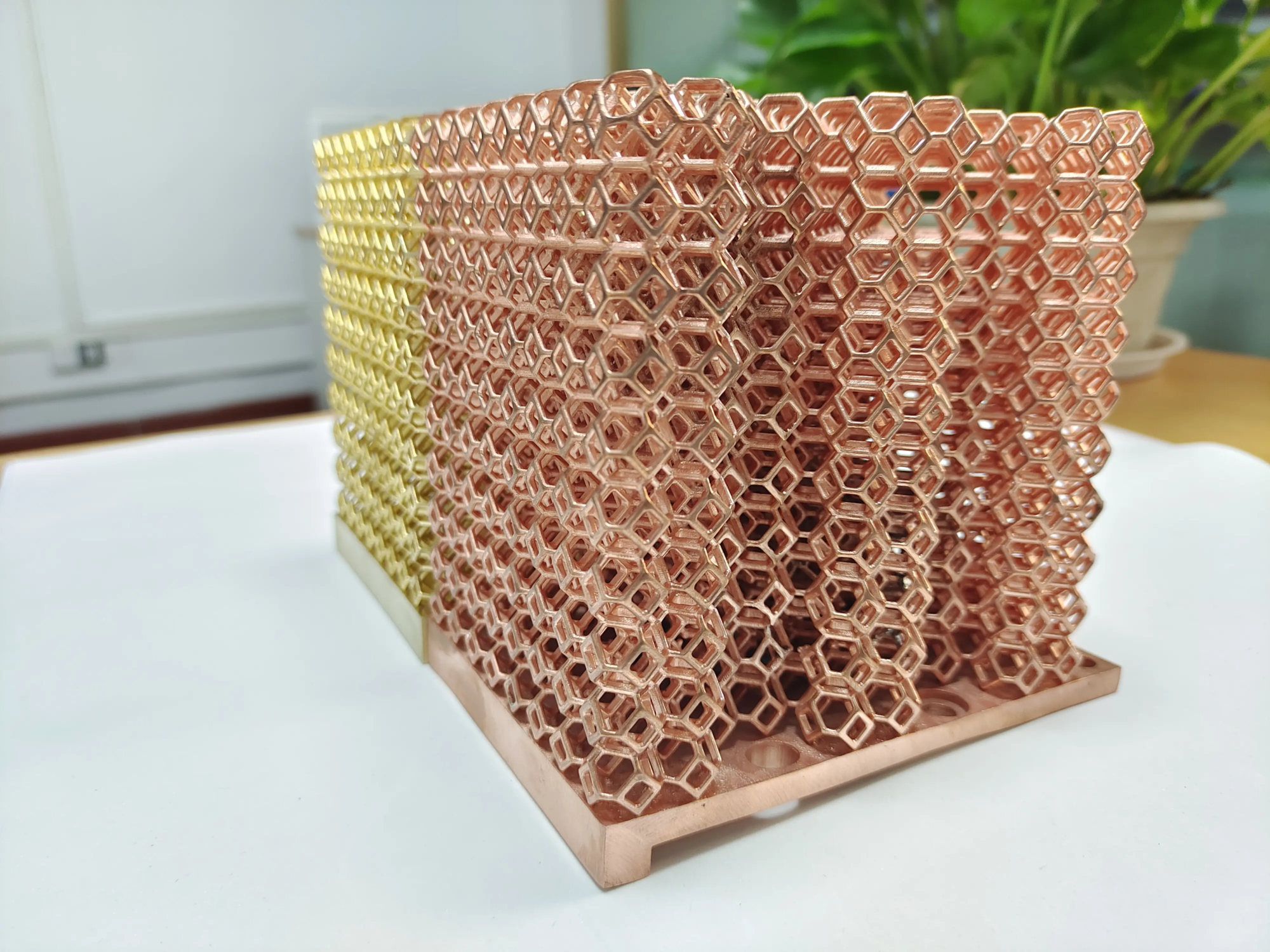
The main limitation of PTFE in traditional manufacturing is its poor processability. Complex internal channels or organic shapes are expensive or impossible to produce. 3D printing avoids this, making lattice structures, embedded fluid paths, and lightweight conformal designs ideal for sealed, insulators or chemical-resistant laboratory components. -
Material efficiency and sustainability:
Unlike the subtraction method (which can waste up to 80% of the original PTFE blocks), the additive process builds the parts layer by layer, minimizing waste. This is consistent with the production of ecological consciousness, especially considering the non-biodegradable nature of PTFE. -
Quick iteration for prototyping:
For R&D teams that require functional PTFE prototypes (e.g., custom gaskets or linings), the leading time for 3D printing slashes ranges from weeks to days. Without the cost of CNC tools, iterative testing will become feasible. - Custom toolless:
Small batches of highly professional parts (such as patient-specific surgical tools or customized semiconductor components) are economically feasible, without mold or mold.
Challenge: Navigating the typographic barriers of PTFE
-
Complexity of material processes:
Pure PTFE melts around 327°C but does not flow like conventional thermoplastics. Printing usually involves:- sintering: Adhesive spraying or extrusion methods require post-print sintering (up to 380°C) to fuse the particles, risking bending.
- Limited printers: Unlike mainstream FDM/FFF, few industrial systems (e.g., professional pellet ribs or powder machines) handle PTFE.
-
Performance trade-offs:
- Mechanical weakness: Printed PTFEs usually exhibit lower tensile strength and elongation compared to molded equivalents.
- Porosity: Microscopic gaps between layers can impair chemical resistance or vacuum sealing – critical in high purity applications.
-
Cost and scalability barriers:
Industrial PTFE printers are rare and expensive. The cost of raw materials is 3-5 times higher than that of standard filaments such as PLA. Post-treatment (sintering, surface finishing) increases time and expense, making large batches impractical with compression molding. - Safety and environmental issues:
Degraded PTFE releases toxic fumes (e.g., perfluorobutylene) above 300°C. The printer requires strict ventilation and filtration to complicate laboratory safety solutions.
Conclusion: Strategic value niche solutions
PTFE 3D printing is not a wholesale alternative to traditional manufacturing. Its real advantage is that it bridges the gap, i.e. complexity, customization or speeding outweighs the demand for mass production. For prototypes, highly complex one-time or R&D applications, it offers unparalleled flexibility. However, processing or molding remains superior for mission-critical components requiring full mechanical/chemical lineages of PTFE (e.g., sealing rings in chemical plants).
At Greatlight, we revolutionize with cutting-edge SLM 3D printing Metal Prototypes with precise engineering properties, passing titanium, aluminum or uncontracted parts. For polymers such as PTFE, we work with trusted partners to advise the best solutions to ensure functional and economic viability. Coupled with our in-house grinding, anodizing and plating services, we offer an overall rapid prototype ecosystem – whether your project requires aviation grade metals or dedicated polymers.
Customize precision parts with China’s leading rapid prototyping partner, combining innovation, speed and uncompromising quality.
FAQ: The Mystery of PTFE 3D Printing
Q1: Can PTFE be printed on a standard desktop 3D printer?
Answer: No. PTFE requires a dedicated high temperature printer (> 350°C heat station) and a controlled environment to manage smoke. Most consumer FDM machines cannot handle it safely or effectively.
Q2: Are printed PTFE parts food safety or biocompatible?
A: Pure PTFE is essentially food safety and USP VI certification. However, the porosity of printed parts may capture contaminants and require FDA-compliant coatings. Always post-processing for specific applications.
Q3: Why choose 3D printing on CNC processing of PTFE?
A: When you need internal geometry, lightweight or rapid prototyping, select Print. Select CNC for large-scale orders, excellent mechanical properties and tight sealed surfaces.
Question 4: How does Greatlight handle PTFE projects?
A: Although our core expertise is SLM metal printing, we evaluate PTFE requests by case. For viable projects, we work with polymer experts to manage end-to-end post-treatment (sintering, surface sealing) to ensure quality.
Q5: If PTFE printing is not feasible, what options are there?
Answer: Consider:
- PFA or FEP: Similar chemical resistance, better printability.
- PTFE coated metal: SLM printed metal parts with post-treated PTFE coating.
- High performance Beijing/Peeing: Thermal/mechanical load dropped by PTFE.
Question 6: Will sintering affect the legendary non-stick properties of PTFE?
A: Not inherent – the inserted PTFE retains low friction. However, poor layer fusion can produce performance-damaging microtext. Optimized printing parameters and post-processing are crucial.
Drive innovation without compromise. Connect with Greatlight to meet complex material challenges and convert your prototype into performance-driven reality.