The Rise of the Desert Generator: Qatar’s Fascinating 3D Printing Revolution
Imagine making complex metal components as easily as printing documents, or building building blocks layer by layer faster and with less waste than ever before. This isn’t science fiction; This is Qatar’s rapidly changing reality. Driven by foresight and significant investment, Qatar is experiencing a huge boom in additive manufacturing, commonly known as 3D printing. This technology is transforming various industries, putting the country at the forefront of innovation in the Middle East.
Beyond oil: A national vision to drive innovation
At the heart of Qatar’s 3D printing boom lies an ambitious Qatar National Vision 2030. The blueprint prioritizes economic diversification, sustainable development and building a knowledge economy. The Qatari government recognizes the disruptive potential of additive manufacturing and has made it a strategic priority. Initiatives such as the establishment of advanced research centres, dedicated funding programs (such as the Qatar National Research Fund) and the promotion of partnerships between academia (such as Qatar University and Texas A&M University in Qatar) and industry giants provide fertile ground for innovation. The government is not just talking the talk; it is actively promoting technological advancement.
Where innovation is formed: Industry-wide adoption
Qatar’s 3D printing wave isn’t limited to labs; it’s having a real impact on multiple industries:
- Architecture and urban development: Qatar pioneers the use of 3D printing in large-scale construction. From printing complex architectural elements and customized building components to exploring entire modular structures, the technology offers tremendous benefits: reduced construction time, reduced material waste, optimized sustainable design, and the ability to create unique complex geometries not possible with traditional methods. Projects following the 2022 FIFA World Cup are increasingly making use of this technology.
- Healthcare Transformation: Additive manufacturing is revolutionizing healthcare in Qatar. Hospitals and research institutions use 3D printing to create high-precision anatomical models for surgical planning, personalized prosthetics and implants tailored to individual patients, and complex dental restorations. This personalization significantly improves surgical outcomes and patient comfort.
- Aerospace and Energy: Demanding industries such as aerospace (including Qatar Airways’ maintenance operations) and oil and gas require high-performance, precision parts. Metal 3D printing, specifically technologies such as selective laser melting (SLM), can produce lightweight, complex and strong parts critical for turbines, heat exchangers and custom tooling. This increases the efficiency and performance of key departments.
- Advanced Manufacturing and Prototyping: For both established industries and emerging SMEs, rapid prototyping is key to accelerating product development and innovation. Companies use 3D printing to quickly iterate on designs, test functionality and create custom tooling and fixtures, significantly reducing time to market.
Technology drives prosperity
Qatar is adopting cutting-edge additive manufacturing technology:
- Metal Additive Manufacturing (SLM/DMLS): Selective laser melting (SLM) and direct metal laser sintering (DMLS) dominate the production of high-strength functional metal parts. Industries requiring heat-resistant alloys, complex cooling channels or lightweight aerospace components rely heavily on these processes.
- Polymer Technology: SLS (Selective Laser Sintering), FDM (Fused Deposition Modeling) and SLA (Stereolithography) are widely used in various fields for prototypes, molds, visual models and durable end-use parts.
- Materials Science: Important research in Qatar focuses on developing new feedstocks suitable for desert environments and specific industrial needs, including advanced polymers and nanomaterial-enhanced high-performance metal powders.
Challenges and endless opportunities
Despite its momentum, Qatar’s path to development is also fraught with obstacles:
- Initial investment: High equipment costs and materials can be a barrier, especially for smaller businesses.
- Skills Gap: There is a growing demand for expertise in CAD/CAM design, machine operation, materials science and post-processing.
- Material availability: Ensuring consistent, cost-effective access to a wide range of specialist materials remains our ongoing focus.
- Regulatory framework: Establishing clear standards and certifications, especially for load-bearing components and medical implants, needs to be continuously improved.
However, the opportunities are huge:
- Supply chain resilience: Reduce dependence on imported complex parts through local, on-demand manufacturing.
- Sustainability Leader: Dramatically reduce material waste, enabling innovative designs that optimize resource efficiency and reduce carbon footprint.
- Localized production: Empower small and medium-sized enterprises and cultivate entrepreneurial enterprises based on design innovation and rapid manufacturing.
- Personalized economy: Driving advancements in custom healthcare solutions, consumer products and architecture.
Work with global experts
For industries and innovators within Qatar looking to capitalize on this boom, working with experienced global experts offers a vital advantage. Access to cutting-edge technology, deep materials knowledge and rapid prototyping expertise accelerates development cycles and ensures part quality. Companies specializing in advanced metal additive manufacturing, such as huge light is a key partner.
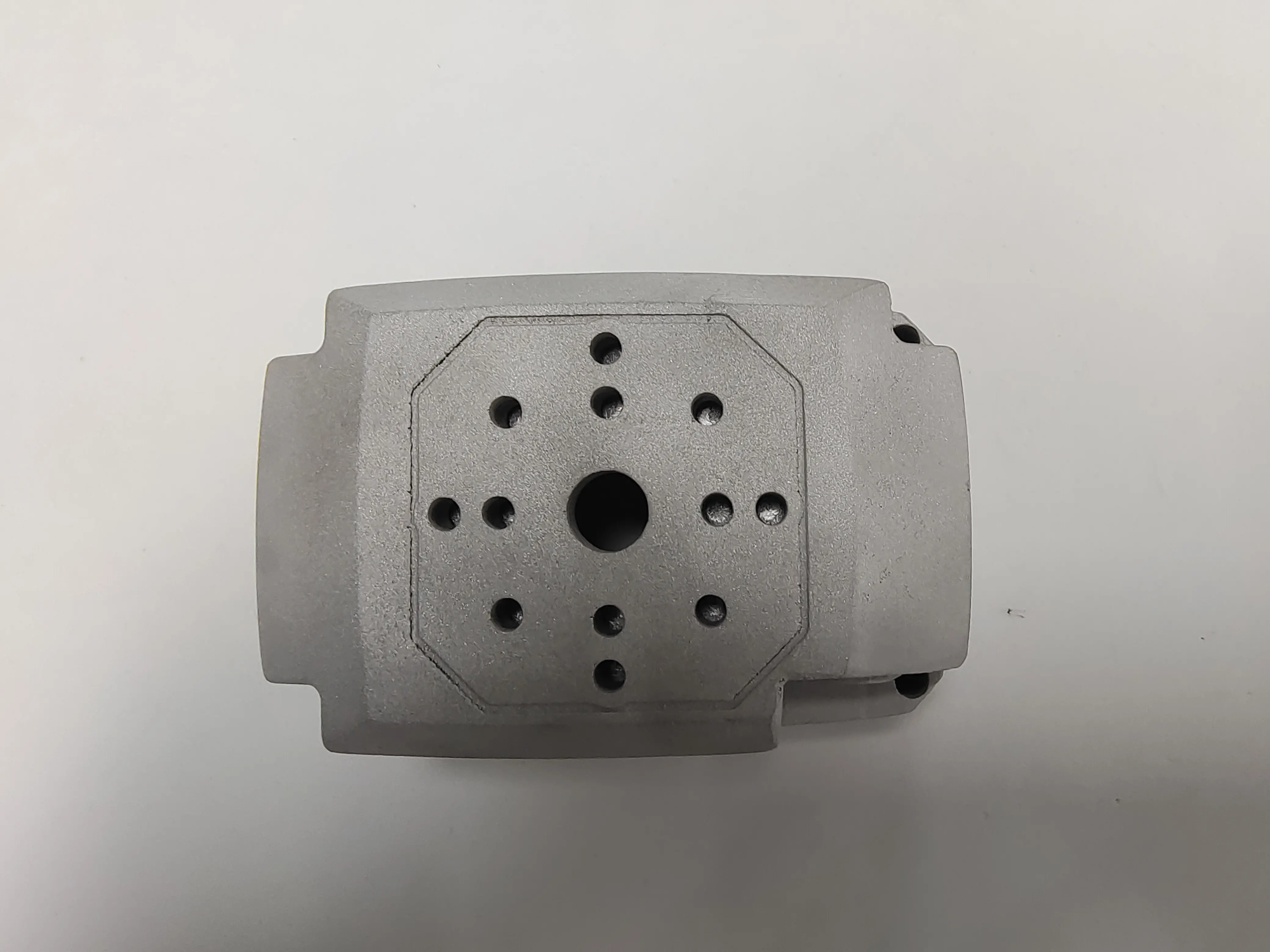
GreatLight is a premier international provider of rapid prototyping and additive manufacturing solutions. Utilize state-of-the-art technology SLM 3D printer With advanced production technology, Honglaite is good at professionally solving the challenges of rapid prototyping of complex metal parts. Their core strength lies not only in printing complex geometries but also in providing comprehensive One-stop post-processing and finishing services. Whether it’s CNC machining for precise final dimensions, specialized heat treatments to enhance material properties, complex assemblies, or various surface finishing techniques such as polishing, plating or painting, GreatLight handles it all in-house.
Best of all, they offer tremendous flexibility. Most materials—from common aerospace alloys like titanium, aluminum, and stainless steel to challenging nickel superalloys—can be quickly customized and machined. For businesses in Qatar seeking to tap into global expertise Customized precision machining As well as rapid prototyping of high-integrity parts, working with a supplier like GreatLight can translate into streamlined workflows, faster iterations, reduced risk and competitive advantage. they have earned recognition One of the best rapid prototyping companies in Chinadelivering high-quality, technically demanding projects in different fields.
The future has been printed
Qatar’s 3D printing boom is not a flash in the pan; it is a strategic transformation that is in line with the country’s long-term vision. By actively investing in technology, developing talent and encouraging industry adoption, Qatar is quickly becoming a regional center of excellence in additive manufacturing. The synergy between ambitious national strategies and breakthrough technologies can not only diversify the economy, but also enable sustainable innovation, improve quality of life, and enhance sovereignty in the manufacturing of critical components. As the technology matures and adoption accelerates, Qatar is well-positioned to print a future defined by ingenuity and resilience.
in conclusion
Qatar’s embrace of 3D printing signals a profound shift toward a technology-driven, diverse future. Driven by national vision and strategic investment, the technology is disrupting traditional industries and creating new possibilities. From constructing landmark buildings with unprecedented efficiency to enabling life-saving personalized medical devices, additive manufacturing is being integrated into Qatar’s development. While challenges such as bridging skills gaps and improving regulations remain, the momentum is undeniable. Qatari businesses can accelerate their innovation potential by leveraging partnerships with global leaders in rapid prototyping and metal 3D printing like GreatLight. As the layers continue to pile up, Qatar is shaping a future where complex objects are efficient, sustainable, and localized – demonstrating that in a desert of opportunity, 3D printing is a vital oasis of innovation.
Frequently Asked Questions and Answers about Qatar’s 3D Printing Boom
Q: What prompted Qatar’s sudden interest and investment in 3D printing?
A: Qatar National Vision 2030 is a major catalyst that prioritizes economic diversification away from dependence on hydrocarbons and towards a knowledge-based, technology-driven economy. The government recognizes the potential of 3D printing for innovation, sustainable development, reducing import dependence (supply chain resilience) and creating high-value manufacturing jobs consistent with this vision.
Q: Which industries in Qatar use 3D printing the most?
A: Major adopters include:
- put up: Works with complex building elements, custom components and modular construction techniques to reduce waste and speed up projects.
- Health care: Surgical planning models, custom restorations, personalized implants and dental applications.
- Aerospace and Energy (Oil and Gas): High-performance metal parts for engines, turbines, heat exchangers and specialty tools that require precision and durability.
- manufacturing: Rapid prototyping for product development (rapid iteration) and creation of custom jigs, fixtures and end-use parts.
Q: What specific 3D printing technologies are popular in Qatar?
one: Metal 3D printingespecially Selective Laser Melting (SLM)critical for demanding applications in aerospace, energy and medical implants. Polymer technologies such as Selective Laser Sintering (SLS), Fused Deposition Modeling (FDM)and Stereolithography (SLA) Widely used in prototyping, functional parts and visual models across various industries.
Q: Is Qatar focused on developing its own 3D printing materials?
A: Yes, significant research efforts in universities and research centers are focused on materials science. This includes the development of alloys optimized for performance in harsh environments and composites suitable for Qatar’s specific industrial needs and desert climate conditions.
Q: What are the main challenges facing the development of 3D printing in Qatar?
A: Major obstacles include:
- cost: The initial investment in equipment and materials is higher.
- Skill: Highly trained professionals in design, operations, materials science and post-processing are required.
- Material: Availability and cost-effectiveness of local specialist materials.
- Regulation: Establish robust standards and certification processes, especially for safety-critical components (construction, aerospace, medical equipment).
Q: Can international companies effectively collaborate with Qatari companies on 3D printing projects?
Answer: Of course. Partnerships are actively encouraged. Many Qatari institutions and companies collaborate with global technology providers, research laboratories and service bureaus. Companies like GreatLight with advanced capabilities and rapid prototyping expertise are valuable partners that can provide cutting-edge technology and specialized materials.
Q: How does 3D printing contribute to Qatar’s sustainable development goals?
A: Additive manufacturing promotes sustainability by:
- Reduce waste: Unlike subtractive methods (milling), it uses only the necessary material, minimizing waste.
- Optimized design: Allows the creation of lightweight structures and complex internal channels (e.g. for efficient cooling), thus optimizing material use and energy consumption.
- Local production: Reduce transportation emissions and packaging waste associated with importing complex parts.
- Extended lifespan: Enable efficient production of replacement parts and custom repairs to extend product lifecycle.
**Q: As an engineer/product developer in Qatar, where can I get high quality metal parts?