Diagnosing and Repairing Banding in 3D Printing: A Comprehensive Guide
There’s nothing more frustrating than seeing a nearly perfect 3D print ruined by unsightly horizontal ridges – a defect known as banding (or "ribbing"). These repetitive lines can compromise surface quality and dimensional accuracy, turning the prototype into a scrap. But don’t be afraid! Banding is usually repairable once you understand the root cause of the banding. As experts in precision manufacturing, we’ll demystify this common problem and provide you with advanced troubleshooting strategies.
◍ Understanding Banding: Why Precision Matters
Bands appear as consistent horizontal ridges aligned with model layers. different from random "salmon skin" Artifacts, bands with a predictable pattern linked to Irregular mechanical movement or Inconsistent extrusion. To eliminate it permanently, run system diagnostics:
◍ Mechanical culprit: Z-axis problem (prime suspect)
Most of the banding originates from irregularities in the Z-axis assembly motion. Defects exponentially amplify layer distortion.
Solution:
- Cleaning and Lubrication: Grit on the Z-axis rod can cause microbonding. Use PTFE grease or special synthetic lubricant every 100 printing hours.
- Alignment lever: Place a machinist’s square on the Z frame – the bars should be parallel to within 0.1mm at a height of 200mm. If the coupling is tilted, shim it.
- Upgrade anti-backlash nut: Standard brass nuts wear out quickly. The POM plastic variant absorbs misalignments; the two-stage screw prevents eccentric swings.
- Reinforcement structure: Belt tensioners prevent gantry from sagging. Reinforce the stand with vibration-absorbing polymer pads.
🔍 Pro tip: Run the Z axis motion at 20x speed while observing the movement of the rod. Hunting (speed change) indicates rod bending. Use a dial indicator to measure runout (>0.02mm deviation = replace bent rod).
◍ Unstable extrusion: subtle but critical reasons
Inconsistent filament flow creates slight layer changes that accumulate into banding.
Solution:
- Calibration > Low Temperature: PID automatically tunes the hot end and heated bed – ensuring bed overshoot does not distort prints below layer 20.
- Filament variance scan: The volumetric extrusion test was performed by a filament analyzer and the diameter fluctuation was detected >±0.04mm. Replace spools that do not meet specifications.
- Moisture Bomb Diffusion: Over 50% RH? The filament will shrink slightly during the printing process. Store PLA/ABS/PETG in a dew-specific drying box (<10% humidity).
- Hydraulic outage: Check extruder gear wear >5%. Upgraded hobbing gear. Install bimetallic thermal breaks to prevent thermal creep clogging.
◊ Parameter Trap: Undiscovered Settings
Destroys quality by default. Target ignored slicer variable:
- Conversion speed ≠ printing speed: Too high a Z-jump speed can produce a ringing effect that is amplified into banding. Set <70mm/s and minimize jump distance.
- Skirt/Brim Layer Time Trap: Suboptimal cooldown times distort geometry. Layer Time I/O → Minimum Layer Time is approximately 15 seconds at maximum fan speed.
- Resonance Breaker: Input shaping (Klipper) reduces ringing frequencies >100Hz – critical for CoreXY setups.
◍ Stable environmental blind spots
Ignore external interference = permanently reintroduce striping:
- Silence suppresses trembling: Anchor printers on top of medium-density concrete pavers absorb ambient vibration above 25Hz.
- Housing thermal balance: Prevents airflow from disrupting cooling consistency. Uses clear acrylic housing to maintain temperature stability >20°C.
✎ Conclusion: Banding Elimination Strategy
Persistent striping requires switching to engineering-level diagnostics:
- It is preferred to use a dial indicator for Z-axis integrity investigations.
- Using Filament Analysis: An optical micrometer detects variables that affect extrusion.
- Use ASC modulation firmware to dynamically optimize motion paths.
- Stabilize the environment using the ICSSLMS (Isolation/Cooling/Sealing/Sensing/Light/Moving Surface) principle.
Nearly every banding problem can be solved with a system solution that combines mechanical precision tuning, extrusion science, algorithmic slicer tuning, and environmental control to sustainably restore superior printing results.
𝐅𝐀𝐐𝐬: 𝐄𝐱𝐩𝐞𝐫𝐭 𝐀𝐧𝐬𝐰𝐞𝐫𝐬
Q: Do belt tensioners help with strapping?
Answer: Only if the strip drifts vertically. Belt slippage shows staggered “layer shifts” rather than recurring bands. Finally tighten the seat belt.
Q: Does printing temperature affect banding?
Answer: Indirectly! Low temperature increases extrusion pressure → vibration transmission. Calibrated by temperature tower and flow heat capacity tests.
Q: Can glass reduce banding compared to PEI sheets?
Answer: Neither is important. Surface bonding prevents warping but does not change the axis misalignment errors that cause strips.
Q: Does the adaptive speed firmware feature prevent banding?
Answer: Partially. Motion controllers with S-curve acceleration can actually decouple vibration modes/suppress artifacts.
𝐀𝐛𝐨𝐮𝐭 𝐆𝐫𝐞𝐚𝐭𝐋𝐢𝐠𝐡𝐭: 𝐓𝐡𝐞 𝐏𝐫𝐚𝐜𝐭𝐢𝐜𝐚𝐥𝐢𝐭𝐲𝐨𝐟𝐏𝐞𝐫𝐟𝐞𝐜𝐭𝐢𝐨𝐧 𝐎𝐧𝐭𝐚𝐩
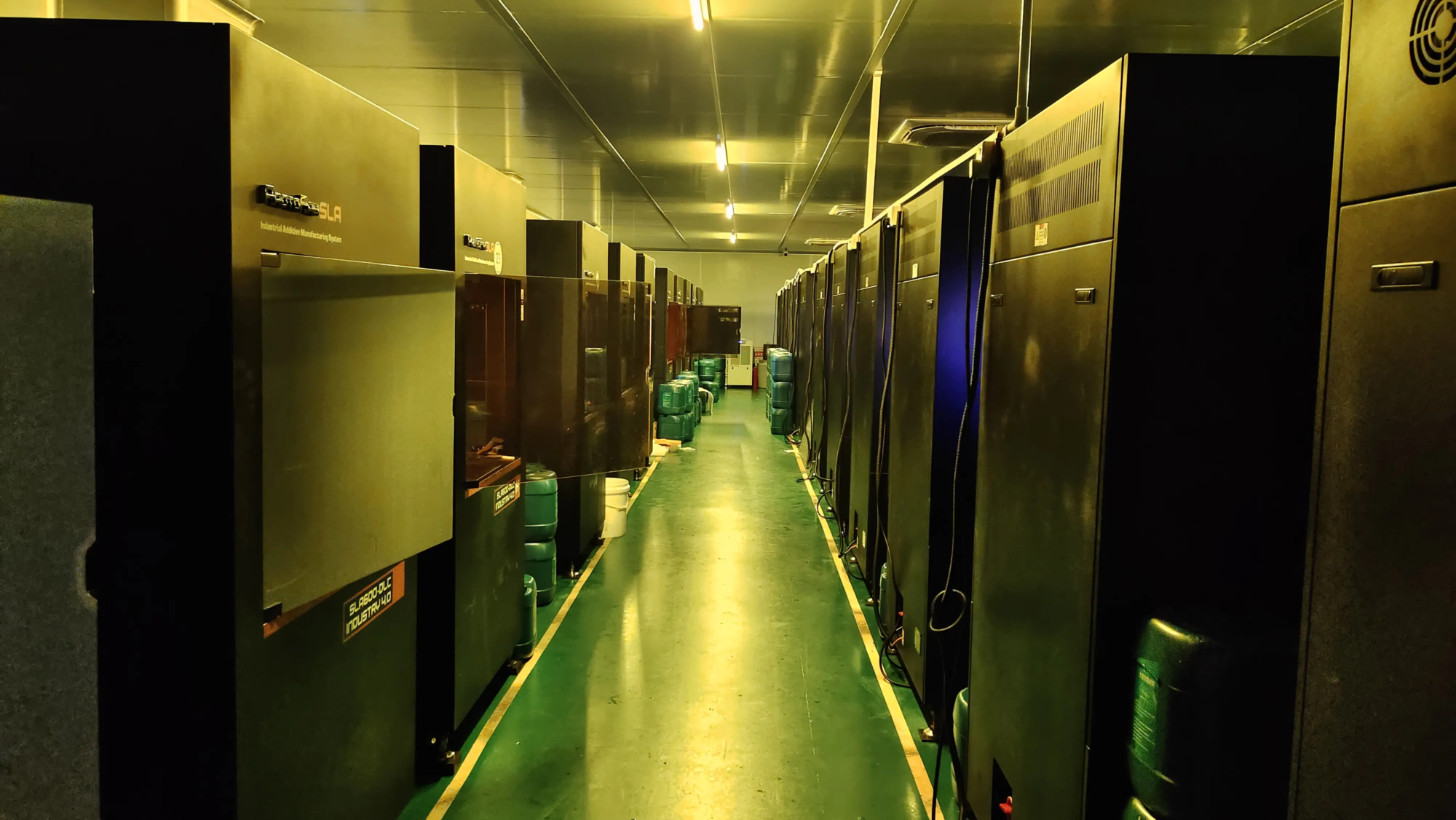
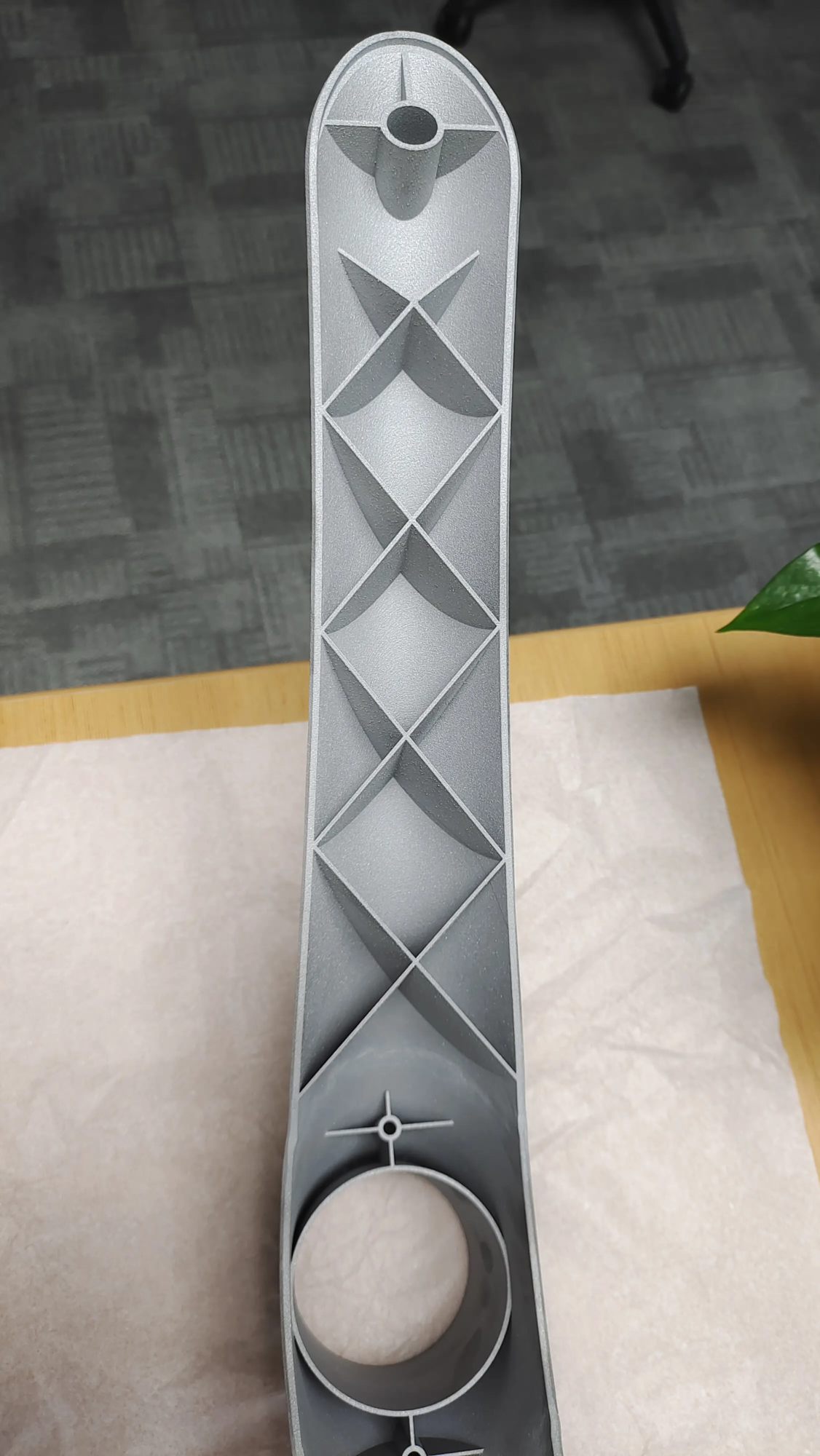
Metal prototypes are at risk of amplified banding – thermal stress + drape effects require a level of accuracy that is not possible at hobby level. exist huge lightwe utilize AI-calibrated SLM printers to produce aerospace-grade metal prototypes, virtually eliminating sources of banding distortion. Integrated 15-level post-processing (HIP/sandblasting/EDM polishing) to ensure cleanliness, parallelism and RA≤0.4μm. Submit your CAD files today; receive functional steel, aluminum or titanium printed prototypes with a money-back guarantee within 96 hours.