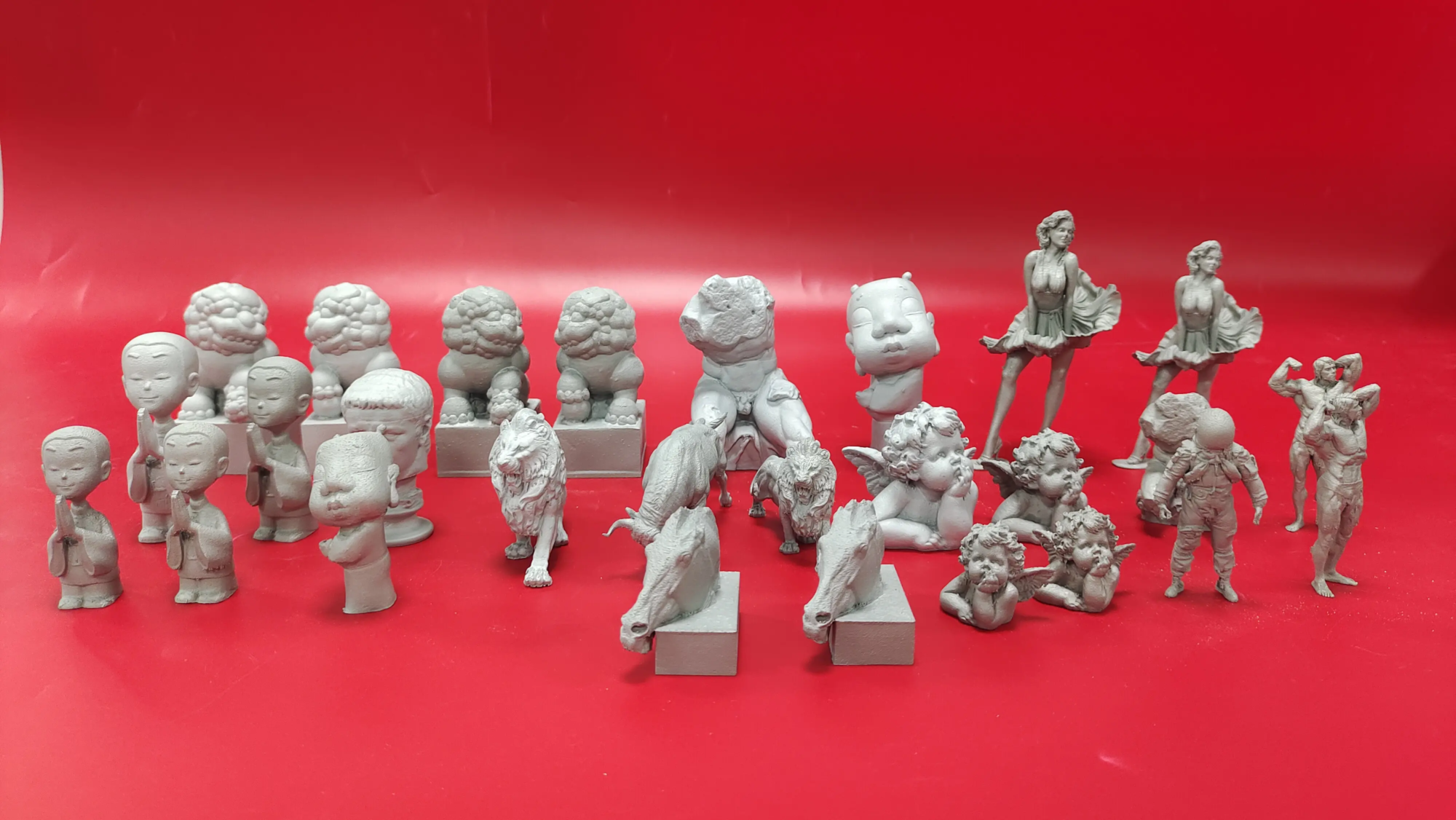
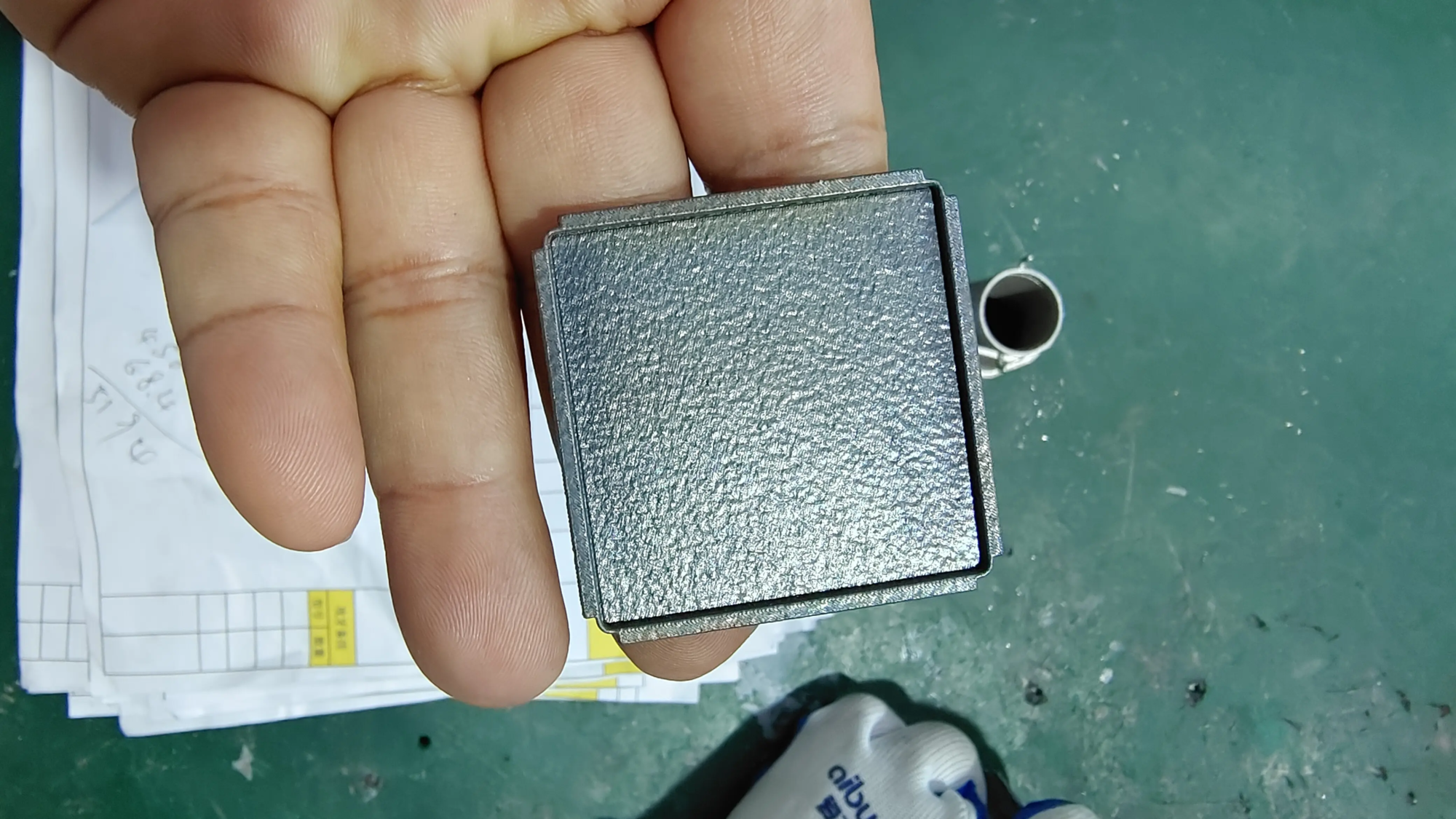
Experience rough surfaces on 3D printed parts? you are not alone. Surface roughness is a common challenge in the additive manufacturing process, affecting aesthetics, dimensional accuracy and functionality. Whether you are using FDM for plastic prototypes or metal AM technologies like SLM, understanding the root causes and solutions is critical to professional-level results. Let’s explore practical strategies for smooth finishes and when to work with experts to get perfect results.
Why is my 3D prints rough? The key culprit
Surface roughness stems from technical factors between design, material, machine setup and post-treatment blanks. This is a malfunction:
- Machine calibration issues: Misaligned beds, worn nozzles or unoptimized laser focus (in metal SLMs) can cause material inconsistencies.
- Incorrect printing parameters: Excessive printing speed, incorrect layer height or insufficient cooling speed will create such as spots, strings or "Orange peel" Texture.
- Material behavior: Plastics that easily buckle (such as ABS) or absorb moisture (nylon) and twist the surface. Metal powders with irregular particle methods or thermal stresses can induce pitting.
- Design Complexity: Overhanging, thin walls and complex geometry often lead to scars or incomplete fusion associated with support.
- Post-processing shortcuts: Skip steps such as supporting removal or grinding leaves residual roughness.
Step-by-step solution for smooth surfaces
1. Optimize printing parameters:
- The layer height of the plastic is reduced to 0.1-0.15 mm; for metals, adjust the laser power and scan speed to minimize sputtering.
- Enable function "Ironing" (FDM) or contour scanning (SLM) to perfect the top layer.
- Maintain a stable temperature – Heating will amplify the irregular surface.
2. Strict calibration:
- Print the bed smoothly and ensure consistent distance between nozzles and bed.
- For metal SLM systems, verify laser calibration and powder recoating uniformity.
3. Material selection and treatment:
- If dimensional stability is critical, use a low-rinse resin or metal alloy (for example, Maraging Steel of SLM).
- Dry silk/powder pre-print to prevent moisture-induced defects.
4. Strategic post-processing:
- Mechanical finish:
Grinding: Start with coarse sand (180-220) and then fined (800-2000). Wet sand metal avoids overheating.
roll: Very suitable for small metal parts; use abrasive media in vibrating barrel for a uniform matte finish.
CNC machining: For critical tolerances, precision milling or rotation can provide mirror-like surfaces. - Chemical smoothing:
Steam polishing: Exposure plastic (ABS,ASA) to acetone vapor to dissolve the microlayer.
electricity: For metals, this electrochemical process removes microscopic peaks, thereby enhancing corrosion resistance. - Advanced Technology:
Hot and other static pressure (buttocks): Smooth the surface at high heat/pressure, closing the internal holes in metal parts.
Laser re-melt: Secondary laser passes through the surface defect on the SLM assembly.
Why work with Greatlight on the surface perfect?
As a leading rapid prototyping manufacturer of advanced SLM 3D printers and comprehensive post-processing labs, Greatlight offers an end-to-end solution:
- Metal expertise: Our professional SLM machines produce complex geometry and have optimized support strategies to minimize post-processing labor.
- One-stop organization service: From CNC machining support removal to electropolishing and custom coatings, we tailor solutions to materials (titanium, aluminum, tool steel) and applications.
- No compromise on speed: Automatic completion process to cut turnover time – ideal for functional prototypes or end-use parts.
- Cost-efficiency: Avoid capital investment in equipment by leveraging our scalable infrastructure.
in conclusion
The rough 3D printed surface can be solved through meticulous parameter adjustment, machine maintenance and purposeful post-processing. However, achieving aerospace or medical device-level smoothness requires expertise and tools, especially with metal components. By integrating AM optimization with professional completion services like Greatlight’s, you bypass trial barriers and speed up quality results. Whether it is to perfect prototypes or produce parts, mastering surface integrity can improve product performance and professionalism.
FAQ (FAQ)
Q: Can I prevent surface roughness during printing?
A: Part – Optimization direction, support and cooling are helpful. However, most industrial applications require additional post-processing to achieve true smoothness.
Q: Is steam smoothing safe for all plastics?
Answer: No. Not only used with compatible materials like ABS or ASA. Nylon, PETG, or resins require alternative methods (e.g., manual polishing).
Q: How to improve metal parts by electropolishing?
A: It can electrolytically remove 5–50 microns of surface material, enhancing smoothness, corrosion resistance and infertility – ideal for medical or food grade ingredients.
Q: Will post-processing change the dimensions of parts?
A: Yes, techniques such as CNC machining or electropolishing materials. We mitigate this by designing predetermined parts for tolerance compensation.
Q: How quickly can Greatlight provide finished parts?
A: With internal SLM printing and post-processing, we provide smooth, fully functional parts in just 3-7 days depending on the complexity.
Q: Do you handle a large number of orders?
A: Absolutely – Our automated completion workflow supports production batches while maintaining consistency and fast turnaround.
By addressing these challenges in a whole, Greatlight ensures that your rapid prototyping projects seamlessly meet stringent standards. Please contact us to discuss custom solutions – because perfection is always in perfect condition.