The Dawn of Precision Agriculture: How 3D-printed Sprinklers Innovate Irrigation
Water shortage and the urgent need for sustainable resource management define the challenges of modern agriculture. Traditional irrigation systems and their standard mass-produced components are often difficult to provide water efficiently in a variety of terrain and crop types. result? Waste water, uneven coverage, reduced output and higher operating costs. But a transformative solution begins with an unexpected quarter: Metal 3D printing (additive manufacturing). Innovative manufacturers are now leveraging this technology to create custom sprinklers and usher in a new era of precision and efficiency in irrigation.
Why are standard sprinklers insufficient
Traditional sprinklers adopt a fixed design. Although suitable for general applications, they face limitations:
- Unity Challenge: Complex fields, slopes or irregular plots often suffer from excessive moisture in some areas and water in others.
- Limited adaptability: They cannot easily adapt to specific plant water needs, soil type, or microclimate within a farm.
- Performance Limitations: By traditional manufacturing limitations such as molding or casting, a specific spray pattern, droplet size or pressure tolerance is limited.
- Durability and maintenance: Wear-critical internal components (nozzles, turbines) can lead to performance degradation over time.
Entering a 3D printed sprinkler: Technological leap
Metal 3D printing, especially Selective laser melting (SLM)overcome these limitations by achieving previously impossible or expensive production of expensive sprinkler heads and complex internal components. This technology uses high-power lasers to build parts layer by layer from fine metal powders such as stainless steel, titanium or aluminum alloys, and accurately fuses the powder according to digital design.
How 3D printing changes sprinkler design and performance
-
Unrivaled design freedom and geometric complexity:
- Optimized internal flow path: Engineers can design complex aerodynamics to optimize water channels to minimize turbulence and pressure losses. Complex impact surfaces and chambers can be created to accurately control droplet formation and atomization.
- Custom nozzle holes: The nozzle can be designed in non-circular, elongated or multi-stage geometry, adjusting the spray pattern (fan, jet, circular, irregular) and droplet size distribution (fine mist for larger droplets) Accurate Site and crop requirements.
- Integrated features: Turbine chambers, rotating gear mechanisms, pressure regulators and even filter elements can all be used as single, highly complex components or with optimized internal geometry, reducing potential leak points and improving reliability.
-
Final customization and optimization:
- Location-specific solutions: Computational fluid dynamics (CFD) can be used to design sprinklers only Specific Farm plot. Irregular edges or areas with strange shapes can be irrigated with uniform precision.
- Crop-specific watering: Different crops have different water needs. 3DP allows adjustment of droplet impact energy and distribution to match delicate seedlings, thirsty row crops or dense orchards without wasting water or causing damage.
- Pressure optimization: The internal channels can be shaped to maximize efficiency under pressure, saving energy and reducing wear of the pump.
-
Enhanced durability and performance:
- Excellent material properties: SLM allows the use of high-strength corrosion-resistant alloys. Compared to casting, the parts can be denser and have a more uniform grain structure, resulting in a longer service life, especially in abrasive or chemically treated water.
- Reduce wear: Optimized flow paths minimize erosion and cavitation damage to critical surfaces. Near mesh printing reduces the need for weaknesses introduced by welding or assembly.
- Consistent performance: Precise manufacturing means that every printing sprinkler is consistently standardized without the variability in mass production.
- Rapid innovation and prototype:
- Faster iteration: Design changes can be iterated and tested overnight. New prototypes can be printed quickly, thus accelerating the innovation cycle of complex new sprinkler concepts.
- Manufacturing on demand: Eliminate the need for expensive tools (molds, deaths), thus making the design of highly specialized or customized sprinklers economically feasible.
The role of Advanced Manufacturing Partner: Greatlight’s expertise
Taking these cutting-edge sprinklers to life requires not only technology, but also deep expertise in additive manufacturing and completion. Great Standing at the forefront of this revolution.
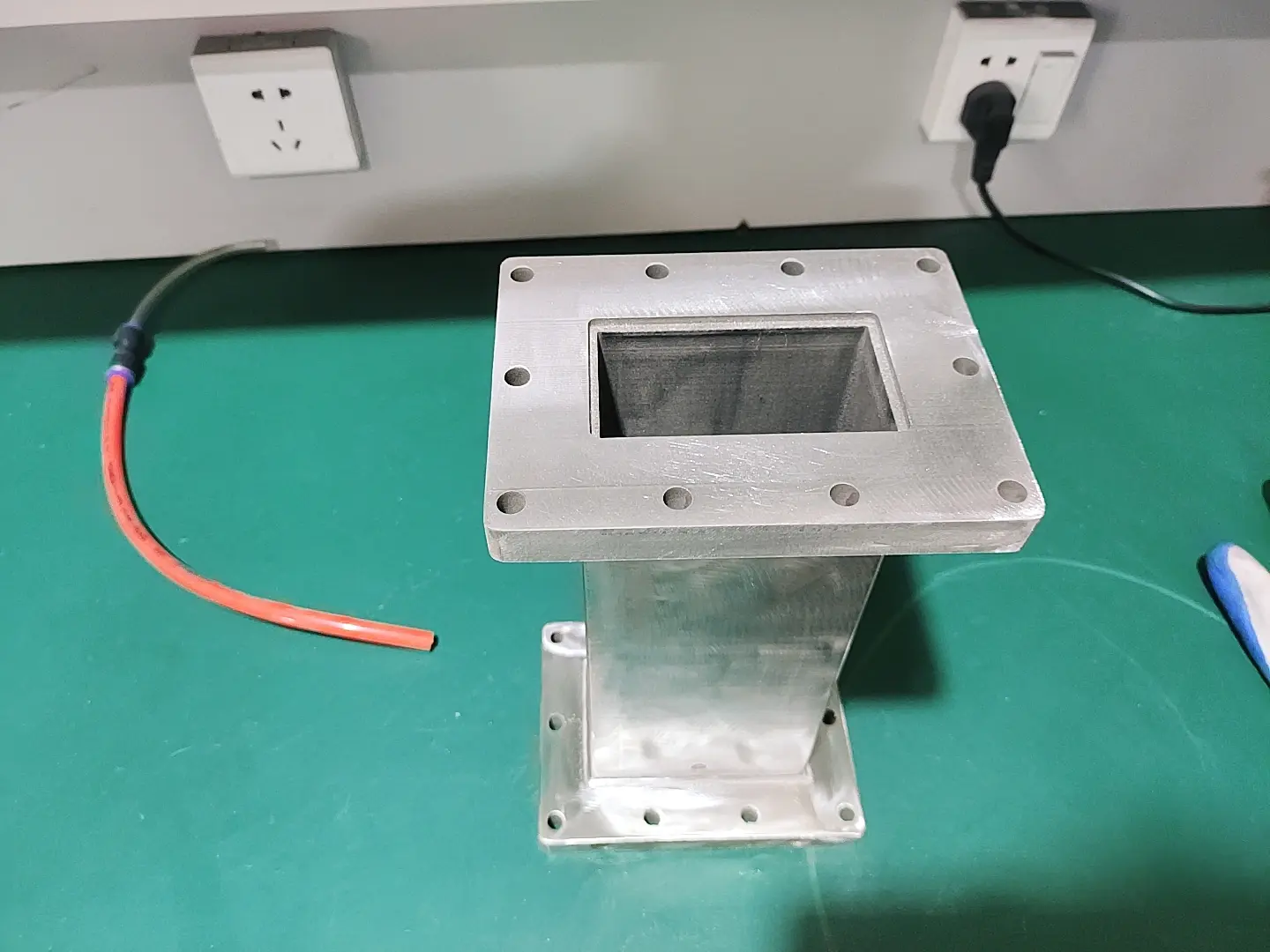
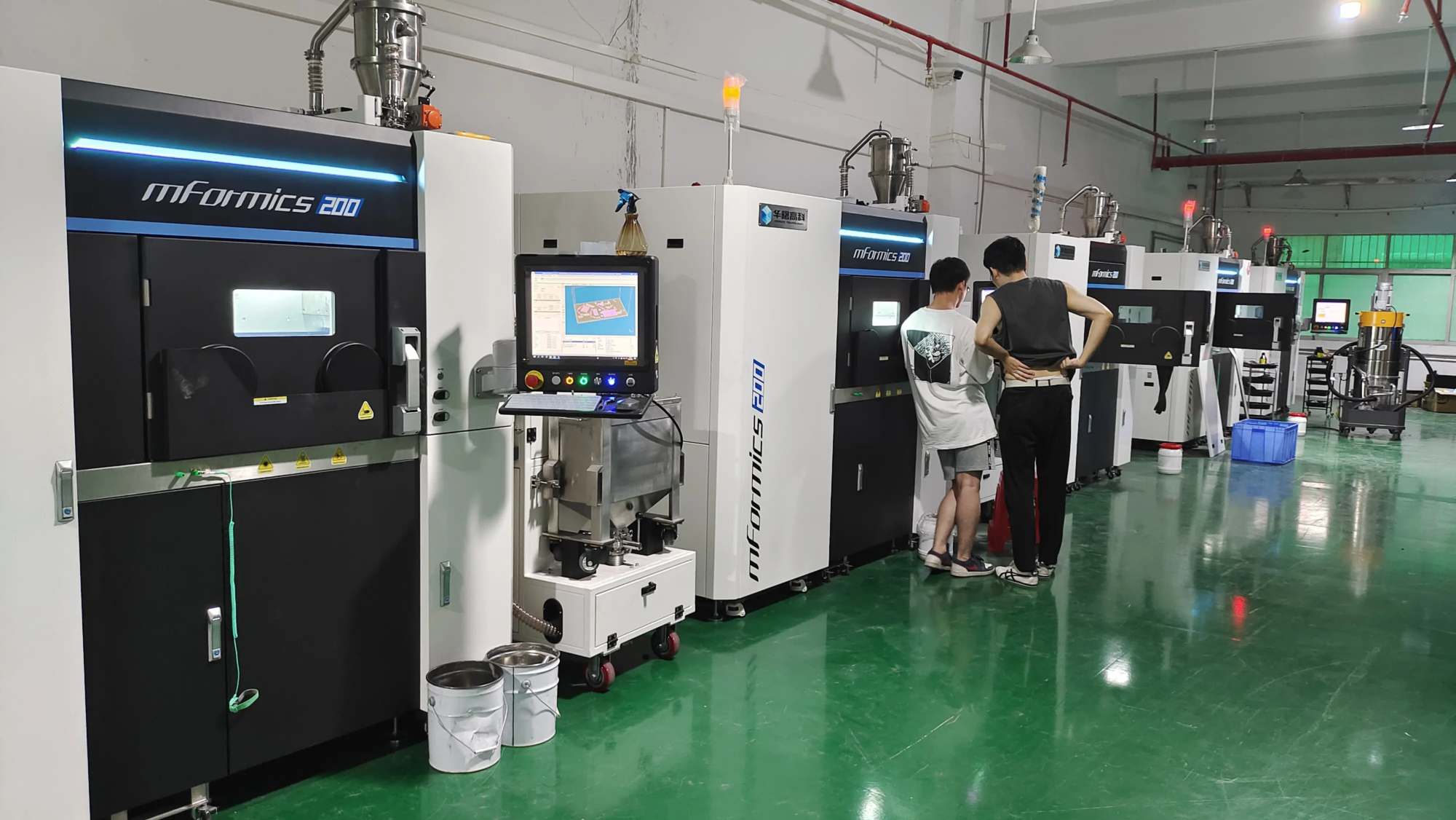
- Industrial grade SLM capacity: Leveraging state-of-the-art selective laser melting (SLM) 3D printers, Greatlight Process high-performance metal powders are used to build robust, complex irrigation components that meet demanding agricultural environments.
- Rapid prototype strength: Our core strength lies in the rapid iteration and generation of functional prototypes that enable irrigation innovators to quickly and cost-efficiently test and refine complex geometric concepts.
- Advanced post-processing: We offer comprehensive post-machining – from complex support removal and surface smoothing (machining, grinding, polishing, vibrating finishes) to polishing, to polishing, electrochemical treatment (burring), porosity sealing and heat treatment – ensuring that the sprinkler meets tight liquid properties, surface surfaces (critical to flow effects) and durability requirements.
- Precise customization: We focus on real customization: Transform unique irrigation challenges into optimized, manufacturable 3D printing solutions from one-time prototypes to small batch production.
- Material Science Understanding: Our team has the expertise to select the best metal alloys (e.g., stainless steel 316L corrosion resistance, high strength MARAGGEN steel, lightweight aluminum alloys of aluminum alloys), based on specific water chemistry and operating pressure requirements.
Real-world impact: achieving sustainable abundance
The meaning is profound:
- Water Conservancy: Tailor-made applications can reduce waste by 15-30% or more, which is a key gain in areas prone to drought.
- Improved crop yield and quality: Accurate, even watering minimizes plant stress and optimizes growth, thereby increasing productivity.
- Reduce energy consumption: Effective hydraulic design reduces pump pressure requirements.
- Lower long-term costs: Durable components mean less replacement and maintenance downtime.
- Innovation accelerates: Enable the fundamental new irrigation head design with a focus on efficient and micro-management of water distribution.
Conclusion: Accurate watering of a thirsty planet
3D printed metal sprinklers represent not only component upgrades, but also more upgrades. They mark a paradigm shift in the way we manage our most valuable resource – water. By achieving unprecedented design complexity, customization, durability and performance, additive manufacturing enables to create truly intelligent and efficient irrigation systems. Greatlight’s expertise in rapid metal prototyping and precise completion makes us a key enabler of this agricultural revolution. We work with irrigation designers, agricultural engineers and forward-looking farmers to turn innovative concepts into solid high-performance reality.
Stop being restricted by ready-made restrictions. Embrace the future of irrigation. Connect with Greatlight today to explore how custom 3D printed sprinkler solutions can revolutionize your water efficiency, crop yields and operating costs.
FAQ: 3D printed sprinklers and Greatlight services
Q: Are 3D printed sprinklers as strong and durable as traditionally made sprinklers?
one: Yes, it’s usually much bigger. SLM 3D printing with high strength alloys such as stainless steel 316L or titanium produces parts with excellent mechanical properties. Optimized internal geometry also minimizes erosion and wear. At Greatlight, we use proper heat treatment to maximize strength and durability.
Q: Isn’t 3D printing too expensive for irrigation components?
one: While the initial unit cost of mass-produced items may be higher, 3D printing offers enormous value for complex, custom or low-medium components. It eliminates expensive tool costs and enables water and energy saving designs. We focus on cost-effective solutions that consider total lifecycle value, not just the initial component cost.
Q: What materials can be used to print sprinkler devices?
one: Corrosion-resistant and powerful metals that are essential for irrigation: special alloys such as stainless steel 316L, titanium alloy (EG, TI6AL4V), aluminum alloy (EG, ALSI10MG) and special alloys, such as Maraging Steel, have extremely high strength. We help select the specific water type and pressure that best suits you.
Q: How long does it take to get a custom 3D printed sprinkler prototype?
one: As a rapid prototyping expert, Greatlight is excellent at speed. Simple prototypes can be delivered within a few days. Complex designs involving fluid dynamic optimization and complex details can take 1-3 weeks. We prioritize rapid iterations that meet development schedules.
Q: Can Greatlight produce functional prototypes and final production parts?
one: Absolutely. We focus on functional prototypes for rigorous testing and verification. Additionally, our process can easily scale to low to medium production runs of qualified designs, ensuring a seamless transition from concept to field-ready components.
Q: What post-processing options are available for completion?
one: Greatlight offers a comprehensive suite of: for precise machining of critical surfaces, complex support structure removal, grinding, polishing (manual and automated), rolling/vibration finishes, electrochemical burr/polishing/polishing (ECM/ECP) (ECM/ECP), porosity sealing (hot, etc., position pressing or chemical-specific processes-specific processes-specific processes-specific processes-possible VARE) and heat treatment. We tailor it to the functional requirements and aesthetics required for hydraulic performance and durability.
Q: Can 3D printing really improve irrigation efficiency?
one: To be clear. By enabling complex internal geometry to optimize water flow and droplet formation and allow precise customization for on-site conditions, 3D-printed sprinklers significantly reduce water loss due to runoff, evaporation and excessive variety, while ensuring a uniform distribution tailored to crop needs.
Q: How to start a project for a custom sprinkler’s Greatlight?
one: Contact our engineering team! We begin by discussing your specific challenges, performance goals, water conditions and site characteristics. Based on this, we collaborate on design, material selection, prototyping, testing and production. We guide you through every step from concept to deployment.