

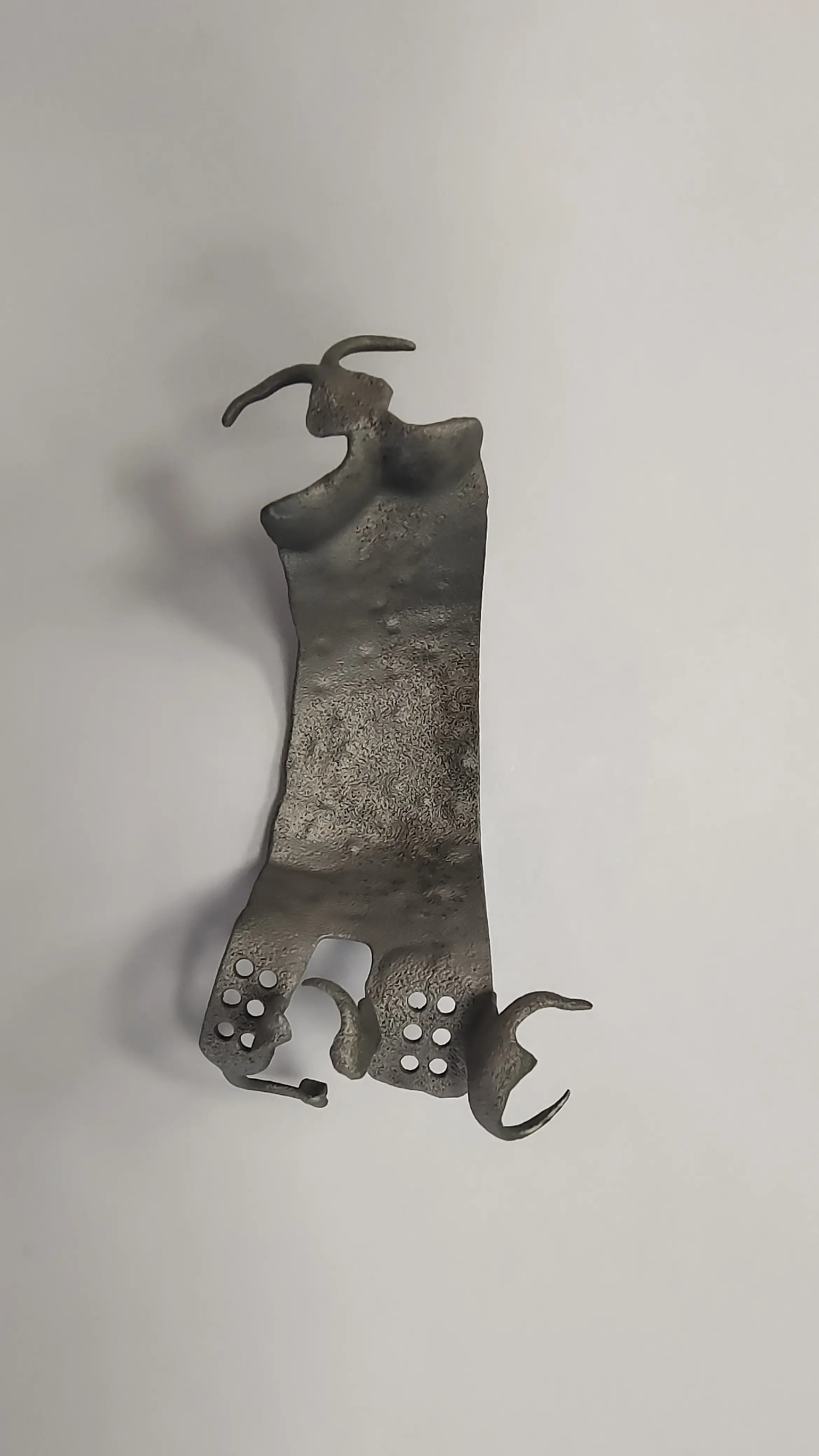
Digging into the future: cutting-edge innovation in rock 3D printing
The world of additive manufacturing is constantly evolving, pushing the boundaries of materials and applications. While polymers and metals dominate the headlines, a fascinating frontier is emerging: Rock 3D printing. The technology goes beyond traditional sculpture to replicate, enhance or even create entirely new rock-like structures with unprecedented precision and functionality. It blends geological science, advanced engineering and artistic vision and promises to revolutionize fields from geology and architecture to art and aerospace.
Driven by innovations in materials, printers and software, 3D printing of rocks is no longer science fiction. Here are ten key advances advancing this exciting field:
-
Mastering material mimicry: the reinvention possibilities of engineered geopolymers
Forget just copying the look. Researchers are developing complex geopolymer-based composites. These mixtures accurately mimic the mineral composition, density, porosity, and even mechanical properties (such as compressive strength and weather resistance) of specific natural rocks (sandstone, granite, basalt, limestone). This unlocks hyper-realistic geological models that are indistinguishable from quarries for research, restoration, and customization of building elements.
-
Multi-material stratigraphy printing: capturing geological complexity
Natural rock formations tell stories through their layers. Advanced multi-material 3D printer can now print different materials "Geological ink" Layer after layer. This allows for accurate simulation of complex formations, fossil inclusions, textures (such as marble), or density changes within a single printed structure. This fidelity is critical for petroleum reservoir modeling, paleontological replication, and advanced architectural texturing.
-
Nanoreinforcement Integration: Transforming Weak Rocks into Strong Structures
Why settle for emulating weaknesses? Innovations focus on embedding nanomaterials such as carbon nanotubes, graphene oxide or nanosilica into rock printing binders and aggregates. This significantly improves the tensile strength, fracture toughness and durability of printed rocks "rock," Able to create load-bearing structural components, erosion-resistant landscape features, or ultra-durable custom tools that outperform their natural counterparts.
-
Flexible robotic arms: large-scale, free-form rock structure fabrication
Going beyond standard gantry systems, large robotic arms equipped with specialized deposition nozzles are solving ambitious projects. These robots can build complex, free-form rock-like structures on site or in large facilities—think artificial reefs, sculpted terrain features, or building facades—depositing highly viscous rock composite slurries at large scales with incredible freedom and precision.
-
Sustainable Stone: The Recycling and Local Sourcing Revolution
Pioneers are converting waste streams into "Digital rock." Technology is being perfected to crush construction waste (concrete, bricks) or local mineral-rich soil/waste rock and use it as the primary aggregate for 3D printing geopolymer binders. This significantly reduces costs, reduces landfill burden, lowers transportation emissions and allows for truly site-specific "geological background" Architecture and landscaping.
-
Ultra-high resolution sandstone binder jetting: microscopic detail preservation
A new generation of binder jetting technology enables resolutions previously impossible on rock. Dates, resins or nanoparticle-loaded binders are sprayed onto a specialized layer of sandy mineral powder. Once cured, the unbound powder is removed, revealing an extremely detailed, smooth-surfaced rock replica, ideal for producing intricate paleontological casts, complex jewelry prototypes or heritage conservation artefacts where every tiny fossil or crystalline detail matters.
-
In-situ regolith printing: preparing for lunar and Martian habitats
One of the most fundamental and critical applications is the use of lunar or Martian soil (regolith) itself as raw material. Specialized (often laser-based) printers are being developed to sinter regolith simulants directly on-site into durable rock-like building blocks or shelter structures. This eliminates the astronomical costs of transporting materials from Earth and is central to future space exploration infrastructure.
-
Dynamic Filling Algorithm: Optimizing Density and Sustainability
Solid rock is inefficient. Computational design algorithms now optimize internal structures ("fill pattern") printed rock elements. These algorithms create lightweight honeycomb or lattice structures that mimic bone, balancing strength requirements with significantly less material, faster print times, and improved thermal or acoustic insulation compared to their solid counterparts.
-
Artificial Intelligence-Driven Lithology Generation and Prediction: Designing Virtual Geology
Artificial intelligence is making its way into workflows. AI algorithms analyze large data sets of real-world rock scans (CT scans, photogrammetry). They can then generate highly realistic new synthetic rock models (digital twins) based on required parameters, or predict the printability and potential failure modes of a specifically designed rock structure before fabrication.
- Biomimetic mineralization: growing rocks with microorganisms
Going beyond traditional deposition, researchers explore biologically mediated printing. The technique involves 3D printing scaffolds and then introducing bacteria, e.g. Bacillus pasteurianus). These microorganisms induce mineral precipitation (such as calcite) within the scaffold, essentially "grow" cementitious matrix. This gives bioconcrete or artificial sedimentary rocks unique self-healing potential and low embodied energy.
Conclusion: Laying a solid foundation for the future
rock 3


