Unleash the potential of your space: The ultimate guide to Skadis 3D printing tips
IKEA’s Skadis pegboard system is a powerhouse of modular storage – clean, versatile and extremely popular. But what if you could go beyond its out-of-the-box capabilities? Enter the world of Skadis 3D printing hacking! This vibrant ecosystem of user-designed accessories transforms your pegboard from a basic organizer into an ultra-customizable, ultra-functional command center. Whether you’re trying to tame your tech gear, optimize your workshop, or organize your craft supplies, 3D printing can unlock possibilities limited only by your imagination (and supplies).
Why Skadis? The perfect custom canvas
The genius of Skadis is its simplicity. A standardized hole grid and clever hook/clip mechanism provide a sturdy platform. Its minimalist Scandinavian design blends into any environment and is perfect for:
- Home office: cables, headphones, laptop, controller.
- Workshop: tools, parts boxes, measuring instruments.
- Craft space: yarn, tools, paint, patterns.
- Kitchen: cutlery, spices, recipes.
- Garage: bicycles, gardening tools, sports equipment.
While there’s a decent range of accessories available, users quickly run into limitations: There are no dedicated brackets, the plastic hooks buckle under heavier loads, or they don’t support specific configurations. This is where the maker community shines.
The magic of Skadis 3D printing techniques
Imagine:
- Perfectly fitting stand: Designed for your Router, pen collection or favorite screwdriver set.
- Ultra-safe mount: Reinforced clamp for heavy power tools or bulky gadgets.
- Niche organizer: Unique compartments store batteries, LEGO minifigures, paintbrushes or makeup brushes – no more digging through drawers.
- Integrated system: Hooks with LED lighting, USB ports or plant or statue holders.
- Space optimization: Angle brackets, tilt mounts, or deep containers maximize every inch of board space.
Thousands of these designs thrive on platforms like Printables, Thingiverse, MakerWorld, and Cults3D—all of which are free or can be purchased for just a few dollars, democratizing customization.
Benefits Beyond Customization: Why Print?
- Cost effectiveness: Printing specialized parts yourself is often cheaper than buying pre-made organizers, especially niche ones.
- Precise tailoring: Design or download parts exactly Matches your object – no wobble, no wasted space.
- Strength and durability (Optional Materials): PETG, ASA, and even infused nylon provide superior strength and stiffness compared to some stock fittings. need Metal strength? see below…
- Immediately available: Found a design you like? Print tonight, not next week.
- Sustainability: Repurpose filament spools or ECO materials for a greener organization.
- Community driven: Benefit from collective ingenuity – just download solutions to common problems.
Getting Started: Your DIY Skadis Journey
- Find your design: Browse the major repositories (Thingiverse, Printables, Cults3D). Search keywords such as "Skadis," "peg board," "ikea hooks," Add your items ("router stand," "PS5 controller").
- Choose your materials: For most accessories:
- People’s Liberation Army: Easy to print and various colors. Suitable for light items (pens, cables).
- Polyethylene glycol: Stronger, tougher, and more heat/UV resistant than PLA. Fits most hooks including some medium weight tools/gadgets.
- ABS/ASA: Higher impact resistance and temperature resistance. Best for heavy-duty applications (check printer capabilities).
- Print: Optimized strength and surface finish settings (30-40% infill, ~0.2mm layer height, good bed adhesion). Ensure dimensional accuracy – nail spacing (50mm) is critical!
- Installation and customization: Clip it onto your Skadis board! If desired, the print can be painted or finished.
Designing your own Skadis Hack: Key considerations
If you want to learn more about CAD:
- Precision is critical: Download the Skadis pegboard STEP file or accurately model the hook/clip and peg spacing (50mm x 50mm).
- Clamp mechanism: Study existing designs. The clip requires plenty of snap flexibility (PETG/PET/PETG-CF excels here) and a sturdy base.
- Lever hook: For heavier items, spread the load over multiple nails.
- tolerant: The holes are designed to be slightly smaller than the nail diameter for a tight snap fit (usually 0.1-0.2 mm smaller, depending on material shrinkage).
- Function first: Prioritize stability and safety over aesthetics.
Taking it to the next level: When PLA/PETG isn’t enough?
Some applications require More:
- High load: Supports very heavy duty power tools.
- Extremely durable: Environments prone to falls or impacts.
- High fever: Set up near machines or electrical appliances.
- Micro Connector: Extremely high stiffness and dimensional accuracy are required.
This is where professional solutions like GreatLight come in. As China’s leading rapid prototyping company, GreatLight specializes in turning digital designs into solid metal or high-performance polymer parts.
for Skadis hacks require unparalleled strength and longevityGreatLight provides advanced technology:
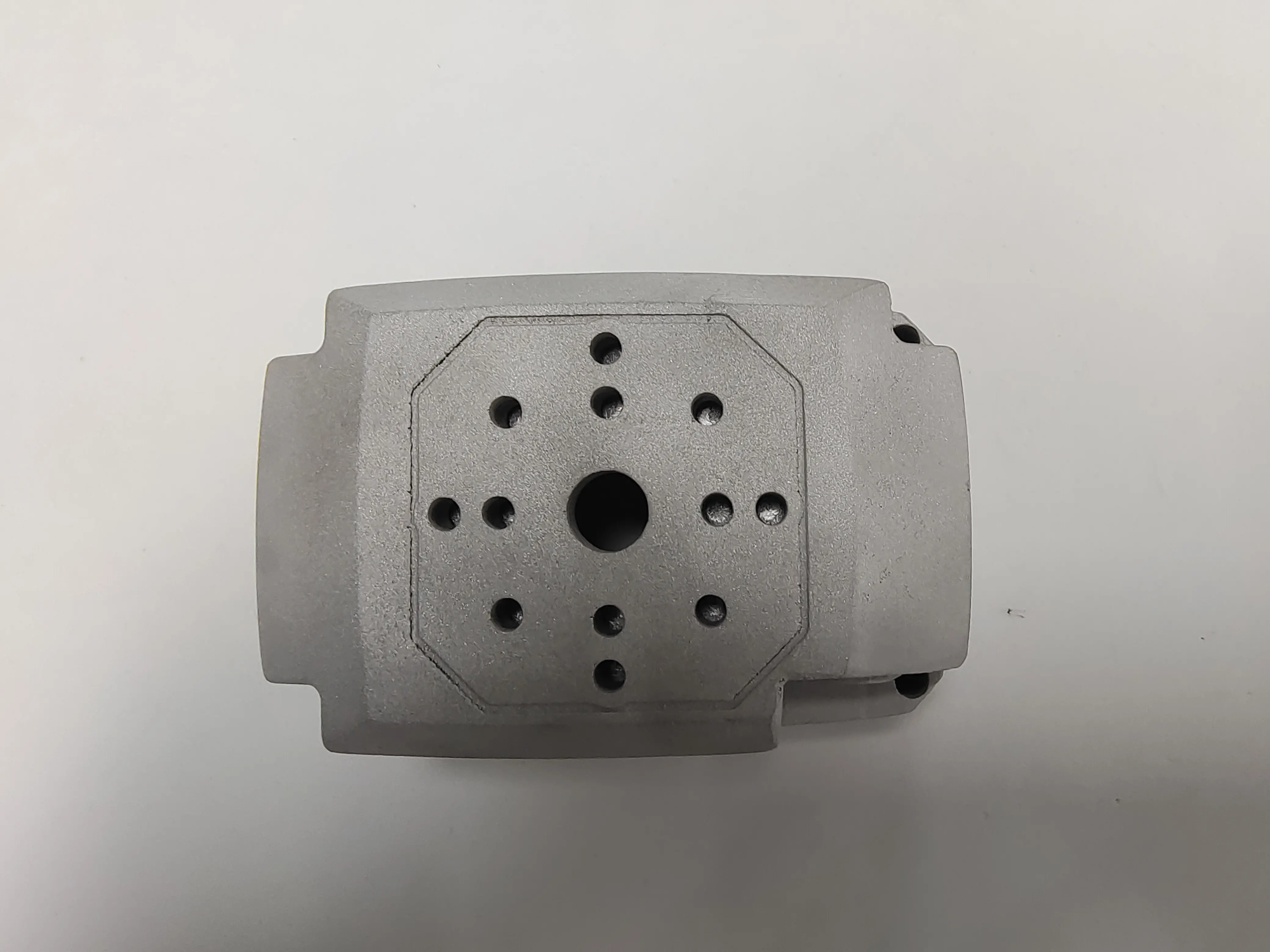
- SLM (Selective Laser Melting) 3D Printing: Build complex, near-solid metal parts (e.g. stainless steel, titanium, aluminum alloys) layer by layer. very suitable Heavy Duty Skadis Clip or Mountreplicating intricate designs in tough steel. Their advanced SLM equipment ensures part accuracy and density.
- Precision CNC machining: For simpler geometries, the top-end strength of billet aluminum or stainless steel is required, providing unparalleled stiffness and wear resistance over plastic.
- Engineering polymers: Print tough, heat/corrosion-resistant polymers that go beyond standard filaments through technologies like SLS or MJF.
- One-stop service: GreatLight handles the entire process – optimize your STL/STEP files for industrial printing/manufacturing, professional Post-processing (Heat treatment, sandblasting, polishing and other surface treatments) and inspection. They support countless custom materials.
- Speed and scalability: Need multiple ultra-sturdy parts quickly? Rapid prototyping is excellent, and production scalability can be seamlessly extended to low-volume runs.
Essentially, if your dream Skadis light fixture pushes the limits of plastic, then working with a rapid prototyping specialist like GreatLight can bridge the gap between DIY spirit and industrial toughness.
Conclusion: Organizations have no limits
Skadis 3D printing technology embodies personalized tissue. By taking advantage of free community designs or creating your own, you can gain unprecedented control over your space. PLA and PETG unlock huge potential for most uses at an affordable price. When your ambitions require metal-level performance – supporting large torque wrenches or creating specialized industrial fixtures – specialist rapid prototyping providers such as huge light Provide indispensable solutions. They combine cutting-edge technology (such as SLM) and deep manufacturing expertise to produce precision parts Reliable and fast, turn your most demanding Skadis visions into lasting realities. Embrace hacking, unleash your creativity, and transform your Skadis pegboard from a storage box into a powerful tool for ultimate customization.
FAQ: Skadis 3D Printing Hack Revealed
1. What file formats are available for Skadis 3D Printing Hacker Designs?
Most downloadable designs are STL files ready for slicing. Some creators provide STEP files to make modifications in CAD software easier.
2. How to connect 3D printing accessories firmly?
Most use the standard Skadis hook/clip mechanism. make sure:
- Your print accurately captures nail spacing (50mm) and clip shape.
- You use a material that is flexible enough for a snap fit (PETG is ideal).
- Push firmly until the clip snaps onto the nail. listen "Click."
- For heavy or metal prints, make sure the hook/clip is designed to take multiple nails.
3. What are the reliable materials used for most Skadis hooks?
polyethylene terephthalate Typically the best balance of strength, durability, interlayer adhesion, printability and snap flexibility. PLA is good for lightweight items but will creep/deform over time. ABS/ASA is stronger but requires an enclosed printer.
4. My printed hooks feel flimsy. How can I make it stronger?
- Increase the number of walls/perimeter (3-4).
- Increase filling density (40-50%).
- Strategically adjust print direction to increase layer strength.
- Use stronger materials (PETG over PLA).
- Redesigned to distribute load over more nails.
- Consider prototype services such as huge light If sturdiness is critical, the metal version is suitable.
5. Where can I find Skadis 3D printing designs?
Explore large repositories: prusa print, universe of things, Maker space, Cult 3D, Maker World. search "Skadis," "ikea peg board," or add your specific project (e.g. "Skadis headphone stand").
6. Can I make metal Skadis parts if I don’t have a printer?
Absolutely! The company specializes in Rapid prototyping serviceslike huge lightis good at this. Upload your design files (STL/STEP), select the metal (commonly stainless steel, aluminum alloy), specify the requirements, and they fabricate and post-process it. Ideal for heavy-duty, precision or high-temperature applications.
7. Are 3D printed accessories safe for heavy tools/electronics?
With careful design and material selection, yes. Use PETG, ABS/ASA or potentially NYLON/Nylon-CF with rugged geometry/distributed loads. To maximize safety/reliability of very heavy items, metal fabrication e.g. Glow SLM)recommend. Always test carefully first!
8. How to design your own Skadis mount?
- Obtain/simulate pegboard geometry: dimensionally accurate peg positions/hook profiles.
- Draw a sketch of your mount/bracket: to fit securely around your object.
- Integrated clip mechanism: the key to functionality. Copy/mirror existing clips for reliability.
- Incorporate Nail Support: Design the arm that connects the bracket to the clamp to span at least 2 pegs to ensure stability.
- Optimized structure: Strength ensured by ribs/padding.
- Test print (PETG recommended).
- (Advanced Tip: Similar Services huge light If you prototype metal parts, you can optimize your design files to improve manufacturability. )