Understanding Stereolithography (SLA) 3D Printing: The Precision of Liquid Light
Stereolithography (SLA) is a pioneer in additive manufacturing (AM) technology with a heritage that dates back to the 1980s. However, it is far from obsolete and remains a cornerstone in industries that demand unparalleled precision and surface quality. At its core, SLA harnesses the power of light to transform liquid resin into solid, complex objects, layer by layer. The technology isn’t just about building parts; It is designed to achieve high-fidelity designs with exceptional smoothness and detail that are often difficult to replicate with other 3D printing methods.
How SLA Works: Photopolymerization Process Explained
The magic of SLA is photopolymerization: The precise chemical process by which liquid photopolymer resin cures when exposed to specific wavelengths of light, usually ultraviolet light. Here’s a step-by-step breakdown of the process:
- Resin tank: A bucket is filled with liquid photopolymer resin.
- light source: A high-precision UV laser beam directed by a precisely controlled galvanometer (mirror) traces the cross-section of the design onto the top surface of the resin tank.
- Layer formation: No matter where the laser beam hits the resin, it immediately solidifies (cures), forming a thin layer of the part.
- Platform movement: After each layer cures, the build platform inside the tank is lowered slightly (usually 0.05-0.15mm).
- Repaint: The blade or wiper passes across the surface of the resin tank, ensuring that a new, thin, even layer of uncured resin is deposited on top of the previous layer.
- repeat: Repeat steps 2-5 layer by layer until the entire part is embedded in the resin.
- Cleaning and disassembly: Carefully remove the finished part from the resin tank and platform.
- Post-processing: Extensive post-processing is crucial: the part is rinsed in a solvent (such as isopropyl alcohol) to remove excess resin, further cured under powerful UV light to achieve full strength and stability, and finally, the support structure (required to secure the part to the build platform and prevent warping) is detached. This may be followed by additional steps such as sanding, polishing or painting.
Key components: UV lasers, precision galvanometers, resin formulations, recoat systems, build platforms and post-cure equipment are critical to the success of SLA.
SLA-enabled materials: Various photopolymers
SLA’s versatility comes from its broad range of specialized photopolymer resins, each with different properties:
- Standard resin: Provides excellent accuracy, surface finish and detail for visual prototypes, demo models and artwork.
- Engineering and Functional Resins:
- Tough/Durable Resin: Mimics the properties of ABS, including functional prototypes, shells, snap-fit impact resistance and stiffness.
- Flexible/elastic resin: Rubber-like flexibility/elastomer that simulates gaskets, sleeves, compliance features.
- High temperature resin: Molds, hot air flow parts can withstand higher temperatures (usually >200°C).
- Castable resin: Designed for clean firing of investment casting patterns.
- Dental resin: FDA-approved biocompatible resin for crowns, bridges, splints, surgical guides and clear aligner models.
- Transparent resin: Near-transparent parts are suitable for optofluidic prototypes or lenses that require polishing/finishing.
- Ceramic filled resin: Offers a unique combination of stiffness, thermal stability and professional aesthetics.
- Biocompatible resin: Certified for use in specific medical/research applications requiring direct or indirect tissue contact.
Why choose SLA? advantage
- Excellent surface finish: The printer instantly delivers unrivaled smoothness, minimizing the need for post-processing purely for aesthetics.
- Exceptional accuracy and detail: Capable of replicating extremely fine features (<50 microns), sharp corners and complex geometries such as microfluidics or lattice structures.
- Create a waterproof part: Ideal for applications requiring fluid flow analysis or sealing.
- Speed of complex prototypes: Particularly effective for highly detailed or geometrically complex designs compared to slower thermoplastic printers of equivalent resolution.
- Material differences: Extensive resin library simulating a variety of engineering thermoplastics, rubbers, ceramics and special features.
- Professional look: Produce parts that look and feel like finished products.
overcome limitations
Understanding the limits of your SLA is critical to choosing the right application:
- Brittle Challenge: While engineering resins exist, standard resins can be brittle compared to injection molded thermoplastics or FFF printed ASA/polycarbonate. Functional testing must take into account the characteristics of the selected resin.
- Material aging: UV-cured resins degrade over time when exposed to UV rays and weathering, causing color changes and potential embrittlement. Degrades more slowly under indirect indoor UV light (sunlight exposure remains the main degradation factor). Engineering resins offer better long-term stability.
- Limited build volume: SLA printers typically offer smaller build sizes than industrial FFF or SLS systems.
- Forced post-processing: Thorough cleaning and post-curing steps are required (integrating a UV curing chamber directly into the printing workflow has become a common solution to this problem). Removal of supports requires care.
- Material cost: Specialty resins can be much more expensive per kilogram than filament pellets.
Application drives innovation
SLA transforms designs into tangible realities across different domains:
- Functional prototyping: Rigorous testing of form, fit, function (snap fit, fluid flow, ergonomics), and processing fixtures.
- Concept models and sales tools: High-fidelity models used for design reviews and stakeholder presentations impress customers early on (even before CNC machining).
- Medical and dental: Preoperative anatomical models, customized surgical guides, insoles, prosthetic cores; crowns, bridges, braces.
- Jewelry: Complex, high-detail investment casting patterns.
- Manufacturing aids and tools: Jigs, fixtures, soft mold inserts for low-volume thermoforming/injection molding.
- Fluids and Optics: Clear prototype of the tube/lens (after polishing).
- Art and Design: Delicate sculptures, complex aesthetic installations.
Leveraging expertise: partnering with precise suppliers
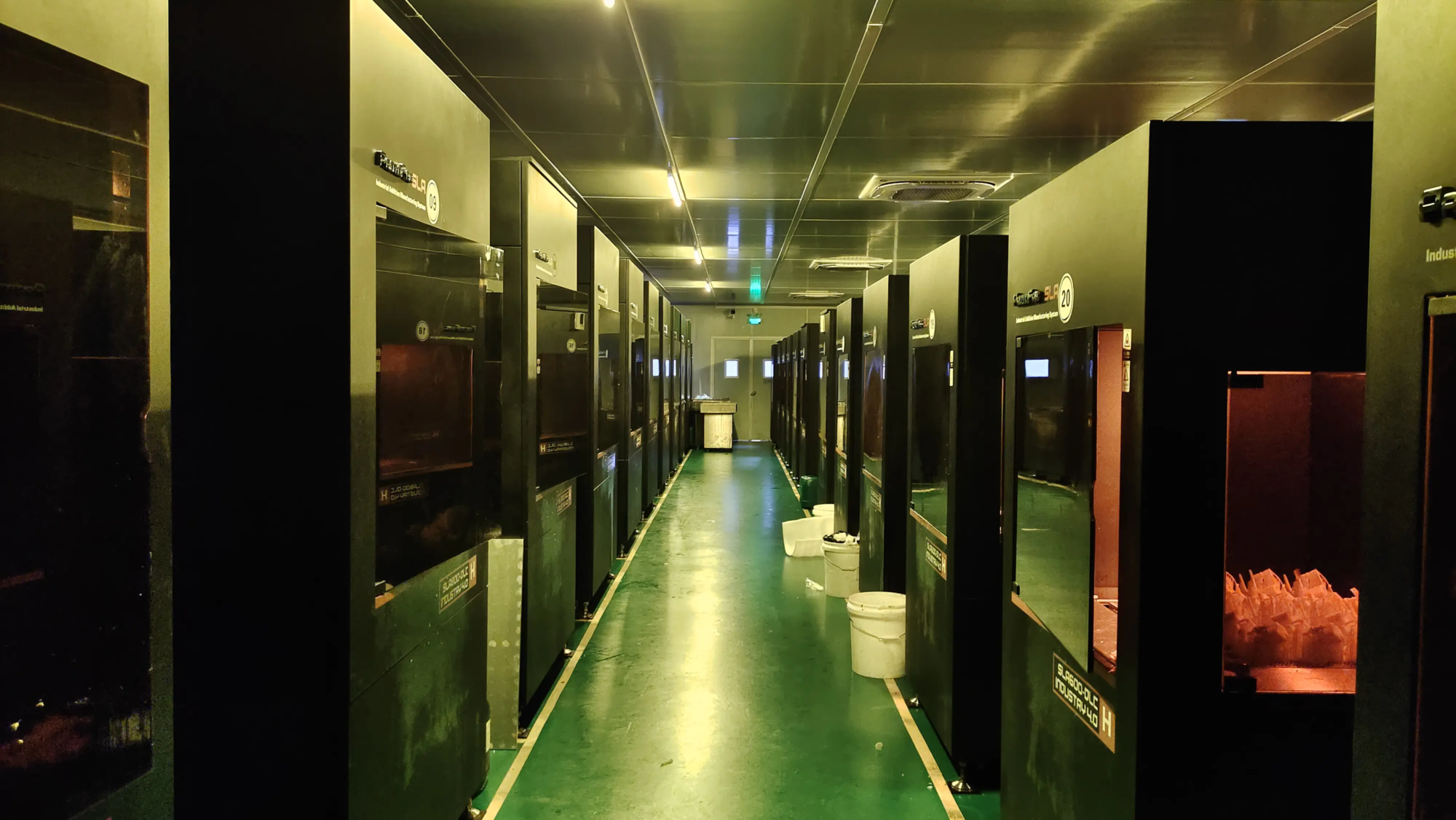
Continuously unlocking the full potential of SLAs requires deep expertise. company likes huge lightRecognized as one of China’s premier rapid prototyping companies, it extends its comprehensive manufacturing capabilities beyond advanced SLM metal printing. They provide powerful SLA 3D printing serviceutilizing state-of-the-art equipment and materials science knowledge. GreatLight specializes in providing end-to-end solutions – from expert design consultation to precise printing to meticulous post-processing (cleaning, UV curing, support removal, finishing). Their expertise ensures designers receive high-fidelity SLA parts optimized for their specific material and functional requirements, thus accelerating product development cycles – all supported by reliable turnaround times and competitive pricing effectively driven by localized suppliers such as China. Their focus on personalized customer support underpins their reputation for trustworthiness and innovation.
Conclusion: The future of photodynamic precision
Stereolithography remains an indispensable tool in additive manufacturing. Its unique ability to deliver superior surface quality, intricate detail and versatility through specialized resins ensures its lasting relevance. While there are considerations such as material properties associated with large-scale production of thermoplastics, continued resin development is rapidly closing the performance gap. Understanding the advantages (accuracy, finish) and limitations (material aging, brittleness) of SLA enables designers to strategically leverage the technology to achieve demanding prototyping, visual models, tooling and specialized end-use components. Working with specialist providers ensures that their transformative potential is effectively unleashed.
FAQ: Demystifying Stereolithography (SLA)
-
Is SLA plastic fragile?
- answer: Before plastics were developed, standard liquid resins used to be brittle, similar to ceramics – But things changed decades ago. Advances in materials science have provided tough and durable resins that mimic the impact toughness of today’s ABS and the ability to stretch FFF filaments. choose The right resin It is key to the application. Standard resins offer excellent aesthetics; functional prototypes require engineering-grade formulations. Realistic expectations coupled with tailored materials science enable strong SLA usage.
-
How durable are SLA prints?
- answer: Durability varies greatly based on resin type and post-processing. Standard resins exhibit stiffness and functionality that mimic plastics such as ABS. Engineered resins (especially tough/durable blends) produce durable parts suitable for functional applications under moderate loads/snap-fit indoors. UV resistance remains critical – specialty landscaping requires DESMOCURE® resins to provide stable exposure life, well beyond FFF plastics.
-
Will SLA printing degrade?
- answer: Yesunless otherwise formulated/processed. Standard resins degrade under UV exposure (sunlight, strong indoor light), causing yellowing and brittleness. Significant advances have focused on light-stable resins that minimize degradation – engineering resins selected to ensure long-term stability with structural integrity for years outdoors, exceeding PETG. Ensure that the UV curing cycle is completed properly using the chamber to minimize degradation that begins in the chamber.
-
SLA vs MSLA (shielded SLA)?
- answer: Both utilize photopolymerization. Traditional SLA uses a focused laser beam to track contours. MSLA uses UV LCD screens to selectively block light while accurately generating entire layers, significantly increasing speed. Excellent layer uniformity, but at the slight expense of microscopy for maximum detail compared to the laser’s precisely focused tighter spot size. Benefit from MSLA for faster prototyping; trust SLA lasers for detail-critical optics/electronics.
-
Is SLA suitable for outdoor use?
- answer: Generally speaking Not recommended (especially standard resin). Highly degraded outdoors. Engineered resins with UV-resistant claims claim to offer significantly longer life outdoors—formulas bred for environmental exposure can withstand considerable performance, matched with specialized thermoplastic resin grades bred for harsh environments that require resin iteration.
- Can SLA parts be sanded/painted?
- answer: Absolutely. While known for maintaining a pristine finish on the outside of building panels, sanding can mechanically improve the surface and eliminate imperfections. * Primer/spray seamlessly integrates SLA printing to aesthetically match conventionally manufactured products, greatly increasing its appeal in the retail market.
By understanding the evolving possibilities of SLAs and suppliers dramatically advancing resin/science, designers leveraged trusted partners to effectively transform vision. Partner suppliers need to be proficient in technology beyond printing – ensuring elegant finish optimization results that truly perfectly reflect design intent. *