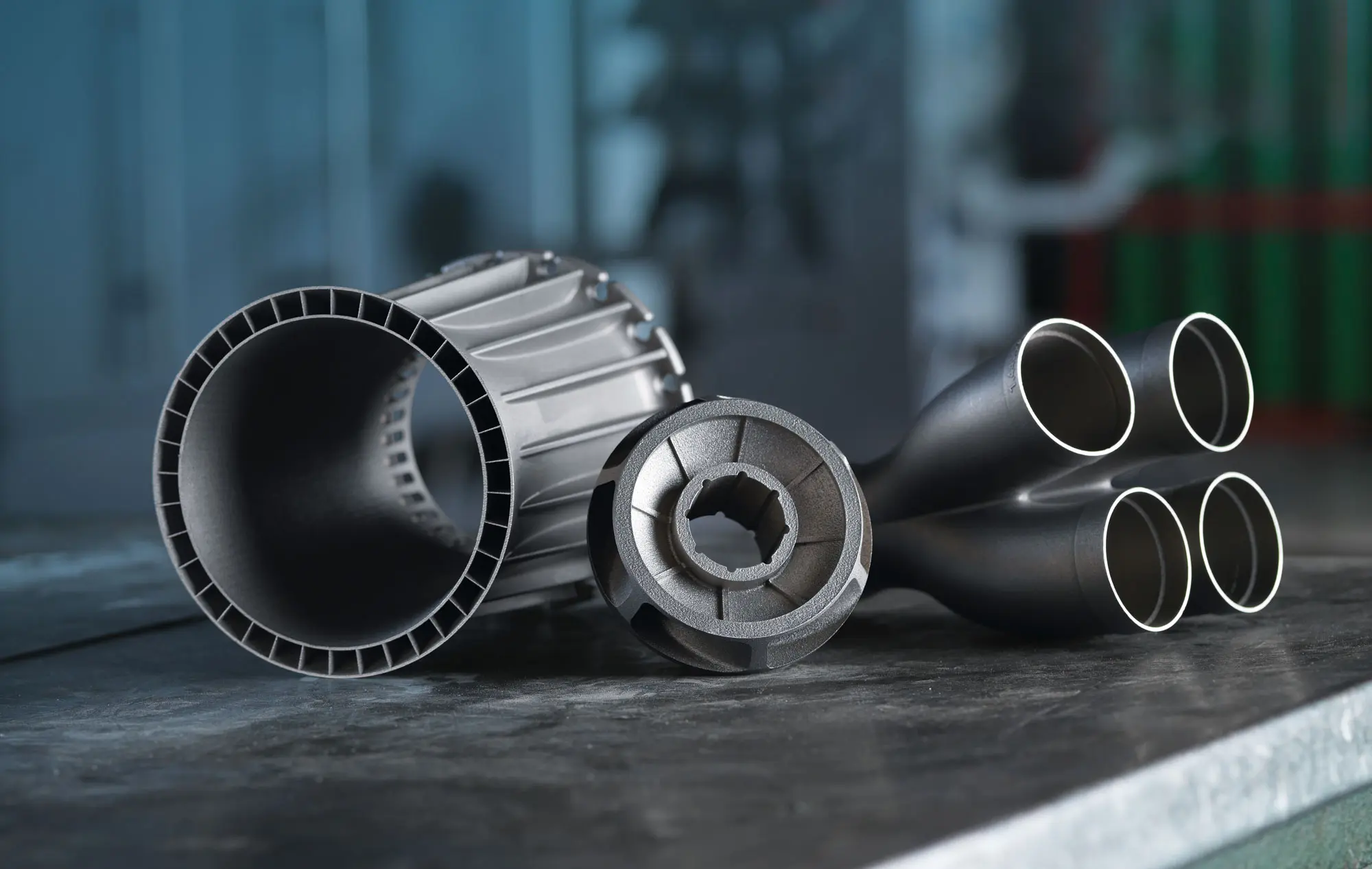
Spray Putty: The Secret Weapon for Perfect 3D Printing Finishes
In the exciting world of 3D printing, holding onto newly printed parts holds great promise. But often, layer lines, tiny imperfections or support scars mar the surface, reminding us that the journey from printed to polished product is not quite complete. where is this spray putty It’s a game-changer for amateurs and professionals alike.
Spray putty (also called automotive primer or surfacer) is more than just a primer; It is a specialized high-build product specifically designed to fill in tiny imperfections and create a smooth, even surface ready for painting. For 3D printed parts, especially those used for visual prototypes, functional models requiring low friction, or end-use parts requiring aesthetics, mastering spray putty is an essential skill in the post-processing arsenal.
Why spray putty dominates 3D printing
While sanding alone can smooth the surface, it is laborious, risks altering the geometry, and makes it difficult to deal with deep lines or pinholes. Spray putty has obvious advantages:
- Efficient filling: Its thick, viscous formula closes tiny gaps, dents and layer lines faster than traditional primer or filler putty applied by hand.
- Superior construction: It’s designed to build thickness evenly, creating a perfectly smooth canvas faster and with less effort than filling each line individually.
- Sandability: Once cured, spray putty sand beautifully to get an incredibly smooth surface without overly sticking to the sandpaper.
- Primer base: It creates an excellent, even and sealed base layer that enhances the adhesion and appearance of subsequent paint layers.
- Refinement: Ideal for achieving a truly professional-grade finish, concealed "3D printing" It looks effortless.
Skilled Application: Your Step-by-Step Guide to Spray Putty
Achieving a flawless finish requires careful preparation and execution. Here is the roadmap:
-
Thorough cleaning is crucial:
- Wash the parts thoroughly with warm water and mild dish soap to remove oil, fingerprints, printing residue, and any release agent (if applicable).
- For materials like nylon or resin prints, consider wiping with a small amount of isopropyl alcohol (IPA) for a deeper clean (make sure compatibility first). Make sure the part is completely dry.
-
Preliminary Polishing: Creating Grip
- Lightly sand the entire surface using dry sandpaper (120-180 grit) or wet sandpaper (220-320 grit). especially Layered lines and defective areas such as support scars.
- Goal: Remove major bumps/scratches and create minor scratches ("key") to allow the spray putty to mechanically adhere. Don’t aim for perfection—just prepare the surface. Wipe away any sanding dust with a tack cloth or damp lint-free cloth.
-
Impeccable Finish (continued):
- Make sure your workspace is clean, well-ventilated, free of dust, and at the recommended temperature/humidity (check the putty jar – usually around 20°C/68°F for low humidity).
- Wear appropriate personal protective equipment: nitrile gloves, safety glasses, and respirator with organic vapor/P100 cartridge are non-negotiable. Spray putty contains solvents.
- Use masking tape/blue tacks in an invisible area to securely mount the part to the turntable or stand so you can turn it easily.
-
Spray Technology: The Art of Thin Coats
- Shake the spray putty can vigorously At least After 2 minutes you can hear the mixing ball rattling freely. Continue to shake regularly while spraying.
- Test spray briefly on scrap cardboard to ensure an even spray pattern and flow.
- Place the jar 20-30 cm (8-12 inches) away from the part. Start spraying forward Go past the edge of the part and stop spraying back Go over the opposite edge.
- Apply multiple thin mist coat. The first coat should be barely noticeable. Follow product directions, allowing 5-10 minutes of flash-off time between coats.
- Apply 2-4 coats and gradually increase coverage. Avoid wearing heavy coats! This can lead to runs, sagging, orange peel texture and prolonged drying time.
- Cover the entire section evenly, maintaining consistent distance and speed. Rotate the pieces frequently to get even coverage on all sides.
- Spray putty provides better coverage than standard primer but should not be used as the final color coat. Focus on creating a smooth, opaque base.
-
Cure Patience:
- Allow the spray putty to cure completely according to the manufacturer’s instructions. This usually takes a few hours, often 24 hours, for deep curing before heavy sanding. Don’t worry! Insufficient curing can cause problems during the sanding process.
- Polished to Perfection: Showing Smoothness
- Work your way up to finer grits: Start wet sanding with 400-grit sandpaper to reduce the high spots and start leveling them. Move to 600 mesh, then 800 mesh for finer leveling.
- Your goal is to achieve a perfectly even matte finish. accomplish "scratch pattern" The consistency of the finest grit you use.
- Rinse parts frequently to remove slurry and prevent clogging of sandpaper. Examine carefully in good light – wetting the surface will help reveal defects.
- Wipe thoroughly and dry completely. Now you’re ready for the final priming or painting!
Advanced tips and pitfalls to avoid
- Temperature issue: Always spray within the recommended temperature range. Cold temperatures will greatly extend the drying time and affect atomization; high temperatures will cause too fast drying and uneven film formation.
- Humidity hazards: High humidity (>65%) Cause "blush" (White haze due to residual moisture in dry film). If humidity is high, delay spraying.
- Compatibility check: Make sure your spray putty is compatible with your 3D printing material. If you’re not sure, test it on scrap material first.
- Breathe Safely: Prioritize ventilation. A spray booth (professional or homemade) can significantly improve results and safety.
- Less is more: Multiple thin coats will beat one thick coat every time. Dealing with running/sag only after They are fully cured – sand them smooth.
- High filling special putty: For deeper voids (>1mm), consider applying small First apply an appropriate amount of traditional putty and sand it smooth. Then Use spray putty on top to get a final level surface.
- Mechanical preparation: Bonded by mechanical bonding spray putty. Properly worn surfaces ensure longevity.
The power of professional post-processing
While DIY spray putty works extremely well, achieving a true production-grade finish consistently, especially on complex geometries or demanding materials, often requires specialized skills and industrial equipment. This is where working with a rapid prototyping post-processing expert can make a real difference.
huge lightAs a leading innovator in rapid prototyping, he understands this deeply. In addition to leveraging advanced SLM metal 3D printers and production technologies to solve complex prototyping challenges, GreatLight also excels in providing comprehensive one-stop services Post-processing and finishing services. The application of spray putty, followed by detailed sanding, priming, painting, polishing or any desired custom surface treatment, is performed with precision and efficiency. Most materials (polymers and metals alike) can be quickly customized and finished to meet the highest aesthetic and functional standards.
Whether your project requires an impeccable decorative effect that is indistinguishable from injection molding, functional coatings, polished to a mirror finish or special surface treatments, huge light Leverage its expertise to enhance your 3D printed parts. Their commitment to expert finishing ensures that your prototype is not only functionally perfect, but also visually impressive.
in conclusion
Spray putty isn’t magic, but for aspiring and experienced makers, it’s a very effective magic powder in a jar. It bridges the gap between the inherent surface texture of FDM, SLA, SLS or MJF printing and the flawless professional-grade look. By mastering the basics of cleaning, preparation, thin-coat application, controlled cure, and progressive sanding, you can unlock the potential to transform your creations. Remember, addressing defects layer by layer is not just about hiding defects; It’s about improving your craft and achieving the beautiful results your designs deserve. To achieve ultimate perfection and efficiency, especially on critical projects or complex geometries, leveraging the expertise of experienced partners like GreatLight ensures truly outstanding results.
Frequently Asked Questions (FAQ)
Q1: Can I use spray putty directly on any 3D printing material?
A1: Generally speaking, yes, but Preparation is key. Metals such as PLA, ABS, PETG, resin-based printing (SLA, DLP), nylon (PA12/PA6), and aluminum alloys commonly used in printing are all suitable. cruciallymake sure to clean (degrease/scrape) thoroughly to prevent sticking. Always test on scrap material first. Unless using a bend-specific coating system, avoid using highly flexible filaments as spray putty sets rigidly and may crack if the underlying part bends.
Q2: How long does it take for spray putty to dry?
A2: Drying time varies depending on brand, ambient temperature, humidity and coating thickness. "Finger dry" May take 15-60 minutes. Allow at least 1-2 hours for light processing, preferably 24 hours Allow for proper curing before extensive sanding or topcoating for best results. See product data sheet for details