Innovation Trophy: The Miracle of 3D Printed Stanley Cup Replica
The Stanley Cup is more than just a trophy. It’s a legendary icon of courage, victory and hockey history. For a hard-working fan, player or organization, having a part of that legacy is a dream. Traditionally, official replicas are elusive and expensive. Entering a game changer: High-fidelity 3D printed replica. The intersection of state-of-the-art manufacturing and sporting enthusiasm provides an unprecedented way to capture the details of the cup. But how is it done and what makes it really special? Let’s dive into the fascinating world of making the Stanley Cup using advanced 3D printing.
The Journey from Pixels to Prestige: Making Masterpieces
Creating a convincing Stanley Cup replica is not simply about hitting “print.” It is a meticulous process that requires expertise, precise technology and artistic finishes:
-
Digital engraving and CAD accuracy: It all starts with super accurate 3D models. Skilled designers use precise measurements and reference images to reproduce the complex geometry of cups in CAD (Computer Aided Design) software. This includes the intricate bands of the champion team’s prints, the iconic bowl shape and layered collar sections. Every curve, groove and angle must be captured perfectly.
-
The Power of Metal 3D Printing – SLM: This is where the technical strength really shines. For replicas worthy of cup height, metal is the gold standard (although alternative materials exist). Selective laser melting (SLM) is a form of metal additive manufacturing (AM) and is an ideal technology. Why:
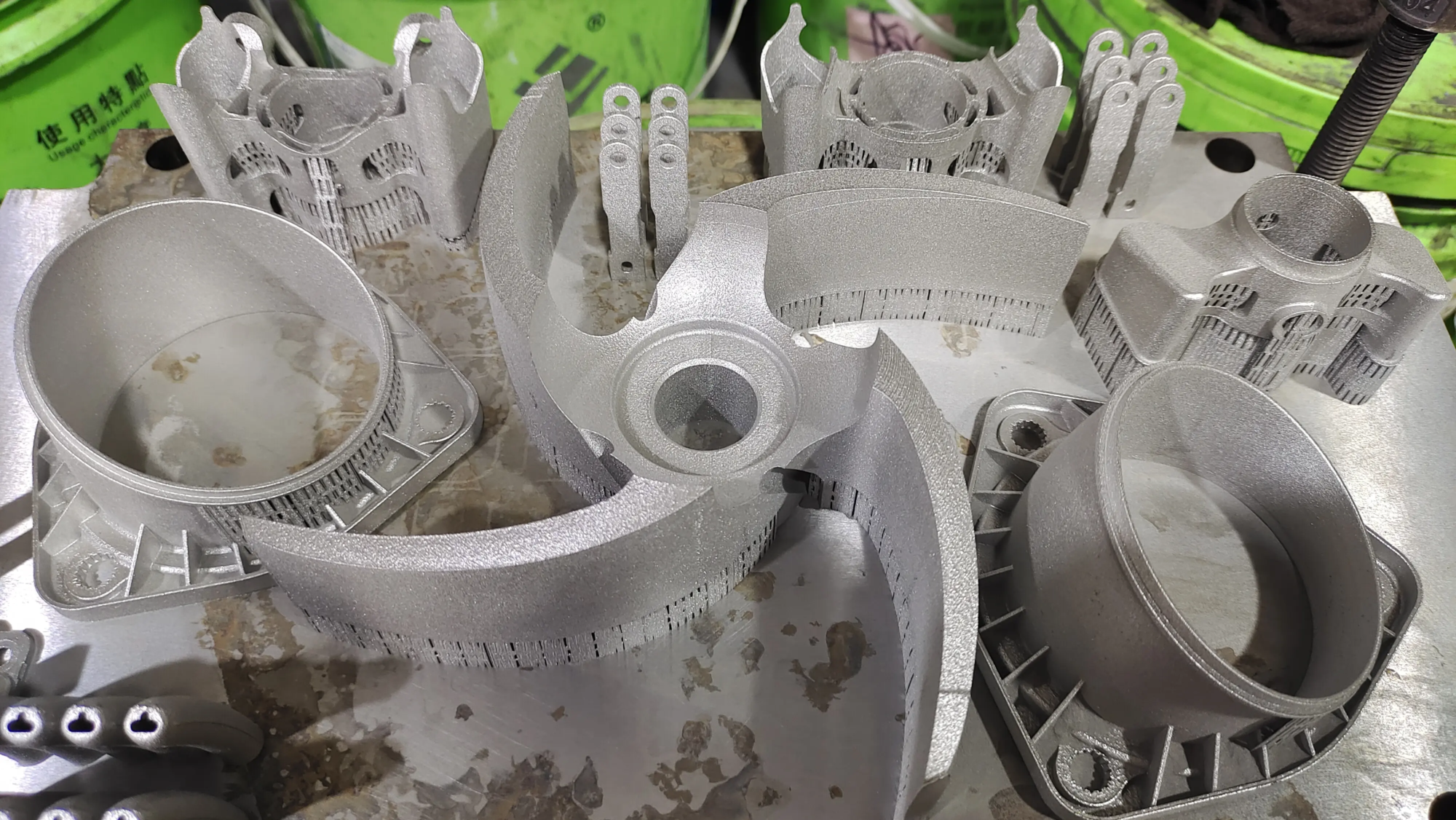
- Unrivaled details and accuracy: SLM printers use high-power lasers to selectively melt ultrafine metal powders (such as stainless steel, aluminum and even titanium) to build objects layer by layer. This allows faithfully replicating the slightest details in the CAD model – crucial for engraving names on the cup and complex filament work.
- Structural integrity: Fuse layer by layer to create parts with excellent density and mechanical properties. A well-printed and post-processed SLM replica feels durable and durable, replicating the weight and durability of the original.
- Geometric freedom: SLM can create hollow structures and complex internal geometry of the cup, if not impossible, to achieve cost-effectiveness by starting with solid blocks using traditional machining (such as CNC milling). Think of the complicated negative space under the bowl.
- Art of post-processing: The original SLM printing, although accurate, appears with a slightly granular surface finish. Turning it into a shiny trophy requires experts to complete:
- Support removal: Carefully remove the structure that retains the parts during printing.
- Surface smooth: Techniques such as CNC machining polishing (for critical surfaces), sandblasting or specialized chemical polishing sheets remove the layer lines and achieve the desired surface texture.
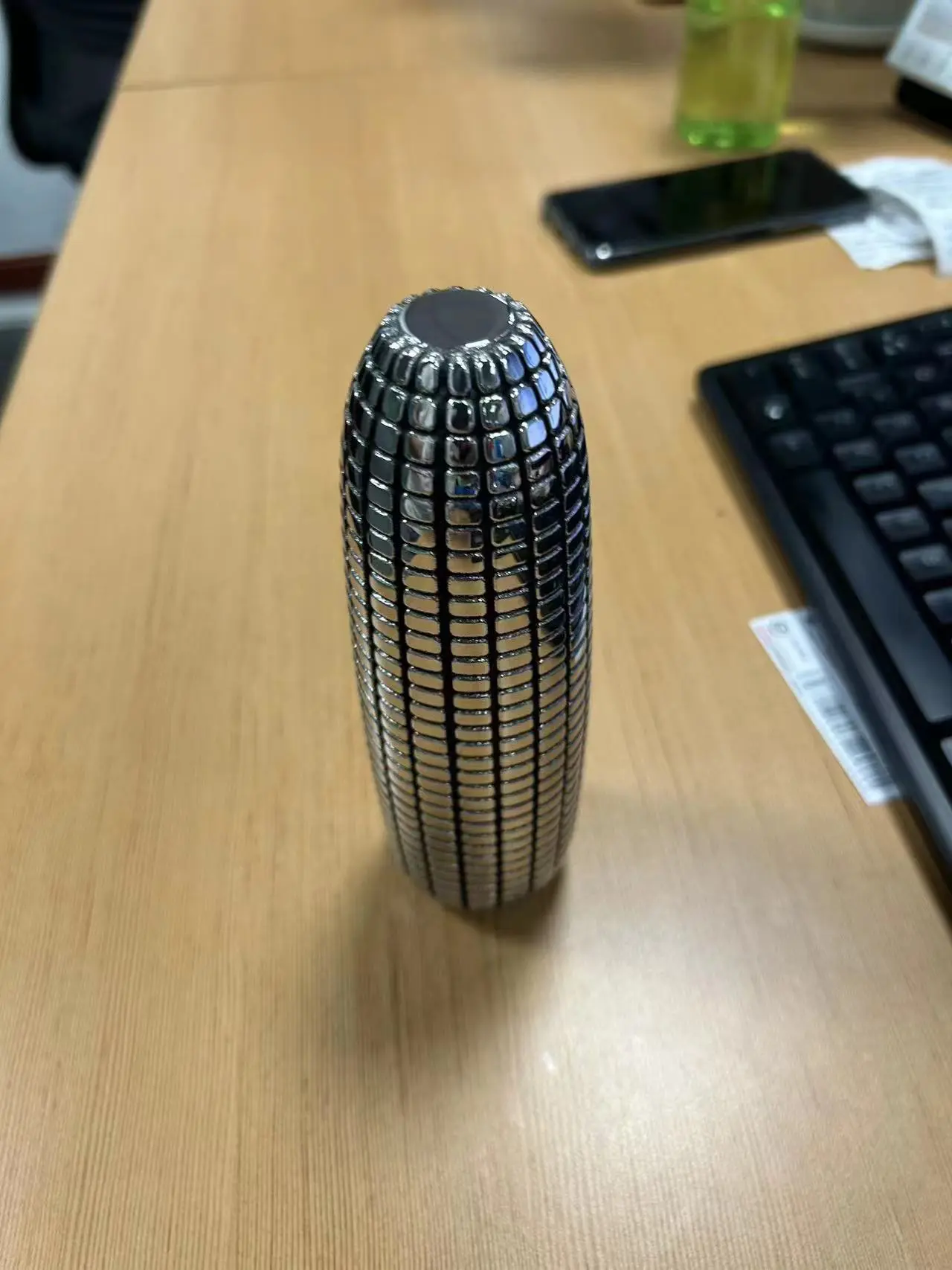
- Polishing and plating: The multiple stages of polishing have excellent, mirror-like finishes. The final plating step (usually silver or nickel powder) provides the cup’s signature high-gloss and durable protective coating. Achieve perfect luster is an art in itself.
- Assembly (if multi-part): The complexity of the cup may require printing a single ring or section (bowl, collar, base) and then carefully assembled and aligned by a skilled technician.
Why 3D printing rule replica supreme
Compared to traditional methods such as casting or processing, 3D printing, especially SLM, provides obvious advantages for creating copies of Stanley Cup:
- Unrivaled detail fidelity: Capture details of engraving and complex geometric shapes in other ways.
- Excellent accuracy and repeatability: Make sure that the replicas generated by each replica match the digital model.
- No compromise complexity: Effortlessly create hollow, complex structures.
- Quick Prototyping and Customization: Design iteration is faster and cheaper. Want a famous dungeon to be famous for your team’s championship year? Customization is much easier.
- Reduce waste: Compared to the subtraction method, additive manufacturing uses only materials when needed, minimizing excess.
- Production on demand: Can effectively create one-time masterpieces or small batches. No expensive mold is required.
Bringing legends to life: Great advantages
Achieve truly excellent museum quality 3D printed Stanley Cup replicas, not just machines. It requires deep expertise and a comprehensive service approach. This is Great Good at it.
As a professional rapid prototyping manufacturer with advanced features, we specialize in solving complex metal parts challenges:
- The most advanced SLM technology: We leverage industrial-grade SLM 3D printers to produce parts with excellent resolution, density and surface quality, which is essential for work as detailed as the Stanley Cup.
- Material mastery: Whether you need the classic weight and finish of stainless steel, the lighter touch of aluminum, or the premium feel of titanium or nickel alloy (or custom material), we can procure and handle professionally.
- End-to-end expertise: Greglight provides complete One-stop solution. We go beyond printing and process the entire journey:
- Expert design consulting and CAD modeling support.
- Optimal build strategies and print execution with advanced SLM.
- Comprehensive post-processing kit: precise CNC finish, exquisite polishing technology (hand, machine, chemistry), electroplating service (silver, nickel, chromium, etc.) and detailed final assembly.
- Strict quality control is carried out at each stage.
- Fast accuracy: It is often crucial that we understand time. Our streamlined processes and technical advantages ensure that custom precise parts are delivered quickly without compromising quality or fidelity.
- Focus of problem solving: Complex geometry, strict surface requirements, strict tolerances – these are the challenges we thrive and solve every day. Your Stanley Cup Replica Challenge is exactly the type of project we have expertise to deliver amazing results.
Our mission is to transform a vision of a piece of hockey history into a tangible, breathtaking reality using state-of-the-art manufacturing technology. We are committed to being a supplier and are a trusted partner for innovation.
in conclusion
The magic of the 3D printed Stanley Cup replica is that it perfectly blends heritage and high technology. This proves that advanced manufacturing, especially SLM metal 3D printing with superb finishes, can recreate icons with amazing accuracy and beauty. For collectors, fans, organizations, and even for celebrating displays, custom printed replicas provide easy access but impressive pieces for the NHL’s ultimate prize.
It is crucial to choose a partner with the right expertise and competence. Greglight is equipped with cutting-edge SLM technology, unrivalled post-processing skills, and a relentless focus on quality and accuracy. We transformed complex digital dreams into flawless metal reality that enables the legendary Stanley Cup to be realized as before.
FAQ (FAQ)
-
Q: Are 3D printed Stanley Cup replicas as durable as real things?
one: High-quality metal 3D printed replicas, especially made with SLM with stainless steel (such as stainless steel) and a properly finished/plated alloy, are extremely durable and sturdy. While it may not be made from the exact sterling silver alloy used historically for the original, it is enough to display and handle, with a significant weight and a premium feel. Electroplating also adds protective, long-lasting finish. -
Q: How are 3D printed replicas detailed? Can it include prints?
one: Yes, precision SLM 3D printing excels in capturing complex details. Engraving, textures, filigree patterns and complex geometric shapes unique to Stanley Cup (such as the layered band of the team name) can be reproduced with significant fidelity. The key is to have highly accurate CAD models and expert printing/post-processing. The engraving can be incorporated directly into the CAD model before printing. -
Q: What materials can be made of Stanley Cup replicas?
one: Greglight specializes in metals in high-end replicas. Co-choices include:- Stainless steel (for example 316L): Most popular, durable, affordable, perfect for gold plating for an iconic silver finish.
- Aluminum alloy: It is lightweight and easy to polish and can be plating.
- titanium: Advanced option, very powerful but lightweight, unique aesthetic (can be anodized for color).
- Nickel alloy: Provides unique characteristics such as high polishing and corrosion resistance, which are commonly used in electroplating layers.
Plastic/resin replicas exist, but lack the weight, durability and quality feel of metal. Greatlime focuses on metal solutions.
-
Q: How long does it take to produce a custom 3D printed Stanley Cup replica?
one: The timeline varies greatly depending on size, complexity, material and required finish. A highly detailed, polished and plated full-size replica can take several weeks. This includes design time (if needed), printing time (which can be long for large metal objects), and extensive multi-step post-processing. Smaller replicas or fewer complex finishes will be faster. Greatlight prioritizes speed and quality. -
Q: Is it legal to make 3D printed replicas?
one: For personal use and display, it is usually acceptable to create replicas. However, selling exact replicas, as if they were official copies of NHL goods, would infringe on copyright and trademark laws held by the NHL and the Hockey Hall of Fame. It is important to clarify that the replica has nothing to do with the NHL and is a display piece. Greglight can create replicas for legitimate purposes, such as personal collections, internal rewards, or historical displays. - Q: Why choose Greatlight over other rapid prototyping or 3D printing services?
one: Greglight offers a unique combination:- Advanced SLM expertise: Specialized manufacturing of high-dimensional metal additives.
- Complete internal post-processing: Complete control over finishing, polishing and plating for perfect results, eliminating the need to coordinate multiple suppliers.
- Material versatility and guidance: Expertise in procurement of various metals and custom materials.
- Precision focus and QC: Strict quality control throughout the process to ensure loyalty and perfection.
- Quickly respond and resolve issues: Dedicated to effectively and effectively addressing complex prototype challenges.
We don’t just print; we design and finish trophy worthy of the Stanley Cup legacy.