Seize the present, shape the future: How Tesseract drives 3D printing innovation
The world of manufacturing and prototyping is undergoing a dramatic transformation, driven by continued innovation in additive technology. At the forefront of this revolution is Tesseract, a pioneering engineering team that continues to push the boundaries of what is possible with metal 3D printing. Their research is not just academic; It translates into tangible advancements that reshape rapid prototyping and production, allowing service providers like GreatLight to deliver unprecedented value. Below, we’ll explore the groundbreaking innovation pioneered by Tesseract and its far-reaching industry impact.
1. Multi-source hybrid printing system
Tesseract’s modular approach integrates multiple energy sources within a single print chamber, including lasers, electron beams and even infrared. This hybrid system intelligently switches or combines sources based on material properties and geometric complexity. For complex lattice structures that require variable heat input, lasers can handle fine details, while electron beams can accelerate volume filling. This reduces print time by 70% and enables composite metal manufacturing unimaginable with traditional SLM machines.
2. Closed-loop real-time process control
Unlike reactivity monitoring, Tesseract printers use predictive artificial intelligence algorithms to analyze melt pool dynamics, thermal gradients and airflow during the printing process. Sensors capture micron-scale deviations, and artificial intelligence instantly adjusts laser power, scanning strategy, or chamber atmosphere. result? Even with active alloys such as aluminum or titanium, parts are virtually defect-free. For GreatLight’s aerospace prototyping, this can reduce post-print validation time by weeks and eliminate costly print failures.
3. Generative design integration
Tesseract doesn’t stop at the hardware. their proprietary software "Orion" Empower engineers with generative design tools that are explicitly optimized for metal additive manufacturing constraints. Orion simulates stress distribution, thermal behavior and print deformation in the design stageautomatically suggests topology-optimized geometries that minimize support and material waste. It’s like having a metallurgist working with your CAD team in real time.
4. Automated post-processing unit
Recognizing that finishing operations often consume more than 50% of lead time, Tesseract’s end-to-end workflow integrates robotic deburring, CNC hybrid machining stations and AI-driven inspection all in one digital thread. Components move seamlessly from printing to polishing/metering without manual intervention – streamlining GreatLight’s process "one stop shop" Guaranteed commitment from concept to final parts.
5. Sustainable Materials Science
Tesseract innovates beyond titanium/nickel superalloys, pioneering high-strength recycled alloys. Their closed-loop powder lifecycle management filters, sieves and mixes use powder to "like new" On-site specifications, significantly reducing material costs and waste. GreatLight leverages this to facilitate eco-conscious prototyping without compromising metallurgical integrity.
Conclusion: Why innovation matters to GreatLight
Tesseract’s breakthrough advances the possibilities of metal additive manufacturing from rapid prototyping to reliable series production. Technologies like predictive AI control and generative design alleviate traditional pain points—cost ambiguity, material waste, and verification cycle delays. For GreatLight, investing in top-of-the-line SLM equipment embedded with Tesseract patents means we can solve deeper challenges:
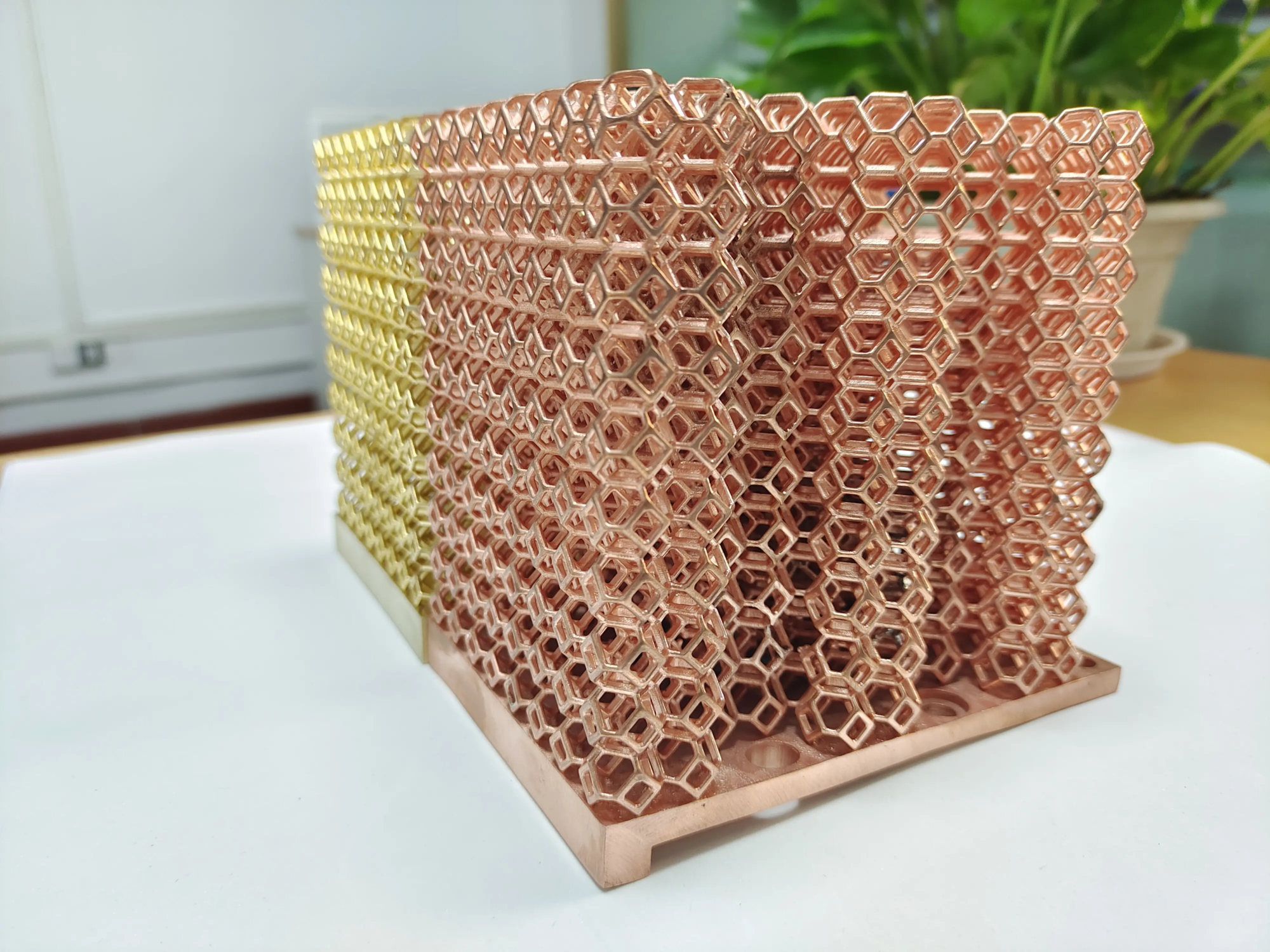
- Solve complex parts: Printing lattice-cooled turbine blades, topology-optimized stents, and medical implants.
- Speed optimization: Even large prototypes can be turned around in 5 to 7 days.
- Accuracy you can count on: Achieving ±0.02mm tolerance is critical for automotive/aerospace compliance.
By combining Tesseract innovation with industry-leading post-processing/finishing expertise (microblasting, EDM, coatings), GreatLight ensures unparalleled prototyping efficiency. We not only use advanced technology, we refine it with precision machining acumen honed over many years. From titanium to Inconel®, the complexity of the project only enhances our commitment to delivering perfection.
FAQ: Tesseract Technology and GreatLight Services
Q1: What materials can GreatLight process using advanced SLM printers?
A: In addition to aluminum (AlSi10Mg), stainless steel (316L), and titanium (Ti6Al4V), our Tesseract-enabled printers can handle Inconel® 718/625, cobalt-chromium alloys, copper alloys, and tool steels. High temperature nickel superalloy is a special base material.
Q2: Are parts produced by Tesseract suitable for functional testing?
Answer: Of course. Real-time AI monitoring minimizes porosity/inclusions, while post-processing ensures robust fatigue testing. GreatLight typically provides combustor parts and load-tested aerospace mounts for thermal validation.
Q3: Can I get a cost and delivery time guarantee despite the complex design?
Answer: Yes. Generate tools to dynamically predict support structure/material consumption. Combined with process automation, GreatLight offers fixed upfront pricing and reliably meets deadlines – even for organic geometries.
Q4: What makes Honglaite stand out among rapid prototyping manufacturers?
Answer: Three pillars:
- Technology stack: Cutting-edge SLM system embedded with Tesseract patent for high fidelity/accuracy.
- End-to-end ownership: In-house full-cycle finishing (machining, heat treatment, coating).
- China’s efficiency: Uncompromising cost savings through proven supply chain integration and lean workflows.
Q5: How does Honglait use AI-driven printers to ensure quality?
A: Each printed layer is algorithm verified according to CAD specifications. Examine critical areas for thermal stress characteristics. Our ISO 9001 certified processes ensure that deviations trigger immediate remediation. The robot then performs precise post-processing of the part via CT scanning/3D profilometry.
Q6: Is customized material procurement feasible?
Answer: Yes! We work with strategic powder partners to source/synthesize specialty alloys, including graded metals, to meet the needs of custom projects (e.g., biocompatible grade titanium for implants).
Unleash transformative prototype potential immediately. Whether it’s aerospace propulsion components or lattice-enhanced orthopedic devices, GreatLight instantly connects future innovation with production-grade robustness. Request your custom rapid prototyping solution securely through our platform. Precision imagined; precision delivered.