Limitations of 3D printing: Rigorous testing of carabiner safety
The rise of accessible 3D printing has spurred innovation, attracting manufacturers to produce functional load-bearing items such as climbing carabiners. However, unlike prototyping decorative items, creating safety-critical components requires extreme care. This time we explore in depth Why is it not only recommended to test 3D printed carabiners against real world standards, but also for safety reasons which are non-negotiable, And why professional manufacturing likes huge lightExpertise in metal rapid prototyping and finishing is essential.
Why carabiners pose unique risks to 3D printing:
Carabiners are deceptively simple devices that perform extremely complex jobs: preventing falls and sustaining life. Their failure under load can be catastrophic. 3D printing introduces inherent drawbacks that traditional forging or CNC machining carefully avoids:
- Material integrity and anisotropy: Fused deposition modeling (FDM) filaments, even strong filaments such as nylon or PETG, exhibit anisotropic properties. The intensity varies significantly with layer orientation. Metal 3D printing (such as SLM – Selective Laser Melting) can reduce anisotropy, but poses obvious challenges.
- Layer adhesion and porosity: Inconsistent adhesion between printed layers creates weak flat surfaces. Internal micropores, voids or incomplete fusion in metal prints can significantly reduce load capacity and fatigue life – these defects are invisible to the naked eye.
- Stress concentration: Small geometric imperfections in the print path, support interface, or (common when completing 3D printing) can significantly amplify local stresses and cause cracks.
- Material degradation: Plastics can creep under constant loads and degrade due to UV exposure, temperature fluctuations and chemical exposure. The mechanism of metal fatigue is different from that of forged materials.
- Limited verification: Many hobbyist printers lack sophisticated sensors to ensure perfect temperature uniformity or laser power consistency, which are critical to the integrity of metal SLMs.
Testing Methods: Beyond Simple Pulling
Validating a carabiner requires repeating the harsh conditions it must withstand. Compliance manufacturers make carabiners meet strict ISO/UIAA or EN/DIN standards. Here’s what the test must contain:
-
Destructive tensile testing:
- Door strength: The weakest axis. A calibrated tensile tester loads the door sideways until failure. Minimum standards require at least 7 kN (1575 lbf).
- Long axis strength: Pull apart along the length of the spine. Standards require at least 20-27 kN (4500-6070 lbf).
- Short axis strength: Pull across the spine. Standard requires at least 7 kN (1575 lbf).
- analyze: Document final failure loads and modes (sudden fracture, gate slip) – important data that cannot be predicted by CAD simulations of additive parts alone.
-
Fatigue test:
- A repetitive load/unload cycle is repeated, simulating constant shearing/unclamping. Standards typically require more than 25,000 cycles at lower loads without failure, testing resistance to cyclic stress buildup and crack propagation—the major weaknesses of printed parts. CLI platform, e.g. huge light A high cycle fatigue testing machine is used to capture this key performance metric.
- Non-destructive testing (NDT):
- Visual inspection: Surface defects such as cracks, warping, and poor bonding between layers.
- Dimensional accuracy: Precise measurements are taken to specifications using tools such as a coordinate measuring machine (CMM) to ensure correct gate function and cross-sectional strength.
- Advanced Microscope: Examination of the fracture surface after testing can reveal the failure initiation point and microstructural integrity.
- Computed tomography (CT) scan: For metal SLM parts, CT scanning produces 3D X-ray images that non-destructively detect internal pores, inclusions, voids and layer bonding defects that are not visible from the outside. This level of analysis is costly for amateurs but routine for professional manufacturers (huge light).
Metal 3D printing: Not a magic solution (requires cutting-edge execution)
While SLM unlocks geometries not possible through forging, it introduces complexities for high-strength applications:
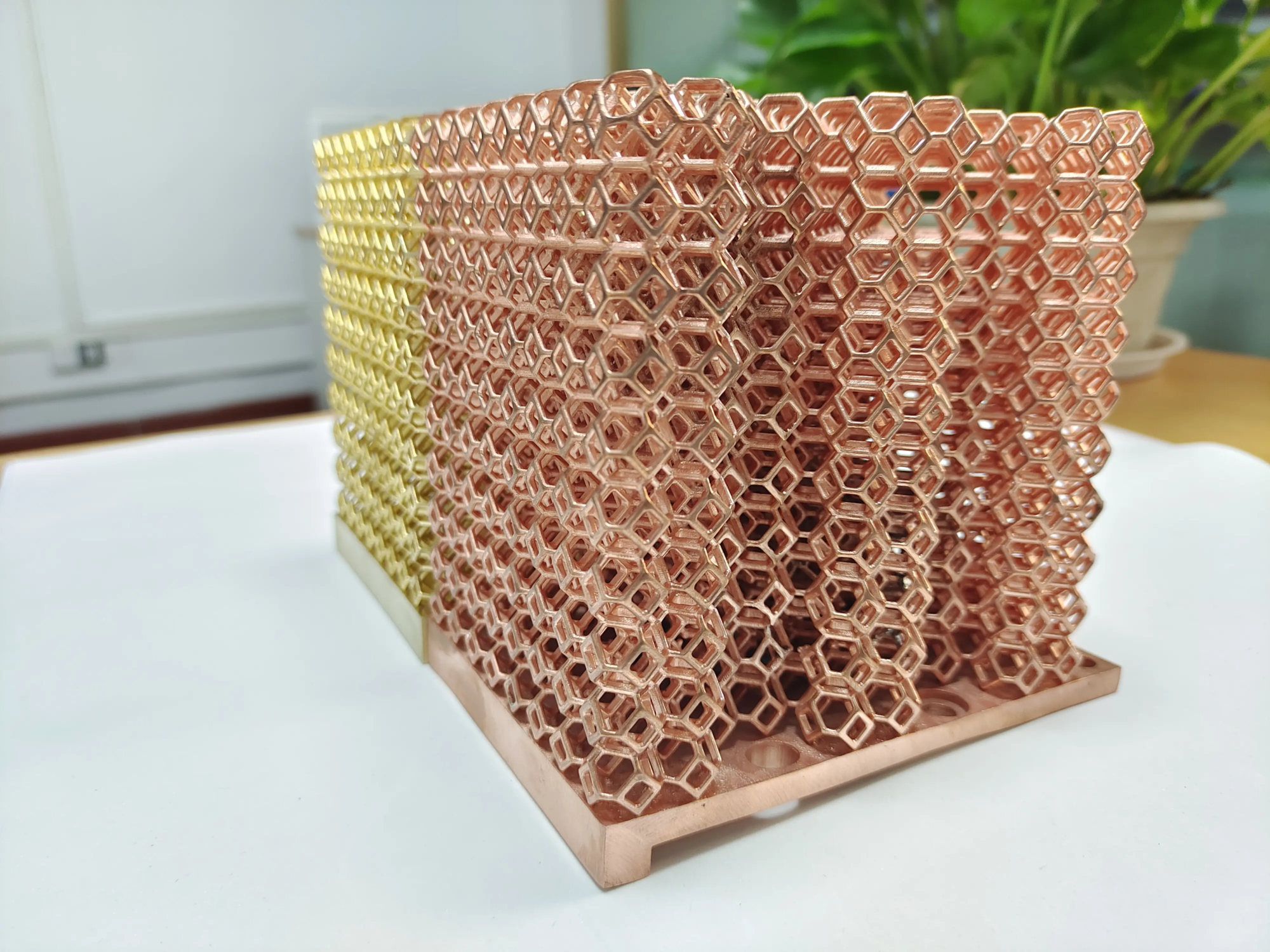
- Material selection: Not all alloys print well. Aerospace-grade titanium alloys (Ti-6Al-4V), specific aluminum alloys (e.g., AlSi10Mg, AlSi7Mg), and maraging steels provide the best strength-to-weight ratio, but require precise parameter control. huge light Take advantage of extensive material libraries and parameter optimization.
- Post-processing commands: Raw SLM prints often have residual stresses and surface irregularities that require:
- Stress Relief/Annealing: Essential for enhancing ductility and reducing the risk of cracking.
- Hot isostatic pressing (HIP): Applying high temperatures/pressures collapses internal voids, significantly increasing density and fatigue strength – a critical step in printing safety-critical metals.
- Precision machining: CNC machine gates/spines or abrasive flow machining to eliminate surface imperfections and achieve precise dimensions critical to gate function and stress distribution. huge light Seamlessly integrate these essential organizing services.
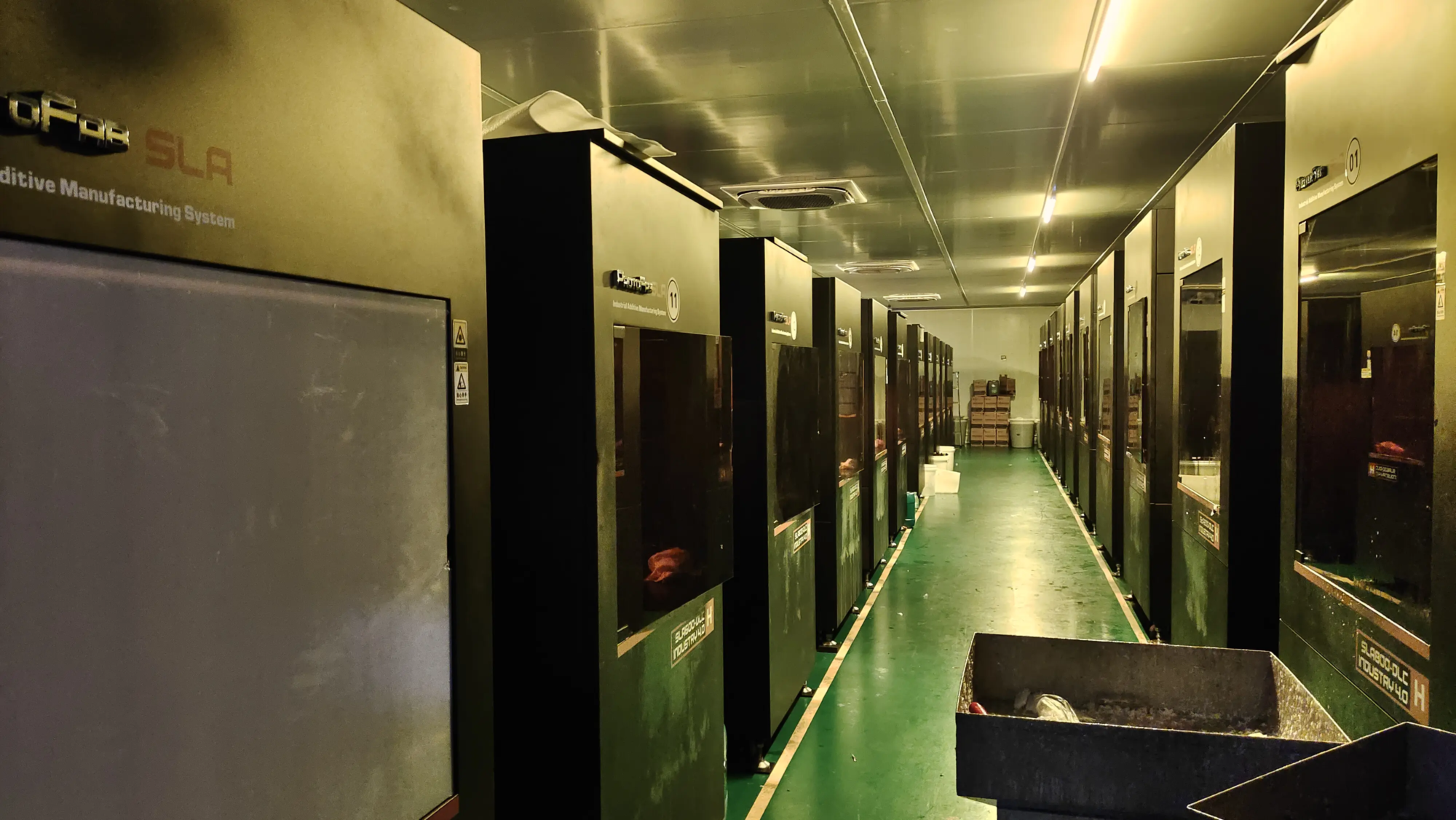
- Process control: SLM requires extremely consistent laser power, scan speed, atmosphere and powder quality. Professional manufacturers such as huge light Employ advanced sensing and monitoring throughout the build process.
The irrefutable conclusion: only trust professionally proven solutions
Extensive destructive testing and sophisticated non-destructive testing revealed a consistent truth: Untested hobbyist grade 3D printed carabiners, even metal carabiners, are extremely dangerous and not suitable for life support applications. The inherent AM variability, potential internal defects, and unpredictable fatigue behavior pose too great a risk.
Professionally made carabiners, forged or CNC machined from certified stock subject to strict quality control, remain the only A safe choice for climbing, rescue, roof construction or any critical load-bearing activity. These standards and testing protocols were established through rigorous engineering and hard lessons learned. They must be respected.
Advantages of safe metal rapid prototyping:
This caution is indeed no Deny the power of 3D printing. Professional services such as huge light Demonstrate its great value:
- High-intensity functional prototypes: Rigorous testing of design stiffness and distributed load paths forward Expensive forging tools.
- Clamps/fixtures: Create optimization tools for manufacturing assemblies.
- Final non-critical components: Lightweight structural components whose failure is not life-threatening and where verification testing deems them safe.
Working with an expert is non-negotiable:
Experimenting with high-strength, safety-critical components requires expertise well beyond desktop printing. From materials science and parameter optimization to HIP, precision finishing and comprehensive validation testing, manufacturers love huge light Deployment techniques, strict protocols, and scientific understanding are critical to reducing risk in demanding rapid prototyping applications. Choosing expertise isn’t just about good manufacturing; This is to protect life.
FAQ: 3D Printed Carabiner Safety
Question 1: I printed a plastic carabiner that holds X pounds in static testing. Doesn’t that prove it’s safe?
Answer: Static testing provides a tiny snapshot. It does not simulate cyclic stress, impact, UV degradation (plastics), internal defects that propagate cracks over time, loss of strength due to notch sensitivity/design flaws, or fatigue failure under repeated loading. Parts that pass static testing may fail catastrophically later.
Q2: What about strong plastics like nylon/polycarbonate/carbon fiber infused filament?
A: Although PLA/PETG is stronger, thermoplastic filaments remain anisotropic under varying humidity/temperatures with unpredictable interstitial bonding. Internal annealing stress weakens the lamellar interface. None can match the consistent isotropic strength of forged alloy steel/aluminum. Titanium/aluminum metal powder fusion printing requires professional handling.
Q3: How to verify professionally manufactured large metal carabiners?
A: Reputable manufacturers will systematically submit batches to an independent ISO/IEC certified laboratory to perform accredited UIAA EN/DIN testing protocols for specified batch sizes. This includes destructive tensile/gate strength testing, fatigue cycling, visual/NDT inspection and metallographic/CT analysis to ensure uniformity.
Q4: Is metal 3D printing inherently unsuitable for use in certified climbing carabiners?
A: Proven SLM/HIP treated titanium carabiners theoretically comply with ISO/UL specifications when optimized in a complex facility specializing in aerospace/medical metallurgy. However, current compliance relies on batch destructive validation of each specified geometry/parameter. Desktop systems cannot replicate aerospace grade accuracy/uniformity.
Q5: Will post-processing of metal additive manufacturing carabiners make them safer?
A: Definitely yes. Post-heat treatment removes microstructural stresses and eliminates micron-scale pores through hot isostatic pressing, thereby significantly improving the alloy’s ductility and cyclic durability. Precision machined critical surfaces ensure reliability. professionals like huge light Engineers combine collation/validation for seamless integration.
Q6: My printer has upgraded nozzles/temperatures/extruders. Won’t structurally optimized printing succeed?
A: Despite adjustments, desktop platforms are still subject to inherent isotropic strength limitations. Qualitative assessment methods for assessing security risks require destructive verification that amateurs cannot perform. Carabiner requires proven production integrity beyond the optimizer slicer settings functionality.
Trust Engineering Verification – Partner with those who prioritize integrity. Your reliability depends on their reliability.