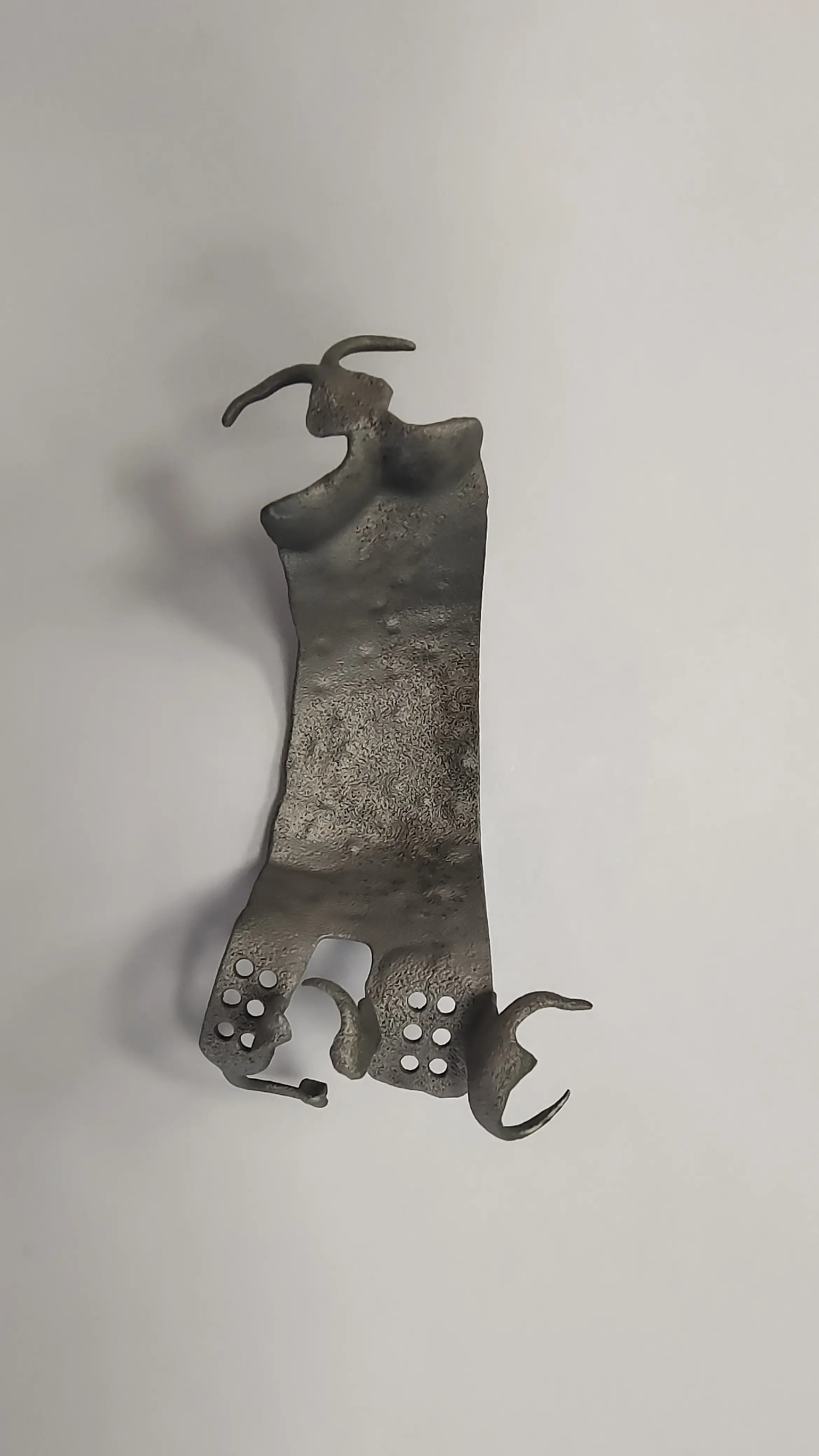
Silent Leap: How 3D printing is revolutionizing the world of ballet with custom pointe shoes
The ethereal beauty of ballet has captivated audiences for centuries, and its magic lies in the fragile power of dancers to maintain balance with ease cutting edge. At the heart of this gravity-defying feat lies the humble yet crucial pointe shoe. Despite their iconic status, traditional pointe shoes are also fraught with challenges: They require painstaking break-in, have limited customization capabilities, often cause blisters and injuries, wear out quickly, and generate a lot of waste. Until now, the quest for a shoe with true comfort, optimal support and personalized precision has been a constant struggle. Enter additive manufacturing and prepare to change the very heart of ballet performance.
this The 3D printed pointe shoe revolution It’s not just speculation; it’s an ongoing technological leap driven by a deep understanding of biomechanics and materials science. Forget about bulky printers that awkwardly copy existing designs. This revolution took advantage of things like Multi-Jet Fusion (MJF) and Stereolithography (SLA) Complex lattice structure components are manufactured primarily using advanced polymers (nylon powders and photopolymer resins) known for their unique stiffness, flexibility and lightweight properties. These polymers can precisely adjust the density and elasticity of specific areas.
Why this is truly a revolution:
- Unparalleled customization for optimal performance: This is a game changer. CNC machines provide a bridge, but 3D printing operates on a completely different level. Advanced scanning captures the anatomy of a dancer’s foot – arch height, toe length and shape, metatarsal distribution, weight distribution and pressure points – down to a millimeter. Software algorithms then generate unique shoe designs. The soles and legs are not only different sizes, but also different sizes. Their thickness, curvature and internal lattice structure are precisely calibrated to provide precisely targeted support that particular dancer It’s needed, optimizing alignment and force distribution to reduce stress on the ankles, knees and hips. The toe box fits perfectly around each toe.
- Unlock new levels of comfort and injury prevention: Standard shoes force the foot into alignment, creating friction points that can lead to blisters, bunions, and bruises. Even worse, improper arch support can lead to serious overuse injuries. Biomechanically optimized 3D printed shoes are like personalized orthotics built into shoe. Pressure is evenly distributed, the custom fit eliminates friction points, and the adjusted flexibility reduces fatigue. The result is not only less pain; The risk of injuries that plague a dancer’s career is significantly reduced.
- Significantly enhanced durability and consistency: Traditional shoes degrade quickly; their glue softens, the fabric rips, and the stems break. Consistent performance between doubles is a myth. 3D printed components made from engineering polymers have excellent resistance to compression fatigue and deformation. A pair can maintain the supportive properties it was designed for longer. Crucially, whether it’s your first or tenth pair of digitally produced shoes, fit and performance remain the same, a level of consistency that professional dancers desperately need.
- Sustainability takes center stage: The elegance of ballet belies the environmental burden: worn-out shoes generate vast amounts of waste. 3D printing offers a more efficient solution. Designs are stackable, minimizing material waste. Polymer powders can often be reused. More durable shoes mean fewer shoes produced and discarded per dancer. While the recyclability of composite materials remains an active area of research and development, the inherent precision of additive manufacturing significantly reduces the overall environmental footprint compared to traditional manufacturing processes. Biodegradable resins are also emerging.
- Accelerate design innovation: The design cycle shifts. Digital design allows for rapid prototyping and iteration. Designers can test complex lattice configurations to optimize weight-to-strength ratios, hybrid material combinations (stronger handles surrounded by softer comfort layers?) or previously unimaginable integrated padding molds. New levels of functionality, beauty, and performance can be imagined and tested incredibly quickly.
The role of precision prototyping and manufacturing services:
Translating biomechanical insights and dancer scans into practical wearable art requires highly specialized manufacturing capabilities. This is where a premium prototyping partner becomes critical. company likes huge light At the forefront of driving this revolution:
- Expertise in complex geometry: Adopt industrial grade SLM (Selective Laser Melting) Printers and polymer-centric MJF and SLA technologies, GreatLight specializes in producing complex, lightweight lattice structures and complex organic contours that are critical for functional pointe shoe components, whether prototypes or low-volume end-use parts.
- Material mastery: By using a wide range of engineering grade polymers such as nylon PA12, TPU elastomers, resins that mimic the stiffness of leather, it is possible to experiment and select the perfect blend of materials for stiffness, flexibility, durability and comfort. Expertise extends to composites and hybrid materials.
- Rapid prototyping speed: Rapidly generating multiple design iterations is critical for fitting sessions and biomechanical testing.
- One-stop excellent post-processing: Achieving the smooth surface finish and precise dimensional accuracy required for skin comfort requires complex finishing techniques – meticulous sanding, smoothing, sealing and staining – seamlessly integrated by GreatLight.
- Design for Manufacturability (DfM) supports: Actively collaborate with innovators to refine designs for optimal printability, functionality, durability, and ease of assembly into the final shoe (connecting straps/elastic straps/etc.).
in conclusion:
The 3D printed pointe shoe revolution goes beyond mere novelty. It addresses long-standing fundamental limitations in dance shoes with scientific rigor and technical precision. By enabling truly personalized biomechanical support, enhanced comfort, superior durability, consistent performance and sustainable production, additive manufacturing enables dancers to perform at their peak while protecting their musculoskeletal health for a longer career. Although challenges with cost scalability and material recycling remain, the trajectory is clear. Leading prototyping and manufacturing service providers such as huge lightWith its advanced capabilities and commitment to precision, it is an important partner for designers and manufacturers driving this exciting future. The quiet leap into digital pointe shoes marks a profound shift in ballet—putting the health and peak artistry of dancers center stage, powered by cutting-edge technical precision. The future of dance, with dazzling poise, is being printed layer by layer.
FAQ: Understanding 3D Printed Pointe Shoes
Q1: Are 3D printed pointe shoes available now?
A1: Fully integrated 3D printed pointe shoes are mainly in the advanced prototype and low-volume production stages led by startups and professional manufacturers. While not yet widely available in major dance apparel stores, they are increasingly available to professional dancers and fitting experts directly through these innovators.
Q2: How much do 3D printed pointe shoes cost?
A2: Currently, custom 3D printed shoes are expensive ($250-1000+ per pair) because of the customization process, specialized scanning, complex printing and finishing work involved. As production scale, technology matures and automated processes develop, costs are expected to fall significantly, but personalization is likely to maintain a certain price premium over mass-produced shoes.
Q3: Are 3D printed shoes more durable than traditional shoes?
A3: Research shows there is huge potential. The optimized polymer structure resists compression fatigue and breakage better than traditional pasty hardened cardboard handles. Key components (calf/toe box) maintain support longer. While the outer satin layer still wears away, the lifespan of the core structure is significantly increased and may double or triple depending on the intensity of use.
Q4: Are they more comfortable from day one?
A4: Yes, this is a big benefit. Unlike traditional shoes that require painful breaking-in to soften the material and mold to the foot, often creating friction points, 3D printed shoes provide an instant, personalized fit. The material conforms precisely to the scanned foot, minimizing pressure points and optimally distributing force, eliminating dancers’ fear of popping blisters.
Q5: Can any material be used? Is the plastic one uncomfortable?
A5: Advanced polymers are tailor-made. Think SLS nylon PA12 powder particles print complex structures, achieving precise stages of hardness while remaining lightweight; TPU introduces controllable flexibility. Materials mimic density, from the supportive nature of cork to the softness of cushioned foam. Strategically layered application of softer elastomeric resin along milled areas, rather than dense support arches constructed in one piece digitally, allows for a level of comfort previously not traditionally possible.
**Q6: How are they made? What role do companies like GreatLight play?