Breathing is simple: Basic guide to choosing the best 3D printed air purifier
The intoxicating buzz signals of 3D printers at work are innovative. But lurking next to creativity is an invisible problem: air quality. Whether you are tinkering in a home studio or managing an industrial printing farm, it is understandable and mitigating emissions from 3D printing are critical to health, safety and printing quality. That’s where to invest in the right air purifier. This guide delves into pollutants, protection solutions and how to choose the best purifier for your specific settings.
Why You Definitely Need an Air Purifier for 3D Printing
3D printing, whether it is FDM (Fusion Deposition Modeling – Using Plastic Wire) or resin-based (SLA/DLP/LCD), produces microscopic contaminants:
- Ultra-Iron Particles (UFPS): The main hazards in FDM printing. Because thermoplastic filaments (such as PLA, ABS, PETG, nylon) are heated and extruded, they release particles measured in nanometers (one billionth of a meter) (usually less than PM0.1). These are easily inhaled into the alveoli deep into the lungs and can even enter the blood. Studies have linked long-term exposure to respiratory and cardiovascular problems.
- Volatile organic compounds (VOC): Both FDM and resin printing emit gas cocktails. FDM can release styrene (from ABS), Caprolactam (from nylon), formaldehyde, etc. Resin printing is especially notorious for VOCs such as methyl methacrylate and other photopolymer monomers – often producing strong and potentially irritating odors. VOC exposure can cause headaches, dizziness, eye/respiratory irritation, and long-term health risks.
- odor: While sometimes just annoying, a constant strong smell (especially with resin) is often an indicator of the presence of VOC.
Operating a printer in a non-ventilated or inadequately purified space is similar to ignoring workplace safety protocols in traditional manufacturing environments. An effective air purifier will actively eliminate these aerial hazards, creating a safer, healthier and more pleasant workspace.
The main functions of 3D-printed air purifiers: Go beyond marketing hype
Not all air purifiers are equal, especially with the daunting task of cleaning 3D printing emissions. Focus on these basic characteristics:
- HEPA filtering: This is not negotiable. Real HEPA (H13 or H14) The filter captures at least 99.97% of particles as low as 0.3 microns. Crucially, these are effective for ultrafine particles produced by FDM printing, which are usually less than 0.3 microns (by mechanisms such as diffusion). Don’t be satisfied "Hepa type" or "Like hepa" – Requires true HEPA certification. In a strong environment, the absolute highest particle capture rate of H14 is considered.
- Activated carbon filtration (particle preferred): It is essential for trapping VOC and neutralizing gas. The more carbon activated, the better. type Very important. Granular activated carbon (GAC) Provides more surface area to adsorbable than thin carbon sheets or mesh. Looking for thick deep carbon beds measured in pounds/kg, not just "Contains carbon." For severe resin printing environments, some units provide specialized gas phase filtration for specific chemicals.
- Strong airflow and adequate coverage (CADR): An air purifier needs to effectively move a large amount of air through its filter. Check the clean air delivery rate (CADR) for dust (particles) as a key indicator. More importantly, ensure that the manufacturer’s recommended room coverage will encounter or Much exceeds the actual volume of your printing area. Remember that printing rooms often have complex airflows of equipment and furniture. It is highly recommended to use oversized (e.g., to buy a unit rated 500 square feet for a 300 square feet room) for 3D printing applications. Look for multi-speed fans with high maximum airflow settings.
- Sealing system design: Make sure all incoming air is forced through the filter ("washer" Very important! The leaked design greatly reduces effectiveness.
- (Optional but recommended) Air quality sensor and automatic mode: The sensor (mainly used for particles like PM2.5) allows the unit to automatically detect an increase in pollution levels (e.g. when printing starts) and increase fan speed. This optimizes effectiveness and noise/energy usage during idle time.
- Powerful build and filter availability: This is an investment. Choose a well-known brand and is known for its construction quality. It is crucial to ensure that replacement filters (HEPA and carbon) are readily available and affordable in the long term. The high cost of consumption quickly negates the initial investment.
Adjust your choice: FDM and resin printing
The best air purifier strategy depends on your primary printing technology:
- FDM printing (Filament):
- Key Threats: Ultra-iron particles (UFP) are the highest priority.
- Ideal purifier focus: True HEPA (H13/H14) filtration is crucial and is supported by a strong particulate activated carbon filter to handle VOCs of certain wires. Ensure a high CADR (dust particle grade). Placement near printer intake greatly improves capture efficiency.
- Resin Printing (SLA/DLP/LCD):
- Key Threats: Volatile organic compounds (VOCs) are the main concern with obvious odor and potential respiratory/skin irritation.
- Ideal purifier focus: The capacity of large quantities of granular activated carbon is crucial. Looking for units with over 5 pounds of carbon, ideally offering dedicated gas phase filtration options. True HEPA is still necessary, but secondary to VOC control. Key Add-ons: always Use a printer housing (such as a growth tent) to vent directly pass Use air purifiers for pipes. This can effectively capture smoke instead of letting them spread. Select a purifier designed for piping connections or corresponding adjustments.
Recommended air purifier standard table:
| feature | Why is it important for 3D printing | Minimum recommendation | better |
|---|---|---|---|
| HEPA filter | Capture dangerous super iron particles | Real HEPA (H13 with leak test) | H14 certification |
| Activated Carbon | Adsorbs VOC and neutralizes odor | Deep particle bed (clearly stated carbon amount) | More than 5 pounds of carbon, specialized VOC ink cartridge |
| Airflow (CADR dust) | Move the air volume in the room through the filter | cadr dust> = 2 times room volume (CFM or m³/h) | cadr dust > = 3 times room roll |
| Room size rating | Indicates original air handling capacity | Rated room 1.5 times larger than your space | 2x-3x ratings larger than your space |
| Sealing system | Stop dirty empty bypass filter | Confirm by comment/OEM information (washers around filters) | The efficacy of independent certification |
| Noise level | Integrate into the workspace for comfort | High < 55 dB (tolerable near the printer) | Quiet in medium settings |
| Filter life | Predictable operating costs | High usage time authentication time (far beyond "Maximum runtime") | Intelligent filtering life index based on sensor |
| Pipeline Options | Resin shell extraction is crucial | Available accessories kits or alternative strong flow units | Built-in standard pipe ports |
Choose the most suitable: considerations beyond specifications
- Room size and actual pollution load: Your printer will not produce even contamination throughout the room. Placement near the source and size of the device are key strategies. A small bedroom printer requires different power compared to a garage workshop with multiple machines.
- Noise sensitivity: High power air purifiers on maximum power can be very large. If your print area is close to the living space or you are highly sensitive, study DB levels at high/medium speeds and look for effective models "Quiet" Non-print time mode.
- Budget (initial and ongoing): Factors of first-time purchase and Cost and frequency of replacing filters. High-capacity HEPA and carbon filters usually have longer upfront expenses but last longer, potentially saving money every year under heavy loads.
- place: Ideally, place the purifier air inlet near the printer’s printhead/extruder (FDM) or exhaust port to absorb air from the breathing zone. Make sure that there is no disturbed air flow around the purifier.
- Other ventilation: Nothing is better than source capture. Combining an air purifier with local exhaust ventilation (such as a DIY ventilated housing or a few inches of smoke extractor arms from a printhead/resin bucket) provides a standard of protection that greatly reduces load on the room purifier.
The key role of professionalism in the prototype environment
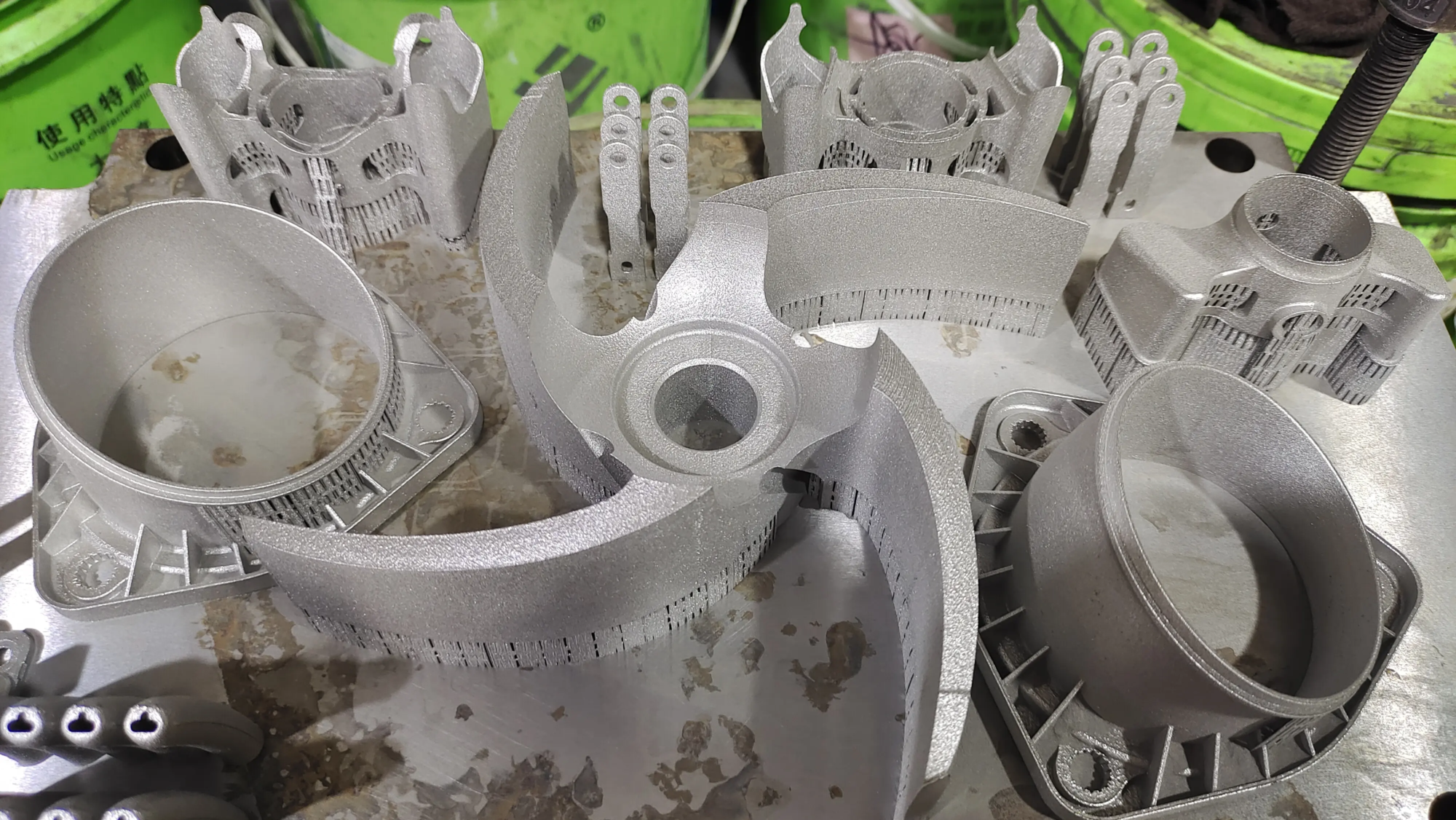
While this guide focuses on equipment for individual enthusiasts and stores, it emphasizes a broader principle of Great: Professional-grade environmental control is inherent in quality rapid prototyping. As a professional rapid prototyping manufacturer leveraging advanced SLM (selective laser melting) and other printing technologies, Greatshile not only prioritizes the precision and materials of parts such as sintered aluminum or titanium components, but also complies with strict occupational health and environmental safety standards. Our closed industrial system combines built-in high-capacity HEPA and multi-stage chemical filtration to ensure a safe production environment.
For customers looking for customized precision machining and one-stop post-treatment solutions – from polymer sintering to CNC machining and metal alloy surface treatment – knowing that the entire manufacturing workflow prioritizes operator safety and environmental responsibilities, this reflects our commitment to excellence. We learned that true professional prototypes start with clean air. Customize your next precision rapid prototyping project with Greatlight – Advanced production technology is in line with responsible manufacturing and delivered at the best value.
Conclusion: Invest in your health and print
3D printing unlocks incredible potential, but responsible enjoyment requires awareness of air quality risks. Simply breaking the window is not enough to effectively capture UFP and many VOCs. Investing in a correctly designated air purifier – prioritizing true HEPA, substantial particulate activated carbon, strong airflow and sealing design – is an important investment in your long-term health and comfort in your workspace. Customize your choices based on your choices (FDM requires different strategies than resin), room size and budget. Remember to combine the purifier with good practices such as printer placement and to exhaust the resin. By controlling the stealth hazard, you can breathe easily and focus on the incredible work your 3D printer brings.
FAQ: 3D printed air purifier
Question 1: Can’t I just open the windows instead of using an air purifier?
A: Ventilation will help, but this is inconsistent. Wind, temperature, humidity and external pollution can affect it. Opening the window does not effectively capture the UFP directly before propagation. It also fails to reliably remove VOCs from fast or consistent outdoors. The air purifier provides constant targeted filtration regardless of the conditions.
Q2: How close does it take to place the air purifier on a 3D printer?
one: As close as possible, especially for intake. Place it next to or behind the printer and direct the intake to the printhead/extruder (FDM) or extraction port (for resin housing). This will capture contaminants closer to the emission source.
Q3: How often do I need to replace the filter?
A: This depends to a lot on the time of use, the pollution load (printed materials) and the purifier model. Print in large quantities every day (more than 4): HEPA may need to be replaced every 6-12 months. Particulate carbon can last 6-18 months but is saturated in a resin-intensive environment, expressed as odor return. Monitor the indicator (if any) of the monitoring unit and be careful to reduce airflow or odor. Always check manufacturer’s recommendations based on actual usage.
Question 4: Will any HEPA air purifier work?
one: No. "Hepa type" Insufficient purifiers. You need a real HEPA (H13 or H14). Crucially, 3D printing requires high-designed purifiers Particle and VOC loading Have strong airflow (high CADR dust grade). For such demanding applications, many consumer purifiers lack sufficient carbon or airflow.
Q5: Is PLA safe without an air purifier?
A: PLA emits significantly less VOC and visible smoke compared to ABS or nylon. However, it still produces measurable ultrafine particles (UFP) When the filaments are heated and extruded. While the risk of higher than high-rate filaments is lower, continuous exposure to any UFP is not ideal for long-term lung health. Using a HEPA with an air purifier is still a recommended precaution.
Question 6: What does resin printer have to do? Why is shell + pipe so important?
A: The resin printer emits effective VOC and irritation on the VAT surface during printing and opening/resin treatment. The shell (for example, a growth tent) contains these smoke. Pipe exhaust attached to the housing is contaminated with air Direct access to the appropriate size air purifier Attracts powerful suction. this Source Capture Stop smoke entering your room to make the air purifier more effective. Don’t run the resin printer in the open air even if there is a purifier nearby – capturing the source through the housing/pipe is essential.
Question 7: How does Greatlight ensure the air quality of metal 3D printing?
A: Industrial processes such as selective laser melting (SLM) require strict engineering control. Greatlight utilizes a fixed building chamber with an inert gas (such as argon) environment for critical metal powders such as aluminum, stainless steel, inconel and titanium alloys. Additionally, a high-capacity integrated filtration system captures any accidental particles or smoke generated during laser sintering, ensuring operator safety, protecting sensitive equipment and maintaining material purity for aerospace and medical-grade prototypes. This is supplemented by a compliant waste disposal procedure.