Unlocking Precision: Choose the Best Laptop for 3D Printing Success
In the rapidly evolving world of 3D printing, your laptop is more than just a tool, it’s the command center for transforming visionary designs into tangible reality. Whether you’re a PLA prototyping enthusiast or an engineer making titanium aerospace parts, your hardware determines efficiency, accuracy, and creative freedom. But what makes a laptop truly 3D printing ready? Let’s break down the main points.
Why your laptop is more important than you think
Modern CAD, slicing software (such as Ultimaker Cura or Simplify3D) and simulation tools require significant computing power. A slow laptop can result in long render times, slow model operation, or failed prints due to processing bottlenecks. Industry insights emphasize that the best hardware can speed up the iteration cycle by 40%, directly affecting productivity.
Key features of the 3D printing giant
-
CPU: main force
Multi-core processors handle slicing algorithms and complex geometric calculations. Target:- Minimum: Intel® Core™ i5 or AMD Ryzen™ 5 (quad-core).
- Respected: Intel® Core™ i7/i9 or AMD Ryzen™ 7/9 (6–8 cores).
Tip: Prioritize clock speed (3.0+ GHz) and core count for faster slicing.
-
GPU: Beyond Basic Graphics
Dedicated GPU accelerates rendering and previsualization. Focus on:- NVIDIA RTX 3050/4060 or AMD Radeon™ RX 7600. Budget alternatives include the RTX 2050 or GTX 1660Ti.
- 4+ GB VRAM for complex assembly designs.
-
RAM and storage: speed matters
- Memory: 16GB DDR5 is optimal; 32GB can handle large-scale simulations.
- Storage: NVMe SSD (minimum 512GB). Pair with an external drive to back up intensive project files.
-
Connections and ports
USB 3.0/Type-C port ensures fast data transfer to the printer. Wi-Fi 6/6E facilitates cloud-based collaboration. - Display and ergonomics
15-17-inch IPS screen (minimum 1920×1080) ensures clear visualization. For color-sensitive work, consider 100% sRGB coverage.
Popular laptop recommendations
Entry-Level Champion: Acer Nitro 5
CPU: AMD Ryzen 7 5800H
GPU: Nvidia Rtx 3050 (4GB)
Memory: 16GB | Storage: 512GB NVMe SSD
Great for beginners, it offers reliable slicing speeds and a durable metal chassis for under $1,000.
Midrange Master: Lenovo Legion Slim 7
CPU: Intel® Core™ i7-13700H
GPU: NVIDIA RTX 4060 (8GB)
Memory: 16GB DDR5 | Storage: 1TB SSD
Balance portability and power consumption with a QHD screen that excels in multi-component assemblies.
Pro Titan: ASUS ROG Strix SCAR 18
CPU: Intel® Core™ i9-14900HX
GPU: NVIDIA RTX 4080 (12GB)
Memory: 32GB DDR5 | Storage: 2TB SSD
Built for complex simulation/CAM workflows. Vapor chamber cooling for all-day reliability.
The combination of professional manufacturing and digital design
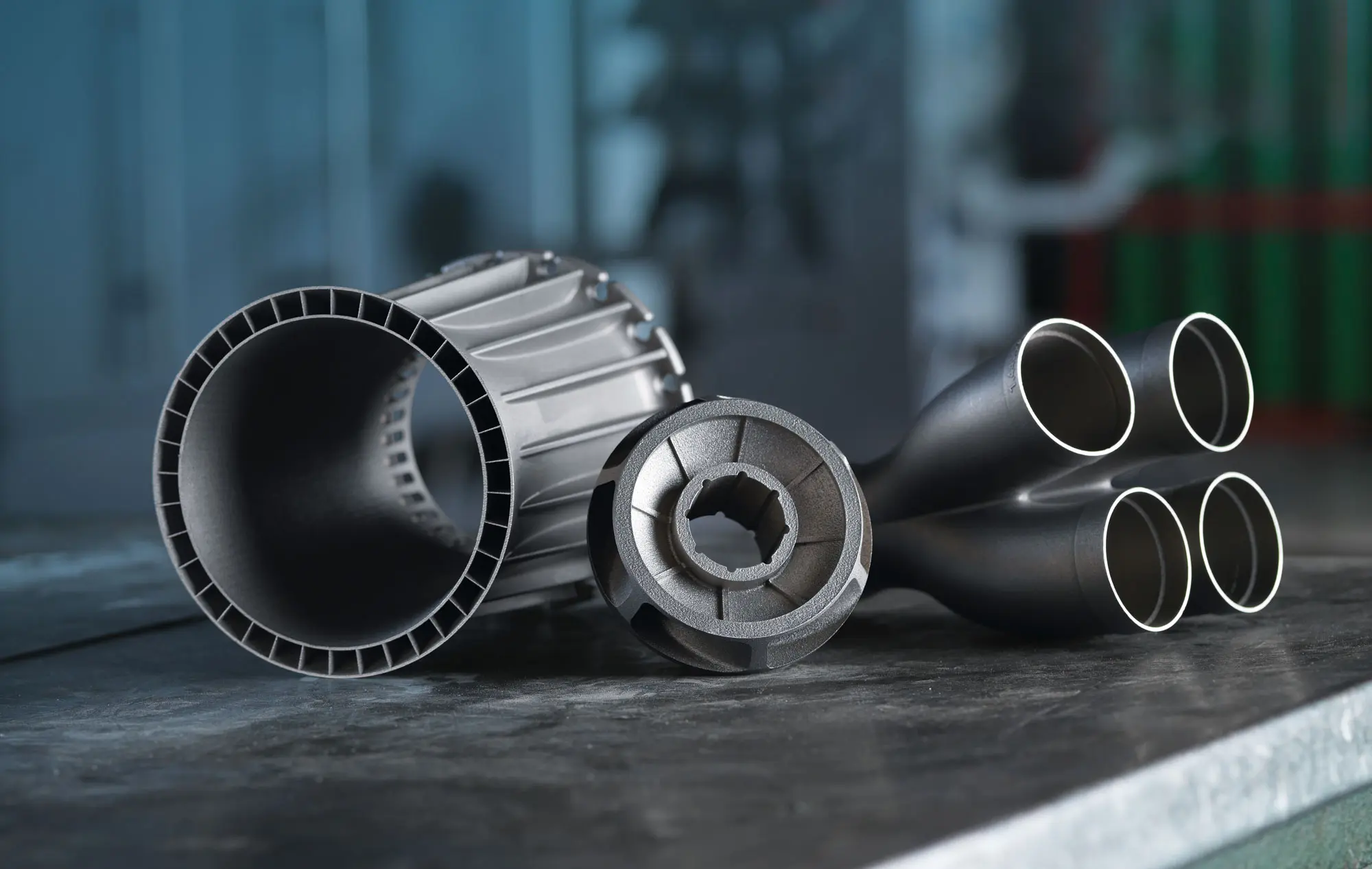
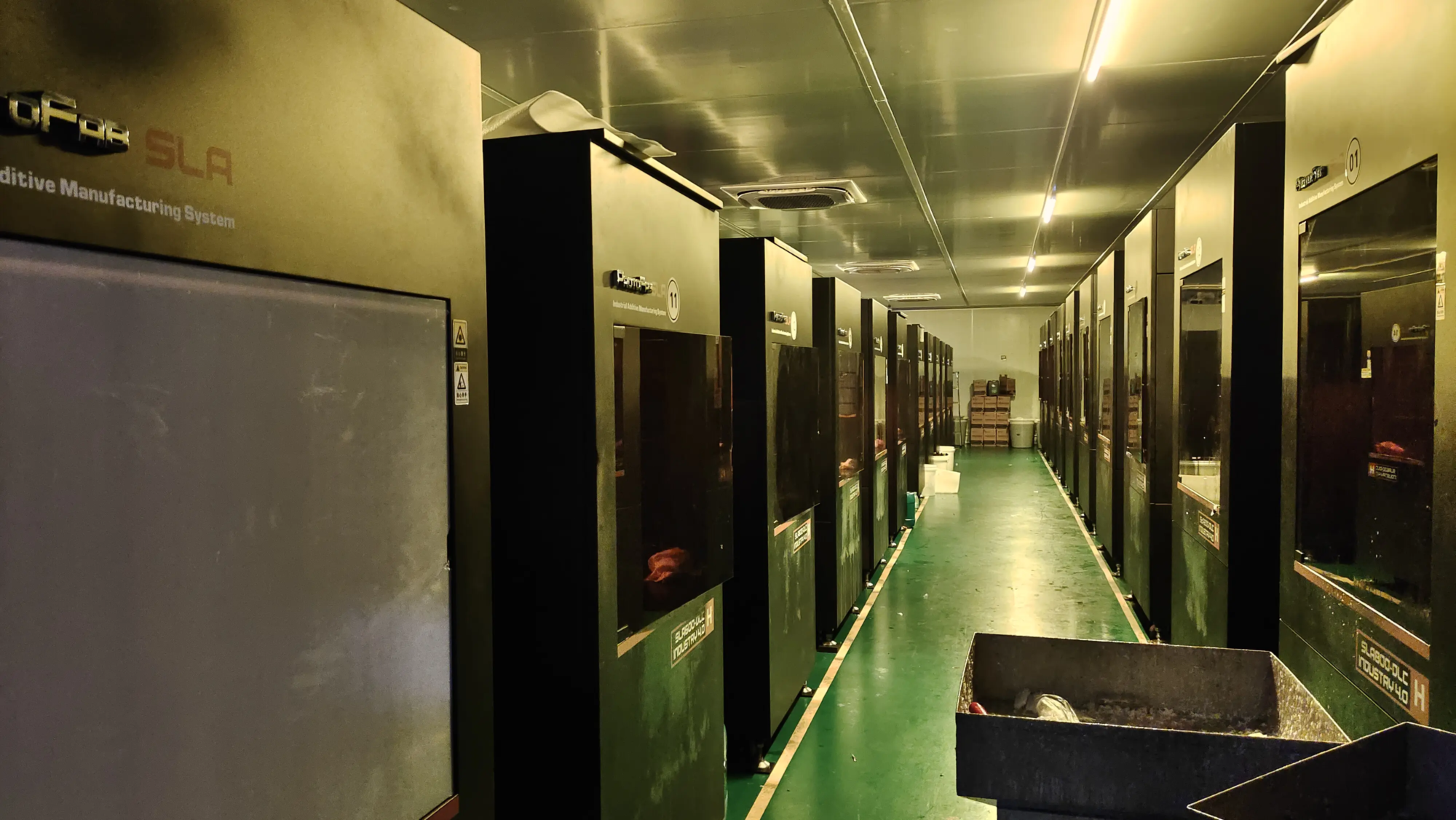
Designing models is only half the journey – bringing them to life requires precision engineering. where is this huge light Sparkling. as a leading rapid prototyping manufacturer Focusing on metal parts, GreatLight takes full advantage of SLM (Selective Laser Melting) technology to solve complex production challenges. From aerospace alloys to medical-grade titanium, their advanced printers fuse digital blueprints with unparalleled precision.
In addition to printing, GreatLight also offers One-stop post-processing: CNC machining, surface polishing and heat treatment to ensure parts meet tight tolerances. Customers around the world trust their ability to customize materials and provide quick turnarounds – critical in an industry that demands agility.
Tips for professionals: Combining high-performance laptops with GreatLight’s end-to-end capabilities enables a seamless transition from digital iteration to flawless production.
Conclusion: Matching hardware ambitions
Your laptop is an investment in creativity. Entry-level options are suitable for hobbyists using FDM printers, while professionals working with metal prototypes will want advanced specs. Adjust your choices based on project complexity, prioritizing CPU power and GPU support. Remember, whether you are designing in CAD or debugging a titanium prototype, always work with Certified partners like GreatLight Connect innovation and excellence to ensure your concepts are realized to perfection.
Like design? Discover unparalleled prototyping accuracy: Get it done quickly and at a competitive price with GreatLight.
FAQ: Solve your laptop questions
Q1: Can ultrabooks use 3D slicing software?
While some lightweight laptops, such as the Dell XPS 15, can manage basic slicing, complex geometries can slow down performance. Avoid CPUs with a TDP below 15W and prioritize devices with active cooling.
Question 2: Is Mac suitable for 3D printing workflow?
Partly. Apple Silicon Macs (M1/M2/M3) can efficiently run ARM-compatible tools such as Blender, but Windows-specific software (SolidWorks, Siemens NX) limits flexibility. Parallels/Boot Camp is recommended for cross-operating system users.
Question 3: How important are GPU and CPU for CAD rendering?
The GPU accelerates vision tasks (model rotation, shading), while the CPU dominates slicing simulations. For organic modeling (ZBrush), invest in a GPU; for structural engineering, lean towards the CPU.
Q4: Will RAM affect G code generation?
indirectly. Insufficient RAM can hinder concurrent applications (CAD + Slicer), increasing the risk of failure. 16GB handles <1M-poly models; complex components require 32GB.
Q5: Can I print from a USB-connected laptop and avoid using an SD card?
This can be achieved by running the OctoPrint script. However, Wi-Fi/standard SD transfer reduces the risk of printing interruptions and avoids reliance on USB during long jobs.
Q6: Why should you cooperate with manufacturing experts like Ferrite Post Design?
In-house SLM printer and finishing expertise ensure prototypes meet industry standards, especially important for heat-critical or load-bearing metal parts that cannot be replicated by desktop printers.