

Unlocking Ancient Echoes: A Creepy Fusion of 3D Printing and Death Whistle
This human-like scream is harsh, disturbing, and completely primal. It echoes the ancient traditions of Mesoamerican cultures such as the Aztecs and Mayans. The sound, produced by a unique instrument called a death whistle, was believed to offer prayers to the gods or frighten enemies in battle. Now, thanks to the transformative power of 3D printing, this ancient artifact is undergoing a modern renaissance—a mesmerizing, yet chilling fusion of archeology and cutting-edge technology.
Beyond Clay and Ceramics: The Digital Rebirth of Weird Artifacts
True death whistles, traditionally made from clay or carved stone, are rare and fragile archaeological finds. Their intricate internal air channels – designed to vibrate and produce a distinctive scream – require extraordinary handcrafting skills. Enter 3D printing. This technology enables designers and musicians to accurately recreate complex digital models of existing artifacts and even reimagine them using CAD software.
Printed materials such as PLA or resin faithfully replicate the necessary internal geometry, transforming the designer’s vision into a tangible, functional whistle with extraordinary accuracy. Unlike fragile ceramics, printed versions offer durability and the freedom to experiment with design. Thanks to additive manufacturing, even non-traditional interpretations, such as skulls or stylized figures, become viable production runs.
Engineering Screams: Why 3D Printing Wins
The effectiveness of a death whistle depends entirely on its internal structure. The airways must branch precisely and direct the airflow to the sharp interior edges of the resonant chamber. Achieving this consistently with traditional methods is notoriously difficult. 3D printing excels in this area:
- Exact reproduction: STL files capture the precise dimensions and complexity of internal paths from a scan or CAD model, ensuring consistent functionality in the print.
- Iterate quickly: Design flaws that affect sound quality can be quickly identified and fixed in the digital model, then reprinted within hours—a process not possible with kiln-fired clay.
- Material Versatility: While resin offers fine detail and a smooth finish often sought for visual aesthetics, PLA offers a strong and cost-effective option. More advanced materials like ABS or specialty resins offer greater durability.
- Uncompromising sophistication: 3D printing builds up layer by layer, allowing for the creation of internal voids and complex channels that would be impractical or impossible with subtractive manufacturing techniques.
Expertise meets challenges
While desktop 3D printers can produce basic whistles, achieving professional-quality sound reproduction always requires expertise. Factors that affect the final sound include:
- Layer lines and surface finish: The rough inner surface of the printed layer disrupts airflow. Professional steam smoothing or precise print settings can minimize this.
- Material acoustics: Different plastics have different densities and resonance properties, affecting tone, timbre and volume.
- Sealing and Adjustment: Air leaks or slight dimensional errors may attenuate the squeal or change its characteristics. Precision manufacturing is key. This is where utilizing professional rapid prototyping services becomes extremely valuable. Platforms such as huge light We have an advanced SLM printer for the metal version as well as an advanced resin/SLS printer, combined with engineering expertise to optimize the acoustic design and oversee the necessary post-processing (smoothing, sealing, tuning) to ensure the printed whistle is as loud and weird as the whistles of old.
Beyond Novelty: Applications of the Modern Death Whistle
- Music and sound design: Composers and foley artists use them for unique sound effects in film, television, and experimental music.
- Culture and education: Museums and educators use replicas to provide tangible representations of ancient technologies and cultural practices.
- Art & Collectibles: Detailed art prints make unique conversation pieces or collectibles.
- Ceremony and Performance: Some modern practitioners embrace them in ritual or performance arts.
GreatLight: The bridge between digital design and weird reality
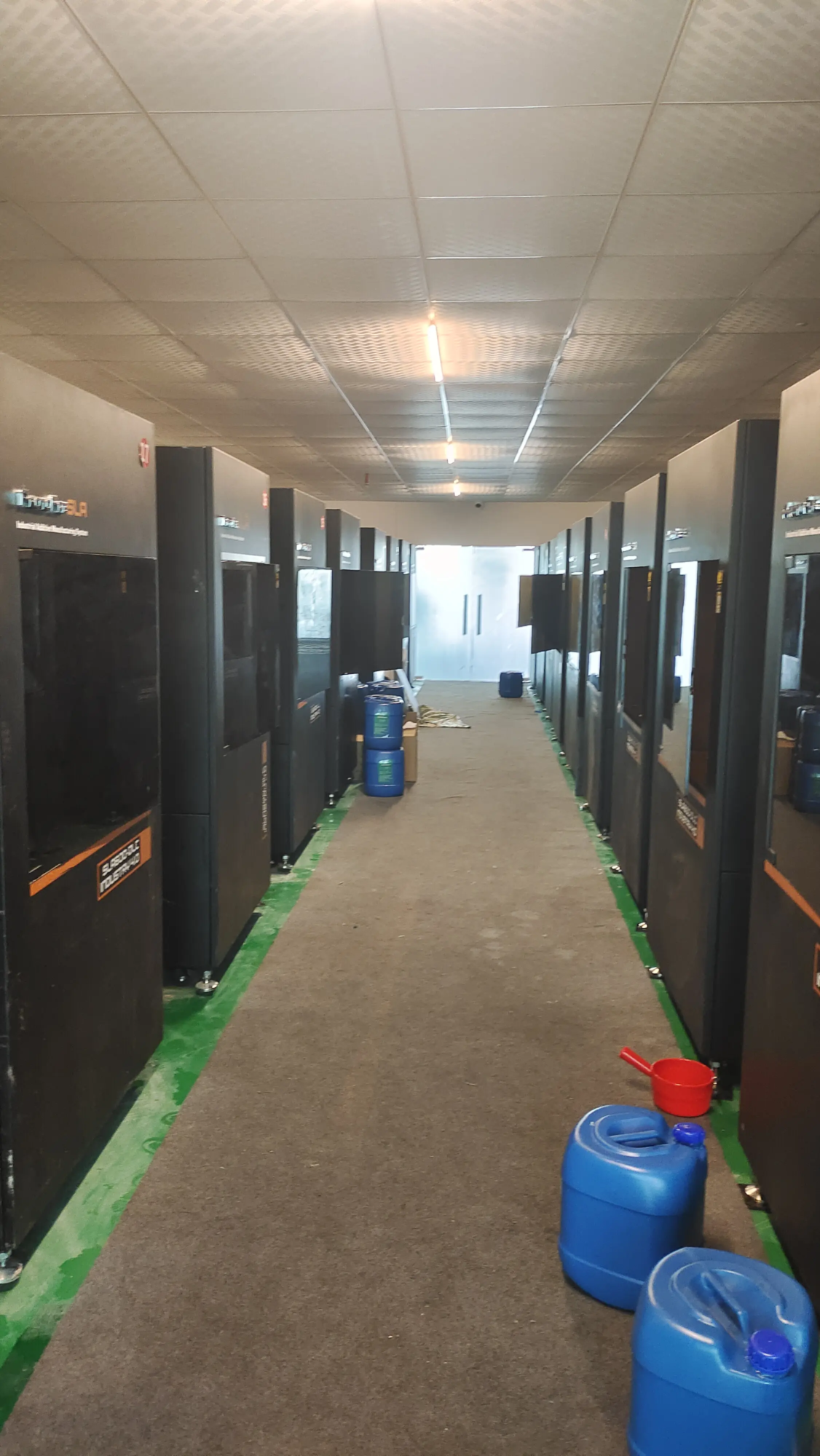
Going from creepy concept to functional, high-quality 3D printed death whistle requires more than just a printer; It requires advanced technology, meticulous engineering and professional finishing. huge light Focused on transforming complex visions into precision-crafted realities. As a leading rapid prototyping manufacturer equipped with state-of-the-art SLM 3D printer With extensive production expertise, we specialize in solving complex manufacturing challenges, especially metal parts and complex geometries.
In addition to printing, GreatLight also offers Comprehensive one-stop post-processing services Including smoothing, polishing, painting, sealing and precision tuning that are essential to perfecting an acoustic instrument like the death whistle. We offer rapid customization in a variety of materials and guarantee competitive pricing without sacrificing quality – truly making us one of the best rapid prototyping manufacturing companies in China.
Whether you’re an artist pushing boundaries, a historian recreating the past, or a developer in need of unique prototypes, GreatLight empowers your design. Ready to implement sophisticated prototypes? Customize your precision rapid prototyping parts today at the best prices!
in conclusion
The 3D printed death whistle is a fascinating example of how modern technology can breathe new life into an ancient mystery. It demystifies complex artifacts, making them easy to study, artistic, and even a touch of tactile horror. The precision and versatility of advanced 3D printing through huge lightunleashing possibilities far beyond what traditional craftsmanship can achieve. It’s a reminder that innovation isn’t always about looking to the future—sometimes, it’s about recreating haunting echoes of the past with unprecedented accuracy and accessibility.
FAQ: 3D Printed Death Whistle
Q1: How big is the 3D printed death whistle?
A1: They can be surprisingly loud! A well-designed and printed whistle can easily reach sound levels comparable to loud whistles or even shouts (usually 90 decibels or more at close range), producing an incredibly high-pitched, penetrating scream.
Q2: What material is most suitable for 3D printing death whistles?
A2: It depends on the priority:
- People’s Liberation Army: Affordable, easy to print, and durable. The sound is only as good as the design accuracy.
- Resin (e.g. standard resin, tough resin, ABS-like resin): Capturing very fine details, the smooth surface benefits acoustics, wider material properties (some engineering resins offer enhanced transparency, strength or temperature resistance). The results are generally more acoustically consistent.
- Metals (via SLS/SLM – Professional Services): Highly durable, unique feel and weight, often impressive sound clarity and projection (but usually more expensive).
Q3: Why doesn’t my homemade 3D printed whistle scream?
A3: Common culprits include:
- Air leakage: The air escapes rather than passing through any gaps in the internal channels.
- Rough inner surface: Layer lines destroy the smooth airflow needed for turbulence/sound production. Vapor smoothing (for ABS/ASA) or careful sanding/resin coating can help.
- Dimensional error: Channel size or alignment is not perfect. Tolerances are important! Check your STL file geometry.
- Wrong blowing techniques: A sharp, powerful blow needs to be delivered directly to the main airway.
Q4: Are 3D printed death whistles dangerous?
A4: The sound itself is loud and alarming and may cause alarm or discomfort (please use responsibly!). Physical security depends on: Desktop prints may have small ridges; professional printing/smoothing minimizes risk. Make sure the inside of the chamber is smooth to avoid inhaling tiny particles (unlikely, but good practice).
Q5: How complex is the design? Can I find files online?
A5: The sophistication of the design lies entirely in the complex internal air channels – different paths splitting the airflow and directing it to the edges. There are a large number of free STL files on the Internet (search platforms such as Thingiverse, Printables), but the quality varies greatly. Professional prototyping services optimize designs for superior sound and manufacturability.
Q6: Can GreatLight print death whistles in metal?
A6: Of course. Take advantage of premium SLM (selective laser melting) technologyGreatLight specializes in producing complex metal parts, such as death whistles, with exceptional precision and material integrity (using materials such as stainless steel, titanium, aluminum alloys, etc.). Metal printing offers unparalleled durability, acoustic performance and unique aesthetics, complemented by our expert finishing services to create a flawless final product. Contact GreatLight about your custom metal prototyping needs.


