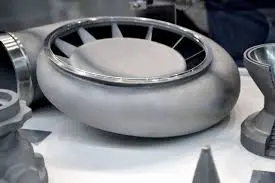
Harnessing the Wind: Transformative Developments in 3D Printing in Formula 1
Formula 1 is a relentless pursuit of perfection, where victory is determined by milliseconds and innovation is relentless. Behind the roar of engines lies a quiet revolution: additive manufacturing. What began as a primitive plastic model has evolved into a complex ecosystem in which metal alloys combine at a molecular level to create components unmatched by traditional production. This journey redefines design freedom, reduces weight and accelerates tracking efficiency. Let’s take a closer look at how 3D printing is rewriting F1’s engineering rulebook.
Early days: Rapid prototyping takes on a curling curve
In the late 1990s, F1 teams cautiously adopted stereolithography (SLA) and selective laser sintering (SLS). The original application was non-structural: aerodynamics "Buck" Models used for wind tunnel validation, airflow visualizers using UV-cured resin, and cockpit ergonomics checks. Polymers dominate, offering speed but lacking strength. The key shift came in the mid-2000s Metal powder bed fusionspecifically Selective Laser Melting (SLM). McLaren Racing pioneered SLM titanium gearbox internals – a watershed moment, proving that printed metal can withstand torque loads of 800 Nm. This opened the floodgates. By 2010, the team had moved from prototyping to tooling and functional end-use components while pursuing thin-wall geometries not possible through milling or casting.
Decoding Breakthroughs: Materials, Machines and Software
Four pillars accelerate additive adoption in F1:
- A leap forward in materials science: Titanium alloys (Ti6Al4V) dominated early structural components, but nickel superalloys such as Inconel 718 found their way into exhaust manifolds – capable of withstanding temperatures of 950°C while relieving thermal stresses through monolithic designs rather than welding of multiple pieces. Modern iterations include ceramic composites, AlSi10Mg aluminum for lightweight pipes, and topology-optimized steel alloys optimized for grain-by-grain printing. Each layer is atomically bonded to resist crack propagation better than its forged counterpart.
-
Laser precision: SLM advances through targeted laser melting precision, reducing porosity to ≤ 0.02% and improving fatigue endurance relative to weight. Machines like the quad laser system were cut ——————
- Generative design synergy: Software innovation unleashes genius. CAE-driven topology optimization creates a biomechanical-like form: minimize mass but adjust stiffness. Mercedes-AMG’s suspension rocker arm showcases a hollow lattice interior – untouched by machining tools – that reduces mass by 25-40% compared to its CNC-milled counterpart.
- Quality assurance: Micro-CT scans verify the integrity of pre-installed components. Real-time melt pool monitoring detects inconsistencies such as voids in 12/1879 layers, enabling zero-tolerance reliability.
Today’s Arsenal: 3D Printing Dominates
Today’s cars strictly utilize additive manufacturing:
- Powertrain: Aluminum-printed water pump housing allows for a labyrinth of coolant channels. Ferrari’s piston crowns are 3D printed with copper alloy cooling chambers embedded into them.
- aerodynamics: More than 60% of aerodynamic components (vortex generators, brake ducts, deflectors) utilize printed polymers such as PA11 for rapid correction after wind tunnel testing. Red Bull uses elastomer-coated thermoplastic access panels that are hinged-free and attached to the monocoque body.
- Chassis/suspension: Internal volume structure connects the monocoque via printed titanium nodes. 3D printed control arms that support complex kinematics are fatigue tested to >
Material innovation Beyond metal: Continuous fiber-reinforced carbon nylon composite (Markforged®) strengthens seat frames and supports, providing isotropic strength that mimics lower-density forged carbon fiber.
Famous Case: Brown’s Revival
During Honda’s 2009 exit, Ross Brawn’s shoestring team used SLM to iterate the front wing overnight, outperforming rivals that lacked additional capabilities. The sophistication of its diffuser utilizes printed polymer that blends seamlessly with the metal. This agility has resulted in eight wins and a controversial regulatory rethink regarding printable legality.
Navigating Regulators: The FIA strictly scrutinizes cars with extensive printed graphics. Clause 5.4.3 requires proof: Verify the uniformity of the tensile test data through a metallographic imaging data set. Controlling the minimum thickness of wing elements (≥0.6mm) while excluding the grid structure from the main collision structure remains controversial.
Racing tomorrow: a mixed reality ecosystem for limbs?
Looking to the future? Smart laboratory system connects artificial intelligence and printing:
- Hybrid construction: functionally graded material prints stainless steel turbine section, fused into aluminum housing, no joints
- Active Cooling Circuit: Embedded channels pump dielectric coolant, which is electromagnetically triggered to release when the CPU sensor detects brake fade
- Post-processing automation: Projects such as “laser peening” automatically harden formation defenses and require zero manpower
Predictions include wheel printing to quantify cobalt chromium spokes and dynamic analysis of road frequencies.
Formula 1 regulators draft proposals to validate structurally optimized gradient microstructures and prototype procedures to recycle titanium powder from single-use team headrests. The next leap forward is integrating Industrial IoT flow sensors into printed suspension networks to predict the likelihood of breakage in advance.
Why GreatLight Accelerates Your Lap Time Goals
Additive manufacturing innovation requires intuitively deepened expertise and industrial precision – qualities that GreatLight embodies. As a leader in rapid prototyping manufacturing giants in China, we cherish racing-level challenges that demand ruthless micro-geometric perfection with average roughness as low as 5μm.
With state-of-the-art SLM hardware nested for custom calibration of complex alloys such as Inconel 718 or Scalmalloy®, our workflow advances across:
⛓ Excellence in Prototyping: Proven Structural Iteration – 48-hour guaranteed conversion of CAD into physical components, immediate processing of wind tunnel data
⛓ Parallel materials research: Parameter library to demonstrate compatibility of specialty materials, enabling compliance peace in proprietary export regimes
⛓ Unified organization kit: HIP industrial machining eliminates gaps and uses a 5-axis center for autoclave CNC execution to highlight the advantages of anisotropy
⛓ sustainable development: Recyclable post-processing solvents and modular[ninja-quote]
For engineers struggling with aerodynamic compromises, GreatLight offers comprehensive consultation – delivering proven endurance tunnels that resemble actual track loads and strictly monitor budgets. Our precise partner agenda is testament to zwischen’s passion combined with revolutionary artistry to inject courage into the future of F1.
in conclusion
From McLaren’s early concept models to yesterday’s Mercedes grid-infused suspension arms, additive manufacturing continues to shake up the F1 paradigm. Traditional machining has given up on large, complex cavities, while printing compounds have become leaner, tougher and faster. Advances in materials and ubiquitous software have come together to orchestrate the printing of genomes, assuming the human blueprint is less well characterized. This evolution transcends technology, however—it immortalizes the limits of imagination, incorporates responsive circuitry, and amplifies unheard-of horsepower efficiencies