Breaking Barriers: The Speed of Sound – Revolutionizing Metal 3D Printing Time and Quality
The relentless pursuit of faster production times without sacrificing quality is an eternal theme in additive manufacturing (AM). For industries that rely on metal components (aerospace, medical, automotive, energy), the prospect of rapid prototyping and production is critical. While technologies such as selective laser melting (SLM) have made significant progress, a new frontier is emerging: The speed of sound in 3D printing. This isn’t science fiction; It is an advanced technology that pushes the boundaries of laser powder bed fusion (LPBF) technology, specifically SLM, delivering incredible speed improvements while potentially increasing part integrity.
What exactly is the speed of sound in 3D printing?
Traditionally, SLM uses high-power lasers to selectively melt metal powder particles to build metal parts layer by layer. Each layer involves precise laser scanning paths, often involving complex vectors and points that require acceleration, deceleration, and constant direction changes. This inherent limitation limits the scanning speed because excessive acceleration may cause melt pool instability, balling, keyhole voids and other defects, or even damage to the recoater mechanism.
Sonic Speed technology addresses this fundamental limitation head-on. Rather than focusing primarily on pushing the raw power output of the laser (which brings its own thermal management challenges), Sonic Highly dynamic laser modulation system. The key difference is Mechanism that drives the laser scanning mirror:
- Harmonic drive system: Sonic systems often integrate complex harmonic or resonant systems rather than relying solely on traditional servo motors with complex kinematics. These utilize the principle of resonance to enable extremely precise movement of the scanning mirror High frequency oscillation.
- Optimized trajectory control: Combining high-frequency mirror motion with extremely fast laser modulation (rapidly turning the laser beam on/off at specific points) at the speed of sound can greatly simplify the scan path. Laser basically follows Long, continuous, unidirectional raster pathoften traversing the entire length of the build plate.
- Dynamic beam shaping: Even at these unprecedented speeds, advanced optics ensure fine beam control to maintain stable melt pool geometry, which is critical for consistent material fusion.
Sonic’s Advantage: More Than Raw Speed
The leap in scanning speed is astonishing – often cited in Meters per second (m/s) rangesignificantly exceeding traditional SLM scanning speeds (in millimeters/second). This means build time is reduced 50% to 100% or more For comparable parts. But the benefits go far beyond sheer speed:
- Improve microstructure and reduce porosity: The short interaction times and rapid cooling rates inherent to sonic printing can produce finer grain structures. This often results in improved material properties, such as greater strength and hardness. Additionally, controlled melt pool dynamics achieved through fast pulses and scans can suppress certain defect formation mechanisms (such as small-pore porosity instabilities) more effectively than slower scans, potentially resulting in denser parts.
- Enhanced accuracy and stability: By minimizing complex accelerations and changes in direction, Sonic systems reduce vibrations in the coater mechanism and print platform. This mechanical stability translates into greater dimensional accuracy, better skin surface finish, and more reliable powder bed recoating—especially important for tall, thin-walled structures.
- Increase productivity and reduce cost per part: Dramatically shorten build times, directly reducing machine time costs, energy consumption per part, and accelerating prototyping and production cycles. This makes metal additive manufacturing more feasible for high-volume production scenarios previously dominated by traditional manufacturing.
- Materials’ versatility expands: While initial sonic development focused on existing alloys such as aluminum (AlSi10Mg), titanium (Ti6Al4V) and stainless steel (316L), rapid advancements are extending compatibility to a wider range of materials, including high-strength nickel-based superalloys and copper alloys.
Speed of sound: considerations and challenges
Although sonic is transformative, it is not a panacea and requires careful consideration:
- Optimization for specific materials: Achieving optimal quality requires careful parameter adjustment (laser power, scan speed, fill distance, layer thickness) Each specific material and required properties. Speed alone is not enough, effort is also required. The process window requires precise calibration.
- Design Impact: Unique thermal dynamics and rapid cooling affect residual stress patterns and anisotropic behavior differently than slower methods. Advanced simulation tools and additive manufacturing (DfAM) expertise become even more important to mitigate warpage or deformation.
- Subtle differences in surface finish: While the stability of the recoater improves vertical surface quality, extremely high scan speeds can sometimes introduce specific surface texture patterns (such as streaks) on the top surface. For functional applications requiring a fine surface finish, post-processing (e.g., machining, polishing, sandblasting) is often still necessary.
- Equipment investment: Sonic Speed-enabled machines represent cutting-edge technology and require significant investment. Working with an expert service provider that leverages this technology often provides the most cost-effective access.
App Spotlight: Where Sonic Speed Really Shines
Industries requiring fast turnaround, complex geometries, and high-performance metals are driving adoption:
- aerospace: Rapid iteration of turbine blades, lightweight structural supports, heat exchangers and combustor components.
- Medical: Produce custom orthopedic implants (spine cages, bone plates), surgical instruments and patient-specific guides faster.
- car: Accelerated prototyping of engine components, complex hydraulic manifolds, lightweight structural components for racing and electric vehicles.
- vitality: Expedite the manufacturing of complex radiators, fuel injector heads and renewable energy system (solar, hydrogen) components.
Conclusion: Uncompromising speed is here to stay
Sonic Speed technology represents a paradigm shift in metal additive manufacturing. By fundamentally rethinking the laser scanning mechanism and leveraging the principles of harmonic motion, it delivers unprecedented build speeds, significantly reducing production times. Crucially, it achieves a speed breakthrough although Potentially enhances internal soundness (density, finer microstructure) and improves mechanical properties and stability during printing.
This isn’t just faster printing; This is smarter printing. It opens up new avenues for metal additive manufacturing to move beyond niche prototyping into volume production environments, delivering parts faster, potentially more robustly, and at a significantly lower cost per part.
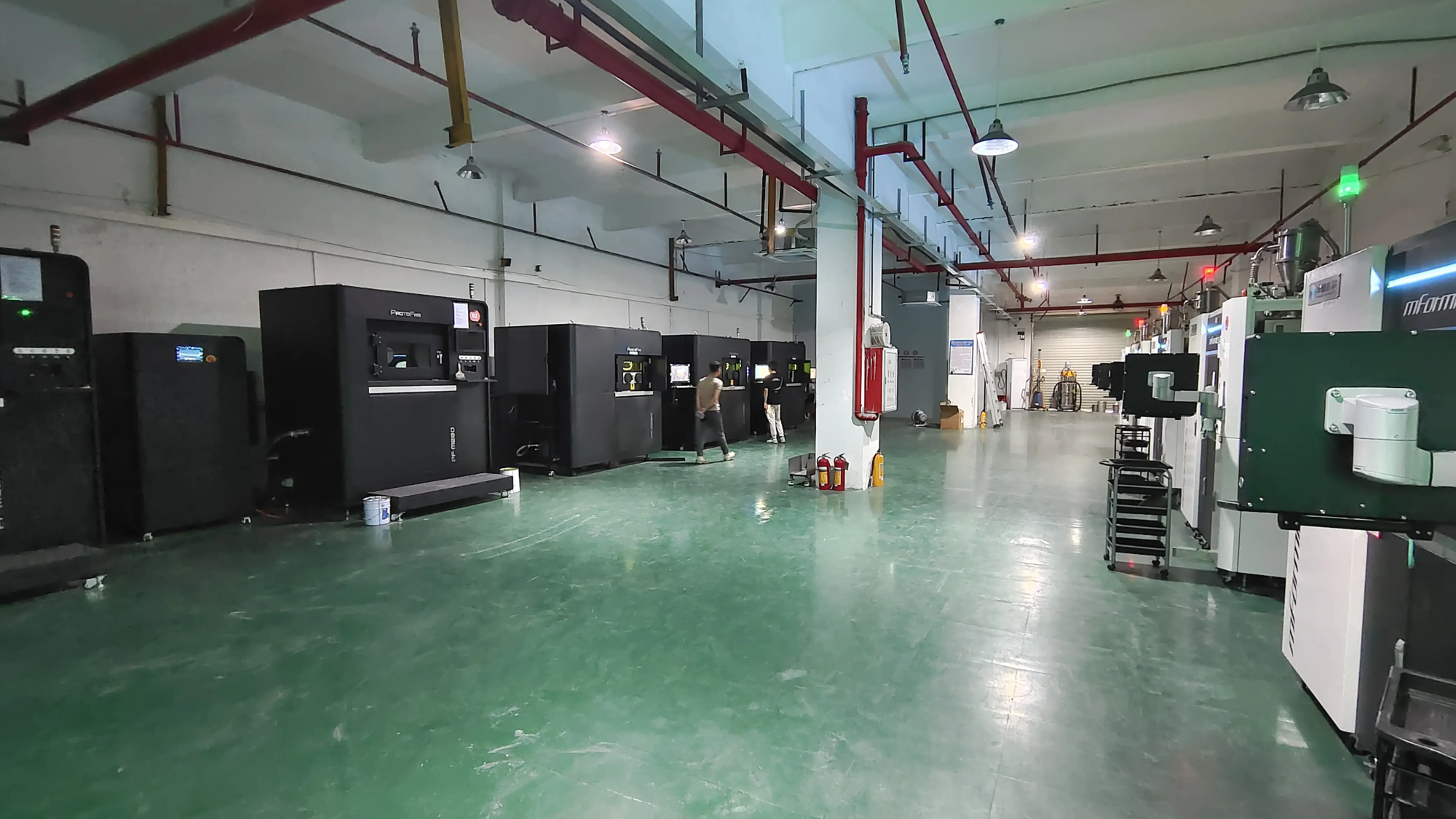
GreatLight is a pioneering rapid prototyping manufacturer specializing in metal additive solutions using cutting-edge technologies like Sonic Speed SLM. We combine advanced machinery and deep production technology expertise to expertly solve your most challenging metal rapid prototyping needs. Our wide range of materials capabilities means most alloys can be quickly customized to your project. Crucially, we offer a comprehensive One-stop post-processing and finishing servicesensuring that your Sonically printed parts not only come off the machine quickly, but are ready for use immediately upon arrival at your facility. We are committed to pushing boundaries – Contact us today to learn how Sonic Speed SLM can accelerate your innovation and bring your custom precision rapid prototyping parts to life at the best prices.
Sonic Speed 3D Printing FAQs
Q1: Is Sonic Speed a completely different printing technology?
A1: No need. Sonic is an advanced operating mode or technology employed in established laser powder bed fusion (LPBF) technologies such as selective laser melting (SLM). It focuses on accelerating the laser scanning process through dedicated hardware (high-frequency scanning mirrors) and optimized control software.
Q2: Does Sonic Speed sacrifice part quality for speed?
A2: After correct calibration, the speed of sound printing will not no Essentially sacrificing quality. In many cases, it can increase microstructure density and reduce certain defects at practical limits compared to traditional SLM scanning. Achieving this optimal quality requires extensive expertise and careful parameter optimization for each material and geometry. Improper parameter selection at high speeds will definitely lead to defects.
Question 3: Which materials are best suited for Sonic Speed technology?
A3: While still evolving, Sonic works very well with proven SLM alloys such as AlSi10Mg, Ti6Al4V and various stainless steels (316L, 17-4PH). Compatibility with high-performance nickel superalloys (Inconel) and copper alloys is rapidly improving. Material suitability always requires specific parametric verification.
Q4: Will sonic printing affect dimensional accuracy?
A4: Generally speaking, sound speed can improve mechanical stability during printing by reducing shaking caused by rapid acceleration. This is usually translated as improved Dimensional accuracy, especially for tall and thin features. However, rapid solidification kinetics can have different effects on the residual stress pattern. Careful build planning and support strategies remain critical.
Q5: Does Sonic Speed require no post-processing?
A5: No. Although the stability of the recoater has improved vertical Surface finish (lower layer), top surface may exhibit a different texture due to rapid scanning. Achieving a high-quality surface finish often still requires machining, polishing, sandblasting or other finishing processes depending on the application requirements.
Question 6: Is Sonic Speed suitable for all part sizes and complexities?
A6: It excels at accelerating builds that require large solid volumes or multiple layers. For extremely complex features requiring very fine detail (<100 microns), traditional scanning strategies employing slower, more complex paths may sometimes be required to achieve maximum fidelity, although sonic capabilities at finer resolutions are continuing to advance.
Q7: How big is the cost savings of Sonic Speed?
A7: The cost savings are substantial, mainly due to the significant reduction in machine time. This reduces direct machine costs and associated energy consumption and, more importantly, accelerates time to market. The exact savings depend on the part geometry and material volume, but machine time cost reductions of 30-60% are common, making additive manufacturing more competitive for high-volume production.
Q8: Where can I get parts made with Sonic Speed SLM?
A8: As demonstrated in this article, GreatLight specializes in utilizing advanced SLM technology, including Sonic Speed printing. We have cutting-edge equipment and deep technical expertise to unlock the advantages of speed and quality for rapid prototyping and low- to medium-volume production of your custom metal parts. Please contact our team today for a consultation.