introduce
For 3D printing enthusiasts and professionals, filament storage may seem like an afterthought until unexplained print failures, brittle materials, or inconsistent extrusion start to plague your projects. In addition to superficial techniques, e.g. "Keep the filament dry," Mastering storage requires an engineering approach tailored to material chemistry and environmental variables. This guide combines scientific rigor with practical design to help you build or buy Ultimate Filament Storage Cabinetto maximize print quality and filament life while minimizing waste.
Why filament storage is non-negotiable
Filaments (PLA, PETG, ABS, nylon, etc.) are hygroscopic polymers. When exposed to moisture:
- Polylactic acid/PETG Expansion, causing nozzle bubbles and uneven extrusion.
- Nylon/PVA Quickly absorbs moisture and becomes unusable within hours.
- ASA/PC Without protection, chemical degradation can occur when exposed to UV light.
A 2023 study by Protolabs found that 40% of print failures in the industrial and hobbyist sectors were due to improper filament storage. Investing in professional-grade storage not only protects supplies but also guarantees ROI through consistent printing results.
Factors leading to filament degradation
1. Humidity
this #1 Enemyeven in "dry" climate. Relative humidity (RH) >50% can cause hydrolysis:
- PLA: Optimal relative humidity: <30%
- Nylon: RH <10% is required for reliable printing.
- Solution: Continuous passive dehydration (silica gel) or active drying (Peltier dehumidifier).
2. Temperature fluctuations
The heat cycles between day/night cause the filaments to expand/contract, untangling and weakening the layers. The ideal temperature is stable between 18–25°C.
3. UV and ambient light
UV radiation attacks polymer chains, especially those in ABS and TPU. Opaque storage blocks photons while retaining mechanical properties.
4. Dust and contaminants
Particles in the air clog the nozzle. The sealed cabinet prevents micro-debris from accumulating in the filament path.
Storage Solutions: From Budget to Premium
| Solution type | cost | effect | most suitable |
|---|---|---|---|
| Ziplock bag + desiccant | $ | Limited protection (RH~40%) | occasional user |
| Vacuum sealed barrel | $$ | Medium (RH~20%), manual access | small batch printing |
| Drying oven/DIY cabinet | $$$ | High (RH<10%), automatic access | Daily multi-material workflow |
| climate control cabinet | $$$$ | Laboratory grade (RH<5%), temperature regulation | Industrial/R&D environment |
Build the Ultimate Filament Storage Cabinet: A DIY Blueprint
For manufacturers who prioritize scalability and precise control, custom cabinets can outperform off-the-shelf options. Here’s how engineers optimize them:
design principles
- Air seal integrity: Padded door, silicone seal on cable port.
- Humidity control: Rechargeable silicone beads (color indication) + mini dehumidifier backup.
- organize: Magnetic spool holder, index slot, vacuum assist drawer.
- IoT integration: Sensor (Wi-Fi humidity/temperature monitor) that sends remote alerts via apps like Blynk.
Build step by step
- frame structure: Laser cut from acrylic or powder coated steel (dimensions: minimum 60x40x50 cm for 15+ spools).
- seal:Apply neoprene gasket to door edge; use PTFE-lined gland to seal passage.
- Dehumidification: Install 100 g silicone bed + auxiliary Eva-Dry E-333 under the spool stand.
- automation: Add a servo-driven PTFE tube feedthrough to each spool.
- test: Verify RH stability ≤10% within 72 hours using a calibrated hygrometer.
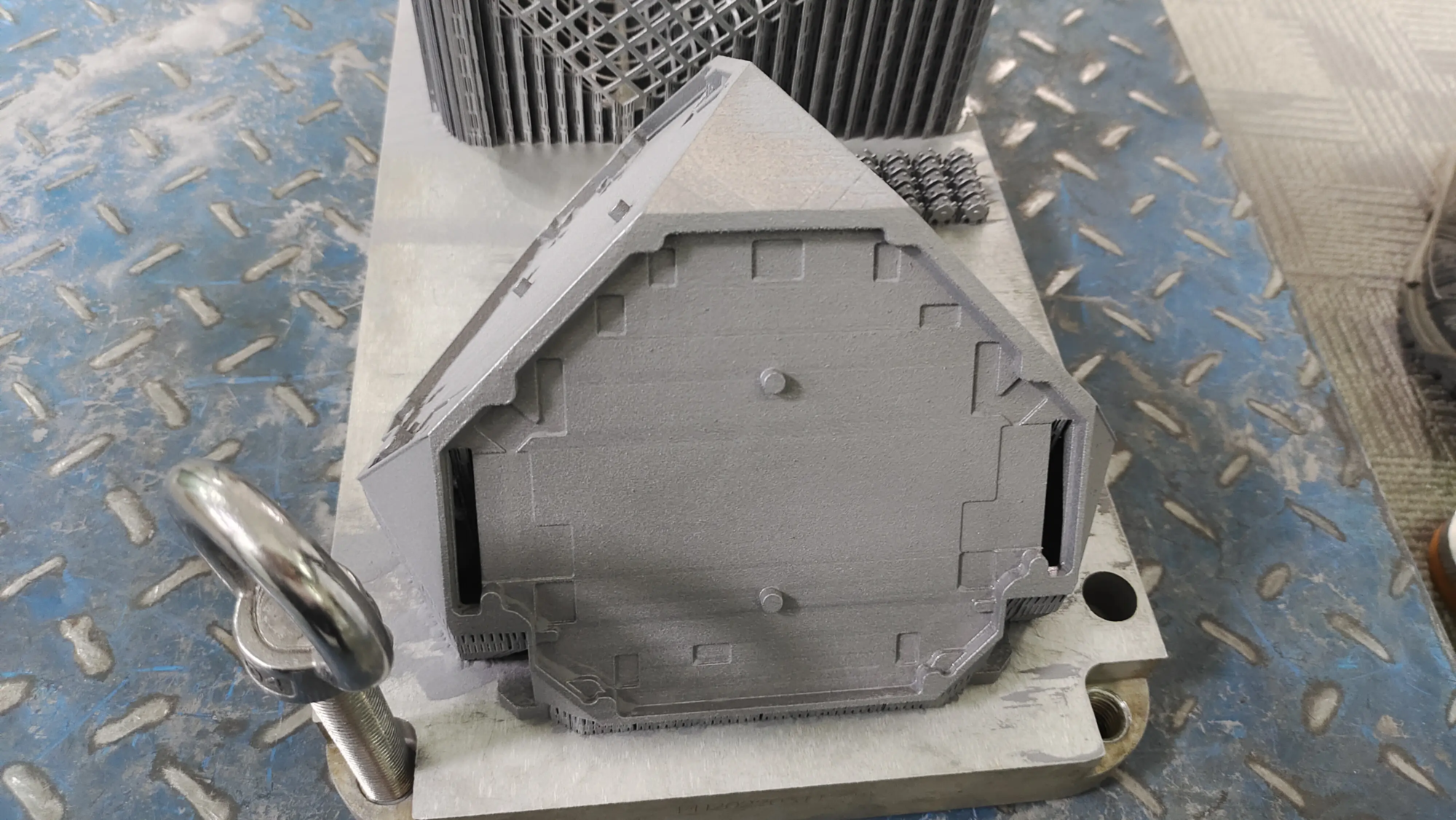
Professional insights: For creators who need high-precision cabinet components, such as moisture-resistant latches or custom spool adapters, working with rapid prototyping experts ensures aerospace tolerances. GreatLight utilizes SLM 3D printers and CNC post-processing to provide seals and mounting brackets to custom specifications. They are able to modify industrial-grade polymers (Ultem, PEEK) to prevent moisture-induced deformation of the storage hardware itself.
Key Characteristics That Define Premium Cabinets
this "final" Cabinet Balanced Accessibility and Control:
- double dehydration: Static desiccant + electric regenerator with fail-safe humidity alarm.
- The filament passes through: Bowden tube ports allow access to materials without breaking the seal.
- Modular design: Expandable area for specialty filaments such as flexible filaments.
- data logging: Export humidity curves to optimize maintenance cycles.
Industrial users should prioritize cabinets with nitrogen flush ports—common in sinter-grade nylon storage.
in conclusion
Filament is not inert; neglect equals costly filament degradation and failed prints. Whether building a DIY cabinet or purchasing an off-the-shelf system, prioritize sealing isolation, dewatering redundancy, and UV stability. By eliminating humidity variables up front, you’ll eliminate the most common failure point in FDM printing. For businesses distributing 3D printed components, consistent quality depends on storage hygiene equivalent to final product tolerances, making professional storage infrastructure non-negotiable.
FAQ
Q1: Can I use a standard food dehydrator instead?
Although dehydrators temporarily dry filaments (70°C for PLA; 4-6 hours), they are only a stopgap measure. The cabinet permanently maintains optimal relative humidity, which is critical for nylon or TPU print queues.
Q2: How long does it take to replace/recharge the silicone?
Color-changing silica is regenerated at 120°C for 3 hours. In humid areas (RH >60%), expect 2-3 charging cycles per month. Dual-compartment cabinet minimizes downtime.
Q3: Does the hygrometer need to be calibrated?
Yes – use a salt calibration kit annually. An uncalibrated sensor will drift by 10%–15%, rendering the RH target useless.
Question 4: I store consumables inside the printer, is this possible?
The printer lacks proper sealing. Open storage can cause hydrolysis. Only allow the spool to be placed inside the housing during printing.
Q5: Is it safe to use nylon yarn in airtight cabinets?
Nylon absorbs nitrogen from the atmosphere, and nitrogen flushing through machines like HydraDry reduces the risk of explosions in bulk storage.
As a pioneer in functional component manufacturing, huge light Inject engineering precision into filament storage design. Leveraging our additive manufacturing expertise, we offer rapid prototyping services to create moisture-proof components for cabinets using SLM/CNC methods. From industrial housings to custom spool adapters, our approach eliminates prototyping bottlenecks, combining rigorous science with industry-leading tolerances. Custom storage hardware designed for perfection – partner with GreatLight for uncompromising quality.