The time-bending magic of a 3D printed sundial: ancient ingenuity meets modern manufacturing
For thousands of years, humans have tracked the passage of time by observing the sun’s movement across the sky. An elegant marriage of astronomy and craftsmanship, the sundial is one of our oldest and most fascinating scientific instruments. Today, this ancient art is undergoing a revolutionary transformation, driven by the precision and creative freedom of additive manufacturing. 3D printed sundials are more than just novelties; they represent a fascinating blend of historical principles, complex geometries, and cutting-edge prototyping technology.
Beyond being fixed on the ground: looking at the complex geometry of time
While the basic concept of a sundial needle casting a shadow may seem simple, making an accurate sundial is a complex exercise in spherical trigonometry, geography, and astronomy. The angle of the dial needle must exactly match the latitude of the location where the sundial is to be used. The hour markers radiate across the dial ( airplane) are not straight or evenly spaced; their shape and position depend entirely on the orientation of the dial (equatorial, horizontal, vertical, polar) and geographical location.
Traditionally, making accurate sundials required the craftsman’s skill using wood, stone or metal. Complex designs, especially complex solar dials or those that compensate for time equations (the difference between apparent and mean solar time), are challenging and time-consuming. This complexity often limits broad access and customization.
Enter 3D printing: democratizing precision timekeeping
3D printing technology breaks these limitations. By translating complex digital designs directly into physical objects layer by layer, it opens up unprecedented possibilities for sundial creation:
- Unleash design complexity: Impossible geometries become commonplace. Ultra-precise curved surfaces, complex dial structures and intricate decorative elements can all be produced with ease. Think of spiral sundials or faceted designs that would be prohibitively expensive or impossible to achieve with subtractive methods.
- Unparalleled customization: Want a sundial precisely calibrated to your garden coordinates? How about incorporating your family crest, a favorite quote, or a unique artistic touch into the base? 3D printing not only makes personalization possible, but also practical. Design files are easily modified, making each piece truly unique.
- Rapid prototyping and iteration: Designing a sundial inevitably involves fine-tuning. Should the dial needle be higher? Will this material deform? Do shadows fall correctly? Compared to traditional methods, 3D printing enables designers and enthusiasts to quickly produce multiple prototypes, test variations, improve accuracy and perfect aesthetics with minimal waste of time and material.
- Material Versatility: While classic sundials use stone or bronze, 3D printing offers a wide range of material options. For upholstery pieces, photopolymer resins provide incredible detail and a smooth finish. For durable, weather-resistant outdoor sundials, advanced metal printing technology such as Selective Laser Melting (SLM) Become indispensable.
SLM metal printing: making sundials that will stand the test of time
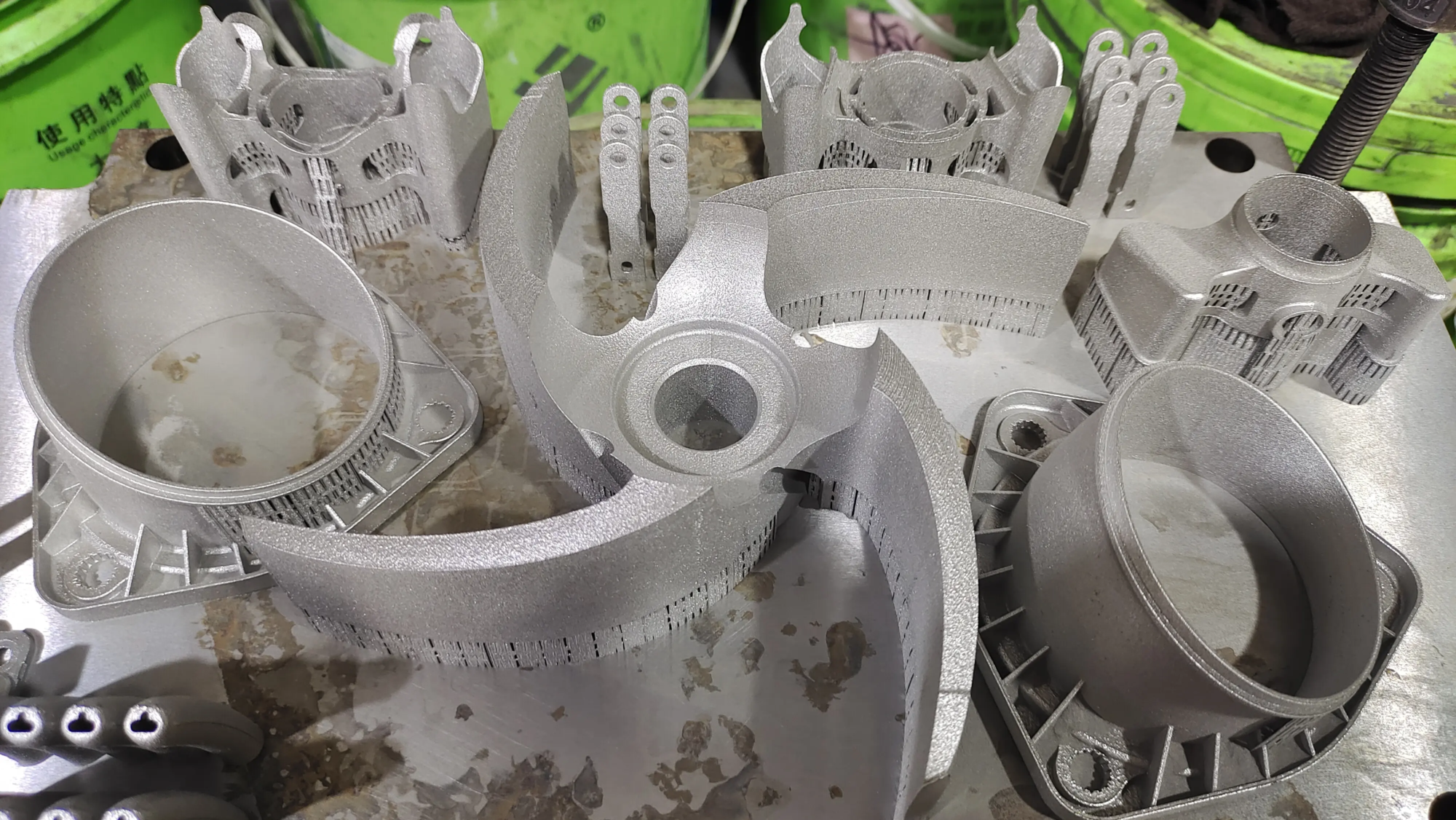
Durability and longevity are crucial when making a sundial for use in a garden, patio or public space. This is the advantage of SLM 3D printing. SLM uses high-power lasers to carefully fuse fine metal powders (stainless steel, titanium, aluminum alloys, nickel alloys) layer by layer to create parts with a density and mechanical properties that equal or exceed those of traditionally manufactured parts.
Why SLM is the ideal choice for advanced sundials:
- Superior strength and durability: Withstands weathering, UV degradation and physical impact better than plastic resins.
- Uncompromising sophistication: SLM can easily handle the complex internal structures and fine details required for high-precision dial hands and dials.
- Material integrity: Produce fully dense parts ideal for functional applications requiring long-term dimensional stability.
- Excellent surface finish: SLM parts can be post-processed to achieve a near-polished surface, improving aesthetics and accuracy by reducing shadow edge diffraction.
- Environmental resistance: Metal alloys are inherently corrosion-resistant, which is critical for outdoor installations.
GreatLight: Your partner for realizing precision sundials
At GreatLight, we specialize in transforming complex concepts into tangible, high-performance metal realities. Leveraging state-of-the-art SLM printers and deep expertise in metal additive manufacturing, we help designers, engineers, educators, and artists create sundials that are both scientifically accurate and stunningly beautiful.
Our sundial production capabilities:
- Advanced SLM technology: Precise metal printing meets the minute details and structural integrity required of high-end sundials.
- Comprehensive material selection: A variety of durable metal powders are available, including stainless steel (316L, 17-4PH), titanium alloy (Ti6Al4V), aluminum alloy (AlSi10Mg), and more – all suitable for long-term outdoor use.
- One-stop post-processing: We don’t just print; we get it done. Our services include expert heat treatment (stress relief), precision CNC machining of critical interfaces, surface finishing (sandblasting, polishing, electroplating) and quality control – ensuring every sundial we produce meets exacting standards.
- Rapid customization and prototyping: Need quick design iterations or low-volume production of custom sundials? Our rapid prototyping expertise ensures quick turnaround without sacrificing accuracy.
- Expertise in complex geometry: With years of experience solving challenging prototyping problems, our engineering team specializes in optimizing designs specifically for additive manufacturing, maximizing performance and minimizing printing issues.
Applications for 3D printed sundials: not just time
- educate: An engaging tool for teaching astronomy, geometry, geography, and history. Students can design, print, and calibrate their own sundial.
- Art and Sculpture: Unique decorative pieces combine scientific functionality with artistic expression for homes, gardens and public facilities.
- Landscaping and Architecture: A custom, durable watch that blends into a park, university, or corporate campus.
- Legacy Copy: Make an exact replica of a historic sundial for a museum or conservation project.
- Personalized gift: A very meaningful and unique gift to celebrate an anniversary, graduation or retirement.
in conclusion
The humble sundial has moved from ancient astronomy to the forefront of modern manufacturing. 3D printing, especially advanced metal technologies such as SLM, has breathed new life into this timeless technology. It democratizes precision, unleashes boundless creativity, and allows us to blend ancient wisdom with cutting-edge science. Whether you are an educator looking for a fascinating teaching tool, an artist exploring light and form, or someone who simply appreciates the elegance of recording time through the sun, 3D printed sundials offer a fascinating and easy-to-use avenue.
For professionals and enthusiasts seeking to create strong, precise and stunning sundials using premium metal alloys, GreatLight provides the expertise and manufacturing excellence to realize your vision. From complex CAD files to beautiful, functional artifacts calibrated to your precise location, we simplify the process. Customize your durable, scientific work of art today and experience the seamless fusion of millennium principles with future manufacturing potential.
Frequently Asked Questions (FAQ) about 3D printed sundials
1. How accurate is the 3D printed sundial?
Accuracy depends largely on the precision of the design and printing. Well-designed sundials, properly calibrated to their specific latitude and longitude, printed using high-resolution techniques (especially metallic SLM) and post-processed to ensure detail fidelity, can be extremely accurate, often within minutes of true solar time. Accuracy mainly depends on correct direction (true north/south) and seasonal changes (time equation).
2. Can I place the 3D printed sundial outside?
It all depends on the material. PLA plastic degrades quickly outdoors. ABS or ASA plastics have better UV resistance but may warp or degrade after a few years. For permanent outdoor use, metal 3D printing (sustainable development management) is essential. Materials such as corrosion-resistant stainless steel (316L), titanium or specialty alloys provide the required service life and weather resistance.
3. How to correctly adjust the direction of the sundial?
For a horizontal sundial in the Northern Hemisphere, the dial needle must point exactly to celestial north (true north, not magnetic north). This usually requires properly aligning the edge or centerline of the dial hands and leveling the dial. Smartphone compass apps can provide rough alignment, but for maximum accuracy it’s best to use the sun itself (by methods such as finding local solar noon) or a professional surveying tool.
4. Why choose metal SLM printing instead of plastic printing sundial?
- Durability: SLM metal sundials can withstand decades of harsh weather, UV exposure, and physical stress, unlike plastic that degrades outdoors over time.
- Accuracy and Stability: Metal parts have excellent dimensional stability, reducing potential warpage that could affect accuracy. SLM achieves very fine details.
- Surface finish and detail: Metals allow for superior finishes (polished, plated) that are both beautiful and provide clear shadow definition.
- Weight and feel: Metal sundials have a sturdy, premium feel and are suitable for permanent installation.
- Function: Essential for high-precision or critical applications where long-term reliability is critical.
5. Can GreatLight handle fully custom sundial designs?
Absolutely! Customization is the core advantage. If you have a CAD model (STEP, IGES, STL) we can manufacture it using advanced SLM systems and comprehensive post-processing services. Need help optimizing your design for 3D printing or calculating the precise geometry of your location? Our engineering team has the expertise to work with you from concept to finished product. We focus on "Impossible" Designs requiring complex geometries and high-quality metal materials.
Explore the fusion of ancient science and future manufacturing. Contact GreatLight today to discuss your custom metal sundial project – from rapid prototyping to precise final production.