Unleashing Innovation: The Power of 3D Printing in Rapid Prototyping
3D printing is fundamentally reshaping the product development landscape. Once a niche technology, it has become an indispensable tool for engineers, designers and manufacturers worldwide, enabling rapid iterations, complex geometries and reduced time to market. For businesses looking for agile prototyping solutions, navigating the diverse ecosystem of 3D printers is critical. Let’s dive into some of the leading technologies across fields and explore how you can leverage professional services like GreatLight to optimize your prototyping journey.
Beyond the Hype: Key 3D Printing Technologies Driving Prototyping
choose "correct" 3D printer depends largely on your prototyping goals: material requirements, accuracy, surface finish, mechanical properties, budget, and volume. Here are the three main technology categories driving rapid prototyping today, with a focus on specific machine examples:
-
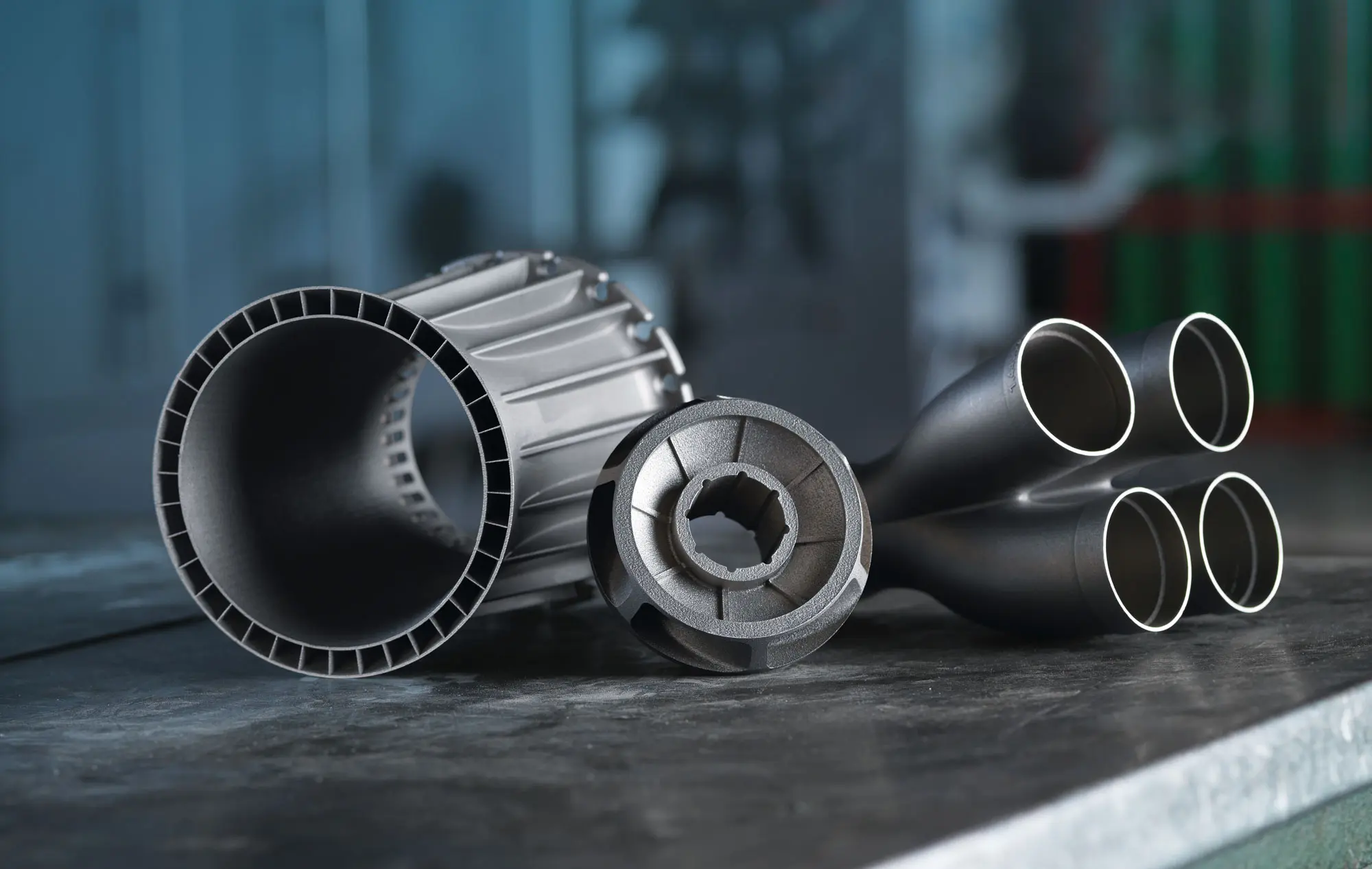
Industrial metal power stations: Selective Laser Melting (SLM) printers (e.g. EOS M 290, SLM Solutions SLM 500)
- technology: SLM uses high-power lasers to selectively melt and fuse fine metal powders layer by layer to build fully dense, high-strength metal parts directly from CAD data.
- Advantages of prototyping: unparalleled creation functional, End-use metal prototypes and complex parts (internal channels, lightweight meshes) not possible with conventional machining. Materials such as titanium (Ti6Al4V), stainless steel (316L, 17-4PH), aluminum alloy, Inconel and cobalt-chromium alloy are usually used. Ideal for aerospace, medical implants, automotive and energy applications where ruggedness and heat resistance are required.
- Things to note: High machine cost (often over $500,000), complex operation requiring skilled technicians, need for inert gas chambers, significant safety protocols for powder handling, and often extensive post-processing (support removal, heat treatment, surface finishing). This is where professional service providers shine.
-
Leader in precision and versatility: Stereolithography (SLA) printers (e.g., Formlabs Form 3+, 3D Systems ProJet MJP 2500W)
- technology: SLA uses a UV laser to cure liquid photopolymer resin layer by layer, allowing it to cure precisely.
- Advantages of prototyping: Excellent surface finish, high resolution and precision make it ideal for Detailed conceptual modelmaster model for castings, molds, and prototypes that require smooth surfaces and fine features. A variety of resins can simulate properties such as toughness, flexibility, transparency and high temperature resistance.
- Things to note: Parts made from standard resin can be brittle. Some specialty resins require careful post-processing (cleaning, UV curing). Material costs may be higher than FDM. While desktop SLAs (Formlabs) exist, industrial models offer greater scale and material options.
- Easy-to-use workhorses and functional testing: Fused Deposition Modeling (FDM) printers (e.g. Stratasys Fortus 450mc, Ultimaker S7)
- technology: FDM extrudes thermoplastic filaments through a heated nozzle, depositing them layer by layer to build the part.
- Advantages of prototyping: very suitable Quick concept modelfunctional prototypes (using engineering-grade thermoplastics such as ABS, Nylon, PC, PEEK/UPEKK), jigs, fixtures, and low-volume end-use parts. Used in a wide range of applications, from powerful desktops (Ultimaker) to powerful industrial systems (Stratasys). Material costs are relatively low.
- Things to note: Layer lines are clearly visible and post-processing is required to obtain a smooth finish. Dimensional accuracy and intricate details are typically lower than SLA or SLM. For complex geometries, support structure removal can be more challenging.
Why work with a professional service provider like GreatLight?
While smaller desktop printers can support individuals and small teams, complex or mission-critical prototyping, especially involving high-performance metals, requires industrial-grade equipment and deep expertise. This is where working with a professional rapid prototyping manufacturer becomes crucial. Here’s how GreatLight provides significant value:
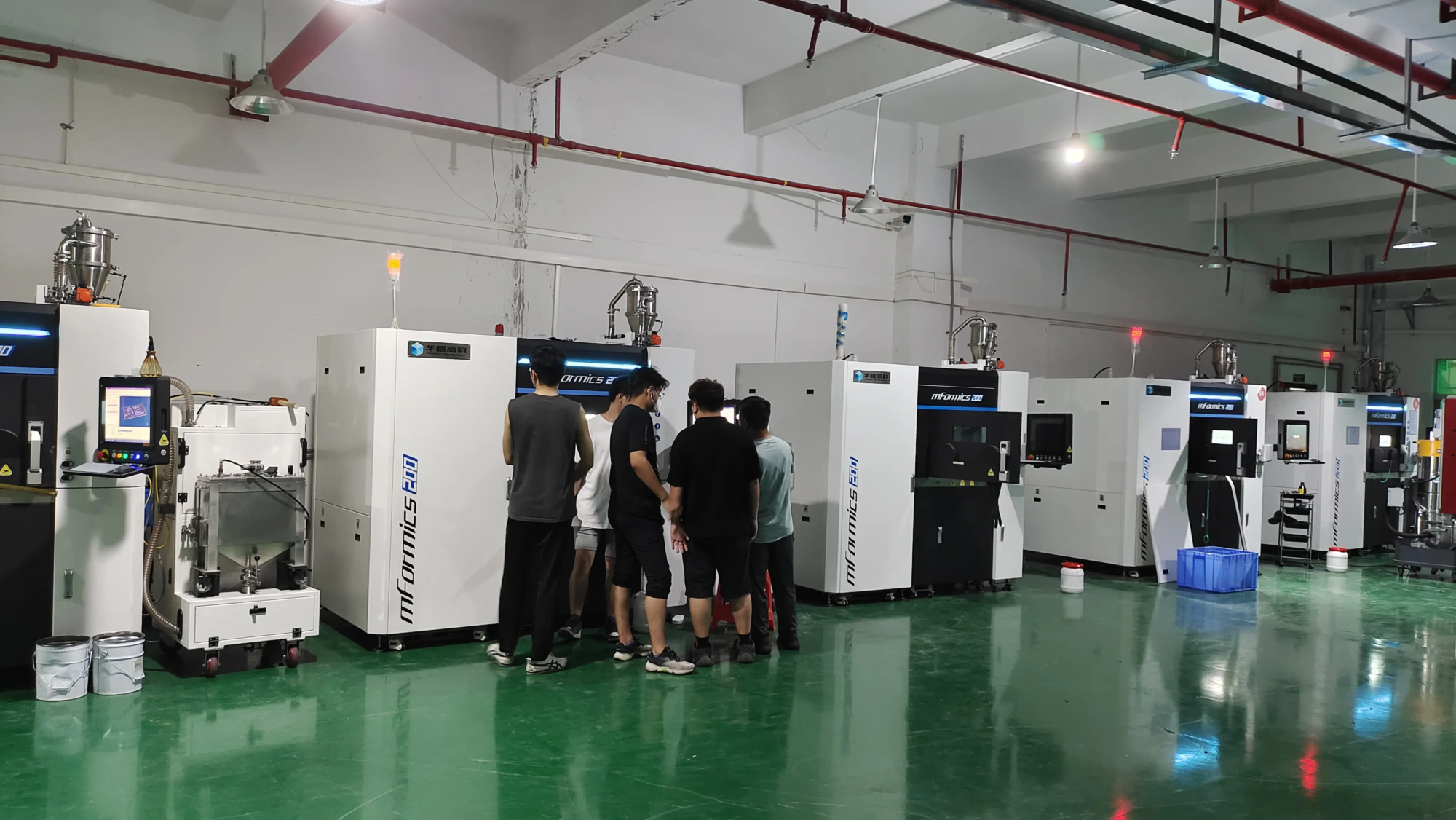
- Get advanced SLM technology: Owning and operating an industrial SLM printer requires significant capital investment and specialized infrastructure. GreatLight provides access to top-of-the-line SLM equipment (critical for complex metal prototyping) at no additional cost.
- Unwavering focus on solving complex problems: Their core expertise lies in challenging metal part prototyping, particularly utilizing SLM. They understand the nuances of metal powder behavior, laser parameters, support structure design, heat treatment stresses, and more.
- Engineering expertise and DFM: It’s not just compressions "Print." Their team brings engineering insights to Design for Additive Manufacturing (DFAM). They work together to optimize part orientation, minimize supports, predict distortion and ensure manufacturability.
- Comprehensive post-processing package: one "at the time of printing" Metal parts are often not ready for use. GreatLight provides integration One-stop post-processing and finishing services. This includes the following key steps:
- Support removal (complex and critical for interior functionality)
- Stress relief and heat treatment (HIP – Hot Isostatic Pressing – for critical parts)
- Precision CNC machining of critical tolerances and mating surfaces
- Surface treatment (sandblasting, polishing, machining, coating)
- Material flexibility and rapid customization: In order to meet different project needs, they handle a variety of metals (such as titanium, stainless steel, aluminum, inconel) and often meet custom material requirements. Their workflow is optimized for quick turnaround without compromising on quality.
- Cost effectiveness: By leveraging economies of scale, expert operations that minimize waste/rework, and efficient post-processing integration, GreatLight delivers high-quality metal prototypes at competitive prices.
For companies and innovators pushing boundaries in aerospace, automotive, medical, energy and more, HuiLite positions itself as one of China’s premier rapid prototyping partnerscombining technical prowess with proven problem-solving abilities.
Conclusion: Match technology to needs, leverage expertise
this "top" 3D printers do not exist in a vacuum. Success depends on the exact match of technology (SLM for functional metals, SLA for precision/resins, FDM for thermoplastics/accessibility) with the functional, aesthetic and compliance requirements of the prototype.
For complex, high-strength metal prototypes that require industrial-grade SLM machinery and complex post-processing, working with an expert service provider like GreatLight is not only convenient; This is strategic. Their mastery of the SLM process, dedication to solving complex prototyping challenges, and comprehensive one-stop service from consultation to precision machined finished parts remove barriers,