Embrace Efficiency: A Comprehensive Guide to 3D Printed Tree Supports
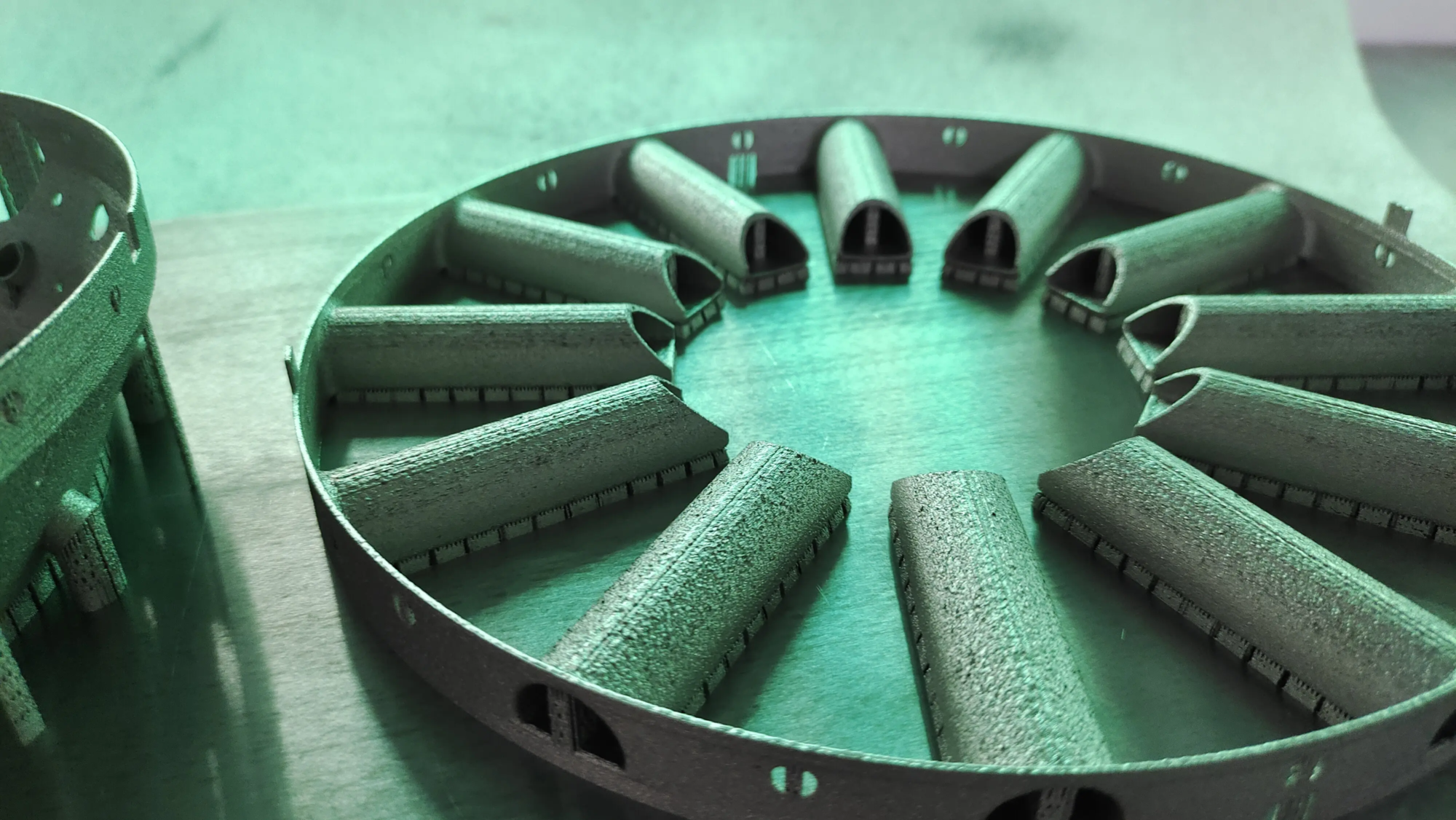
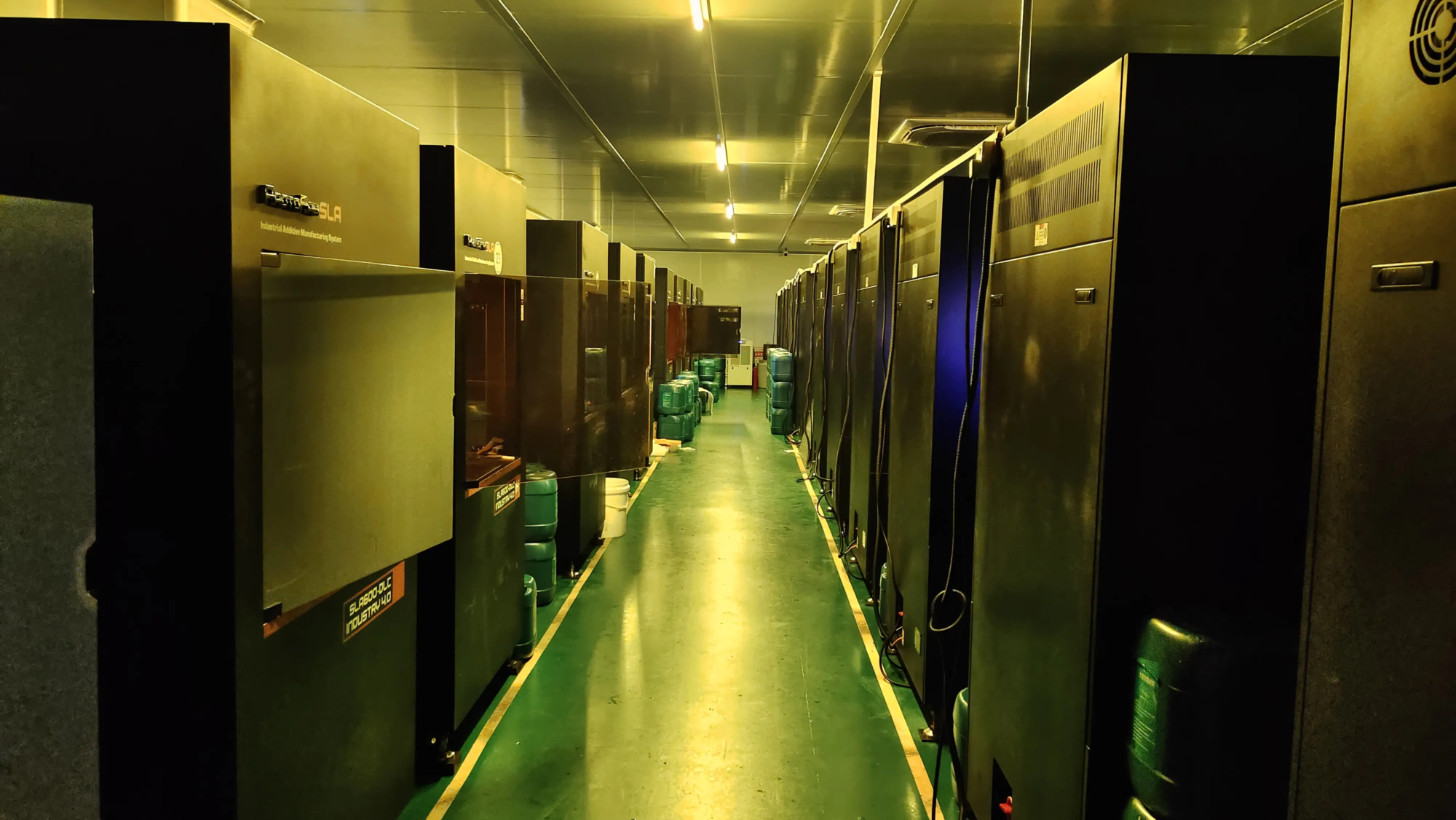
The pursuit of perfect, complex 3D printing often conflicts with basic laws of physics, especially gravity. This is where support structures come in, acting as temporary scaffolding during the construction process. However, traditional bracing, while effective, often comes with a host of vexing problems: excessive material usage, difficulty in removal, and superficial scarring. Enter tree support technology – A game-changing approach that revolutionizes the way we work with overhangs and complex geometries. As a pioneer in GreatLight rapid prototyping, we leverage our deep expertise in advanced technologies like Selective Laser Melting (SLM) and support strategies to deliver superior results. Let’s dive into why tree supports are reshaping additive manufacturing.
Why tree supports? Core advantages
Unlike their blocky, grid-like traditional counterparts, tree supports mimic natural branching structures. This kind of biomimicry is not only beautiful, it’s also enjoyable. It brings real benefits:
- Complete material savings: By branching only where absolutely necessary and minimizing contact points, tree bracing greatly reduces the amount of support material used. This directly translates into lower costs, which is especially important for the expensive metal powders used in SLM printing (one of GreatLight’s core technologies).
- Easier disassembly and less damage: Traditional supports are often tightly integrated with the model, resulting in tedious picking or sanding and potential surface scarring. Tree supports feature precise contact points (like branch contact surfaces) for cleaner separation, preserving the integrity of the final part and saving significant post-processing time.
- Enhanced reach and overhang handling: Their branching nature allows tree supports to grow diagonally from the build plate, effectively reaching distant island overhangs where straight supports might be unmanageable or require dense scaffolding below.
- Reduce build time: Less printing material means faster overall build times. Efficient construction often enables higher print speeds without compromising stability.
- Improve the surface quality of the support area: Minimizing contact points often results in smaller, less noticeable scars or blemishes where the support contacts the model.
When to use tree supports: Smart applications
Tree supports, while powerful, are not a universal solution. Understanding their ideal use cases can maximize their benefits:
- Complex geometries with deep overhangs: Parts with organic curves, cavities with overhanging features, or complex lattice structures benefit greatly.
- Models are "islands" (Independent cantilever): The feature floating in the middle above the build plate is a prime candidate for the tree’s support branch range.
- Material and cost sensitivity: When printing with expensive metals such as titanium, Inconel or aluminum alloys commonly machined by GreatLight’s SLM printers or when aiming to minimize material waste.
- Prioritize post-processing efficiency: Projects that require faster turnaround or a smoother final surface finish on supported areas.
- Standard FDM printing using PLA, PETG, ABS: Tree supports are widely available and effective on common thermoplastics.
Where legacy support may still prevail:
- Very flat, big overhang: Large, completely level surfaces may benefit more from the uniform stability of dense linear or grid supports, although tree supports can still work well.
- Extremely thin wall/vertical body: Sometimes precisely calculated tree branches can be more difficult to predict than linear supports used to support very thin features that are tilted vertically (vertically) at extreme angles. Fine-tuning the settings is key.
- Extreme angles near the printing platform: Sometimes sharp, severe angles from the build platform may be better anchored with traditional supports. Software analysis is critical.
Successful Design and Slicing of Tree Supports: Key Settings (in the FDM/SLM Slicer)
Unlocking the tree’s potential depends on optimized slicer settings:
- Enable tree support: choose "Tree" or "organic" Supported options in slicing software (eg, Cura, PrusaSlicer, dedicated metal SLM slicers).
- Branch angle: Controls the steepness of branches as they grow upward. Lower angles provide wider coverage but may be less stable; higher angles are more sturdy but have shorter reach. (Typical range: 40-65 degrees, depending on model geometry).
- Branch diameter: Sets the base thickness of the trunk. Adjust according to the size and weight of the model you need to support. Larger/metallic prints require a thicker base.
- Tip diameter (minimum branch diameter): Determine the thickness of the branch at the point of contact with the model. Smaller = less scarring, but likely less support. Need to balance.
- Branch density/branch count: Controls the number of main branches starting from the build plate and how densely the tree is distributed. Higher density provides greater stability for heavy drape.
- Support hanging angle: Defines the minimum unsupported angle before generating supports. Start at 40-50 degrees and adjust according to material and model.
- Z distance (depends on slicer): The important gap between the top of the support and the bottom of the model. Essential for easy removal. For FDM this is typically 0.15-0.3mm; for SLM metal it is managed differently within the machine parameters for optimal sintering without melting.
- Tree support placement: choose "everywhere" or "touch build board" Strategically. "touch build board" Typically produces cleaner results, but may miss air islands that require other support types.
Pro tip: Thoroughly preview your slicing results. Rotate the model view to examine how the branches connect to key surfaces. Adjust settings incrementally for optimal bridging and minimal contact.
Post-processing tree support: The GreatLight advantage
The inherent advantages of tree supports shine during post-processing:
- Easy to disassemble: In FDM they can usually be broken off cleanly by hand or using simple pliers/clamps, especially if the Z distance is set up well. For GreatLight, structurally optimized metal tree supports are generated using advanced SLM simulation software, eliminating the need for CNC machining, EDM technology or strategic chemical processes, designed to minimize the impact on critical part geometry, which is a core part of our one-stop post-processing service.
- Minimal surface traces: Small contact points will leave corresponding small imperfections. For plastics, these issues are easily sanded/polished, and for metals, they can be addressed through precision machining steps such as micro-milling or abrasive flow machining, ensuring cosmetic or functional surface requirements are met.
- Reduce labor time: Faster removal speeds directly translate into lower finishing costs, an advantage we pass on to customers looking for fast and cost-effective prototyping.
Conclusion: Moving to better printing
Tree support technology represents a major leap forward in optimizing 3D printing workflows. By intelligently minimizing waste, shortening build times, simplifying post-processing, and maintaining surface quality, it can deliver significant real-world benefits—lower costs, faster turnaround, and superior final parts.
Whether you’re printing complex plastic prototypes or high-strength, complex metal parts, understanding and utilizing tree supports is critical to unlocking the full potential of additive manufacturing. At GreatLight, we combine cutting-edge SLM 3D printing equipment, sophisticated support generation algorithms tailored for metal powders, and decades of metallurgical expertise. We don’t just print parts; We engineer efficient, elegant solutions from design to finished product, including custom post-processing.
Ready to experience rapid prototyping? Let our GreatLight team tackle your next complex project. Benefit from the expert application of technologies such as tree bracing and overall one-stop finishing to achieve outstanding results quickly and cost-effectively.
Customize your precision rapid prototyping parts today at the best prices! [Insert Link to Your Quote/Contact Page]
Frequently Asked Questions (FAQ)
-
Q: Are tree supports stronger than traditional supports?
- one: Tree supports are designed for efficiency and minimal material use, not necessarily pure brute force. They are generally adequate and stable for most geometries, but may not be ideal for supporting extremely large unsupported sections, where dense traditional bracing provides more even weight distribution. Our SLM engineering team performed structural simulations to select the best bracing strategy.
-
Q: Are tree supports only available for FDM printers?
- one: No! Although popularized in FDM environments, its underlying principles are well suited to metal powder bed fusion technologies such as SLM. Advanced slicers and simulation software for metal printing generate complex support structures that are heavily influenced by tree-like branching logic for minimal thermal deformation and efficient powder removal. GreatLight specializes in applying these strategies to achieve optimal metal part quality.
-
Q: Will tree supports cause printing to fail?
- one: As with any support structure, improperly configured tree supports can cause failure. Common problems are branches that are too thin and break during printing, poor adhesion to the build plate, or incorrectly calculated branch angles causing collisions with the model. Careful microtome setup calibration and testing of complex sections is critical. Our expertise mitigates these risks by precisely customizing parameters for each project.
-
Q: How do I prevent tree supports from leaving marks?
- one: Optimize your Z distance (gap setting) and minimize tip/branch diameters that contact the model. With FDM, good cooling also helps prevent excessive adhesion. For high-quality metal parts, GreatLight uses strategic support placement methods combined with EDM, precision machining or specialized separation techniques in our post-processing suite to virtually eliminate visible marks on critical surfaces.
- Q: Why are GreatLight’s metal brackets more efficient?
- one: In addition to utilizing tree optimization principles to minimize material usage and thermal stress, we use proprietary algorithms combined with extensive SLM process knowledge. This allows us to generate support for:
- Significant reduction in expensive metal powder consumption.
- Optimize heat dissipation during laser melting to mitigate deformation.
- Strategically position brackets for maximum efficacy and minimal surface impact.
- Seamlessly integrated with our advanced one-stop CNC machining and final part surface finishing capabilities.
- one: In addition to utilizing tree optimization principles to minimize material usage and thermal stress, we use proprietary algorithms combined with extensive SLM process knowledge. This allows us to generate support for:
Embrace the future of efficient support structures. Contact GreatLight today for your next rapid prototyping challenge!